
Philip Rivers’ 44-Year-Old Comeback TD Exposes the NFL’s Quarterback Crisis

Sarah Johnson
December 15, 2025
Brief
Philip Rivers’ surprise touchdown at 44 is more than a comeback moment. It exposes the NFL’s deepening quarterback crisis, injury risks, and reliance on retired veterans to keep playoff hopes alive.
Philip Rivers’ Unlikely Return Touchdown Isn’t Just Nostalgia — It’s a Window Into the NFL’s Quarterback Crisis
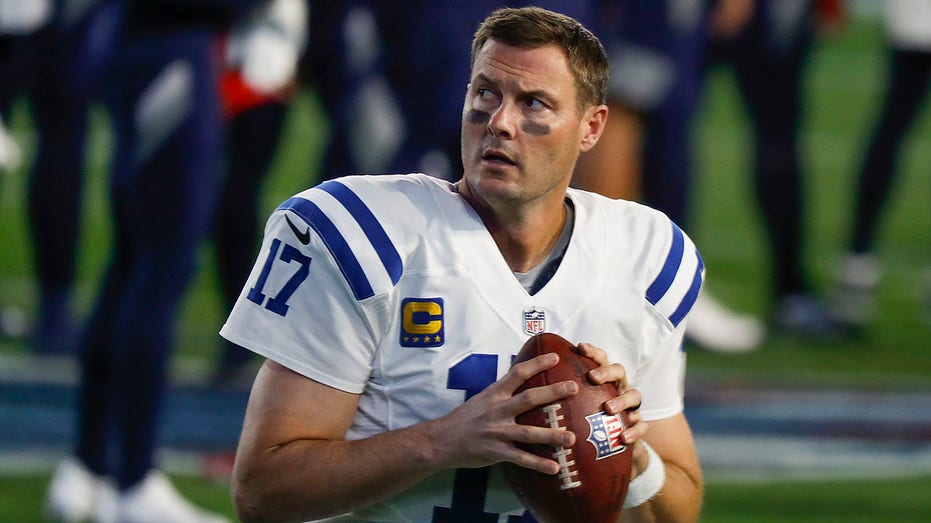
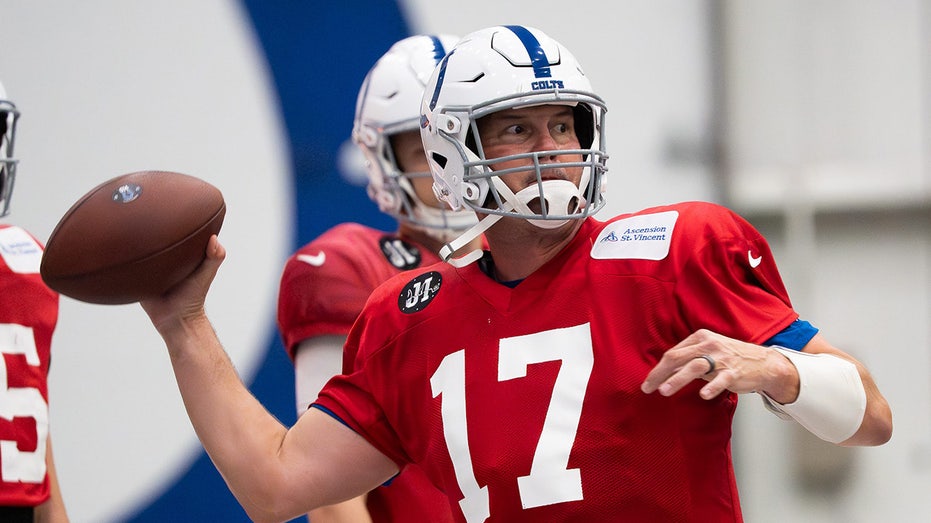
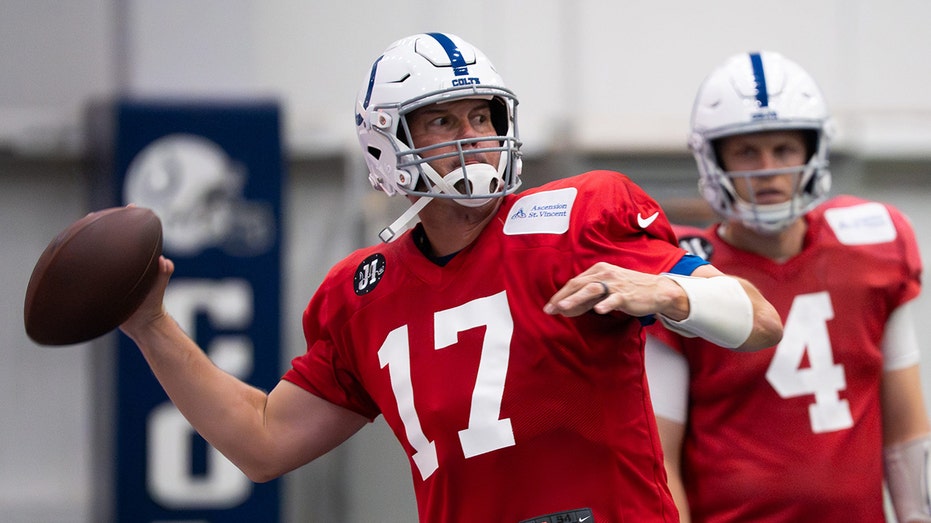
Philip Rivers throwing a touchdown pass in 2025, five years after his last NFL score, is more than a feel-good comeback moment. It’s a flashing red indicator of how precarious the quarterback position has become in today’s NFL — and how franchises are increasingly forced to choose between long-term development and short-term survival.
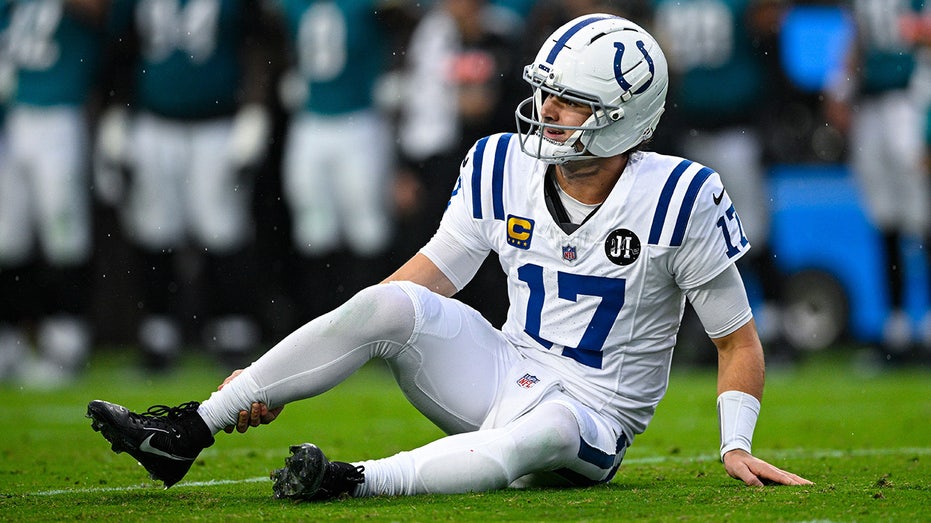
At 44, Rivers stepping in for the Indianapolis Colts and finding Josh Downs in the end zone against the Seattle Seahawks is, on the surface, a remarkable individual achievement. But the more consequential story lives underneath: why a team in a multibillion-dollar league is turning to a retired quarterback to stabilize its season, and what that says about roster building, injury trends, and the evolving nature of quarterback play.
The Bigger Picture: How We Got to a 44-Year-Old Back Under Center
To understand why Rivers is back on an NFL field, you have to zoom out from one game and look at the structural pressures that have reshaped the quarterback market over the past two decades.
From Franchise Stability to Quarterback Roulette
For much of modern NFL history, elite quarterbacks were synonymous with stability. Think of:
- Brett Favre starting 297 straight regular-season games.
- Peyton Manning anchoring the Colts for 13 seasons.
- Tom Brady delivering two full dynastic eras in New England and Tampa.
Franchises built rosters and identities around a single passer for a decade or more. That model has been breaking down. Since roughly 2015, teams have increasingly cycled through quarterbacks at an accelerated pace, driven by:
- Rookie contract economics: The value of hitting on a cheap rookie QB deal has incentivized teams to move off veterans faster.
- Injury volatility: Mobile QBs take more hits, and even pocket passers are seeing more lower-body injuries behind inconsistent offensive line play.
- Schemes tailored to athleticism: Systems that emphasize movement, RPOs, and designed runs often shorten a QB’s physical prime.
In that context, Rivers’ return is less of a one-off Hollywood story and more of a predictable outcome in a league where the demand for competent quarterbacking far exceeds the supply.
The Age of the NFL “Relief Pitcher” QB
Rivers is not the first veteran to get a late-career call. The NFL has been edging toward a baseball-style “relief pitcher” model at quarterback for years:
- Brett Favre unretired to play for the Jets and later the Vikings, nearly taking Minnesota to a Super Bowl at 40.
- Josh McCown was pulled off a high school field to start an NFL playoff game at 41 for the Eagles in 2020.
- Joe Flacco, at 38, signed midseason in 2023 with the Browns and helped rescue their playoff push, making the Pro Bowl as a late addition.
What’s different about Rivers is the size of the gap. He last threw an NFL touchdown in January 2021. Coming back after roughly 1,800 days — nearly five full years — moves this from “late-career stopgap” into almost unprecedented territory for a modern quarterback.
What This Really Means: The Economics and Risk Behind the Rivers Gamble
Injuries, Achilles Tears, and the Fragility of Contenders
The Colts turned to Rivers after Daniel Jones tore his Achilles, ending his season. That detail is part of a disturbing pattern: Achilles injuries and serious lower-leg injuries to skill players and quarterbacks have spiked in recent years.
While precise annual figures fluctuate, league data and external tracking have shown:
- An increase in Achilles tears over the past decade, especially early in seasons and on certain playing surfaces.
- More quarterbacks lost for the year due to lower-body injuries — from Aaron Rodgers’ 2023 Achilles tear to Kirk Cousins, Deshaun Watson, and others.
When your entire offensive infrastructure — scheme, roster allocation, salary cap commitments — is built around one player, a catastrophic injury can instantly turn a potential playoff team into a basement dweller. For a franchise, the temptation to call a retired veteran who already knows pro systems is obvious.
The Cost of Not Giving Up on a Season
The Colts’ decision to sign and start Rivers is, at its core, an attempt to preserve competitive relevance. They entered the game having lost three straight and four of five, staring at a collapsing playoff bid. The front office essentially made three bets:
- Experience over upside: A 44-year-old Rivers with limited arm strength but elite processing might be better, in the short term, than a young backup still learning to read NFL defenses.
- Locker room psychology: Bringing in a former star can signal to the team that management hasn’t given up on the season, which matters in December.
- Fan and business calculus: A fan base is more likely to stay engaged with a familiar name than with a developmental QB in survival mode.
Even Rivers’ modest halftime numbers — 10-of-16 for 82 yards and one touchdown, with a long completion of 17 yards — point to how the Colts likely view him: not as a savior, but as a stabilizer. Short, efficient passing; ball security; functioning offense.
What the Numbers Say About Veteran QBs in Late Comebacks
Historically, veteran quarterbacks returning after long gaps or at advanced ages can provide a short-term lift, but sustainability is rare. Consider:
- Favre (40, Vikings): Elite season in 2009, but fell off a cliff the next year amid injuries.
- McCown (late 30s, multiple teams): Flashes of competence, but primarily a bridge and emergency option.
- Flacco (38, Browns): High-variance play — big yardage and touchdowns, but also high interception rates.
Older QBs can still process defenses at a high level, but their limited mobility and diminished arm strength generally compress the playbook. Defenses can sit on shorter routes, crowd the box, and force tight-window throws. Rivers’ game profile in his last full season already showed this trend: high completion rates on short and intermediate passes, but fewer explosive plays downfield.
Expert Perspectives: What Rivers’ Return Signals About the League
Coaches, analysts, and former players have been warning for years that the NFL’s quarterback development pipeline is misaligned with how the game is evolving.
Dan Orlovsky, former NFL quarterback and current analyst, has repeatedly argued that teams overestimate how quickly young quarterbacks can adapt to NFL complexities: “You’re asking 22-year-olds to be CEOs of billion-dollar operations with defenses that change the picture after the snap. That learning curve can’t be bypassed by scheme alone.”
Dr. Jess Flynn, a sports medicine physician who regularly analyzes NFL injuries, has highlighted the risk profile QBs now carry: “Even so-called pocket passers are moving more, dodging pressure behind offensive lines that often lack continuity. The physical load on quarterbacks has never been higher, especially with longer seasons and expanded playoffs.”
Louis Riddick, former NFL executive, has emphasized the value of veteran competency: “There’s a massive gap between a true starting quarterback and the average backup. A guy who can just run the offense, protect the ball, and get you into the right play is incredibly valuable — and increasingly rare.”
Rivers, with 63,440 passing yards and 421 career touchdown passes, perfectly fits that last profile: not the most athletic or strongest-armed, but a high-IQ operator who maximizes what’s available in a structured offense.
Data & Evidence: The Shrinking Middle Class at Quarterback
One of the underreported trends behind the Rivers story is the hollowing out of the “middle class” of quarterbacks. The league now has:
- A small cluster of true franchise stars on massive contracts.
- A rotating cast of young, unproven quarterbacks on rookie deals.
- Very few solid, mid-tier veterans who can reliably keep a team competitive.
In previous eras, teams often had veteran backups with 30–50 career starts. Today, cap constraints and developmental priorities mean many backups are late-round picks or cheap signings with minimal real-game experience.
That’s why Rivers’ phone rang. Teams are effectively reaching backward in time — to retired players — because the middle tier of present-day options is thin.
Looking Ahead: Is Rivers an Outlier or the Start of a Pattern?
Several forward-looking questions emerge from Rivers’ return:
1. Will More Retired QBs Be Stashed as “Break Glass” Options?
If Rivers performs even at a competent level over multiple games, other teams may reconsider how aggressively they try to keep relationships warm with recently retired veterans. We could see:
- Informal “readiness agreements” where former QBs stay in shape and keep up with film in case of emergency.
- Teams building systems that are simpler for older veterans to plug into quickly.
2. Does This Slow Investment in the Next Generation?
The downside of the veteran fallback is developmental stagnation. Every snap taken by a 44-year-old Rivers is a snap not taken by a young quarterback who might be part of the team’s long-term future. For organizations, the tension between “win now with a veteran” and “develop the future” becomes sharper with each high-profile comeback story.
3. How Will the NFL Respond to the Injury Problem?
With high-profile Achilles and lower-body injuries mounting, the league is already under pressure to revisit:
- Field surface standards and enforcement.
- Offseason and in-season workload management.
- Rules protecting quarterbacks inside and outside the pocket.
If the trend continues, short-term band-aids like parachuting in retired veterans may become normalized — but they won’t address the structural issue of keeping primary starters healthy.
The Human Element: Why Rivers’ Touchdown Still Matters
For all the macro-level analysis, there’s also the human story: a 44-year-old father of nine, long retired and widely assumed to be done with professional football, walking back into a locker room and into a huddle.
Rivers’ style was never built on raw athleticism. It was built on anticipation, timing, and an almost stubborn competitiveness. That’s why, even after 1,800 days away from NFL touchdowns, he can still execute a scoring drive at this level. It’s also why teammates — even those who didn’t play with him in his Chargers prime — are likely to respond to his presence.
In a league that often treats players like interchangeable assets, Rivers’ return provides a rare reminder that institutional memory has value. Quarterbacks who have seen everything defenses can throw at them don’t just run plays — they calm chaos.
The Bottom Line
Philip Rivers’ first touchdown pass since the 2020 season is not just a quirky stat line or a nostalgic headline. It’s the latest data point in a larger story about how fragile the quarterback position has become, how thin the pipeline of reliable passers is, and how far teams are willing to go to salvage a season.
Whether Rivers’ comeback is a brief cameo or a multi-week run, it exposes systemic pressures the NFL can’t ignore: injury trends that keep derailing contenders, developmental gaps that force teams into desperate solutions, and a quarterback economy increasingly defined by extremes — mega-stars at the top, long shots at the bottom, and not enough in between.
For now, the Colts have a familiar face giving them a chance. But the real question is whether the league learns anything from the fact that, in 2025, one of its best options at the most important position on the field is a retired 44-year-old who last threw a touchdown when many of his current teammates were still in college.
Topics
Editor's Comments
What stands out most about Philip Rivers’ return isn’t the touchdown itself, but how normalized this type of move is becoming. A league that generates over $20 billion annually is relying on retired forty-somethings to patch over systemic roster weaknesses at the most important position. That tension reveals something uncomfortable: for all the talk about analytics and long-term strategy, a single injury can still push even well-run teams into short-term desperation. It raises a broader question about where the real bottleneck lies. Is it in quarterback development at the college and high school levels, in the NFL’s incentive structure that rewards quick turnarounds over patient grooming, or in the physical demands of the modern game that simply break quarterbacks faster than systems can replace them? Until the league confronts those root causes, stories like Rivers’ will be celebrated as inspirational anomalies, when in reality they are symptoms of a deeper structural imbalance.
Like this article? Share it with your friends!
If you find this article interesting, feel free to share it with your friends!
Thank you for your support! Sharing is the greatest encouragement for us.