Daniel Jones’ Achilles Tear Exposes the NFL’s Dangerous Quarterback Gamble

Sarah Johnson
December 8, 2025
Brief
Daniel Jones’ Achilles injury is more than a Colts setback. It exposes how the NFL’s quarterback-dependent model, medical culture, and economic pressures push stars to dangerous limits.
Daniel Jones’ Achilles Tear Isn’t Just a Colts Crisis – It’s a Warning Signal for the NFL
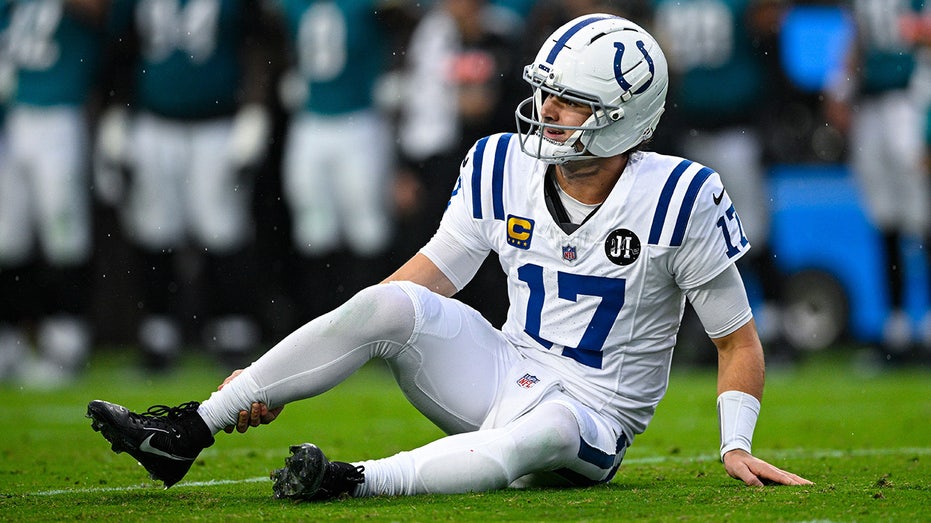
When Indianapolis Colts quarterback Daniel Jones slammed his helmet after collapsing with what appears to be a serious Achilles injury, it read as more than raw frustration. It was the violent punctuation mark on a story the NFL has been writing for years: star quarterbacks pushed to their physical limits, franchises built around them with little margin for error, and a league whose economic model depends on keeping these players upright far longer than their bodies were designed to last.
Jones’ injury – on top of already playing with a broken fibula – doesn’t just derail an MVP-caliber season and a division race. It exposes a deeper tension between competitive pressure, medical risk, and the long-term sustainability of the modern NFL quarterback era.
How We Got Here: The Modern Quarterback Arms Race
To understand the stakes, you have to zoom out beyond one gruesome play in December.
Over the last 15 years, the NFL has turned the quarterback position into the league’s single most valuable asset. Rule changes to protect passers, explosive offensive schemes, and a media machine that builds brands around individual QBs have created a system where a franchise’s fate is often tied to one player’s health and performance.
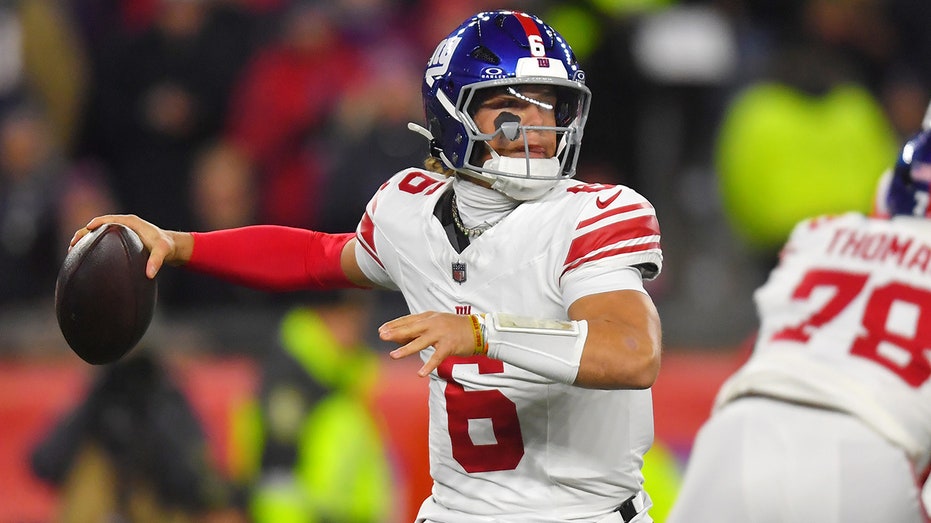
Daniel Jones has lived through the brutal side of that system. Drafted sixth overall by the New York Giants, he was asked to be the face of a rebuild behind shaky offensive lines, inconsistent coaching staffs, and unrealistic expectations. After early flashes, injuries and turnover issues branded him as a question mark. The Giants ultimately cut bait mid-2024, swallowing dead money and signaling that they were done waiting for him to become the player they’d projected.
What happened next is telling about where the league is: the Indianapolis Colts saw value in a “failed” franchise quarterback. They rebuilt him.
In Indianapolis, with a better scheme, more stable infrastructure, and a fresh start, Jones assembled an MVP-level first season: over 3,000 passing yards, 19 touchdowns, and an 8–4 record while dragging the team into a tight AFC South race. He wasn’t just a reclamation project; he was Exhibit A in the belief that the right environment can rehabilitate almost any quarterback.
That made what happened against Jacksonville more than simple bad luck. It underscored the fragility of this model. A team that rebuilt itself around a single revived star watched that bet rupture in one non-contact moment.
The Hidden Story: Playing Through Injury Has Become the Norm
One of the most overlooked details in this incident is that Jones was already competing with a broken fibula in his left leg.
That fact raises hard questions:
- Why was a quarterback with a broken bone still on the field in December, in a high-stress, high-load role?
- What tradeoffs were being made – by the player, by the team, by medical staff – in the name of a playoff push and an MVP campaign?
The NFL has spent the last decade insisting that it takes player safety more seriously – concussion protocols, independent neurologists, greater scrutiny of head trauma. But lower-body injuries, especially to elite quarterbacks, reveal another reality: there’s still enormous cultural and financial pressure to play hurt.
Achilles injuries have become distressingly prominent in recent years. Aaron Rodgers’ Week 1 Achilles tear in 2023, J.K. Dobbins, Kirk Cousins – the list has grown in both number and profile. League-wide data from recent seasons show a gradual uptick in soft-tissue and tendon injuries, especially early in seasons and in high-intensity games. While causation is complex, several contributing factors keep resurfacing:
- Longer seasons (17 games, expanded playoffs) increasing cumulative load.
- Explosive, stop-start offensive systems that ask quarterbacks to move more, extend plays, and shift from pocket passing to hybrid mobility.
- Year-round training with less true downtime or recovery.
Jones’ situation is a classic setup for compensation injury: an athlete altering biomechanics to protect one injured limb and overloading another. Playing on a broken fibula doesn’t guarantee an Achilles tear, but it drastically changes how force travels through the body. That’s the kind of cascade risk teams often downplay in the heat of a playoff race.
Why Jones’ Injury Hits Different: Narrative, Timing, and Economics
On paper, this is a horrible injury to a productive quarterback in a tight division race. On a deeper level, it intersects several powerful narratives:
- The redemption arc disrupted: Jones was on track to potentially win both MVP and Comeback Player of the Year after being cast off by the Giants. His resurgence in Indianapolis challenged the league’s habit of giving up quickly on young quarterbacks and underscored how much situation matters. That entire storyline is now in jeopardy.
- The Colts’ organizational gamble: Indianapolis chose to bypass a full reset at quarterback and instead invest in a veteran reclamation project. Building the roster, scheme, and cap structure around Jones made sense while he was healthy. With a serious Achilles injury on top of a broken fibula, that strategy could drag into a multi-year reset if recovery is delayed or incomplete.
- The economics of star dependence: Quarterbacks now consume up to 20% of a team’s salary cap in some cases, and even mid-tier veterans can command large deals. When a team’s identity and payroll are so heavily concentrated in one player, a single tendon snapping can reorient a franchise’s next three years.
What This Means for the Colts – Short and Long Term
In the immediate term, the Colts face three layered problems:
- Competitive impact: A tight AFC South race becomes an uphill climb with Riley Leonard stepping in mid-season. Even if Leonard performs admirably, the transition from an MVP-level veteran to a less experienced quarterback in December is a massive disruption.
- Locker room psychology: When a team has rallied around a comeback story, losing that emotional engine can deflate belief. Jones’ helmet slam wasn’t just personal anger; it was a visible signal to teammates that he knew what this meant for their season.
- Offseason decisions: The Colts now must plan around uncertainty. Achilles injuries typically require 9–12 months for high-level return, and for quarterbacks, the questions aren’t just about straight-line speed – it’s about pocket mobility, push-off power, and confidence under pressure. Do they treat Jones as the unquestioned starter in 2026? Do they draft insurance? Explore another veteran?
Historically, quarterbacks have had mixed outcomes returning from major lower-body injuries. Dan Marino played effectively but more stationary after his Achilles tear. Aaron Rodgers attempted an unprecedented early return and became the center of debate about risk versus reward. Kirk Cousins’ recovery will be another data point. If Jones loses even a modest amount of burst, his game may need to evolve again – from mobile playmaker to almost exclusively pocket operator.
The Larger NFL Trend: Quarterbacks as Both Assets and Consumables
Jones’ season-ending injury is also a lens on how the league treats quarterbacks as both franchise-defining assets and, at times, consumable resources.
Teams will invest heavily in protecting QBs with rules and penalties, yet routinely tolerate them playing through injuries that increase long-term risk. Fans cheer toughness, organizations talk about “warriors,” and players, eager to secure legacies and contracts, often become complicit in their own overuse.
This isn’t unique to Jones. Joe Burrow playing behind a porous offensive line early in his career, Justin Herbert gutting through a rib injury, Josh Allen repeatedly absorbing linebacker-level contact – the culture still rewards short-term sacrifice over long-term preservation.
Jones’ case is particularly stark because he clearly had something substantial already wrong – a broken fibula – and still remained on the field for a team chasing both a division crown and awards narratives. The MVP and Comeback Player of the Year campaigns aren’t just media hype; they influence contracts, endorsements, and public perception. That creates even more pressure to suit up while compromised.
Expert Perspectives: Risk, Recovery, and Responsibility
Sports medicine and performance experts have been increasingly vocal about these risks.
Dr. Neal ElAttrache, one of the most prominent orthopedic surgeons in elite sports (not speaking about Jones specifically), has repeatedly emphasized that Achilles tears are often the result of accumulated micro-damage and load, not just a single freak step. In high-intensity, explosive sports, he notes, managing cumulative stress is as important as treating acute injury.
On the performance side, longtime strength and conditioning specialists point to “compensation chains” – the body’s instinctive tendency to offload stress from an injured area to another. When a quarterback is protecting a broken fibula, the opposite leg and supporting tendons often bear more force on drops, plants, and escapes.
Former players are increasingly asking whether teams are truly designing protocols to prevent this kind of cascade. Some argue that independent medical evaluations should be expanded beyond concussion assessments to include any situation where a player is returning with a structural injury that significantly alters biomechanics.
What’s Being Overlooked: Mental Health and Identity After Injury
The brief moment of Jones slamming his helmet has mostly been framed as anger at the injury and the lost season. But there’s a deeper psychological layer that tends to get ignored.
For quarterbacks, especially those who have already endured public doubt and career turbulence, a catastrophic injury doesn’t just threaten future paychecks. It threatens identity. Jones fought his way back from being labeled a bust, cut by the franchise that drafted him, and repositioned as a franchise cornerstone in a new city. Losing that platform to injury can trigger a profound sense of loss that goes well beyond the field.
There has been growing recognition of mental health issues among injured athletes, but it remains a secondary storyline in mainstream coverage. With career arcs increasingly volatile – benchings, trades, releases, injuries – the emotional whiplash can be as severe as the physical trauma.
Looking Ahead: What to Watch in the Jones Case and Beyond
Several key storylines will define the fallout from this injury:
- The Colts’ public messaging: How transparent will the team be about timelines, risk, and how they handled Jones’ earlier leg fracture? Vague or evasive answers may intensify scrutiny of their medical decision-making.
- Jones’ recovery trajectory: Media and fan expectations for Achilles timelines have shifted after high-profile early returns, but those cases are often outliers. How the Colts manage expectations will matter.
- Union and policy conversations: If more top-level quarterbacks suffer major non-contact injuries while already playing hurt, the NFLPA could push for tighter medical standards on when injured players can return.
- Draft and roster strategy: The episode may accelerate an emerging shift: teams investing more in high-end backup quarterbacks or designing systems that don’t collapse when the starter goes down.
The Bottom Line
Daniel Jones’ Achilles injury is not just a tragic twist in a compelling comeback season. It’s a case study in how the modern NFL pushes its most important players to the edge – physically, mentally, and economically. The Colts now face a brutally uncertain future at the most important position in sports, and the league faces a familiar but increasingly urgent question: how much risk is acceptable in the pursuit of spectacle and success?
If the NFL is serious about sustainability – of careers, of franchises, of its own product – moments like Jones’ collapse in Jacksonville can’t just be filed away as bad luck. They have to be treated as warnings.
Topics
Editor's Comments
The most troubling aspect of Daniel Jones’ situation is not the injury itself, but the normalized logic that likely led to it. A franchise in contention, a quarterback having a career-defining season, and a structural leg injury that somehow didn’t keep him off the field—none of that raised enough red flags to alter course before disaster struck. We’ve seen this story play out in different forms across the NFL: short-term opportunity consistently outweighs long-term welfare, especially when the stakes include awards, contracts, and television windows. What’s missing from the conversation is accountability. Who, precisely, signs off when a quarterback with a broken fibula is cleared to play in an offense built on movement and extended plays? How transparent are those medical decisions to the union, and to the public that ultimately funds this industry? Until those questions are confronted honestly, Jones’ collapse will be framed as bad luck rather than the foreseeable outcome of a system that still treats player bodies as expendable in the pursuit of competitive and commercial gain.
Like this article? Share it with your friends!
If you find this article interesting, feel free to share it with your friends!
Thank you for your support! Sharing is the greatest encouragement for us.