Inside the White House Ballroom Battle: Security, Power, and the Future of the Presidency

Sarah Johnson
December 16, 2025
Brief
The Trump White House ballroom fight isn’t just about architecture. It’s a high‑stakes test of presidential power, security justifications, private money, and who really controls America’s most symbolic residence.
Trump’s $300 Million White House Ballroom Fight Isn’t About Décor – It’s About Power, Secrecy, and Who Owns the Presidency
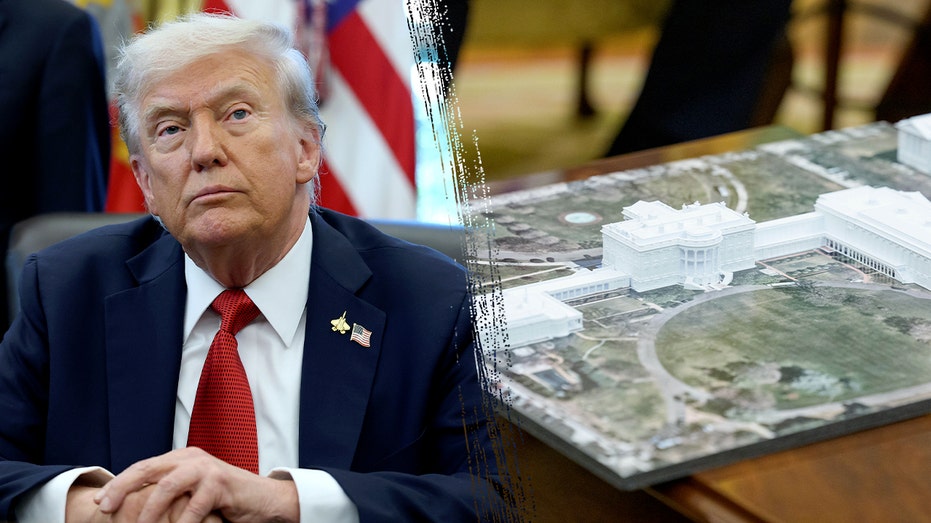
The legal battle over the proposed 90,000‑square‑foot White House ballroom is being framed as a clash between national security and historic preservation. In reality, it’s a referendum on something much larger: how far presidents can go in reshaping the physical and symbolic heart of American democracy, and how much public scrutiny they are willing to accept while doing it.
When the Trump administration tells a federal court that pausing construction would undermine national security, it is elevating a design and legacy project into the realm of security emergency. Preservation advocates counter that rushing ahead risks permanently distorting the architectural balance of the White House and sidelining the public’s role in decisions about its most iconic civic space. Beneath that conflict is a deeper struggle over transparency, process, and the creeping militarization of how the presidency justifies its own prerogatives.
The Bigger Picture: A Long History of Presidents Remodeling Power
The White House has never been static. It has been burned, rebuilt, gutted, expanded, and reimagined repeatedly in ways that reflected the priorities of each era’s leaders:
- Harry Truman (1948–1952) oversaw a full interior reconstruction when the mansion was found structurally unsound. The exterior walls remained, but the inside became essentially a new building.
- Dwight Eisenhower and later administrations expanded the Executive Office complex, particularly the Old (now Eisenhower) Executive Office Building, to accommodate the postwar growth of the federal bureaucracy and national security state.
- John F. Kennedy and Jacqueline Kennedy turned the White House into a curated museum of American art and history, intertwining cultural prestige with political power.
- Richard Nixon created the modern Situation Room concept—integrating high-tech surveillance and command capacities directly into the presidential workspace during the Cold War.
- Post‑9/11 presidents expanded hardened security perimeters, added barriers, and quietly upgraded bunkers and command facilities, reflecting the permanent emergency mindset of the War on Terror.
In other words, every significant alteration has been about more than aesthetics. Each era has used bricks, steel, and square footage to encode its view of the presidency—imperial, technocratic, cultural, or securitized. A 90,000‑square‑foot ballroom, the largest exterior change in eight decades, fits squarely into that tradition. The key question is what kind of presidency it concretizes.
What This Really Means: National Security as a Design Argument
The Trump administration’s filing leans heavily on a Secret Service declaration: the East Wing has been demolished; below‑grade work is underway; stopping construction now, they argue, would leave the complex unable to meet “safety and security requirements” for protecting the president. That framing does three important things.
1. It converts a political choice into a security necessity
By tying the project’s continuity to the Secret Service’s “statutory obligations,” the administration is effectively saying: this is no longer just an elective architectural project; it is embedded in how we keep the president alive. Once a project is framed as security‑critical, courts, agencies, and even political opponents face a higher bar to challenge it. Few judges want to be blamed if a future threat occurs after they ordered a security‑related pause.
2. It narrows the space for public participation
The National Trust for Historic Preservation argues that pausing is necessary to ensure full review by the National Capital Planning Commission and the U.S. Commission of Fine Arts, and to allow public comment. The administration insists those reviews are “forthcoming” and that above‑grade work won’t begin until April 2026, portraying the lawsuit as premature.
That dispute isn’t just procedural. It’s about when public oversight is meaningful. For a project of this scale, underlying structural work, subterranean changes, and the functional program of the building lock in critical choices long before anything rises above ground. The later the reviews, the more they risk becoming rubber stamps on decisions already made in concrete and rebar.
3. It normalizes invoking security to shield controversial presidential projects
Over the last two decades, “national security” has become a catch‑all justification for executive secrecy, from surveillance programs to drone strike authorities. Extending that logic to a massive representational space—a ballroom used for state events, donor galas, and high‑profile gatherings—blurs the line between protecting the president and protecting a president’s preferred image and legacy project.
Why Preservationists Are Alarmed: Scale, Symbolism, and Precedent
The National Trust and the Society of Architectural Historians aren’t objecting to a new coat of paint. They’re warning that a 90,000‑square‑foot addition risks dwarfing the Executive Residence and upsetting the “classical balance” of the White House campus. In architectural terms, the complaint is about massing, proportion, and hierarchy.
For over two centuries, the White House has symbolized a particular idea: the president as a citizen‑leader occupying a grand but not palatial home. The scale is dignified but legible; it is meant to be seen as a house, not a palace. A ballroom of this size—roughly the footprint of a mid‑size convention center annex—pushes that symbol toward something different: a presidential complex built for large‑scale spectacle, donor events, and show‑of‑force diplomacy.
Preservationists also see precedent. If one administration can make the most significant exterior change in more than 80 years primarily on its own terms, future presidents are more likely to treat the White House grounds as a quasi‑personal campus, remade every few terms to reflect their tastes, ambitions, or political needs.
Follow the Money: Private Donors and the Blurring of Public and Personal Space
The funding story is more consequential than it may appear. The project’s cost has climbed from an estimated $200 million to at least $300 million. The Trump team claims it will be funded “100% by me and some friends of mine.” Even if that were strictly accurate—and in practice, such projects almost always intersect with public resources, security spending, or maintenance budgets—the optics are stark.
When private donors underwrite permanent modifications to the seat of the presidency, several issues arise:
- Influence and access: Large donors who finance a signature presidential project gain symbolic ownership and often physical access to the space they built. That access can translate into political leverage, especially when the space is a high‑visibility venue for events.
- Public accountability: When taxpayers fund major alterations, there are statutory checks—procurement rules, oversight bodies, and explicit Congressional appropriations. When private money flows in, the formal oversight can be weaker, and disclosure less complete.
- Legacy capture: A privately funded, permanent structure on public ground can cement one president’s design vision long after they leave office, effectively privatizing a portion of the national architectural narrative.
We’ve seen smaller‑scale versions of this dynamic before—private donors funding presidential libraries, specific rooms, or restoration projects. But a $300 million, security‑entangled ballroom on the main White House campus takes this trend to another level.
Expert Perspectives: Security vs. Stewardship
Security experts tend to view the question through a narrower lens: does the construction plan, as currently designed, leave any period during which the president is less well‑protected in the event of an attack? If parts of the East Wing are demolished and temporary protections are incomplete, the Secret Service’s risk models will naturally treat delay as dangerous. That’s the logic reflected in the government’s filing.
Architectural historians and preservation lawyers approach it from a different angle: what procedures ensure that the permanent visual and spatial impact on the White House is fully understood and debated before it becomes irreversible? For them, early intervention is not obstruction; it’s the only stage at which substantive design changes are still possible.
The collision between these two worldviews is what’s showing up in court: security’s bias toward continuity versus preservation’s insistence on deliberate, inclusive process.
Data & Evidence: How Unusual Is This?
- Scale: A 90,000‑square‑foot addition is larger than many entire federal office buildings in downtown Washington. The existing White House residence is roughly 55,000 square feet; the ballroom as proposed would be well over that.
- Cost escalation: A 50% jump from $200 million to at least $300 million before above‑ground construction even begins is a red flag in federal project management; such early cost inflation often signals underestimated complexity or scope creep.
- Historical rarity: The Society of Architectural Historians’ claim that this is the most significant exterior change in more than 80 years is consistent with the fact that, since the Truman reconstruction, the White House has been treated primarily as a carefully stewarded historic site, with major additions occurring in less visually disruptive ways.
Looking Ahead: What to Watch
The lawsuit’s outcome will shape more than one building project. Several broader trajectories are in play:
- Judicial deference to security claims: If the court accepts the administration’s argument that even a temporary pause is incompatible with the Secret Service’s mandate, it could set a precedent: once a project is underway and labeled security‑relevant, it becomes effectively insulated from emergency challenges, even when other statutory reviews are incomplete.
- The timing and rigor of design reviews: How substantive will the upcoming submissions to the National Capital Planning Commission and the Commission of Fine Arts be? Will these bodies have genuine latitude to demand changes, or will they face a fait accompli shaped by already completed underground work?
- Future presidents’ ambitions: A successful, privately backed megaproject on the White House grounds may embolden future administrations to pursue similarly grand, donor‑supported expansions—further blurring lines between public stewardship and presidential branding.
- Public narrative: If the story crystallizes in the public mind as “Trump builds personal palace” versus “experts nitpick security upgrades,” that will shape political incentives for or against large‑scale modifications to civic landmarks going forward.
The Bottom Line
This ballroom isn’t just another construction project; it’s a test of whether the physical presidency can be reshaped on a security fast‑track, underwritten by private money, and only lightly filtered through public oversight. The clash between the Trump administration and preservation advocates will help determine whether the White House remains a carefully balanced symbol of republican leadership—or evolves into a more overtly monumental complex, reflecting an increasingly imperial conception of the office.
Topics
Editor's Comments
One aspect of this story that deserves more scrutiny is the subtle but powerful shift in how we treat the White House itself. Historically, the building has been framed as a trust—a national asset temporarily occupied by any given administration. In this case, the combination of private funding, a security‑driven justification, and the sheer scale of the project nudges the White House toward something closer to a customizable executive campus. That shift matters because architecture outlasts politics. Even if this project never fully materializes, the legal and rhetorical precedents it sets—using security to fast‑track permanent changes, inviting donors to co‑author the presidential environment—could be picked up by future presidents with very different agendas. We should be asking not just whether this ballroom is aesthetically appropriate, but whether we are comfortable with a model in which the boundaries between public stewardship and personal legacy projects are increasingly porous at the very heart of American democracy.
Like this article? Share it with your friends!
If you find this article interesting, feel free to share it with your friends!
Thank you for your support! Sharing is the greatest encouragement for us.