“It’s the Guns”: How a College Coach’s Outburst Exposes America’s New Normal on Campus

Sarah Johnson
December 15, 2025
Brief
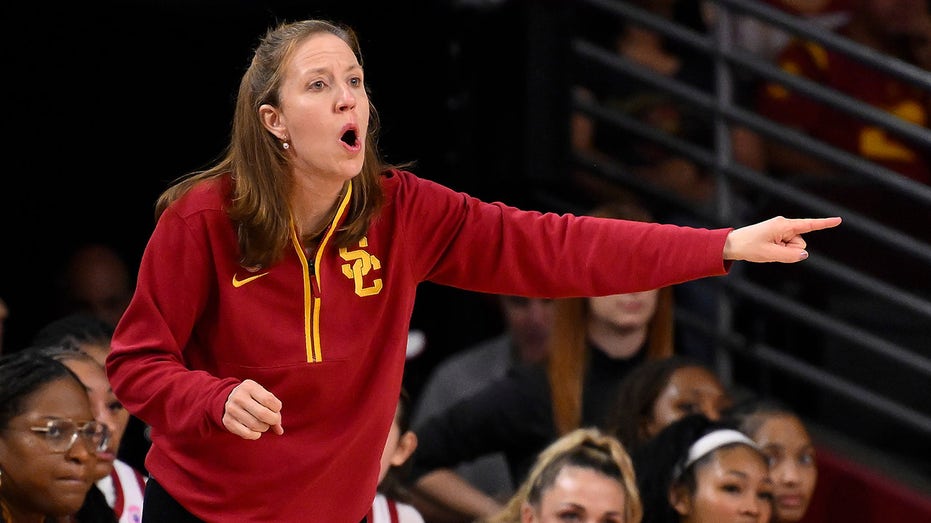
USC coach Lindsay Gottlieb’s raw reaction to the Brown University shooting exposes how gun violence is reshaping college life, sports culture, and the national debate over America’s uniquely deadly status quo.
“It’s the Guns”: Why a College Coach’s Outburst Captures a Turning Point in America’s Gun Debate
When USC women’s basketball coach Lindsay Gottlieb opened her postgame press conference not with reflections on a 28-point loss, but with fury about a deadly shooting at her alma mater, Brown University, she crossed an invisible line in American public life. Her blunt declaration — “It’s the guns. We’re the only country that lives this way.” — is more than an emotional reaction. It’s a sign that gun violence is now so pervasive that even traditionally apolitical spaces like college sports are being pulled into the national reckoning.
To understand why this moment matters, we have to look beyond Providence and beyond one coach’s frustration. This isn’t just about another campus shooting; it’s about how normalized mass violence has become, how it’s reshaping what it means to be a student, a parent, a fan — and how people with platforms outside politics are starting to refuse the script of silence.
How We Got Here: Campus Shootings and the American Exception
Gun violence on or near college campuses isn’t new in the United States, but its trajectory tells a story of escalation. The 1966 University of Texas tower shooting is often remembered as a grim starting point for modern campus massacres. Since then, events like Virginia Tech (2007), Umpqua Community College (2015), and Michigan State (2023) have become tragic milestones in a pattern that no other wealthy democracy experiences at this scale.
Data helps clarify the trend. According to the Gun Violence Archive, the United States has recorded over 600 mass shooting events in multiple recent years, defined as incidents in which four or more people are shot, not including the shooter. The U.S. gun homicide rate is roughly 25 times higher than that of other high-income nations, per research published in the American Journal of Medicine. For young people, the reality is even starker: firearms are now the leading cause of death for children and teenagers in the U.S., surpassing car accidents.
This is the context behind Gottlieb’s statement that “we’re the only country that lives this way.” Multiple cross-national studies back her up. High civilian gun ownership — about 120 firearms per 100 residents in the U.S., more than one per person on average — and relatively permissive gun laws distinguish the American environment from peer nations. Countries like Australia and the U.K., which undertook major gun reforms after single high-profile massacres in the 1990s, now see dramatically fewer gun deaths and virtually no mass shootings of the sort that punctuate American life.
Why a Basketball Coach’s Voice Matters
Gottlieb’s remarks stand out not because the core message is new, but because of who is saying it and where she’s saying it. College coaches occupy a unique space in American culture: part educator, part celebrity, part surrogate parent to student-athletes. Their influence stretches across campuses, fan bases, recruiting pipelines, and media ecosystems.
Historically, most coaches have avoided overt political or policy commentary, especially on hot-button issues like guns. The default has been to “stick to sports.” But that wall has been eroding for years. From NFL players kneeling during the national anthem to WNBA teams leading on racial justice campaigns, sports has become a central arena for civic debate. Gottlieb’s reaction fits into that broader pattern: the refusal to pretend the game exists in a vacuum.
Her comments also highlight the widening circle of people who are personally connected to these incidents. She talks about teammates whose children are sheltering in a library basement, parents frantically calling their kids, and families booking emergency flights. This is not an abstract policy dispute for her; it’s a direct assault on the idea that campuses are places of learning and growth, not sites of trauma.
“It’s the Guns”: Cutting Through the Usual Script
In the aftermath of shootings, public commentary tends to follow a familiar script: expressions of “thoughts and prayers,” debates about mental health, social media polarisation, and then a slow fade into the next crisis. Gottlieb’s three-word indictment — “It’s the guns” — rejects that script, and that’s part of why it hits so hard.
Her assertion reflects a well-established empirical debate. Numerous studies have found a strong relationship between the prevalence of guns and the rate of gun deaths, including suicides, homicides, and accidental shootings. While mental health issues, social isolation, and online radicalization matter, they’re not uniquely American phenomena. What is distinctive is the combination of easy access to firearms — especially high-capacity weapons — and a political system that has largely failed to respond to repeated tragedies with structural change.
Gottlieb’s emphasis that “parents should not be worried about their kid” on campus reaches into the core promise of higher education in the U.S. Universities have long marketed themselves as safe, contained environments where young adults can transition into independence. That social contract is under strain. The fact that a coach feels compelled to start a postgame press conference by assuring (and simultaneously failing to assure) parents speaks to the psychological toll of constant threat.
Sports, Media, and What Gets Attention
One striking part of Gottlieb’s remarks is her jab at the sports media cycle: “The college football cycle has been in the news a million times and are we going to report about this?” She’s pointing to the disproportionate attention given to coaching changes, NIL deals, and conference realignment compared to life-and-death issues affecting the same student populations.
There’s a broader media critique here. Major sports stories command massive coverage and engagement; violence affecting students — even when it produces double-digit casualties — may get intense but fleeting attention. The commodification of college athletics collides with the reality that the people filling stadiums and dorms are living in a security environment shaped by regular lockdowns, active shooter drills, and emergency text alerts.
By injecting gun violence into a sports press conference, Gottlieb is effectively forcing that conversation into a space where networks, sponsors, and fans can’t easily tune it out. It’s a strategic disruption, whether or not she intended it as such.
Expert Perspectives: Why Non-Political Voices Are Stepping In
Criminologists and public health experts have been warning for years that the U.S. is normalizing an abnormal level of violence. But they’ve also noted a shift: civic leadership is increasingly coming from unexpected quarters — survivors, teachers, students, and now coaches.
Gun policy researcher Dr. Daniel Webster has argued in multiple forums that “cultural change often precedes policy change.” When non-politicians start speaking plainly about the causes of gun violence, they help reshape what is socially acceptable to say — and what is politically viable to do.
Sports sociologists point out that athletes and coaches have large, diverse audiences that cut across partisan lines. A message delivered in a postgame presser reaches people who might never read a policy paper or attend a town hall. That doesn’t automatically translate into legislation, but it does erode the idea that gun regulation is a fringe or partisan concern.
What’s Being Overlooked: The Hidden Curriculum of Fear
Most coverage of campus shootings focuses on the immediate casualties and the law enforcement response. Less discussed is the long-term “hidden curriculum” students absorb: that public spaces are inherently dangerous; that any loud noise might be a gunshot; that safety is fragile and temporary.
For student-athletes, this is layered on top of already intense pressures. They juggle academics, training, travel, and public performance under constant surveillance from social media. Adding the risk of real physical danger — not just in nightlife or off-campus neighborhoods, but on quads and in libraries — alters the mental health landscape in ways that universities are only beginning to fully reckon with.
Research on students exposed to campus shootings shows elevated rates of anxiety, depression, and PTSD symptoms. Even those not physically present at the event can experience a sense of chronic vulnerability. When a coach like Gottlieb publicly acknowledges the fear and uncertainty parents and students feel, she’s giving voice to a reality many are living but few in authority want to name so bluntly.
Where This Could Lead: From Press Conferences to Policy Pressure
It would be naïve to suggest that one coach’s comments will reshape national gun policy. But moments like this can contribute to broader shifts along several fronts:
- Campus-level reforms: Brown and other universities are likely to face renewed pressure to review their security protocols, mental health resources, and emergency communication systems. Students and faculty will demand a say in how safety strategies are developed.
- Conference and NCAA responses: As incidents accumulate, athletic conferences and the NCAA may be pushed to address gun violence in more formal ways — whether through public statements, partnerships with advocacy groups, or mental health initiatives.
- Cultural normalization of speaking out: Gottlieb’s comments may embolden other coaches and athletes to address gun violence without couching it in vague language. If “it’s the guns” becomes a more commonly heard statement from respected figures in sports, it shifts the Overton window around what’s acceptable in mainstream discourse.
- Parent and donor pressure: Parents paying high tuition — and donors funding athletic facilities — are unlikely to remain silent if they feel universities are not adequately responding to repeated threats. Financial stakeholders can be powerful agents of change.
On the political level, any immediate impact is speculative. But history shows that seemingly small cultural moments can accumulate into something larger. The anti-smoking movement, for example, wasn’t driven only by legislation; it was driven by a slow cultural turning where influential voices began to say out loud that the status quo was unacceptable.
The Bottom Line
The Brown University shooting is another entry in a long and devastating list. What makes this episode noteworthy is the way Lindsay Gottlieb used a sports microphone to say what many parents, students, and educators are already thinking: that the constant fear, the lockdown drills, and the emergency calls home are not inevitable features of modern life, but the consequence of a uniquely American relationship with guns.
Her fury is not a fully formed policy platform. It’s something more primal: a refusal to accept that this is normal. In a country where gun violence has become background noise, that refusal — spoken into a space usually reserved for box scores and bracket talk — may be the most important message of all.
Topics
Editor's Comments
What’s striking about Gottlieb’s comments is not just the substance but the setting. A blowout loss to UConn is precisely the kind of moment where a coach would normally retreat into clichés about effort and execution. Instead, she chose to foreground a shooting hundreds of miles away, effectively saying: none of this really matters if we can’t keep students alive. That choice, repeated by enough people in enough institutions, could start to erode the quiet resignation that surrounds gun violence in America. At the same time, we should be wary of over-romanticizing rhetorical courage. The U.S. is awash in powerful statements that rarely translate into policy shifts. The real test will be whether universities, conferences, and athletic associations move beyond press releases and actually leverage their considerable economic and cultural clout to push for specific changes. Until then, coaches like Gottlieb are, in some ways, doing the work that political leaders have refused to do: naming the problem plainly and insisting this is not an acceptable price of freedom.
Like this article? Share it with your friends!
If you find this article interesting, feel free to share it with your friends!
Thank you for your support! Sharing is the greatest encouragement for us.