Minnesota COVID Meal Fraud: Political Fallout and Oversight Failures in Ilhan Omar's Somali Community

Sarah Johnson
December 5, 2025
Brief
A deep dive into Minnesota's $1B COVID meal fraud reveals systemic oversight failures, political implications for Rep. Ilhan Omar, and challenges in managing emergency aid within immigrant communities.
Unpacking the Minnesota COVID Meal Program Fraud: A Complex Interplay of Politics, Community, and Oversight Failures
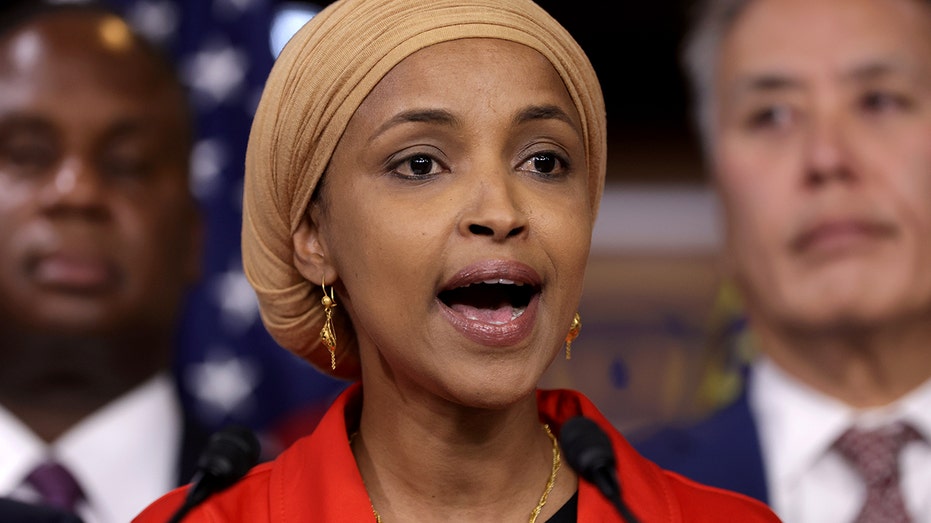
The $1 billion COVID-era meal fraud scandal in Minnesota's Somali community, involving allies of Rep. Ilhan Omar, represents more than a straightforward welfare abuse case. It exposes the deep vulnerabilities in emergency federal aid, the challenges of oversight in ethnically concentrated districts, and the political reverberations tied to identity and governance. Beyond the headlines lie systemic issues underscored by fast-tracked pandemic relief programs and fractured trust between officials and constituencies.
The Bigger Picture: Emergency Aid and Its Historical Context
Emergency relief funds aimed at feeding children during the 2020 pandemic were unprecedented in scale and speed. The MEALS Act, introduced by Rep. Omar, authorized federal aid critical to addressing school closures and food insecurity, providing roughly $250 million in Minnesota alone. Historically, welfare programs targeting marginalized communities have been both essential and contested — with prior scandals influencing how such programs are administered and policed. The Somali community in Minnesota, growing since the 1990s through large-scale resettlement, has faced economic hardships, linguistic barriers, and social exclusion, making them reliant on public aid but also vulnerable to exploitation given tight-knit communal networks.
The rapid launch of pandemic programs, intended to be lifelines, unfortunately came with diminished oversight. As Omar herself acknowledged, the acceleration of aid distribution resulted in inadequate guardrails. This echoes historical patterns where emergency funding mechanisms expand without proportional accountability, creating opportunities for fraud.
What This Really Means: Intersection of Politics, Community, and Fraud
The involvement of figures linked to Omar's inner circle — such as Salim Ahmed Said, a co-owner of Safari Restaurant, and Guhaad Hashi Said, a former campaign official — complicates the narrative. While no direct culpability has been proven against Omar, the political optics tethered to her Somali constituency have intensified scrutiny. The use of Feeding Our Future, the nonprofit organization at the fraud's center, highlights how trusted community intermediaries can be misappropriated, damaging the very networks meant to support vulnerable populations.
This scandal ultimately underscores tensions in governance where rapid policy implementation, ethnic community dynamics, and partisan politics collide. The Minnesota fraud has become a symbol exploited by political adversaries to question representation and communal loyalty, evidenced by inflammatory rhetoric from figures like former President Trump. Yet, it also reveals systemic deficiencies in infrastructure holding community programs accountable — a failure that transcends individual actions.
Expert Perspectives on Oversight and Community Impact
Dr. Fatima Yusuf, a sociologist specializing in immigrant integration, notes: "This is a cautionary tale about how marginalized communities, especially those with limited access to institutional knowledge, can be manipulated both internally and externally. The conflict arises not solely from fraud, but from the eroding trust between communities and public systems."
Michael Hartman, a former federal auditor, explains: "Pandemic aid programs were pushed through extraordinarily fast, creating what we call a 'compliance gap.' Organizations struggled to keep pace with changing rules and reporting requirements, which fraudsters exploited. The Minnesota case is unfortunately one of the largest, but reflective of national trends."
Data & Evidence: The Scale and Scope of Fraudulence
As of late 2025, over 78 defendants have been charged in this sprawling investigation, marking it as the largest pandemic relief fraud case in U.S. history. Key data points include:
- $250 million from federal and state child nutrition programs misappropriated, representing a substantial portion of Minnesota's COVID emergency aid.
- Expenditures linked to fraud included lavish personal purchases like a $2 million Minneapolis mansion and a $9,000 monthly Nordstrom shopping habit by one convicted individual.
- Feeding Our Future, now defunct, was the primary nonprofit portal funneling federal aid to meal providers, many of which later faced allegations of falsifying or inflating meal counts.
This financial footprint illustrates systemic vulnerabilities: billions in emergency aid moved through relatively unregulated community organizations without stringent checks.
Looking Ahead: Implications for Policy and Community Relations
The fallout prompts urgent reassessment for federal and state aid programs, particularly those targeting immigrant communities. Policymakers must balance swift disbursal against robust oversight frameworks tailored to community realities to prevent repetition. The House Oversight Committee investigation into Minnesota's government response and Governor Tim Walz's role exemplifies political demand for accountability.
Furthermore, trust restoration within the Somali community is critical. Public backlash and stigmatization risk deepening social divides, potentially reducing future engagement with public programs. Training, transparency, and community-centered monitoring mechanisms could be vital to rebuild confidence.
The Bottom Line
The Minnesota COVID meal fraud scandal is a multifaceted crisis revealing how well-intentioned emergency aid can become a loophole for exploitation when governance structures and community safeguards falter. It offers a pivotal case study in balancing rapid crisis response with sustained integrity, while navigating the sensitive politics of representation and immigrant community dynamics in America.
Topics
Editor's Comments
This investigation underscores a fundamental tension in public policy: the urgent need to deliver aid swiftly versus the imperative of maintaining stringent oversight and accountability. The pandemic introduced unprecedented urgency, and while the MEALS Act and related programs were well-intentioned, the breakdown in checks within a politically charged and socially complex environment had far-reaching consequences. It also highlights how political affiliations and ethnic identities can shape narratives around fraud, sometimes detracting from structural governance failures. As inquiries continue, the key challenge will be implementing reforms that protect vulnerable communities from both exploitation and prejudice, while restoring trust in public institutions. This case should serve as a catalyst for a deeper reevaluation of how emergency aid is structured and monitored in ethnically diverse regions.
Like this article? Share it with your friends!
If you find this article interesting, feel free to share it with your friends!
Thank you for your support! Sharing is the greatest encouragement for us.