Pepper Balls in Little Village: How Chicago Became a Test Case for Federal Power Over Sanctuary States

Sarah Johnson
December 17, 2025
Brief
Bovino’s return to Chicago and pepper-ball raids in Little Village reveal a deeper shift: federal border-style enforcement moving into sanctuary cities, testing limits of local democracy, civil rights, and public safety.
Border Crackdown in a Sanctuary State: What Chicago’s Pepper-Ball Raids Reveal About the Next Phase of U.S. Immigration Enforcement
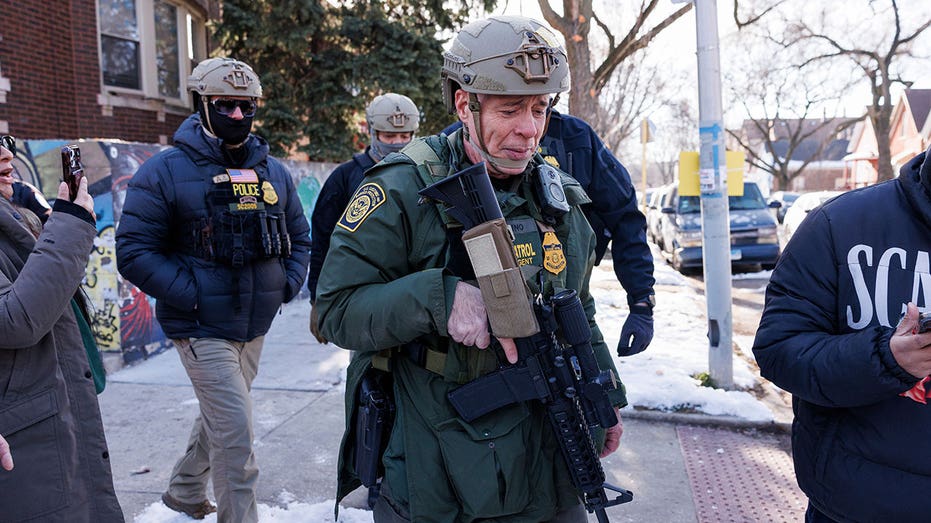
Border Patrol chief Gregory Bovino’s return to Chicago and the deployment of pepper balls in the Mexican‑American neighborhood of Little Village are not just another flashpoint in the immigration wars. They illuminate a deeper transformation in how federal power is being projected into so‑called sanctuary jurisdictions, how immigration enforcement is being militarized in urban communities far from the border, and how both parties are positioning themselves for the next phase of the national immigration battle.
Why this confrontation matters
The clash in Chicago brings together several volatile strands: the federal government’s claim to unrestrained immigration authority, state and local efforts to shield undocumented residents, the politicization of individual crimes committed by non‑citizens, and the use of force in immigrant neighborhoods that already carry a heavy policing burden. It’s a test of where the line now sits between federal supremacy and local self‑government – and whether immigration enforcement can increasingly bypass local democratic accountability altogether.
How we got here: From Obama raids to Trump blitz operations
To understand Operation Midway Blitz, it helps to see it as the latest iteration in a decades‑long expansion of interior immigration enforcement:
- Post‑9/11 securitization: The creation of the Department of Homeland Security (DHS) in 2002 reframed immigration as a security issue. Immigration and Customs Enforcement (ICE) and Customs and Border Protection (CBP) were empowered to treat immigration enforcement less as administrative law and more as quasi‑national security operations.
- Obama’s "felons, not families" era: Between 2009 and 2016, the Obama administration deported more than 3 million people, a record at the time. Programs like Secure Communities linked local jails to federal immigration databases, effectively deputizing local police. Backlash from cities and advocates spurred the rise of “sanctuary” policies that limited local cooperation.
- Trump’s interior enforcement surge: President Trump scrapped many enforcement priorities, widening the net to almost any undocumented person with a removal order or criminal record. Raids in places like Los Angeles and New York, and the deployment of tactical Border Patrol units to Portland and other cities during 2020 protests, signaled a willingness to use border‑style tactics inland.
- From border to inland cities: Historically, CBP’s presence diminished sharply beyond the 100‑mile border zone where it wields special powers. Under Trump, CBP and Border Patrol Tactical Units (BORTAC) began appearing in urban operations more frequently – a trend Operation Midway Blitz extends by treating Chicago, hundreds of miles from the southern border, as a forward operating environment.
Operation Midway Blitz, named after Katie Abraham, whose death is attributed to an undocumented driver, fits a familiar pattern: highlighting a tragic, high‑profile crime to justify broad dragnet operations. Data from multiple studies, including those published in Criminology and by the Cato Institute, have repeatedly found that immigrants, including undocumented immigrants, are less likely to commit violent crimes than native‑born citizens. Yet single cases with tragic outcomes often drive policy far more than aggregate risk.
What’s really at stake: Federal supremacy vs. local democracy
The Chicago showdown is fundamentally a power struggle between Washington and a state that has formally embraced sanctuary policies.
Illinois’ sanctuary posture. Illinois has spent years insulating immigrants from direct contact with federal enforcement. Recent legislation signed by Gov. JB Pritzker extends protections in courthouses, hospitals, campuses, and other public buildings – precisely the kinds of spaces where ICE and border agents have historically conducted "collateral" arrests. These protections seek to ensure that seeking medical care, attending school, or appearing in court doesn’t become a pipeline to deportation.
Federal end‑run around local limitations. Chicago’s mayor and Illinois’ governor can restrict local police cooperation, but they cannot lawfully block federal agents from operating on public streets. By redeploying Bovino and additional Border Patrol personnel without notifying state leaders, DHS is signaling that it views local sanctuary protections as political nuisances, not binding constraints.
This is not entirely new. During the Trump administration, the Justice Department sued several jurisdictions over sanctuary policies and threatened to withhold federal grants. What’s different now is the operational escalation: pepper balls fired in a dense immigrant neighborhood, reported warrantless detentions in public spaces, and visible patrols meant as much to send a message as to make arrests.
From law enforcement to political theater
Officially, DHS frames Operation Midway Blitz as targeting “criminal illegal aliens terrorizing Americans in sanctuary Illinois.” But the operational and communication choices reveal a heavy political overlay.
- Symbolic geography: Little Village is one of the most recognizable Mexican‑American neighborhoods in the Midwest – a cultural and economic hub, but also a recurring site of enforcement. Deploying agents there guarantees attention and sends a deterrent message far beyond the specific individuals targeted.
- Visible force: The use of pepper balls – a less‑lethal but highly visible crowd‑control tool – in a residential neighborhood shifts the optics from investigative work to crowd suppression. It blurs the line between immigration enforcement and riot control.
- Personalization of enforcement: Bovino, already cast by critics as a symbol of “aggressive” Trump‑era crackdowns, becomes a character in a larger narrative. For supporters, he is a tough enforcer taking on crime in a supposedly lawless sanctuary city. For opponents, he personifies federal overreach and racialized policing.
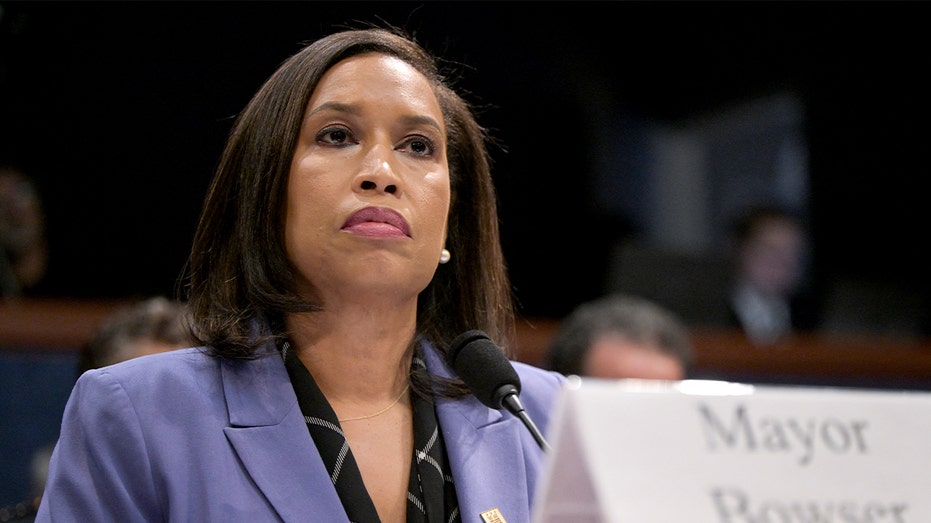
As Chicago Mayor Brandon Johnson’s statement underscores, local officials frame these operations as not just policy disagreements but as existential threats to community trust: agents allegedly "indiscriminately targeting individuals — without warrants — and intentionally showing up in public spaces to intimidate and instill fear." Whether every detail of that claim bears out, the perception of indiscriminate targeting can be as consequential as the reality for families deciding whether it’s safe to go to work, school, or a clinic.
Community trust vs. crime rhetoric
The federal justification hinges on crime: targeting “criminal illegal aliens.” That sounds narrow, but in practice the category can be expansive, including minor offenses and decades‑old convictions. Historically, large ICE operations have routinely picked up “collateral arrests” – people who weren’t the initial targets but happened to be present.
The broader research picture complicates the crime narrative:
- Studies in Texas, a state that tracks offenders by immigration status, have consistently shown lower conviction rates for undocumented immigrants than for native‑born residents.
- Research from the University of California and others has found no credible evidence that sanctuary policies increase crime; some studies suggest they may modestly reduce crime by improving cooperation with police.
- Medical and legal groups warn that aggressive enforcement in public spaces shrinks the “civic space” immigrants are willing to occupy – leading to under‑reporting of crimes, lower turnout at schools, and worse public health outcomes.
By staging highly visible, forceful operations, federal agencies may undermine the very community cooperation needed to address serious crime. That tension is at the heart of Illinois’ decision to shield hospitals, courthouses, and campuses: the state is betting that long‑term safety is better served by ensuring immigrants feel safe accessing essential institutions, even if that means some removable non‑citizens avoid detection.
Why the lack of notice is significant
Gov. Pritzker’s statement that he was not informed of Bovino’s redeployment is more than a process complaint; it signals a breakdown in cooperative federalism. Typically, when federal law enforcement undertakes sensitive operations in a major city, there is some level of coordination with state and local authorities, even in politically tense climates.
By bypassing Illinois leadership, DHS is asserting that immigration enforcement is exclusively a federal prerogative requiring no local buy‑in. In the short term, that may give agents more operational freedom. In the long term, it risks:
- Legal challenges: Expect litigation over alleged warrantless arrests, violations of state sanctuary statutes, or potential civil rights abuses, particularly if video evidence emerges of indiscriminate use of force.
- Policy counter‑moves: States may respond by further restricting how local agencies share information, access local facilities, or assist any federal task forces connected to immigration enforcement.
- Institutional distrust: Local officials, from mayors to police chiefs, may become more reluctant partners in other federal initiatives if they feel blindsided on high‑profile operations.
What experts see beneath the surface
Legal scholars and security experts point to several underlying trends this episode highlights.
First, the use of Border Patrol personnel in inland cities threatens to normalize an expansive reading of CBP authority. Historically, CBP operated primarily near borders and ports of entry, with special powers in a 100‑mile zone. As Professor Karen Musalo of UC Hastings has warned in other contexts, “once tactical border units are routinely deployed inland, the conceptual wall between border enforcement and domestic policing begins to erode.”
Second, civil rights advocates worry about precedent. The more frequently federal agents use crowd‑control tools in immigrant neighborhoods under the banner of immigration enforcement, the easier it becomes to transfer those tactics to other domestic missions. The 2020 deployment of BORTAC in Portland during protests is a template: a border agency exercising domestic public order functions.
Third, policy analysts note the electoral calculus. Operation Midway Blitz was branded around a specific victim and a sanctuary state. That framing is politically potent: it draws a straight line from a tragic crime to a policy opponent – in this case, Illinois’ immigrant protections – and then to a federal show of force. It allows federal officials to argue that if local leaders won’t “protect” citizens by cooperating, Washington will simply go around them.
Looking ahead: What to watch in Chicago and beyond
Several key questions will determine how consequential this episode becomes:
- Escalation or containment? If operations continue, do we see broader sweeps, more use of force, or the targeting of sensitive locations covered by Illinois’ new law? That would set up direct legal confrontation.
- Data transparency: Will DHS disclose how many people are arrested, what charges they face, and how many had serious criminal convictions versus immigration‑only violations? Without transparency, crime‑focused rhetoric is hard to verify.
- Copycat operations: Do similar blitz campaigns appear in other sanctuary jurisdictions – for example, in California, New York, or Washington state – suggesting a national strategy rather than a one‑off in Illinois?
- Court rulings: As challenges to both state sanctuary laws and federal operations move through the courts, judges will refine the boundaries of how far states can go in shielding residents, and how aggressively federal agents can operate without local consent.
At a deeper level, the Chicago raids are another reminder that in U.S. immigration policy, the border is no longer at the edge of national territory. It increasingly runs through city neighborhoods, courthouses, hospitals, and picket lines – wherever federal agents choose to draw it.
The bottom line
Operation Midway Blitz in Chicago is not just an immigration story; it’s a governance story. It raises hard questions about how far the federal government can go in projecting paramilitary‑style enforcement into communities that have democratically chosen a different approach, and what happens when individual tragedies are used to justify broad, fear‑inducing campaigns.
For immigrant families in Little Village, the message is immediate and personal: the risk of encountering armed federal agents has arrived at their doorstep. For the rest of the country, Chicago offers a preview of what the next generation of immigration battles may look like – less about border walls and more about who controls the streets of America’s cities.
Topics
Editor's Comments
One underexamined dimension of Operation Midway Blitz is labor politics. The mayor’s mention of agents appearing at a Teamster picket line hints at a convergence between immigration enforcement and labor disputes that should set off alarm bells across the political spectrum. Historically, employers and sometimes authorities have used immigration threats to chill organizing, from garment factories in Los Angeles to meatpacking plants in the Midwest. If Border Patrol’s presence coincides with or is perceived as targeting labor actions, it could deter both immigrant and citizen workers from asserting basic rights. That risk exists even if DHS did not intend to intervene in the picket line itself; the mere sight of armed federal agents in that context sends a powerful message. As Chicago and Illinois push pro-worker and pro-immigrant agendas, federal operations that intersect with union activity may become a new front in the broader struggle over who gets to define “public safety” and whose voices count in the workplace and in the streets.
Like this article? Share it with your friends!
If you find this article interesting, feel free to share it with your friends!
Thank you for your support! Sharing is the greatest encouragement for us.