Behind D.C.’s Crime Stats War: Power, Autonomy, and the Battle to Control the Narrative

Sarah Johnson
December 16, 2025
Brief
D.C.’s clash over allegedly manipulated crime stats is less about spreadsheets and more about power, autonomy, and 2026 politics. This analysis unpacks the history, incentives, and high-stakes implications.
Why the Battle Over D.C.’s Crime Numbers Is Really a Fight Over Power, Narrative, and 2026
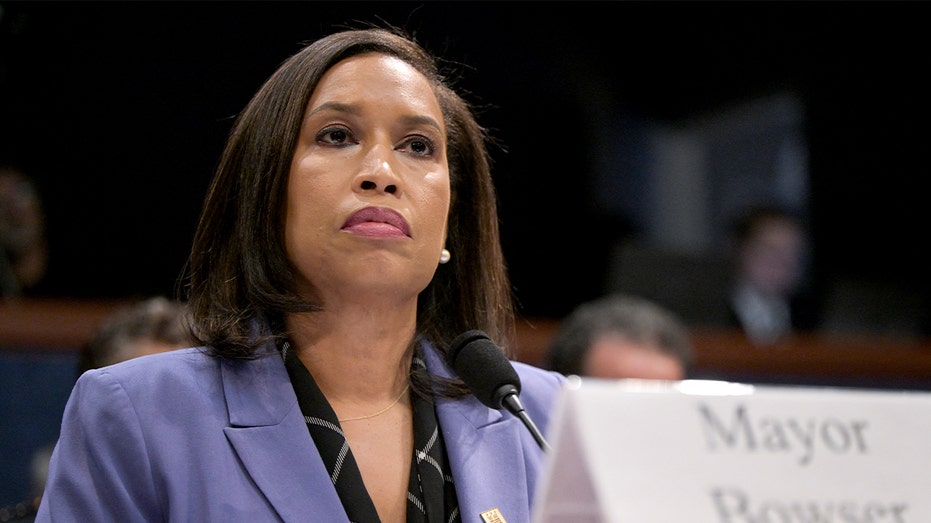
Washington, D.C.’s latest clash between Mayor Muriel Bowser and the House Oversight Committee over allegedly manipulated crime statistics is not just a technical dispute about data quality. It’s a proxy war over who controls the story of crime in the nation’s capital, who sets the agenda on policing, and how both parties position themselves heading into a high-stakes election cycle and renewed debates over crime policy.
The Oversight Committee’s interim report alleges that outgoing Metropolitan Police Department (MPD) Chief Pamela Smith oversaw a system that pressured commanders to downgrade offenses and keep certain crimes off public-facing reports. Bowser calls the report “politically motivated,” arguing that Congress cherry-picked testimony, skipped key witnesses, and rushed to a preordained conclusion.
Underneath those dueling narratives lie three bigger questions: How reliable are U.S. crime statistics anywhere, not just in D.C.? How much of this fight is about the unique constitutional status of the District, where Congress can override local decisions? And how are both parties weaponizing crime numbers to speak to their national bases?
The Bigger Picture: Crime Data Has Always Been Contested Ground
Disputes over crime reporting are as old as modern policing. The FBI’s Uniform Crime Reporting (UCR) program, launched in the 1930s, was an attempt to standardize crime data nationally. But from the start, the FBI has warned that these numbers are not a full count of crime—just a record of incidents reported to and recorded by police. Local agencies have wide discretion in how they classify offenses.
Two historical patterns matter here:
- Classification disputes are common: Cities have repeatedly been accused of “downgrading” crimes—labeling aggravated assaults as simple assaults or attempted burglaries as criminal mischief—to keep key indicators down. New York City faced major scrutiny in the 2000s and early 2010s for alleged downgrading in its CompStat era; Chicago and Baltimore have faced similar questions.
- Politics drives interest in the numbers: Scrutiny tends to spike when crime becomes a partisan wedge issue. In the late 1980s and early 1990s, rising violence fueled the “tough on crime” era. More recently, the post-2020 national rise in homicides and carjackings has been leveraged to attack progressive prosecutors, police reform efforts, and Democratic-led cities.
D.C. is uniquely vulnerable in this environment. Unlike other cities, it is simultaneously a local jurisdiction and a federal symbol. Congress can review and block D.C. legislation, veto local criminal code reforms, and haul city officials in for hearings. That structural imbalance of power makes any dispute over policing or crime statistics instantly national and inherently political.
What This Really Means: Three Battles in One
1. A technical fight over crime reporting – with real stakes
The Oversight Committee’s interim report, based on eight transcribed interviews with MPD district commanders, describes a “toxic management environment” under Chief Smith, where accuracy allegedly gave way to optics. Commanders say they were pressured to downgrade offenses or avoid classifications that would show up in the city’s daily crime report.
If those allegations are accurate and systemic—not just isolated disputes—they would undermine public trust in D.C.’s crime data at a moment when perceptions of public safety are already fragile. That would have practical consequences:
- Policy misfires: Flawed data can distort resource allocation. If certain categories of crime appear to decline because of reclassification, hot spots may receive fewer officers, fewer prosecutors, or less intervention funding than they actually need.
- Accountability gaps: Crime numbers drive electoral narratives and internal performance metrics. If they’re gamed, both voters and oversight bodies lose a core lever of accountability.
- Federal funding risks: Some grants and federal partnerships are tied to crime trends and data quality standards. Serious integrity concerns can invite audits or conditional funding.
Bowser’s letter pushes back on both methodology and fairness. She notes that the committee did not interview Smith or any assistant chiefs before issuing its findings and points out that 20 of the 22 critical block quotes came from just two commanders—suggesting a narrow evidentiary base. That critique matters because crime-reporting systems are complex, and individual commanders may have their own institutional or personal grievances.
2. A constitutional and ideological struggle over who runs D.C.
This investigation cannot be separated from a longer-running fight over D.C. autonomy and statehood. Congress has repeatedly intervened in local criminal justice policy—most recently when it moved to block D.C.’s attempt to modernize its criminal code. Republicans frame such interventions as necessary to protect federal workers, tourists, and national institutions. Many city leaders and residents see them as paternalistic and anti-democratic.
The report arrives “against the backdrop” of a federal crime crackdown and the deployment of federal law enforcement and the National Guard in the District—framed as a response to an “epidemic of crime.” That move reinforced a narrative that D.C. cannot manage its own public safety without federal intervention.
In that light, the Oversight Committee’s report serves a dual function: highlighting alleged mismanagement of crime statistics and building a broader case that local officials are not trustworthy stewards of public safety. That argument is directly relevant to ongoing debates over D.C. statehood and the scope of congressional oversight.
3. A narrative battle as 2024–2026 politics heat up
Crime remains one of the most potent electoral issues. Even as homicide rates have fallen from their 2020–2021 peaks in many cities, public perception often lags years behind the data. Polling consistently shows that Americans believe crime is rising nationally, even when local numbers improve.
In that context:
- Republicans see D.C. as a symbol of “Democratic mismanagement”—a city controlled by Democrats, with highly visible homelessness, property crime, and high-profile violent incidents near federal buildings. Allegations of fudged crime stats bolster a message that blue cities are both unsafe and dishonest about it.
- Democrats in D.C. are trying to show that they have reversed the 2023 spike in violent crime and homicides through targeted interventions. Bowser’s defense of Chief Smith as “integral” in reducing that spike is part of that narrative: she’s signaling that the city has acted aggressively and responsibly.
The question of whether crime numbers are “real” becomes politically explosive because it goes directly to whose narrative—crime is out of control vs. crime is being responsibly managed—will define the next cycle.
Expert Perspectives: Data Integrity, Policing, and Oversight
Criminologists and policing experts I’ve spoken with over the years tend to agree on two key points: crime statistics are imperfect but indispensable, and political pressure is almost always present in how they’re produced.
Professor Franklin Zimring, a leading scholar of crime trends, has long argued that while police data can be manipulated at the margins, broad trends—especially in serious violent crime—are hard to fake over time because they’re cross-checked by other metrics like hospital admissions, victimization surveys, and media reporting.
At the same time, former big-city chiefs point to a real risk of command pressure. The CompStat revolution in the 1990s, which used real-time data to hold commanders accountable, produced enormous gains in crime-control capacity but also created incentives to “make the numbers look good.” The key difference between legitimate reclassification (catching errors, applying new coding standards) and illegitimate downgrading (intentionally softening categories for optics) is intent—and intent is hard to prove without rigorous, independent auditing.
Experts also stress the importance of sampling and process in investigations like the one conducted by the Oversight Committee. Interviews with eight commanders—who may be a small, unrepresentative subset of MPD leadership—can reveal serious problems, but they don’t necessarily capture department-wide practice. Failure to interview the chief or assistant chiefs before publishing an interim report is the kind of procedural omission that, in other contexts, congressional leaders would call out if it came from a local agency.
Data & Evidence: What We Know About Crime and Confidence
To understand the stakes, it helps to zoom out to national trends and local context:
- Nationally, homicides surged by nearly 30% in 2020, the largest one-year increase on record, before plateauing and then declining in many jurisdictions in 2022–2023. Early analysis for 2024 suggests continued declines in violent crime in many cities, though not uniformly.
- In major cities, concerns about carjackings, retail theft, and random assaults have remained high, even where total crime counts have stabilized or fallen. Media coverage and viral videos amplify the sense of disorder.
- Public trust in both police and institutions has been volatile since 2020. Surveys show that while confidence in law enforcement has recovered somewhat from post-George Floyd lows in some communities, trust is still fractured and sharply divided along partisan and racial lines.
Within that environment, accusations that a police department is massaging its numbers can be devastating, not only for the department but for elected officials who rely on those statistics to justify policy decisions. Bowser’s insistence that any official found intentionally downgrading crime will be “held accountable” is as much a message to the public as it is to Congress.
Looking Ahead: What To Watch
Several developments over the next 6–18 months will determine whether this controversy becomes a footnote or a defining chapter in D.C.’s public safety story.
- Independent auditing: Will MPD or the D.C. government invite an independent body—such as the D.C. Office of the Inspector General, the GAO, or an outside academic team—to conduct a systematic audit of crime classifications, not just commander recollections? Transparent methodology and publication of findings would do more to restore trust than dueling press releases.
- Follow-up by Congress: The Oversight Committee’s interim report suggests more hearings and possibly legislation. Those could range from targeted mandates on D.C. crime reporting to broader efforts to tighten federal standards for local police data. The tone—fact-finding vs. performative—is important to watch.
- Leadership transition at MPD: With Chief Smith set to depart, the next chief will inherit both the operational challenge of managing crime and the political challenge of demonstrating unassailable data integrity. Candidates’ positions on transparency, internal whistleblowing, and engagement with congressional oversight will be key signals.
- Public perception vs. data trend lines: If violent crime and homicides continue to fall in D.C., the temptation to declare victory will grow. But without credible, trusted data systems, those claims will remain vulnerable to skepticism from both Congress and residents.
The Bottom Line
This fight is not fundamentally about a single set of crime numbers; it is about who gets to define reality in the nation’s capital. For Republicans on the Oversight Committee, the narrative is that D.C. is unsafe and its leaders are hiding the truth. For Bowser and local officials, the story is about good-faith efforts to reduce crime being undermined by a rushed, politically framed investigation.
Both sides are operating in a broader national environment where crime statistics have become political weapons. The only durable way out is to depoliticize the data itself: adopt transparent, independently audited reporting standards that neither Congress nor local officials fully control. Until that happens, every spike—or decline—in crime will be filtered through competing partisan narratives, and the public will be left wondering which numbers, if any, they can trust.
Topics
Editor's Comments
One under-explored dimension of this controversy is how much both sides rely on the public’s limited understanding of crime data to advance their narratives. Congressional critics can wield precise-sounding accusations—like ‘systematic downgrading’—without fully explaining what percentage of cases are affected, which categories are in dispute, or how those alleged changes compare to national norms. City officials, for their part, often respond by emphasizing cooperation and complexity rather than committing to truly independent audits that might expose embarrassing flaws but ultimately build trust. A contrarian way to view this fight is to see it less as an aberration and more as a predictable symptom of a system that places enormous political weight on imperfect local statistics. As long as mayors are judged on year-to-year changes in a handful of crime categories, and congressional committees can score national talking points by spotlighting urban failings, the incentives to spin, cherry-pick, or overstate problems will remain. The more interesting question is whether any jurisdiction—especially one as politically exposed as D.C.—is willing to cede partial control of its crime data narrative to independent auditors and accept the short-term pain that genuine transparency might bring.
Like this article? Share it with your friends!
If you find this article interesting, feel free to share it with your friends!
Thank you for your support! Sharing is the greatest encouragement for us.