Beyond the Headlines: What the Rob Reiner Tragedy Reveals About Family, Mental Health, and Polarized America

Sarah Johnson
December 15, 2025
Brief
Rob and Michele Reiner’s deaths are more than a Hollywood crime story. This analysis explores parricide, mental health failures, media ethics, and the political weaponization of a celebrity family’s tragedy.
The Rob Reiner Tragedy: When Celebrity, Mental Health, and Polarized Politics Collide
News that iconic director Rob Reiner and his wife Michele were found dead in their Brentwood home, with their son Nick in custody, has been framed so far as a shocking Hollywood crime story. But underneath the headlines lies a much more complex and troubling narrative about untreated mental illness, family systems under stress, the pressures of fame, and the way polarized politics turns human beings into symbols.
To understand why this story matters, we have to look past the crime-scene details and into the deeper forces that shape families like the Reiners – and the larger culture that will now battle over what their deaths “mean.”
A Family in the Spotlight – and Under Pressure
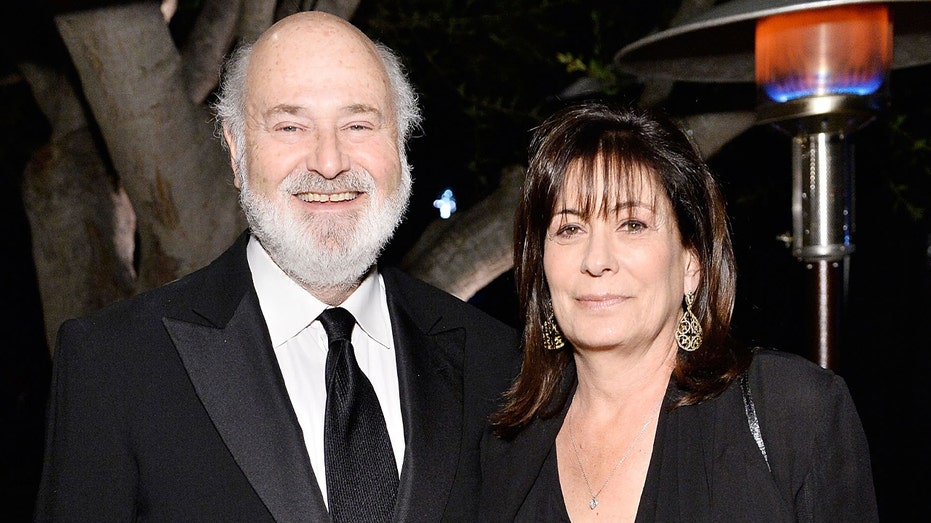
Rob Reiner was not just another Hollywood director; he was a cultural institution. From the 1970s breakout role of “Meathead” in All in the Family to directing When Harry Met Sally, Stand By Me, and The Princess Bride, his work helped define modern American storytelling. In recent years, he also became an outspoken liberal activist, sharply critical of Donald Trump and warning of rising autocracy in the U.S.
That prominence matters for two reasons. First, families living at that level of visibility inhabit a different kind of pressure cooker: constant public scrutiny, wealth that doesn’t insulate from emotional turmoil, and a heightened fear of stigma if a family member struggles with addiction, mental illness, or instability. Second, Reiner’s political identity means his death will not be allowed to remain purely personal; it will inevitably be pulled into the vortex of America’s culture wars.
Police say the couple appear to have suffered stab wounds, and their son Nick is in custody with a $4 million bond. While the criminal process is just beginning and allegations remain unproven, the very possibility of a son killing his parents evokes one of the most disturbing, rare forms of domestic violence: parricide.
Parricide: A Rare Crime Usually Rooted in Dysfunction or Illness
Parricide – the killing of a parent by their child – is statistically rare but psychologically revealing. Criminological studies in the U.S. estimate that children are suspects in roughly 2–4% of homicides of parents each year. The cases that make national headlines – from the Menendez brothers in the 1990s to occasional high-profile cases involving celebrity or elite families – represent only a tiny fraction, but they show recurring patterns.
Research by forensic psychologist Dr. Kathleen Heide has identified three broad categories of parricide offenders:
- Severely abused children who see killing a parent as an escape from chronic physical or sexual abuse.
- Severely mentally ill offenders, often experiencing psychosis, paranoia, or delusions that distort their perception of reality.
- Dangerously antisocial or narcissistic young adults driven by greed, entitlement, or rage, sometimes tied to financial disputes.
We do not yet know where, if anywhere, Nick Reiner’s case fits within this framework. But the fact pattern – adult child, elderly parents, apparent stabbing inside the family home – is consistent with scenarios involving severe mental illness, addiction, or long-term family conflict that has escalated over years. Those problems are often well-known inside a family but hidden from public view, especially in high-profile households.
Hollywood’s Dual Reality: Public Glamour, Private Crisis
Hollywood families often live in two realities at once: the carefully curated public narrative and the messy private one. The entertainment industry is littered with stories of celebrity children battling substance use, depression, psychosis, or directionless adulthood, sometimes under the weight of famous parents’ success.
Empirical research backs up a piece of this pattern: children of highly successful or affluent families are not protected from mental illness; in some cases, they show higher risks. Studies from institutions like Columbia University and the American Psychological Association have found that adolescents from upper-middle and upper-income backgrounds can exhibit elevated rates of anxiety, depression, and substance misuse, driven by pressure to achieve, emotional distance, and sometimes a culture of secrecy around problems.
In Hollywood, those pressures are amplified by public scrutiny and the fear that any vulnerability will become tabloid fodder. That can disincentivize early intervention or inpatient treatment, precisely when it’s most needed.
Media Ethics: From Tragedy to Content
The early coverage of the Reiner deaths is following a familiar template: dramatic details, celebrity connections, neighbors describing visible grief, and shots of famous friends like Billy Crystal and Larry David arriving at the scene. This is the standard grammar of a Hollywood tragedy – but it raises ethical questions.
Is the focus on famous visitors and dramatic details helping the public understand anything meaningful about domestic violence, mental health, or the justice system? Or is it simply commodifying grief into entertainment?
Moreover, the fact that the LAPD publicly noted the home belonged to Rob Reiner, and that media quickly linked the address to his political statements, shows how quickly a family’s private disaster becomes raw material in the news cycle and on social media. The danger is that the individuals involved – including a potentially mentally ill son – become props in someone else’s ideological narrative.
The Political Weaponization of a Family’s Death
Rob Reiner has spent much of the last decade as a prominent liberal voice warning about democracy’s erosion and criticizing Trumpism. In today’s hyperpolarized environment, that virtually guarantees his death will be politicized, especially if his son is convicted.
We can already predict the contours:
- Some right-leaning voices may frame the tragedy as poetic justice for an outspoken critic, or imply that liberal Hollywood fails at “family values.”
- Some left-leaning accounts may emphasize gun control by contrast, arguing that even without firearms, domestic violence remains lethal.
- Conspiracy-minded communities may spin elaborate narratives, invoking political assassination, “deep state” plots, or cover-ups, particularly because Reiner clashed publicly with Trump and right-wing media.
None of this, at least so far, is supported by evidence. Authorities are treating the case as an apparent domestic homicide, with no indication of a political motive. But in an era where facts often trail behind narratives, the Reiner case will likely become fodder for online culture wars long before police complete their investigation.
What’s Being Overlooked: Our Unfinished Mental Health Revolution
If indeed this is a case of parricide involving a son with serious psychological issues, the most important story isn’t about Hollywood or politics—it’s about the United States’ unfinished, fragmented approach to adult mental health.
For decades, America has dismantled large psychiatric institutions without building adequate community-based care to replace them. Families are often left to manage severe mental illness at home, with minimal support, until a crisis forces police intervention. That system failure cuts across class: wealthy families can pay for private care longer, but even they run into limits—particularly when adult children refuse treatment or lack insight into their illness.
Studies show that families caring for adults with serious mental illness frequently report fear of violence, not because most mentally ill people are violent (they are not), but because untreated psychosis, substance misuse, and lack of consistent care can create combustible situations in close quarters. When domestic violence does occur, it is often preceded by months or years of warning signs, emergency calls, and aborted treatment plans.
The open question in the Reiner case is whether this tragedy will spur an honest conversation about what families can – and cannot – manage on their own, and what systemic supports are missing even for those with resources.
Data: Domestic Homicide in an Aging America
One overlooked dimension is age. The bodies discovered in the home were reported to be a 78-year-old man and 68-year-old woman. As America’s population ages, more adult children are moving back in with parents or providing care – sometimes while struggling with their own mental health or financial instability.
Some relevant data points:
- The U.S. recorded more than 2,200 homicides by intimate partners in 2021, per CDC and FBI data; while most involve romantic partners, a significant minority involve other family members.
- Approximately 15–20% of family homicides involve parents killed by their children, according to varying estimates from criminological studies.
- Multi-generational households have risen steadily since the Great Recession, increasing the sheer number of adults sharing space under economic and psychological stress.
Against that backdrop, the Reiner case is not just a singular tragedy but a high-profile instance of a wider, largely invisible set of risks in stressed families nationwide.
Expert Perspectives
Psychiatric and criminology experts caution against drawing simple conclusions from a case like this:
“When an adult child is accused of killing a parent, the public often wants a simple explanation – greed, entitlement, or evil. In reality, these are typically the end point of years of untreated mental illness, addiction, and family denial. The biggest missed opportunity is usually ten years earlier, when early interventions could have changed the trajectory.”
“High-profile homicides involving celebrity families can easily be dismissed as exotic outliers, but they often mirror the same dynamics we see in ordinary households: overburdened caregivers, inadequate mental health services, and a criminal justice system that only arrives after the damage is irreversible.”
Looking Ahead: What to Watch
Several key questions will determine how this story evolves – and whether it becomes a catalyst for deeper reflection or just another lurid headline.
- Nick Reiner’s mental health history: Defense filings and court records may eventually reveal whether he had prior diagnoses, hospitalizations, or substance issues, and whether the family sought help.
- Prior police or emergency calls: Did the LAPD or other agencies previously respond to disturbances at the Brentwood home? The presence or absence of a paper trail will matter.
- How the prosecution frames the case: Will prosecutors portray Nick as cold-blooded and calculating, or as a severely impaired individual whose illness was inadequately treated? That decision will shape public perception of responsibility and policy lessons.
- Media treatment of the accused: Will coverage humanize him as a complicated figure or flatten him into a caricature, especially given his father’s political visibility?
- Whether the family (or their estate) speaks out on systemic issues: If friends and colleagues of Rob and Michele Reiner use their platforms to push for mental health or domestic violence reforms, this case could influence policy debates rather than just social media outrage.
The Bottom Line
The deaths of Rob and Michele Reiner are a devastating personal tragedy that will echo through Hollywood and the broader cultural world. But they are also a lens on three uncomfortable truths: celebrity does not shield families from mental illness and domestic violence; America’s adult mental health system remains dangerously fragmented; and our polarized media and political ecosystem are poised to reduce human suffering to ideological talking points.
How we choose to talk about this case – and whether we let it spark a deeper conversation about prevention, care, and responsibility – will say as much about us as a society as it does about the Reiner family itself.
Topics
Editor's Comments
What makes the Reiner case particularly revealing is not only the alleged act of parricide but the social reflex it triggers. Our first instinct is to individualize it—what was “wrong” with the son, with this family, with Hollywood? That focus can obscure the structural context: a mental health system that routinely leaves families to manage high-risk situations, a media economy that monetizes tragedy, and a political culture that treats any prominent figure’s death as symbolic ammunition. If later reporting confirms a history of psychiatric problems or addiction, the key question will be not simply what Nick allegedly did in one terrible moment, but what options were practically available to his parents in the years prior—and which they may have tried and found wanting. A contrarian reading is that we should resist turning this into a singular, sensational story at all. Instead, we should view it as an unusually visible data point in a much larger, mostly invisible pattern of families struggling at the edge of our frayed social safety nets.
Like this article? Share it with your friends!
If you find this article interesting, feel free to share it with your friends!
Thank you for your support! Sharing is the greatest encouragement for us.