Beyond the Sabrina Carpenter Feud: How the White House Turned Immigration Enforcement into Meme Politics

Sarah Johnson
December 8, 2025
Brief
The Sabrina Carpenter–White House clash isn’t just celebrity drama. It exposes how the administration weaponizes pop culture, memes, and crime rhetoric to sell immigration enforcement in the age of viral politics.
When the White House Memes ICE: What the Sabrina Carpenter Feud Reveals About Power, Pop Culture, and Immigration Politics
On the surface, the feud between the White House and pop star Sabrina Carpenter looks like a bizarre collision of a Disney alum, a Gucci Mane track, and a deportation PSA. Underneath, it’s a revealing case study in how political power now treats culture as a weapon, immigrants as a backdrop, and outrage as a governing tool.
This isn’t really a story about one singer’s anger over the unauthorized use of her music. It’s about how the executive branch is experimenting with meme-style propaganda to sell a hardline immigration message, and what happens when an administration deliberately turns a celebrity into a foil to energize its base.
How We Got Here: From ‘Juno’ to ICE Raids
The sequence matters:
- The official White House account posted a video on X featuring footage resembling ICE raids set to Carpenter’s hit “Juno,” captioned with dismissive, meme-like language (“Have you ever tried this one? Bye-bye” with emojis).
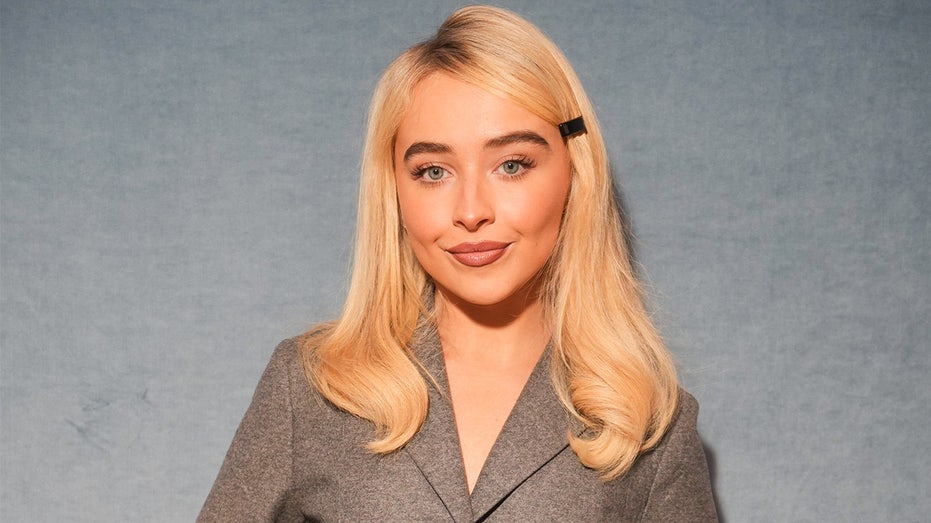
- Carpenter publicly condemned the use of her song, calling it “evil and disgusting” and denouncing what she described as an “inhumane agenda.”
- The White House fired back through spokesperson Abigail Jackson, framing deportations as targeting “dangerous criminal illegal murderers, rapists, and pedophiles,” and insulting anyone who disagreed as “stupid” or “slow.”
- The video was then deleted—but instead of letting the story die, the White House escalated: it repurposed an SNL promo from Carpenter’s hosting gig, dubbing over her joke about arresting someone for being “too hot” to say “illegal,” then overlaying ICE/border enforcement footage and the White House logo.
That second video wasn’t a mistake. It was a choice to reignite a controversy, to recast a celebrity critic as unwilling to support deportations of violent offenders, and to double down on a culture-war narrative.
The Bigger Picture: Presidents Have Always Used Culture—But Not Quite Like This
Political institutions using entertainment to shape public opinion is not new. What’s different here is the tone, the platform, and the target.
- 1980s–2000s: Communications teams coordinated with Hollywood to embed national security narratives into TV and film; pop stars often lent music to campaigns voluntarily.
- 2010s: The rise of social media blurred lines between official messaging and online snark. From the Obama White House’s meme-friendly outreach to Trump’s retweets of fringe accounts, the presidency began to sound more like a user than an institution.
- Now: The federal government’s official channels are not just borrowing meme aesthetics—they’re joining the grievance economy by naming and shaming entertainers in ways that resemble partisan influencers more than state actors.
In that sense, the Carpenter feud sits at the intersection of three longer-running trends:
- The use of fear-based immigration messaging centered overwhelmingly on “criminal aliens,” despite data showing that most undocumented immigrants are not violent offenders.
- The transformation of celebrities into political proxies, where musicians become stand-ins for broader social values—"woke elites" versus “tough on crime” populism.
- The erosion of institutional voice: official accounts increasingly speak in the language of dunking, trolling, and viral clips rather than sober policy explanation.
What This Really Means: Power, Consent, and Who Owns the Narrative
The most important issues here are not about copyright paperwork; they’re about consent, framing, and power asymmetry.
1. The State Using a Private Artist as an Unwilling Spokesperson
When the White House pairs Carpenter’s music and image with deportation footage, it’s doing more than making a creative choice—it’s hijacking an identity. Fans consume her music with an emotional connection; the administration is attempting to redirect that emotional energy toward its enforcement agenda.
Carpenter’s pushback—“Do not ever involve me or my music to benefit your inhumane agenda”—is essentially a demand to control her own moral and political association. Even if the use might arguably fall under some fair-use interpretations (a question for lawyers), the deeper conflict is about moral consent: Who gets to decide what your art stands for?
2. Collapsing the Immigration Debate into ‘Carpenter vs Criminals’
The White House response carefully reframed the terrain: this isn’t about policy, it’s about whether you’re willing to deport “murderers, rapists, and pedophiles.” That’s a classic political move—link criticism of enforcement practices to defending the worst imaginable cases.
Yet the real policy debate is broader: What are the criteria for deportation? How are raids conducted? How many people swept up in operations are charged with or convicted of serious crimes, versus immigration violations or lesser offenses? Those questions disappear when the issue is flattened into: “Are you OK with deporting predators or not?”
3. The Normalization of Government ‘Trolling’
The tone of the responses—“Short n’ Sweet,” name-calling critics as “stupid or slow,” meme-style editing of an SNL clip—signals a deliberate adoption of internet fight culture. This may energize a segment of supporters who see it as “finally fighting back against Hollywood,” but it carries costs:
- It erodes the expectation that official communications should be measured, factual, and civil.
- It blurs the line between policy messaging and partisan content designed for virality and outrage.
- It makes future cooperation with cultural figures less likely, pushing more artists into open opposition or wary silence.
4. Immigrants as Background Extras in a Domestic Culture War
Perhaps the most striking aspect of this PSA-style video is that immigrants themselves have no voice in it. They appear as images of raids, arrests, and deportations—visual proof to be scored with pop music and rap. Their lives function as props in a domestic fight between a pop star and the state.
That has been a recurring pattern in U.S. politics, but the aesthetic here—short, loud, meme-able—pushes it further. It turns enforcement into content. In the process, it makes a complex humanitarian and legal issue look like a punchline.
Data and Context: How Representative Is This ‘Criminal’ Focus?
To evaluate the rhetoric, it’s worth looking at the enforcement landscape:
- ICE priorities: Over the last decade, multiple administrations have publicly emphasized targeting individuals with serious criminal records. In practice, sweeps often include people whose primary offense is immigration-related or non-violent.
- Crime and immigration: Numerous studies—including analyses of Texas conviction data and national surveys—have found that undocumented immigrants, on average, commit violent crimes at lower rates than native-born citizens. Yet political messaging overwhelmingly spotlights extreme cases.
- Scale vs. narrative: Millions of undocumented people live and work in the U.S.; the subset accused or convicted of severe crimes is real but numerically small. The White House framing, however, invites the public to equate “illegal immigrants” with “murderers, rapists, and pedophiles.”
This context doesn’t absolve serious offenders, but it shows how selective storytelling can distort public understanding—and how a celebrity feud becomes a convenient vehicle to push that distortion.
Expert Perspectives: Culture, Law, and Political Strategy
Media scholars, legal experts, and political strategists see different layers in this clash.
On the media side, Dr. Zizi Papacharissi, a professor who studies online political expression, has argued in her work that “the personalization of politics online encourages leaders to adopt the voice of the crowd, even when that voice is sarcastic or combative, because that is what algorithms reward.” The Carpenter feud fits this pattern: the White House is talking like a user trying to win a thread, not a government explaining policy.
Intellectual property scholars note that while political commentary often enjoys broad First Amendment protection, the reputational dimension is becoming more contested. Artists have increasingly balked at their work being used in political settings they oppose—think of musicians sending cease-and-desist letters to campaigns over rally playlists. Even when legal remedies are limited, the public-relations risk is rising.
Strategically, the calculus seems clear: a confrontation with a young, high-profile singer creates a clean storyline for supporters who are already skeptical of “Hollywood elites.” The more Carpenter denounces the policy, the easier it becomes to cast her as soft on crime—regardless of what she actually said. That’s a classic wedge tactic, updated for the era of stan culture.
Looking Ahead: What to Watch Beyond the Headlines
Three long-term questions emerge from this episode:
1. Will More Artists Explicitly Preempt Political Use of Their Work?
Expect more musicians to add explicit clauses in licensing agreements or to publicly stake out red lines about how their creations may be used. While the government can sometimes rely on broad exemptions, the reputational backlash will make careful administrations think twice about conscripting unwilling ambassadors.
2. Are We Entering an Era of ‘Viral Governance’?
If official accounts increasingly measure success by engagement rather than clarity, we’ll see more content that looks like the Carpenter video: emotionally charged, visually aggressive, and structured around villains and heroes rather than nuance. That may mobilize segments of the public, but it also entrenches distrust among those who expect institutional sobriety.
3. How Does This Shape Public Perception of Immigration Policy?
Over time, repetition matters. If “illegal immigrant” becomes almost inseparable from “violent predator” in official messaging, it will skew public tolerance for less draconian approaches and narrow the political space for reforms that balance security with due process and humanitarian concerns.
Conversely, pushback from high-profile figures like Carpenter may accelerate a cultural countermovement that treats heavy-handed enforcement as morally toxic. That polarization doesn’t resolve the underlying policy challenges; it makes compromise harder.
The Bottom Line
This feud is not just a strange footnote in entertainment news. It’s a window into how the modern White House sees its role in the attention economy: part policymaker, part influencer, part combatant in an endless culture war.
By meme-ifying deportations and turning a pop star into an antagonist, the administration is testing how far it can go in using cultural capital it doesn’t own to sell a deeply divisive agenda. The real stakes are not the feelings of one singer, but the norms we’re willing to accept when the state speaks—who it listens to, who it targets, and whose humanity becomes B-roll in someone else’s political narrative.
Topics
Editor's Comments
What’s most troubling here is not that a pop star and the White House are trading barbs—that’s almost predictable in a media environment where attention is currency. The deeper issue is how easily a complex, high-stakes policy domain like immigration can be reframed as a personality clash and then repackaged for virality. By centering the narrative on Sabrina Carpenter’s perceived disrespect, the administration sidesteps serious questions about who is actually being deported, under what conditions, and with what safeguards. At the same time, critics risk getting trapped in reactive mode—focusing on the insult to the artist rather than the use of human lives as B-roll for political branding. The challenge for journalists and citizens alike is to resist that gravitational pull toward the spectacle and instead use these moments as entry points to interrogate the underlying systems and the power structures that benefit from keeping the story shallow.
Like this article? Share it with your friends!
If you find this article interesting, feel free to share it with your friends!
Thank you for your support! Sharing is the greatest encouragement for us.