Beyond the Headline: What Samson Nacua’s Arrest Really Reveals About Sports, Family, and Fame

Sarah Johnson
December 18, 2025
Brief
Samson Nacua’s arrest over a Lakers player’s stolen SUV reveals deeper issues: fringe-league economics, family branding around star athletes like Puka Nacua, and how modern sports culture weaponizes off-field narratives.
Samson Nacua’s Arrest Exposes the Hidden Pressures and Double Standards Around Sports Families
On the surface, Samson Nacua’s arrest for allegedly taking Los Angeles Lakers forward Adou Thiero’s BMW SUV without consent looks like a minor Hollywood crime story with a convenient celebrity-adjacent angle. But underneath the headlines, this case sits at the intersection of fame-by-association, the economics of fringe professional sports, and the way modern sports culture weaponizes family narratives—especially when a relative becomes a breakout star, as Puka Nacua has with the Los Angeles Rams.
What makes this story worth deeper attention isn’t the car, the charges, or even the arrest. It’s what the incident reveals about how athletes’ families become part of the entertainment ecosystem, how off-field behavior is amplified and monetized, and how thin the line can be between a near-miss NFL career and the kind of choices that lead to a police report.
From Prospects to Parallel Paths: The Nacua Story in Context
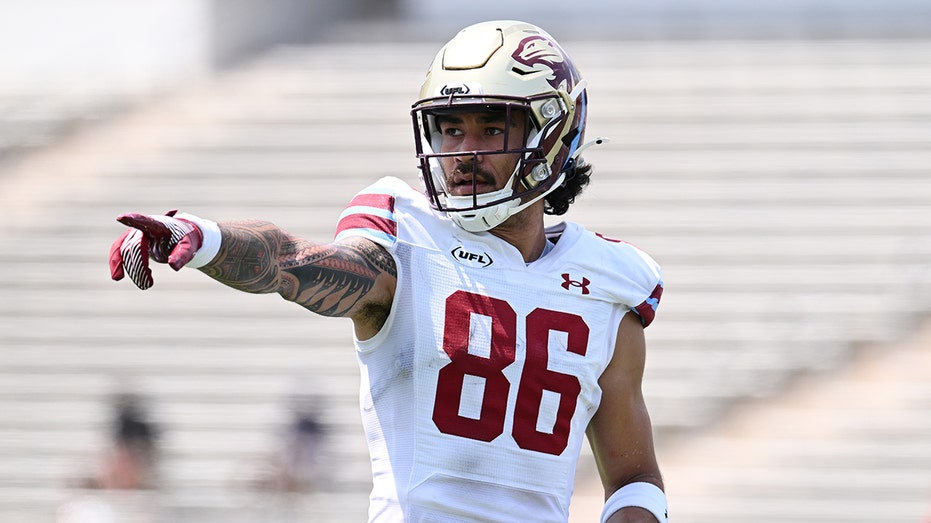
To understand why Samson Nacua’s name is news at all, you have to look at the broader family narrative. The Nacuas are a well-known football family, especially in Utah and BYU circles. Samson followed a traditional path: productive college career at Utah and BYU, a shot at the NFL with stints on the Indianapolis Colts and New Orleans Saints, then a move into the UFL when he didn’t stick on a roster.
His younger brother Puka, by contrast, not only made the league but exploded into stardom. In 2023, Puka set the NFL rookie record for receptions and became a breakout offensive centerpiece for the Rams. That kind of sudden rise creates a powerful public storyline: one brother becomes a star, another bounces around the margins of the sport. Media, fans, and even leagues themselves lean into that contrast because it’s compelling content.
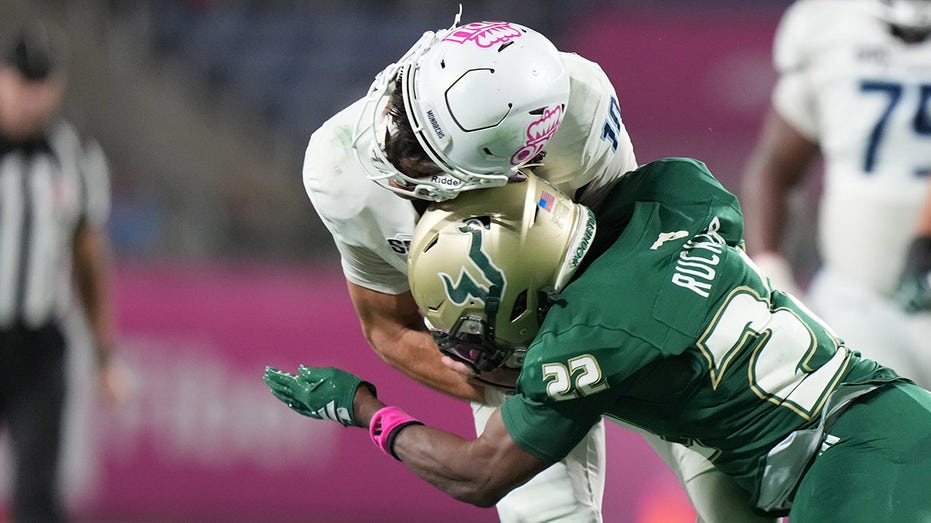
Samson’s recent history is already framed through that lens. Earlier this year, he was suspended in the UFL for slapping a fan in the stands—a moment that went viral precisely because of his connection to Puka. Without the Rams star in the picture, the clip likely would have remained a minor spring football incident. Instead, it slotted neatly into a narrative arc: the struggling brother, frustrated on the fringe, losing his composure on camera.
Now, his arrest in West Hollywood—accused of taking Thiero’s BMW without consent—adds another chapter. The legal details matter, but the cultural and economic context matters more: this is what happens when a fringe player becomes a storyline primarily because of who he’s related to, not who he is in his own right.
Beyond the Police Report: What This Incident Signals
The specific charge—California Vehicle Code 10851(a), taking a vehicle without the owner’s consent—is serious but not extraordinary in Los Angeles County. What’s more revealing are the structural forces around it:
- Proximity to wealth and status: West Hollywood and the Sunset Strip are dense with celebrity, money, and nightlife. For fringe pro athletes, that world is physically close but economically distant. You’re recognizable enough to be noticed, but not secure enough to be comfortable.
- Uneven sports economics: NFL stars like Puka can make millions, with signing bonuses, endorsements, and multi-year contracts. UFL players, by contrast, often earn five-figure seasonal salaries with limited stability. That disparity is widening across all major sports ecosystems.
- Social media amplification: Every misstep by anyone even loosely attached to a star athlete gets clipped, captioned, and circulated. Samson isn’t just a player who got arrested; he’s “Puka Nacua’s brother” who got arrested. That label multiplies the scrutiny.
None of this excuses the alleged conduct. But it helps explain how a case that would normally be a brief police blotter item becomes national sports content—and how that, in turn, can shape the lives and opportunities of everyone involved.
The Family Brand Problem: When Relatives Become Collateral Content
Modern sports are built on narratives as much as on performance. Teams, leagues, and media outlets regularly market family storylines: brothers in the league together, second-generation stars, siblings who trained in the same backyard. It’s human, compelling, and often inspiring.
But there’s a flip side: when one family member rises, everyone related to them is pulled into the story—willingly or not. Samson Nacua’s football résumé is respectable on its own terms: 82 receptions, 1,015 yards, and 11 touchdowns at Utah; additional production at BYU; and professional stints across multiple leagues. Yet nearly every mention of him now begins with his relationship to Puka.
That dynamic has consequences:
- Identity compression: A player becomes “the brother of” or “the son of,” losing individual identity in public conversations. Any mistake is interpreted as reflecting on the family brand.
- Reputational spillover: Teams worry less about what a fringe player did and more about how it might affect a star relative’s image, even if the star had no involvement.
- Media priority: Stories about relatives of stars are disproportionately covered because they drive clicks. That can incentivize outlets to highlight negative incidents involving those relatives.
Ethically, this raises a hard question: how far does a star’s public identity extend? If every misstep by a family member is framed through the lens of the star’s reputation, we blur the line between individual responsibility and collective branding.
Fringe Leagues, Frayed Margins: Why Players on the Bubble Are Vulnerable
Samson’s journey from the NFL margins to the UFL is typical for countless athletes. For every Puka Nacua, there are dozens of players whose careers never fully stabilize. And the new secondary leagues—UFL, G League, lower-tier soccer leagues—are built on that precarious population.
Economically, the gap is stark. A mid-round NFL rookie can earn well over $1 million on a four-year deal. A UFL player’s pay is dramatically lower, often structured as modest base pay with limited guarantees and short seasons. That paycheck barely registers against the cost of living in major cities or the lifestyle expectations that come with “being a pro.”
Psychologically, the pressures are intense: constant evaluation, limited contracts, few alternative career paths, and the looming knowledge that your younger brother has not just made it, but thrived. Sports psychologists have long warned that unaddressed identity and self-worth issues in athletes often surface as impulsive or self-sabotaging behavior, especially under stress.
Samson’s earlier suspension for slapping a fan is a textbook example. Whatever triggered that moment—trash talk, frustration, personal issues—it exposed how thin the emotional margin can be for players trying to hold onto a career. Now, an alleged decision to take a car without consent, if proven, fits into a pattern of risk-taking behavior with high personal downside and limited upside.
What Mainstream Coverage Is Missing
This story has been framed primarily as a celebrity-adjacent oddity: a Rams star’s brother, a Lakers player’s car, a viral clip from earlier in the year. But several more substantive angles are largely overlooked:
- Player conduct standards in secondary leagues: The UFL’s earlier response—one-game suspension, no pay, mandatory community service—reflects a league trying to signal seriousness about fan interactions while still protecting its limited talent pool. How it responds now, if at all, will reveal whether off-field legal troubles are treated differently from on-camera incidents.
- The risk management calculus for agents and teams: Agents representing high-profile players increasingly monitor the behavior of relatives, not for moral reasons but for brand protection. Teams also quietly factor family dynamics into long-term marketing strategies.
- Blurring of private and public lives: The ability to track a “newer model BMW” via digital tools and immediately tie that to a recognizable name illustrates how surveillance tech and celebrity culture intersect. These aren’t just crimes; they’re instantly narrativized events.
In other words, this is not simply about whether a vehicle was taken. It’s about how a minor property crime involving lower-profile athletes becomes a national talking point because of the web of fame around it.
What This Means for Puka Nacua—and Sports Culture at Large
For Puka, the immediate question is whether this affects his career with the Rams. On a strictly contractual and disciplinary level, the answer is almost certainly no. He did nothing wrong here. But public perception doesn’t always care about clean lines of responsibility.
Star athletes are increasingly treated as quasi-corporate entities: their success is not just on the field but as brand partners, community figures, and cultural symbols. That means their families’ behavior is sometimes unofficially folded into the “risk profile.” Even if teams and sponsors avoid making explicit judgments, they watch patterns.
We’ve seen this before. Families of NBA, NFL, and soccer stars have generated headlines—from social media outbursts to legal issues—and in almost every case, the star is eventually asked to explain or contextualize someone else’s decisions. That pressure is rarely acknowledged in salary numbers or endorsement deals.
For sports culture, this case underlines a broader shift: the increasing expectation that athletes manage not just their own lives but the optics of their entire inner circle. For younger players watching this unfold, it sends a clear message: your performance is only part of the job. The rest is managing narrative risk.
Looking Ahead: What to Watch
Several developments in the coming weeks will determine how lasting an impact this incident has:
- Legal outcome: Whether Samson and co-defendant Trey Rose contest the charges, seek a plea, or see charges reduced will affect not just their records but their employability in professional sports.
- League responses: The UFL, already on record disciplining Samson once this year, may face pressure to respond again if he remains under contract. Consistency—or inconsistency—in discipline will be closely scrutinized.
- Public framing: If coverage continues to lead with Puka’s name instead of Samson’s, it will deepen the trend of treating family members as extensions of star brands rather than individuals.
- Player support structures: Quietly, incidents like this often trigger behind-the-scenes interventions from unions, teams, or agents—mental health resources, financial counseling, or reputation management.
The deeper question is whether leagues and media organizations use this as a moment to reexamine how they talk about and monetize athlete families—or simply move on to the next headline.
The Bottom Line
Samson Nacua’s alleged decision to take a vehicle without consent is, in isolation, a relatively routine criminal matter. But in the modern sports ecosystem, there is no such thing as isolation for someone tied to a breakout NFL star. The incident exposes how precarious life can be on the fringes of professional sports, how heavily narrative and economics shape public perception, and how far the concept of a “sports brand” now extends beyond the field.
For fans, the key is to resist the easy storyline—that this is simply a reckless brother embarrassing a star—and instead recognize the larger system in which this story is being told: one that rewards family spectacle, underinvests in support for fringe players, and too often treats individual human struggles as just another piece of content.
Topics
Editor's Comments
One of the more uncomfortable truths in this case is how eager the modern sports ecosystem is to turn familial proximity into narrative leverage. Ask yourself: if Samson Nacua were not related to a breakout NFL receiver, would this incident travel beyond local Los Angeles news? Almost certainly not. Yet because his last name matches a rising star’s, his worst moments now feed a content machine that has very little interest in his interior life—only in his headline value. That raises a broader concern about how we consume sports news: we often demand human vulnerability from athletes and their families while offering little empathy in return, especially when things go wrong. It’s easier to treat Samson as a cautionary tale or a punchline than as a case study in systemic issues—economic precarity, identity loss after near-miss careers, limited psychological support. If we’re going to keep monetizing these stories, we should at least be honest about the power imbalance between the people living them and the institutions profiting from them.
Like this article? Share it with your friends!
If you find this article interesting, feel free to share it with your friends!
Thank you for your support! Sharing is the greatest encouragement for us.