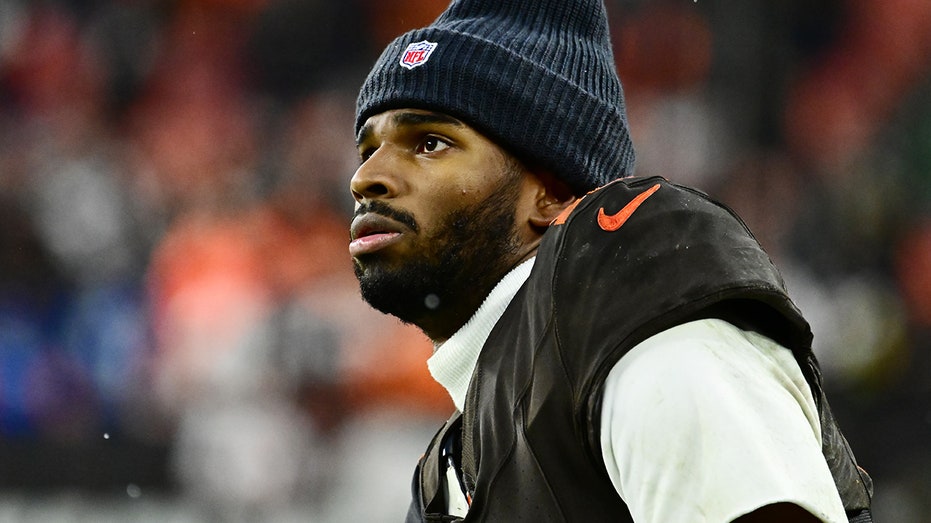
What the Titans’ Mocking of Shedeur Sanders Really Reveals About the NFL’s New Culture War

Sarah Johnson
December 8, 2025
Brief
Titans mocking Shedeur Sanders’ watch celebration after a key turnover reveals a deeper clash over branding, hierarchy, and swagger in the NFL’s NIL and social media era.
Titans Mock Shedeur Sanders’ ‘Watch Flex’ – And Expose the NFL’s New Culture War
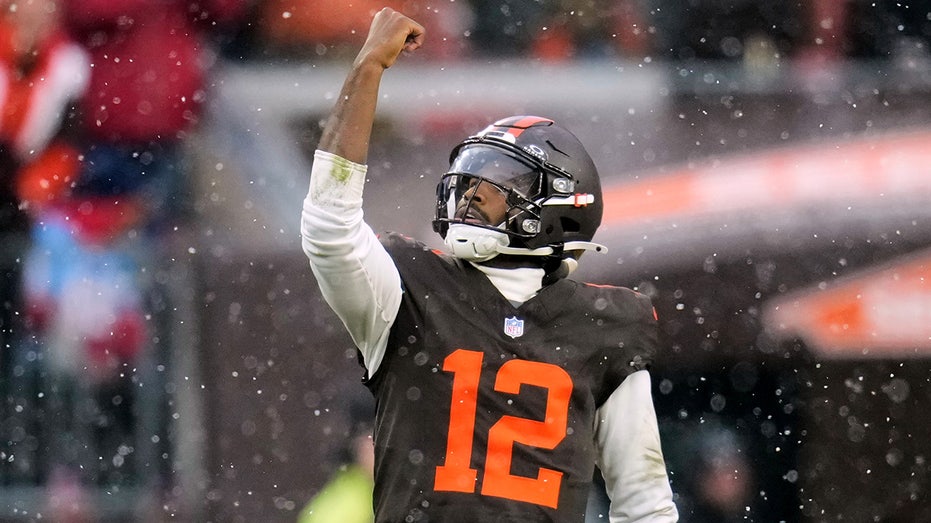
The Tennessee Titans’ decision to mock Shedeur Sanders’ trademark “watch flex” celebration after a late Cleveland Browns turnover wasn’t just petty gamesmanship. It was a revealing snapshot of the NFL’s evolving culture: how swagger, social media branding, and generational identity are colliding with an older ethos of humility, hierarchy, and “act like you’ve been there before.”
On the surface, this was a simple story: rookie quarterback plays well but makes critical mistakes, opponents copy his celebration after a decisive turnover, game ends 32–29. But just beneath that is a bigger narrative about how the league is adjusting to a new kind of star – one who arrives not only with a strong arm, but with a pre-built brand, a viral celebration, and millions of followers watching every move.
The Bigger Picture: From End Zone Dances to Personal Brands
Shedeur Sanders didn’t invent celebratory taunting, and the Titans didn’t break any new ground by mimicking it. The league has been wrestling with showmanship for decades:
- In the 1980s and 1990s, players like Deion Sanders (Shedeur’s father) and Michael Irvin turned celebrations into performance art.
- The NFL responded at various points with stricter taunting penalties, then rolled some back as fans embraced entertainment value.
- In the 2000s and 2010s, Terrell Owens, Chad Johnson and others faced heavy criticism for “me-first” celebrations even as ratings soared.
What’s different now is the infrastructure around a celebration. Shedeur’s “watch flex” isn’t just a moment of on-field swagger; it’s part of a broader, carefully cultivated image that goes back to his Colorado days under his father’s coaching. It’s attached to NIL-era marketing deals, social media clips, and a persona that blurs the line between athlete and influencer.
Historically, rookies entered the NFL as relatively anonymous figures outside hardcore college fans. Sanders is the opposite. He arrived as a known commodity – a headline driver, the face of a college media phenomenon, and a lightning rod for opinions about entitlement, celebrity, and the new economics of college sports.
What This Really Means: A Flashpoint Between Old Guard and New Generation
When Titans defenders gathered in the end zone, held up their wrists, and mimicked Sanders’ watch flex, they were doing more than mocking a rookie. They were sending a message: your brand doesn’t exempt you from the league’s pecking order.
In NFL locker rooms, there’s a deeply embedded hierarchy:
- Rookies are expected to prove themselves, not perform their celebrity.
- Veterans often view overt self-promotion as a challenge to team-first culture.
- Defensive players, in particular, take personally any showboating done at their expense.
Sanders played well statistically – 23-of-42, 364 passing yards, three passing touchdowns and a rushing touchdown – but his pivotal interception and the late-game turnover proved costly. For defenders, that’s the perfect moment to flip the script: everything you celebrated earlier now becomes material for us.
There’s also an undercurrent of resentment toward players perceived as being “made” by media coverage before they’ve earned NFL success. The Colorado era – with cameras in every room, reality-show-style content, and Shedeur as a central character – created as many skeptics as fans across the league.
Beyond the Stat Line: The Psychological Game Around Sanders
Targets like Shedeur don’t just face physical pressure; they face psychological campaigns. Opponents study more than film – they study how to get into a quarterback’s head. In Sanders’ case, that means attacking the symbol of his swagger: the watch flex.
There are three layers to this psychological play:
- On-field pressure: Hit him, confuse him, and force mistakes, knowing he’s trying to live up to a star image.
- Symbolic humiliation: Publicly mocking his celebration in a pivotal moment reframes his brand as premature instead of earned.
- Media amplification: The clip of Titans defenders doing the watch flex is tailor-made for social media, creating a narrative that Sanders’ own branding machine can’t fully control.
The irony is that Sanders’ confidence is also what makes him dangerous as a player. His willingness to push the ball downfield, take risks, and trust his receivers produced that 60-yard touchdown to Jerry Jeudy. The same mentality can lead to high-variance results: spectacular plays and crushing turnovers in the same game.
Expert Perspectives: Swagger, Leadership, and the Rookie Curve
Several current and former analysts have framed this phase of Sanders’ development as inevitable.
Sports psychologist and performance consultant Dr. Jarrod Spencer has long argued that highly visible young stars face a different mental load:
“When your identity is tied to a celebration or a brand before you’ve established sustained success, every setback becomes personalized. Opponents aren’t just beating you; they’re attacking your persona. That can either crystallize an athlete’s resilience or expose emotional fault lines.”
From a tactical standpoint, former NFL quarterback and analyst Dan Orlovsky has often noted that young QBs with aggressive mindsets tend to go through stretches where their risk tolerance outpaces their processing speed against complex defenses. Sanders’ stat line against Tennessee fits that pattern: big numbers, big mistakes.
Leadership experts would also highlight Sanders’ postgame comments about Jerry Jeudy. After a public sideline dispute the week before, Sanders emphasized that they “put everything aside” and reestablished trust. That’s the kind of narrative that coaches love – conflict resolved, chemistry restored – but it also underscores how every interpersonal moment around Sanders becomes magnified content.
Data & Evidence: Rookie QBs, Turnovers, and Reputation
Historical trends help ground the reaction to Sanders in reality rather than hype:
- Over the last 20 years, rookie starting quarterbacks who throw for 300+ yards in a game are more likely than not to also record a turnover. High volume often comes with higher risk.
- Quarterbacks with aggressive air-yards profiles early in their careers (think Josh Allen, Justin Herbert) frequently had games with gaudy yardage and multiple turnover-worthy plays before stabilizing.
- Defensive players routinely report in postgame interviews that they are “extra motivated” by opponents who celebrate visibly. It’s not new, but personal branding has made those celebrations more memorable and more easily replayed in film sessions.
Kevin Stefanski’s postgame comment – emphasizing “ups and downs” and “really good moments” – aligns with the data-driven view: Sanders is on a normal, if heavily scrutinized, rookie curve. The difference is that every misstep comes wrapped in a branding storyline about the watch flex, Colorado, and Deion’s legacy.
What Mainstream Coverage Is Missing
Most game recaps focus on three beats: the mocking celebration, the late turnover, and Sanders’ stat line. What’s largely overlooked are three deeper dynamics:
- The NIL-to-NFL transition: Sanders is one of the first high-profile quarterbacks to bring a fully formed NIL-era brand into a veteran-dominated league that still polices status informally. This is a test case for how welcoming – or hostile – that environment will be.
- Intergenerational norms: The divide isn’t just about showmanship; it’s about how younger players interpret empowerment, self-expression, and monetization versus how older players interpret respect, dues-paying, and team identity.
- The strategic taunting economy: Defenses now think about social media optics as part of how they measure wins. Mocking a celebrated move can be as satisfying – and as motivating – as a sack.
Looking Ahead: The Tests Yet to Come
How Sanders responds over the next several weeks matters more than how he celebrated earlier in the game or how the Titans mocked him.
Several key questions will shape the next phase of this story:
- Does he dial down the celebration? If the watch flex fades, it might be read as maturation – or as a concession that the league has humbled him. If he keeps it, it becomes a declaration that he won’t let opponents control his identity.
- Can he translate yards into wins? Eventually, the narrative will shift from style to results. If Sanders stacks wins, his swagger will be reframed as leadership. If the losses and turnovers pile up, the branding will look increasingly out of sync with on-field reality.
- How do teammates respond? Veterans in the Browns’ locker room will be decisive. If they publicly and privately back Sanders, his persona can be absorbed into the team’s identity. If not, subtle fractures could emerge, especially when the offense stalls or the defense feels hung out to dry.
There’s also the question of how officials and the league office continue to handle taunting. As mocking celebrations become more direct and personalized in a social media era, the line between harmless fun and escalatory disrespect will be tested. The league has oscillated before between crackdowns and leniency; it may need to refine those standards yet again.
The Bottom Line
This wasn’t just a rookie making a late-game mistake. It was a clash between a player whose identity is inseparable from his visible, monetized swagger and a league full of veterans determined to remind him that reputation isn’t grandfathered in from college – it has to be re-earned on Sundays.
The Titans’ mock celebration tells us how Sanders is perceived right now: as a talented, dangerous, but polarizing young quarterback who invites as much resentment as admiration. Whether that becomes a strength or a stumbling block will depend on how quickly he pairs his numbers with consistent, mistake-free football – and whether his mental game can withstand being attacked at the symbolic level, not just the tactical one.
FAQ
Why did Titans players mock Shedeur Sanders specifically?
They targeted his trademark “watch flex” celebration, which has become a symbol of his confidence and personal brand since his Colorado days. By reproducing it after a critical Browns turnover, Titans defenders were sending a message that his swagger doesn’t immunize him from the league’s hierarchy. It was a way of publicly humbling a highly publicized rookie, turning his own signature move into a weapon against him.
Is Sanders’ level of celebration unusual for a rookie quarterback?
In terms of personality and visibility, yes; in terms of on-field celebration, not really. Many players celebrate big plays, but Sanders’ celebration is tightly tied to a broader personal brand that predates his NFL debut. Most rookies don’t arrive with that level of off-field profile, which makes his visible confidence feel more provocative to some veterans who expect newcomers to be more understated until they’ve built an NFL résumé.
How did Sanders actually perform in the game beyond the narrative?
Statistically, he played an aggressive, high-output game: 23-of-42 passing, 364 yards, three passing touchdowns and one rushing touchdown. The downside was a pivotal interception and responsibility in a late turnover sequence that set up Titans scores. It was the classic high-variance rookie performance – spectacular plays mixed with mistakes at critical moments – but the surrounding narrative about his swagger amplified the reaction to those errors.
Does this kind of mocking have a lasting impact on a quarterback’s reputation?
It can, but only if it aligns with a longer pattern of underperformance. If Sanders rebounds, cuts down on turnovers, and leads the Browns to wins, this moment will likely be reframed as a learning experience or even as part of his origin story. If he continues to post big numbers without closing games, the image of defenders imitating his celebration will resurface as shorthand for a player whose brand outpaced his results.
What does this say about the NIL-to-NFL transition for star players?
It suggests the league is still adjusting to players who arrive with established brands and strong social media identities. NIL has allowed college athletes to monetize their image early, but it hasn’t changed the NFL’s unwritten rules about respect and earned status. Sanders’ experience is a case study in how those worlds collide – and how veterans may use on-field moments to challenge or check that pre-existing celebrity.
Topics
Editor's Comments
What stands out in this story is not merely the familiar cycle of celebration and retaliation, but how quickly Shedeur Sanders has become a litmus test for broader anxieties inside the NFL. Veterans are watching a new kind of player arrive: one whose fame was incubated in an NIL ecosystem many of them never experienced, and whose every gesture is instantly monetizable content. The Titans’ mockery can be read as policing the boundaries of an older professional culture, but it also hints at insecurity—about changing economics, shifting fan expectations, and the erosion of traditional hierarchies. The more interesting question isn’t whether Sanders’ watch flex is ‘too much,’ but whether the league is prepared for a generation of players who see branding as inseparable from their identity. If teams and front offices don’t get ahead of that tension—by explicitly addressing it in leadership development and culture-building—the league risks letting these symbolic skirmishes fester into deeper divides that statistics alone won’t explain.
Like this article? Share it with your friends!
If you find this article interesting, feel free to share it with your friends!
Thank you for your support! Sharing is the greatest encouragement for us.