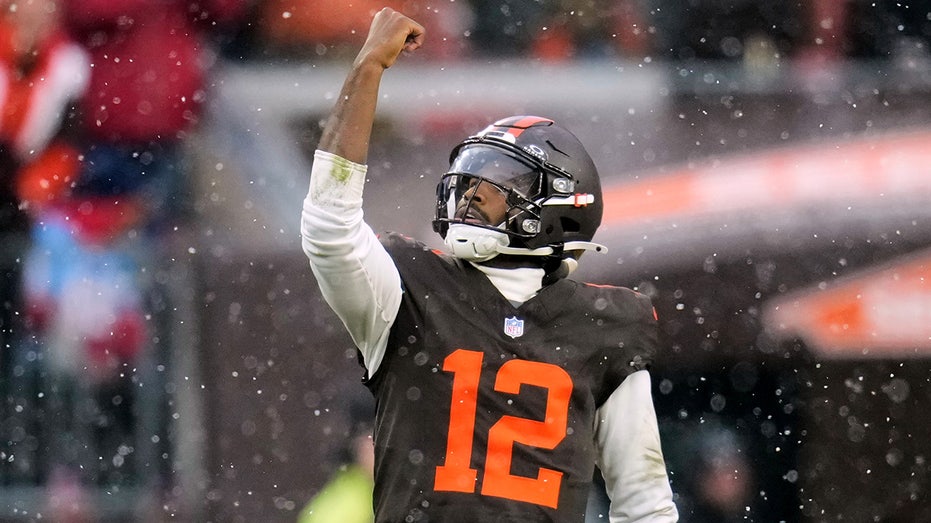
Shedeur on the Sideline: What the Browns’ Botched 2-Point Call Really Reveals About Their Future

Sarah Johnson
December 8, 2025
Brief
Kevin Stefanski’s controversial 2-point call benching Shedeur Sanders wasn’t just a bad play—it exposed deep issues about trust, analytics, and the Browns’ long-term plan at quarterback.
Inside the Browns’ Controversial 2-Point Call: What Stefanski’s Decision Reveals About NFL Coaching in 2025
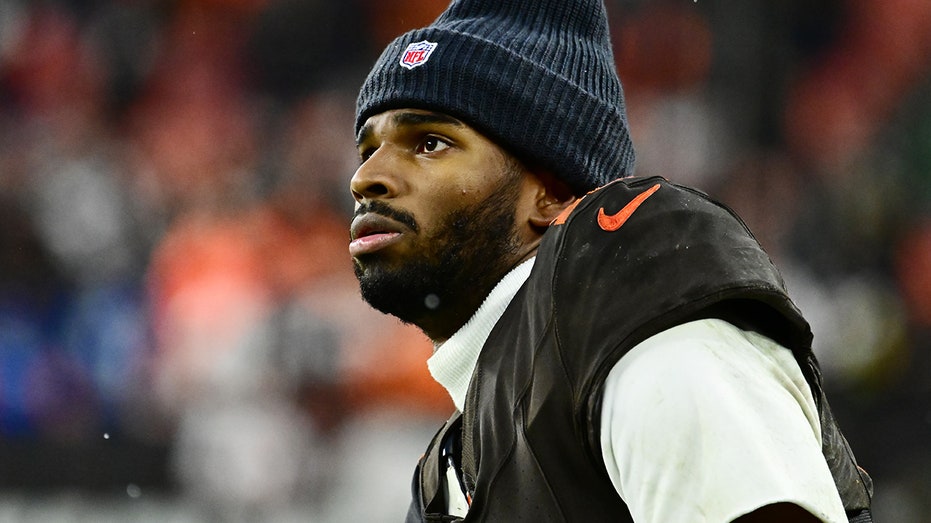
Kevin Stefanski’s choice to remove rookie quarterback Shedeur Sanders for a game-tying two-point attempt wasn’t just a bad play call that backfired. It was a prism into the modern NFL’s obsession with overengineering, the delicate politics of franchise quarterbacks, and the razor-thin line between “innovative” and “outsmarting yourself.”
On the surface, this is a December game between two eliminated teams. But zoom out, and you see a coach under rising pressure, a rookie quarterback already central to a franchise’s identity, and a league where analytics, ego, and job security intersect in those 10 seconds on the goal line.
Why This Moment Matters More Than the Box Score
Down 31–29, Sanders had just authored the kind of drive franchises dream about from a first-year quarterback: poised, explosive, and resilient. He finished 23-of-42 for 364 yards, three passing touchdowns, and a rushing score—numbers that scream, “Put the ball in his hands with the game on the line.”
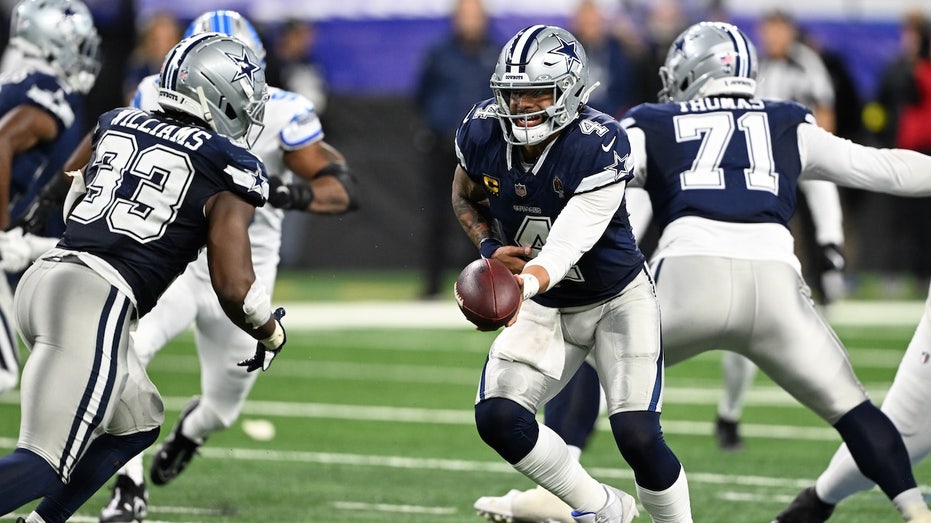
Instead, Stefanski opted for a Wildcat snap to rookie running back Quinshon Judkins, with a misdirection element to receiver Gage Larvadain. The execution imploded. Judkins ran past Larvadain, the timing died, and a desperate cross-field heave fell incomplete. The Titans survived; social media didn’t forgive.
To many fans, this was simple: the coach took the ball out of his best player’s hands at the most important moment. But underneath that frustration lie deeper trends shaping today’s NFL:
- Coaches increasingly leaning on “special” plays to showcase creativity
- The evolving role of analytics in short-yardage, high-leverage decisions
- The symbolic importance of backing your young quarterback in public moments
- The fragile relationship between coaching credibility and locker-room trust
How We Got Here: A Brief History of Overthinking the Goal Line
The Browns’ failed two-point try sits in a long lineage of high-profile calls where coaches deviated from the obvious, only to be crucified afterward. The modern reference point is unmistakable: the Seattle Seahawks’ decision to throw on the goal line in Super Bowl XLIX instead of handing the ball to Marshawn Lynch. That play, rightly or wrongly, became shorthand for overthinking.
Since then, another trend has quietly accelerated: packaged “specialty” plays in critical moments. We’ve seen:
- Wildcat or direct snaps to running backs on 2-point tries
- Jet-sweep shovel passes in tight red zone situations
- Backwards throws and reverse passes in must-have downs
The logic is superficially sound: defenses expect your starting quarterback to handle the ball, so surprise them with something they haven’t seen. Analytics departments often support this with success-rate data showing misdirection carries higher expected value in short-yardage situations.
But there’s a counterweight that analytics models can’t fully capture: the psychological and symbolic impact of who gets the ball in defining moments.
What Stefanski’s Call Signals About His Mindset
Strip away the memes and hot takes, and Stefanski’s decision suggests several things about how he views his offense and his rookie quarterback.
- He wanted the ‘perfect’ play, not the highest-trust play.
From a play-design perspective, the concept likely looked great in meetings: defense flows with the run, receiver slips behind, easy flip, walk-in score. This is the classic trap—coaches falling in love with design rather than probability under pressure. In reality, it depended on flawless timing from a rookie back in a nontraditional ball-handling role. - He didn’t fully lean into Sanders’ hot hand.
Sanders had already thrown three touchdowns and accounted for four total. Even with a third-quarter interception, he’d shown command and strike capability. Benching him for the most important snap sends an implicit message—intentional or not—about trust. Coaches will insist it’s “just a play call,” but players don’t always hear it that way. - He may be coaching with job security in the back of his mind.
At 3–10, with previous seasons already raising questions about the franchise’s ceiling under his leadership, Stefanski is not operating in a vacuum. In such environments, some coaches double down on “identity” plays that showcase their creativity. The downside risk is obvious: when it fails, it looks like ego over common sense.
The Sanders Factor: More Than Just a Rookie QB
Shedeur Sanders is not a typical mid-round rookie trying to carve out a role. Between his high-profile college career at Colorado, the media attention that followed his father, and the expectation that he can be a franchise-changing player, Sanders is part quarterback, part brand, part organizational bet.
For a franchise like Cleveland—scarred by decades of quarterback instability—the optics of sidelining Sanders on a defining play are magnified. Fans aren’t just angry about a failed conversion; they’re reacting to what feels like a deviation from the promise of building around their young star.
History shows how these moments can echo:
- Young QBs who feel undercut in key moments often talk later about trust and communication, not specific play calls.
- Franchises that successfully develop quarterbacks—think early stages of Josh Allen in Buffalo or Joe Burrow in Cincinnati—consistently put the ball in their hands in high-leverage spots, even when it fails.
A late-season game between non-contenders might seem inconsequential, but for Sanders and the Browns, this is part of the foundational story of their partnership: when the game was on the line, did the organization trust him?
What the Data Says About That Decision
League-wide, two-point conversion success rates hover around 47–50%, fluctuating year to year. Certain play types perform differently:
- Traditional QB dropbacks or sprint-outs generally land near the league average but benefit from the quarterback’s decision-making: if the first read is covered, he can extend or scramble.
- Power runs and inside zone can be efficient if you win in the trenches, but they’re vulnerable to penetration and short-edge losses.
- Misdirection and gadget plays tend to be boom-or-bust—high success when perfectly timed and blocked, catastrophic when a single assignment breaks down.
By choosing a Wildcat misdirection with a rookie ball-handler, Stefanski effectively selected a play type with lower margin for error, run by less experienced decision-makers, over a play that leveraged his hottest and most important offensive piece.
From an analytics perspective, there could be a justification if the staff believed the Titans had fully keyed on Sanders or if film showed a specific defensive tendency exploitable by Wildcat. But publicly available data, plus the game context, suggests the higher expected value would have been keeping Sanders on the field with a run-pass option or simple rollout.
What Experts See That Fans Might Miss
Football insiders are less surprised by the play call itself and more concerned with the pattern it might represent.
Sports analytics consultant Dr. Eric Eager has argued in the past that “the biggest mistake in short-yardage situations isn’t being too aggressive—it’s being too cute. You want your best players making the most decisions, not your least experienced.” Stefanski did the opposite.
Former NFL quarterback and analyst Dan Orlovsky has repeatedly emphasized on broadcasts that, “For a young quarterback, those end-of-game reps are gold. Even if you fail, you’re teaching him: this is your team, this is your moment.” Removing Sanders deprives him of exactly that kind of developmental rep.
And from a culture standpoint, longtime coach and commentator Herm Edwards once summed it up bluntly: “Players know who should have the ball. When you overthink it, you lose them.” That’s the quiet risk lurking behind Sunday’s decision.
Beyond the Sideline: What This Means for Cleveland’s Future
For a 3–10 team, the rest of the season is less about wins and losses and more about building a coherent identity around Sanders. In that light, this failed conversion has several key implications:
- Stefanski’s margin for error is shrinking.
In a results-driven league, “process over outcome” is a luxury usually granted to coaches who’ve already won big. At this stage, Stefanski’s controversial decisions are increasingly viewed through the lens of a tenure that hasn’t fully delivered. - Sanders’ internal influence will quietly grow.
If he continues to produce numbers like 364 yards and four total touchdowns, he will earn more say—informal or otherwise—in key situations. Star quarterbacks inevitably become collaborators in red zone and two-point menus. This incident might accelerate that shift. - The front office will be forced to evaluate alignment.
Is Stefanski the right coach to maximize Sanders’ skill set and leadership? Games like this become part of that calculus. Decision-makers will ask: are we maximizing our most important asset on the field, or are we asking him to fit into a rigid system?
A Familiar Playbook: Fan Fury and Narrative Building
NFL history shows that single moments can calcify into lasting narratives about coaches. For Pete Carroll, it’s the Super Bowl pass. For Brandon Staley, it was early-career fourth-down aggression. For Stefanski, Sunday’s decision risks becoming shorthand for a coach who doesn’t fully trust his quarterback when it counts.
Social media accelerates this: clipped videos, quote tweets, and side-by-side graphics of Sanders’ stat line next to the failed Wildcat call. The nuance of defensive looks and weekly game-planning is flattened into a simple story: Coach took the ball away from the playmaker. Coach lost.
Inside the building, players and staff will work hard to insist it’s just one play. But narratives matter. They influence fan patience, media framing, and eventually ownership decisions.
What to Watch Next
The real test isn’t what Stefanski says in the postgame press conference; it’s what he calls the next time the Browns need a conversion with the game in the balance.
Key things to monitor over the coming weeks:
- End-of-game and red zone usage of Sanders. Does the offense increasingly funnel through him, or do we see more spread-out responsibility and gadget concepts?
- Public messaging. Do Stefanski and Sanders present a unified front in interviews, emphasizing trust and shared accountability, or do subtle tensions and coded language emerge?
- Offseason coaching chatter. If losses pile up and moments like this multiply, expect louder questions about whether this staff is the one to shepherd Sanders into his prime.
The Bottom Line
This wasn’t just a failed two-point conversion; it was a revealing snapshot of a franchise at an inflection point. In choosing a Wildcat over his ascending rookie quarterback, Kevin Stefanski made a tactical decision with strategic consequences.
In today’s NFL, your identity is defined not by what you say about your quarterback, but by who has the ball when the game is on the line. On Sunday, Cleveland’s answer raised more questions than it solved.
Topics
Editor's Comments
What’s striking about this moment is how misaligned incentives appear to be inside modern NFL buildings. Analytics departments and scheme-heavy coaching staffs often optimize for marginal edges on a spreadsheet: a Wildcat wrinkle that looked great against a particular front in practice, a self-scout showing a tendency to lean on the quarterback in these spots, a belief that unpredictability itself has value. But franchises don’t live on spreadsheets—they live on the long-term confidence of the player who touches the ball on every meaningful snap. In that sense, the Browns’ decision reveals a potential structural flaw: an organization that hasn’t fully reconciled its desire to be system-driven with the reality that its future depends on embracing a quarterback-driven identity. The most successful modern teams—Kansas City, Cincinnati, early Buffalo with Josh Allen—eventually resolved that tension by defaulting to their quarterback in defining moments. Cleveland’s hesitation here is less a tactical error than a philosophical one, and it raises a larger question: are the Browns ready to be a quarterback-first franchise in more than name?
Like this article? Share it with your friends!
If you find this article interesting, feel free to share it with your friends!
Thank you for your support! Sharing is the greatest encouragement for us.