Trump’s Media Blitz vs. Biden’s Silence: How Presidential ‘Transparency’ Became a Political Weapon

Sarah Johnson
December 11, 2025
Brief
Trump’s first year back features record media access and combative exchanges. This analysis digs into how his high-volume strategy reshapes transparency, public trust, and presidential power in a fractured media era.
Trump’s ‘Open Mic’ Presidency: What His Media Blitz Really Tells Us About Power, Narrative, and 2020s Politics
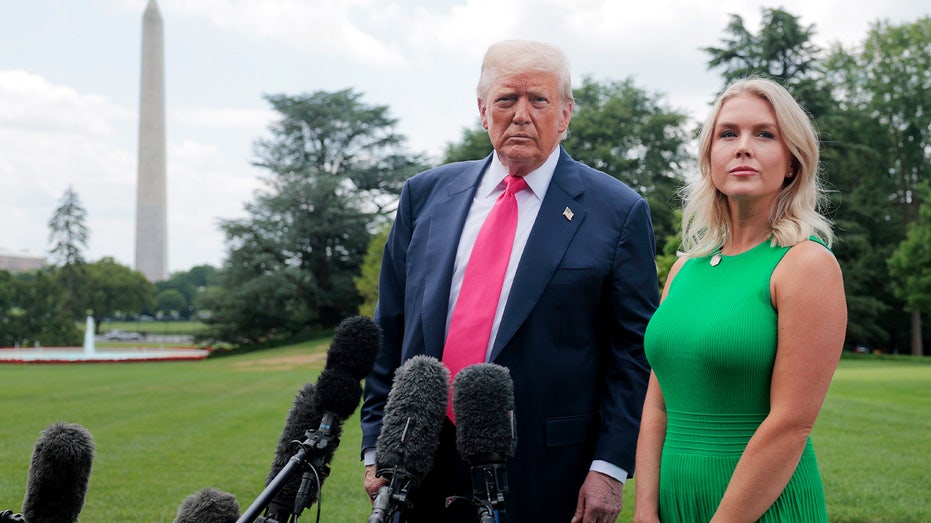
Donald Trump’s return to the White House has produced a familiar but intensified spectacle: a president who attacks the press as “fake news” while simultaneously giving reporters far more on-camera access than his immediate predecessors. The raw numbers from his first year back — hundreds of open press events and millions of transcribed words — are being framed as proof of “unprecedented transparency.” But the real story is more complicated, and more revealing, than a simple access tally.
This isn’t just about how often a president talks to reporters. It’s about how modern presidents manufacture legitimacy, weaponize attention, and redefine what “transparency” even means in an era where performance can matter more than policy detail. Trump’s flood-the-zone media strategy and Joe Biden’s far more controlled approach mark two very different theories of presidential communication — with serious implications for democratic accountability, media norms, and voter perception heading into future elections.
The bigger picture: From “Rose Garden strategy” to perpetual campaign rally
To understand why Trump’s numbers matter, it helps to look at how presidential press access has evolved over the past century.
- Early 20th century: Presidents like Calvin Coolidge and Herbert Hoover operated in a media environment with limited reach and far more gatekeeping. Extended stretches without press conferences weren’t unusual, and what access existed was often off the record or tightly managed.
- Television era (Kennedy–Reagan): The live, televised press conference became a signature presidential tool. Access increased, but the format remained relatively formal and episodic — high-stakes events, not daily brawls.
- Clinton–Obama era: As cable and then digital news exploded, presidents blended formal pressers with curated interviews and carefully choreographed events. The White House increasingly preferred controlled environments over open-ended exchanges.
- Trump’s first term: Trump broke that mold. He relished spontaneous gaggles on the South Lawn, extended Q&A at Cabinet meetings, and hallway ambush-style exchanges, while simultaneously delegitimizing mainstream outlets as “enemy of the people.”
Biden’s first term snapped back toward a more traditional, risk-averse model: fewer formal press conferences, more scripted remarks, and highly managed access. Trump’s second-term media onslaught, then, isn’t just a personal quirk — it’s a deliberate contrast that seeks to turn Biden’s communication caution into a political liability.
What the numbers show — and what they don’t
The data cited for Trump’s first year back is striking on its face:
- 433 open press events involving interaction with the media.
- 2.4 million transcribed words in open press settings — framed as the equivalent of multiple copies of major books.
- A mix of press sprays, gaggles on and off aircraft, lengthy Cabinet meetings, roundtables and a handful of formal briefings.
- An average of 1.9 press sessions per workday in his first 100 days back, outpacing Biden, Obama, and George W. Bush over comparable periods.
By contrast, Biden’s first year and full term figures show:
- A historically long delay before his first full press conference — more than two months, the longest in a century.
- Over his full term: 37 press conferences, 679 informal Q&As, and 151 interviews, according to the White House Transition Project.
Those numbers clearly support one conclusion: Trump does, in fact, engage more frequently and more visibly with reporters than Biden did. But equating frequency with substantive transparency is misleading.
Key questions that raw counts can’t answer include:
- How often are questions answered directly versus deflected or contradicted later?
- How accurate are the president’s statements during these interactions?
- How much policy detail versus personal grievance and attack is being conveyed?
- What topics are consistently avoided, despite the volume of appearances?
Without those qualitative measures, the “most transparent in history” claim is a political slogan, not a conclusion supported by evidence.
Performance transparency vs. informational transparency
Trump’s approach illustrates a crucial distinction that often gets blurred in coverage: the difference between performance transparency and informational transparency.
- Performance transparency is about visibility and access. The president appears unscripted, takes shouted questions, engages in confrontations, and looks like he has nothing to hide. Trump maximizes this dimension.
- Informational transparency is about clarity, consistency, and verifiable detail on policy, decision-making, and facts. It’s measured by accuracy, documentation, and willingness to provide evidence, not just the volume of words.
Trump’s marathon Cabinet meetings and extended gaggles generate enormous amounts of content, but much of it is rhetorical improvisation, political messaging, or attacks on perceived enemies. Fact-checkers throughout his first term documented historically high levels of false or misleading claims. That pattern didn’t disappear with his return.
Biden, conversely, often sacrificed performance transparency — sometimes to the irritation of reporters and critics — while relying more on formal briefings, written statements, and agency disclosures. That model can feel opaque and dismissive, especially in moments of crisis, but tends to yield fewer headline-grabbing confrontations.
The core democratic question is not which model appears more open, but which better informs the public. An hour-long event full of unchallenged inaccuracies can be less transparent, in practical terms, than a 15-minute exchange with fewer fireworks but more verifiable detail.
Why Trump weaponizes access — and why it works
The current White House’s framing of Trump as “the most transparent and accessible president in American history” is politically strategic on several levels:
- Contrast with Biden’s perceived caution and age concerns. Biden’s limited pressers and occasional verbal stumbles fed a narrative that he was shielded by staff. Trump’s constant presence and willingness to joust with reporters is designed to project vigor, mental sharpness, and dominance.
- Control of the narrative through volume. By speaking so frequently, Trump sets the daily agenda, forces reactive coverage, and crowds out competing voices — including critics within his own party or government institutions.
- Reinforcement of the ‘enemy press’ narrative. Viral clips of Trump calling reporters “piggy” or “stupid people” are not political liabilities in his ecosystem; they are loyalty tests and mobilization tools for his base, which already views mainstream media with deep distrust.
- Authenticity as political currency. Trump’s unfiltered style — insults and all — is sold as “real” and “unscripted” in contrast to a more polished or cautious presidential demeanor. For many supporters, the tone is the proof of truthfulness, regardless of fact-checks.
In other words, Trump’s openness to the press is not a concession to institutional accountability. It’s a method of dominating the institution, bending it into a stage for his own narrative.
Expert perspectives: Transparency in the age of distrust
Media and presidency scholars have been warning for years that sheer access doesn’t equal accountability.
Dr. Kathleen Hall Jamieson, director of the Annenberg Public Policy Center, has long argued that in a fragmented information environment, “the volume of presidential speech can overwhelm the capacity of journalists and the public to sort truth from falsehood. More access without more shared standards can paradoxically deepen confusion.”
Professor Martha Joynt Kumar of the White House Transition Project, whose data is cited on presidential press engagement, has noted that “presidents choose their communication strategies to suit their political needs, not the media’s expectations or the public’s abstract interest in transparency.” Trump’s current numbers fit that pattern: they’re politically useful, and they’re now being used as a metric of comparative virtue.
Harvard’s Jane Mansbridge, a scholar of democratic theory, distinguishes between “gyroscopic” leaders (guided by internal conviction) and “anticipatory” leaders (guided by public reaction). Trump’s saturation strategy — constant testing and recalibrating messages in public — is an extreme version of anticipatory communication, but one in which the “public” is effectively his base and aligned media ecosystem rather than the country at large.
What mainstream coverage often misses
Much coverage, especially horse-race political reporting, tends to focus on relative numbers (more pressers vs. fewer, more gaggles vs. less). What often gets under-examined are three deeper issues:
- The erosion of shared factual baselines. When a president repeatedly makes false claims in open press settings, and tens of millions of voters treat those statements as more credible than independent reporting, access can become a mechanism for spreading disinformation, not combating it.
- The normalization of contempt for institutional watchdogs. Trump’s insults toward reporters aren’t just personal jabs; they are part of a sustained effort to delegitimize journalism as a whole. That has long-term consequences for any future administration, regardless of party, and for local and regional outlets with far fewer resources.
- The shifting role of White House staff gatekeeping. Biden’s team was often criticized for over-managing the president’s exposure; Trump’s team, by contrast, is forced into a perpetual damage-control posture. Both models raise their own accountability questions: Who is actually governing — and how do we know?
Data and evidence: Public trust and media saturation
Several broader trends provide essential context:
- Trust in media remains near historic lows. Gallup has consistently found that only around a third of Americans say they have a “fair amount” or “great deal” of trust in mass media. Among Republicans, that figure is often in the teens. Trump’s aggressive posture sits atop this already fractured landscape.
- Partisan media bubbles amplify presidential performance. Studies by the Pew Research Center and others show that Republicans and Democrats increasingly inhabit distinct media ecosystems. In pro-Trump outlets and social feeds, confrontations with reporters are framed as heroic truth-telling; in others, as norm-shattering attacks on democratic guardrails.
- Attention is finite, but Trump’s strategy assumes it isn’t. The “flood the zone” approach, a phrase once used by former Trump adviser Steve Bannon, relies on creating so much content that audiences become overwhelmed. That can dull the impact of individual scandals or misstatements, because there’s always a new clip or controversy.
Looking ahead: What this means for democracy and the next campaign cycle
Several implications are worth watching as Trump’s second-term communication strategy unfolds:
- Press corps adaptation. Reporters face a dilemma: ignoring Trump’s frequent, provocative comments risks ceding narrative space; covering all of them risks amplifying misleading or false claims. Expect more real-time fact-checking, more emphasis on context, and possibly more resistance to being used as conflict props.
- Institutional strain inside the White House. Stenographers and communications staff already report being stretched by the volume and unpredictability of Trump’s appearances. That strain can affect policy messaging, crisis management, and interagency coordination.
- Future presidents’ incentive structures. If Trump successfully brandishes raw access metrics as a political weapon against rivals, future presidents — of both parties — may feel pressure to perform openness without necessarily enhancing substantive transparency.
- Public confusion vs. public engagement. More people may feel they “know” the president because they see and hear him constantly. But without filters or shared standards, that familiarity can coexist with profound misinformation about policy and reality.
Ultimately, the real test is not how often a president faces cameras, but whether the country is better informed, more prepared to judge policy on the merits, and more capable of holding power to account. On that score, the jury is still very much out.
The bottom line
Trump’s first year back in office confirms that he is, once again, a president who thrives on constant exposure and combat with the press. Compared to Biden’s more guarded approach, the numerical gap in media access is real and politically significant.
But transparency is not a word-count contest. The deeper question is whether this torrent of words clarifies or obscures reality. In a polarized media environment where many Americans view the press as just another partisan actor, high-frequency presidential engagement can either strengthen democratic accountability — or turn the White House briefing area into a permanent campaign stage.
For voters and journalists alike, the challenge now is to stop equating openness with honesty, volume with truth, and conflict with clarity — and to start demanding a more rigorous standard of what presidential transparency should actually mean.
Topics
Editor's Comments
What’s most unsettling here is how easily the concept of transparency has been reduced to a scoreboard of microphone time. Both parties are complicit in this distortion. Democrats, stung by Biden’s perception as overly shielded, risk learning the wrong lesson: that what voters want is not clearer information, but a more theatrical president. Republicans, for their part, have embraced a model in which pugnacious performance substitutes for meaningful disclosure. Lost in the middle is any serious conversation about metrics that would actually tell us how open a White House is—timeliness and completeness of document releases, responsiveness to Freedom of Information Act requests, consistency between presidential statements and agency data, and willingness to submit to independent oversight. If we’re not careful, future presidents will game the system by talking endlessly while revealing little, and the press will keep counting gaggles as if they were synonymous with truth. The real challenge for journalists and citizens is to stop confusing access with accountability and to start demanding deeper, structural forms of transparency that go beyond the cameras.
Like this article? Share it with your friends!
If you find this article interesting, feel free to share it with your friends!
Thank you for your support! Sharing is the greatest encouragement for us.