Unearthing Elegance and Social Status: The Significance of the 1,700-Year-Old Untouched Roman Sarcophagus

Sarah Johnson
December 3, 2025
Brief
An in-depth analysis of the untouched 1,700-year-old Roman sarcophagus in Hungary, exploring its historical significance, social context, and implications for understanding ancient burial customs and Roman frontier society.
Opening a 1,700-Year-Old Treasure: Unveiling History’s Hidden Layers
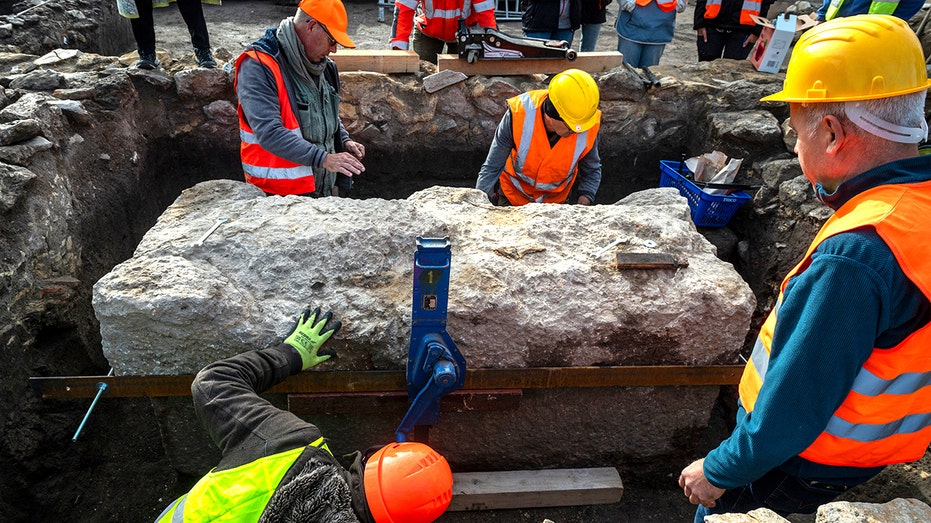
The recent unsealing of a hermetically sealed Roman sarcophagus in Óbuda, Hungary, offers an unparalleled glimpse into the ancient world—a snapshot of life, death, and cultural practices that have remained untouched for nearly two millennia. Beyond its immediate archaeological significance, this discovery prompts a deeper exploration of Roman burial customs, social stratification, and how modern archaeology is redefining our understanding of history’s preserved secrets.
The Bigger Picture: A Glimpse into Roman Society in Pannonia
Óbuda, known historically as Aquincum, was a vital Roman frontier city situated along the Danube River, serving as a military and administrative hub in the province of Pannonia. Roman influence in this region persisted until the decline of the Western Roman Empire, making it a critical archaeological site for understanding frontier life and cultural integration.
Burial practices in Roman Pannonia, particularly among the elite and well-to-do, often reflected a blend of Roman traditions and local customs. The presence of high-quality artifacts, jewelry, and carefully crafted sarcophagi suggests a stratified society where social status was vividly expressed through funerary art and grave goods. This also highlights the importance of such tombs in social identity and posthumous reputation, especially in frontier territories where Roman cultural identity was being negotiated and reinforced.
Why This Find is a Paradigm Shift in Archaeology
Most Roman sarcophagi discovered in archaeological contexts have been reused, repurposed, or looted over the centuries. The fact that this sarcophagus was hermetically sealed—completely untouched since the 3rd century—makes it a time capsule, offering an authentic view into ancient burial rituals. Its state of preservation challenges prior assumptions about the prevalence of grave disturbance and reuse, especially in urban and semi-urban Roman sites.
Furthermore, the identification of a young woman with personal adornments such as amber jewelry and a bone hairpin signifies the importance of gendered identities in Roman funerary contexts. The personal items and careful construction of the tomb reflect the social and emotional investment of her family, emphasizing the significance of individual identity over mere social hierarchy.
Expert Perspectives: Reimagining Roman Death and Society
Dr. Gergely Kostyál, a renowned expert in Ancient Rome, underscores that the primitive yet elaborately crafted sarcophagus suggests a person of high social standing. His insight is bolstered by the rarity of intact, non-reused Roman sarcophagi from this period, which historically indicates a cultural shift away from monumental tombs towards simpler burial practices later in Roman history.
Marine archaeologist Dr. Lucia Martinez comments that such discoveries exemplify how frontier regions like Pannonia were not merely peripheral zones but active agents in the cultural and material exchanges that shaped Roman identity. The preserved artifacts, including coins and glass vessels, further inform us about trade routes, economic status, and daily life in the 3rd century.
The Data and Evidence: Decoding Social Significance Through Artifacts
Archaeological data reveal that the woman was likely of higher socio-economic status, inferred from her jewelry, embroidered fabric, and the craftsmanship of her burial. The 140 coins found in her tomb provide a wealth of economic data: inscriptions, mint marks, and coinage types can detail trade relationships, economic stability, and even political messages from the period.
Additionally, the presence of bronze figures and glass vessels points to specialized crafts and personal belongings indicative of a wealthy lifestyle. These objects collectively portray a community imbued with cultural resilience and material wealth, even amidst the tumult of the third century—a period marked by crises such as invasions and economic decline.
Looking Ahead: The Potentials of the Mud Layers and Future Excavations
The layers of mud covering the tomb suggest the potential for discovering more artifacts—jewelry, personal items, or even organic materials like textiles that could yield DNA analysis. Such findings could unlock information about diet, health, and familial lineage, deepening our understanding of individual lives in Roman Pannonia.
Future excavations and scientific analyses, including isotopic and DNA studies, could reveal migration patterns, familial relationships, and even possible connections to other Roman sites. This discovery also contributes to ongoing debates about the social hierarchies and cultural integration at the frontiers of the Roman Empire.
The Bottom Line: A Window into the Past’s Unspoiled Secrets
This discovery of an untouched Roman tomb offers more than just artifacts; it provides a narrative of individual life, social status, and burial customs that have survived through time’s relentless march. It punctuates the importance of respecting and preserving such sites, as each artifact helps reconstruct the complex tapestry of Roman frontier societies. Ultimately, it reminds us that history’s most profound stories are often buried just beneath the surface, waiting to be rediscovered and reinterpreted for generations to come.
Topics
Editor's Comments
This discovery exemplifies how archaeological breakthroughs are crucial for challenging long-held assumptions about the past. The untouched state of this sarcophagus not only provides a pristine window into Roman frontier life but also emphasizes the importance of meticulous preservation. As we analyze these artifacts, we must remain cautious about over-interpretation, yet excited about the new questions each find raises—particularly regarding social hierarchies and personal identity in a turbulent era of Roman history. It’s a poignant reminder that beneath layers of earth and time, human stories of love, status, and mortality continue to resonate across centuries.
Like this article? Share it with your friends!
If you find this article interesting, feel free to share it with your friends!
Thank you for your support! Sharing is the greatest encouragement for us.