
Alabama, Chuck Todd, and the CFP: Inside a Growing Crisis of Trust in College Football

Sarah Johnson
December 8, 2025
Brief
Chuck Todd’s blast at the College Football Playoff over Alabama’s seeding reveals a deeper crisis: how money, power and opaque committees are eroding trust in college football’s legitimacy.
Chuck Todd vs. the CFP: What an Alabama Seeding Controversy Reveals About Power, Money, and Trust in Sports
When a veteran political journalist like Chuck Todd calls the College Football Playoff (CFP) selection committee a “corrupt joke,” he’s doing more than venting about his favorite sport. He’s importing the language of political dysfunction into the world of college football — and that tells us something important about where American sports, money, and public trust now intersect.
The immediate controversy is straightforward: Alabama, with three losses and a lopsided SEC Championship defeat to Georgia, stayed at No. 9 in the CFP rankings. Todd, a Miami native pleased that his Hurricanes slipped into the field, blasted the committee for not dropping Alabama after the SEC title loss. His reaction wasn’t unique — but his choice of words, and his background, highlight a deeper story about how fans increasingly see major sports institutions as opaque, conflicted, and politically influenced.
How We Got Here: The CFP’s Long War Between “Best” and “Most Deserving”
The CFP was created in 2014 to replace the widely loathed Bowl Championship Series (BCS), which relied heavily on computer rankings and polls to name two title game participants. The promise of the CFP was human judgment: a 12-person committee weighing data, schedules, injuries, and “game control” to identify the four — now expanded to 12 — best teams in the country.
But baked into that mission is a core ambiguity: does “best” mean the most talented, the most accomplished, or the most marketable? The committee’s own public criteria list factors like strength of schedule, conference championships, head-to-head results, and injuries. Yet in practice, decisions have often seemed to tilt toward blue-blood brands and television value.
Historically, the CFP era is filled with flashpoints that look a lot like this Alabama debate:
- 2014: TCU and Baylor, both with strong résumés, were jumped by Ohio State after the Buckeyes destroyed Wisconsin in the Big Ten title game. The message: late-stage dominance and brand power matter.
- 2017: Alabama reached the playoff without even winning its division, edging Big Ten champion Ohio State. “Best vs. deserving” became a national argument.
- 2023: An undefeated Florida State team was left out after its starting quarterback was injured, making way for one-loss SEC champ Alabama. Many fans and analysts saw that as the moment the CFP openly prioritized predictive TV ratings and “eyeball test” over wins.
This latest episode — a three-loss Alabama sitting at No. 9 after a 28–7 loss in the SEC Championship and earlier defeats to Florida State and Oklahoma — lands on a fan base already primed to believe the system is biased in favor of certain programs, conferences, and brands.
Why Chuck Todd’s Critique Lands Differently
On its face, Todd is just another angry fan on X complaining that Alabama didn’t fall further. But his political pedigree changes the resonance of his words.
For years, Todd covered a different kind of committee: congressional panels, election boards, and Supreme Court confirmations. By calling the CFP committee “corrupt,” he’s drawing an implicit analogy between:
- Political legitimacy — whether elections and institutions can be trusted to act fairly.
- Sporting legitimacy — whether championships are earned on the field or manufactured in a boardroom.
What Todd is really articulating, perhaps unconsciously, is a broader American frustration: decisions that claim to be based on neutral criteria are increasingly viewed as outcomes of power, money, and backroom influence. This is exactly the dynamic that has eroded trust in elections, courts, public health agencies — and now, sports.
The Power Structure Behind the CFP: Follow the Money
To understand why Alabama’s seed is so controversial, we have to look at incentives. The formal job of the CFP committee is to rank teams. The underlying economic reality is that the CFP is part of a multibillion-dollar media ecosystem, dominated by:
- Television contracts: The CFP’s media rights deal runs into the billions, with ratings heavily dependent on recognizable brands like Alabama, Ohio State, Michigan, and Texas.
- Conference politics: The SEC and Big Ten are now effectively “super leagues,” controlling much of the sport’s top talent and fan attention. Their champions and contenders are incredibly valuable properties.
- Brand equity: A team like Alabama doesn’t just bring wins — it brings alumni donations, merchandise sales, and national fan interest.
When a three-loss Alabama remains in a favorable position, fans aren’t just questioning whether the committee got a ranking wrong. They’re asking whether the criteria themselves are shaped, consciously or not, by economic and political pressure — the same way many believe corporate interests shape legislation or regulatory policy.
Alabama, Miami, and the Optics of Favorite Sons
There’s another layer here: Todd is both criticizing the committee for allegedly protecting Alabama and celebrating his own team, Miami, making the field. The Hurricanes were ranked above Notre Dame and squeezed into the playoff despite a narrow selection margin. It’s a reminder that fandom and objectivity rarely coexist comfortably — in sports or politics.
From a legitimacy perspective, this matters. When public figures with massive platforms critique institutional decisions while simultaneously cheering their own wins, the underlying message becomes: the system is rigged, except when it benefits me. That mirrors partisan politics, where both parties denounce gerrymandering, dark money, and procedural gamesmanship — until those tools help their side.
In other words, Todd’s reaction is a microcosm of a broader citizen psychology: deep suspicion of institutions, coupled with selective outrage based on personal allegiance.
What Alabama’s Resume Exposes About CFP Criteria
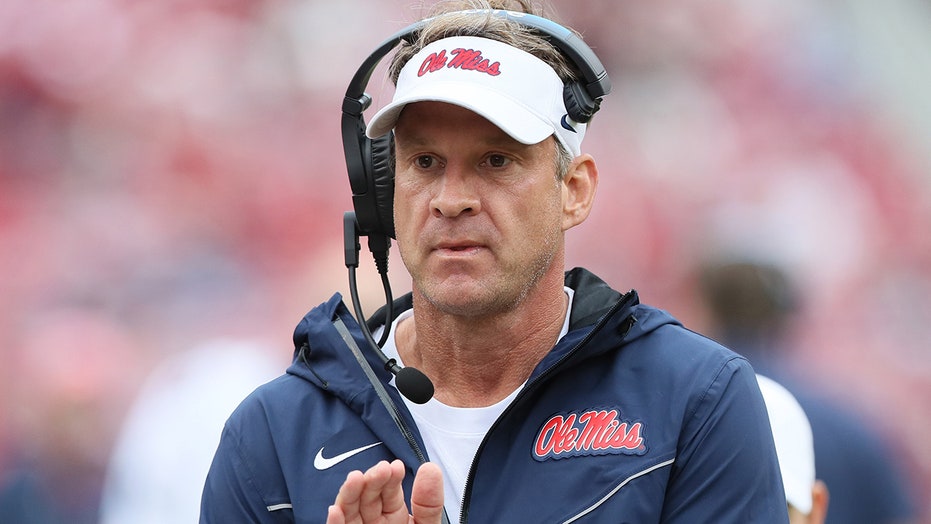
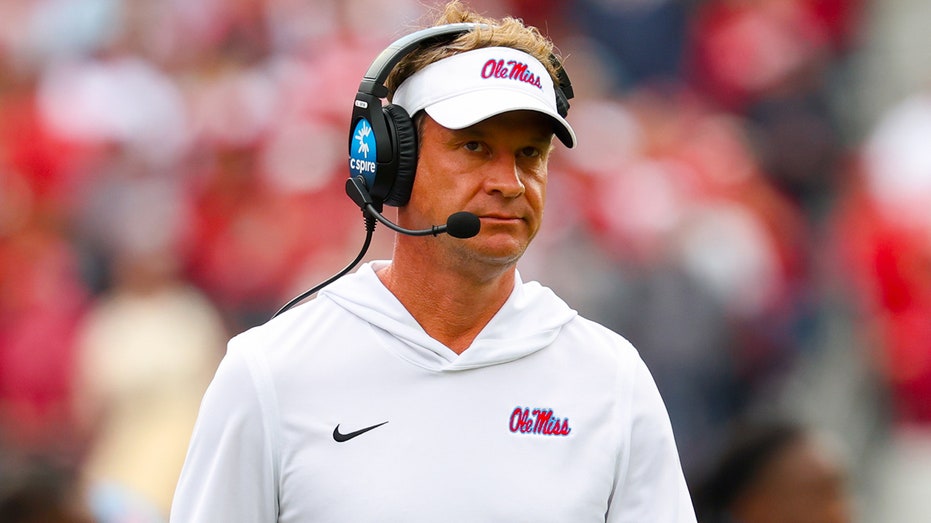
Crimson Tide head coach Kalen DeBoer defended his team by pointing to their “resume” — a word that has become almost talismanic in CFP discussions. Yet Alabama’s 2025 profile shows just how malleable that concept is:
- Three losses: Georgia (28–7 in the SEC Championship), Florida State, and Oklahoma.
- Quality win: A three-point victory over Georgia earlier in the season.
- Strength of schedule: Playing in the SEC, Alabama typically enjoys one of the nation’s toughest slates.
The committee can emphasize different elements of that resume depending on the outcome it wants to justify: one week the emphasis might be “quality wins,” another week “conference championships,” another week “who we’d favor on a neutral field.” That flexibility is by design, but it also makes the process vulnerable to accusations of selective logic.
This is why Todd’s use of “corrupt” resonates beyond a single ranking. When the criteria can be reweighted after the fact, fans experience the process less as a consistent system and more as a series of ad hoc rationalizations.
The Broader Trend: Sports as Another Arena of Institutional Distrust
In the last decade, sports have increasingly mirrored the fractures of American public life:
- Realignment and consolidation: Conference reshuffling — Texas and Oklahoma to the SEC, USC and UCLA to the Big Ten, and others — has been driven almost entirely by TV money, often at the expense of regional rivalries and fan experience.
- NIL and the transfer portal: The explosion of athlete compensation and player movement has made rosters more fluid but also more transactional, reinforcing the sense that college sports is now a quasi-professional entertainment product.
- Expanded playoff: The move to 12 teams was sold as expanding opportunity, but it also dramatically increases inventory for media partners, with more high-value games and more ad slots to sell.
Against this backdrop, every controversial ranking feels like another example of systems serving money first and competitive purity second. Todd’s choice of the word “corrupt” is part of a broader linguistic shift: fans now talk about sports governance the way they talk about rigged primaries, biased courts, or captured regulators.
What Experts Say About Perception vs. Reality
Sports economists and governance experts often emphasize that you don’t need literal bribery or explicit collusion for a system to function in ways that systematically favor certain outcomes. Structural incentives do much of the work.
As sports law scholar Michael McCann has written in similar controversies, “When decision-makers are chosen by the very institutions that profit most from certain outcomes, you have an inherent conflict of interest — even if everyone behaves ethically.” The perception of partiality becomes almost inevitable.
Likewise, media scholar and former ESPN ombudsman Robert Lipsyte has long argued that the line between sports coverage and sports promotion is blurry. Networks that broadcast the games also shape the narrative around which matchups are compelling, which programs are “storied,” and which teams are really “playoff material.” That narrative feedback loop then influences how committee members — many of whom consume the same media — see the sport.
What’s Being Overlooked: The Quiet Erosion of Regular-Season Meaning
The most important long-term story might not be whether Alabama should be ninth, eleventh, or twelfth. It’s how controversies like this gradually erode the perceived value of the regular season.
If a three-loss blue blood can still be comfortably inside the playoff field, fans of smaller programs reasonably wonder: what, exactly, is our path? The more the system appears to guarantee spots to certain brands, the less incentive casual fans have to invest in week-to-week results — especially for teams outside the SEC and Big Ten.
The irony is that the expanded playoff was supposed to protect against outrage by bringing more teams into the tent. Instead, it risks shifting the outrage from “we were left out entirely” to “we were never truly considered because we’re not a ratings monster.” That’s a subtler, but potentially more corrosive, form of disenchantment.
Looking Ahead: Can the CFP Rebuild Trust?
There are a few reforms that could begin to restore confidence, even if they don’t eliminate controversy:
- Greater transparency: Publishing more detailed deliberation notes, ranking rationales, and internal metrics would make it harder to hide behind vagueness like “eye test.”
- Clearer weighting of criteria: Even a rough weighting (for example, conference championships > head-to-head > strength of schedule > margin of victory) would reduce the perception of arbitrary logic.
- Independent voices: Including more members who are not directly tied to power conferences — such as independent analysts, former players from Group of Five schools, or non-football faculty — could broaden perspectives.
None of this will quiet debates entirely. Fans will always argue. But the shift we’re seeing — from “you’re wrong” to “you’re corrupt” — is about legitimacy, not just disagreement. If the CFP doesn’t take that seriously, it risks becoming another American institution most people participate in, but fewer and fewer genuinely trust.
The Bottom Line
Chuck Todd’s fury over Alabama’s seeding isn’t just a sports-radio rant. It’s a revealing data point in a larger story: Americans increasingly see major institutions, from politics to college football, as governed by opaque committees whose decisions reflect power and profit more than transparent, consistent rules.
Alabama’s place in the bracket will eventually be settled on the field against Oklahoma. The real question is whether fans believe the path to that matchup was fair — or, as Todd puts it, a “corrupt joke.” That question will outlast this season, and it will shape how the next generation of fans relates to the sport.
Topics
Editor's Comments
What stands out in this episode isn’t the specific ranking — reasonable people can disagree about where a three-loss Alabama belongs — but the speed with which the conversation jumped to accusations of corruption. That rhetorical escalation mirrors a broader cultural pattern: in politics, public health, and even local school boards, disagreement quickly morphs into claims that the system itself is illegitimate. Sports used to be a partial refuge from that dynamic, a place where fans argued about calls and rankings but broadly accepted the structure of the competition. The College Football Playoff, with its closed-door committee and billions in TV money, has eroded that buffer. Going forward, the CFP’s biggest challenge isn’t just balancing ‘best’ versus ‘deserving’; it’s preserving the notion that the contest is real and not scripted. If fans conclude outcomes are effectively preordained by brand value and conference affiliation, the playoff may still draw ratings in the short term, but it will be quietly hollowing out the trust that makes those ratings sustainable over decades.
Like this article? Share it with your friends!
If you find this article interesting, feel free to share it with your friends!
Thank you for your support! Sharing is the greatest encouragement for us.