Arch Manning’s 2026 Return to Texas: How One Decision Could Reshape the Quarterback Playbook

Sarah Johnson
December 16, 2025
Brief
Arch Manning’s choice to return to Texas in 2026 is more than a draft delay. It’s a strategic bet on development, NIL-era economics, and Texas’ SEC ambitions, reshaping how elite QBs manage their careers.
Arch Manning Choosing Texas Over the NFL (For Now) Is About More Than One Season
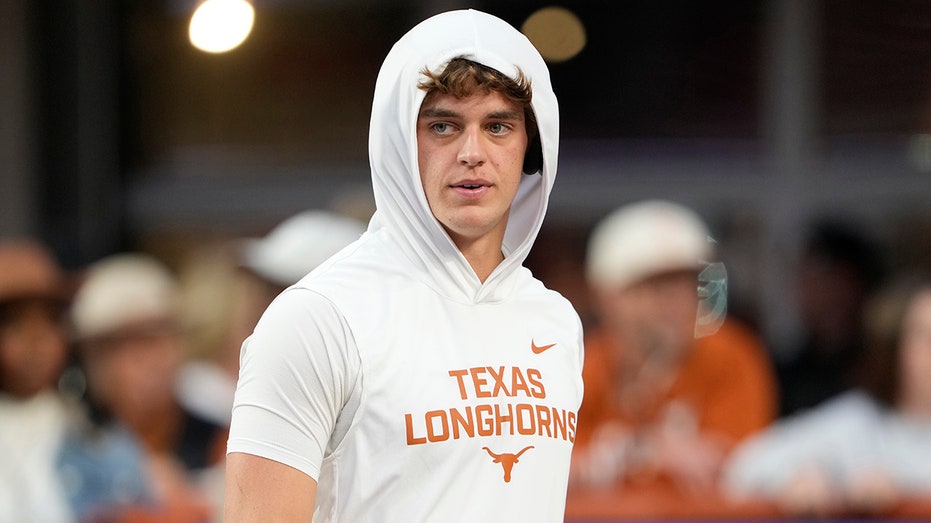
Arch Manning’s reported decision to return to Texas for the 2026 season, rather than declare early for the NFL Draft, looks on the surface like a routine “one-more-year” choice. It isn’t. It’s a flashpoint where family legacy, the changing economics of college football, brand management, and the new SEC reality all collide.
In an era when top quarterbacks bolt the moment draft analysts whisper "first-round pick," Manning’s move signals a different calculation: one that prioritizes controlled development, long-term brand value, and the pressure of expectations over immediate cash and draft status. For Texas, it’s also a referendum on whether it can truly capitalize on the Manning name to complete its return to national power.
The Bigger Picture: A Manning in a Different Era
To understand this choice, you have to understand two timelines at once: the family timeline and the sport’s timeline.
The Manning Family Playbook
The Mannings have long treated quarterback careers like long-term investments, not short-term paydays.
- Archie Manning played at Ole Miss and then endured a brutal NFL career with the Saints in the 1970s, taking a beating behind bad offensive lines. That experience shaped how the family thinks about fit, stability, and circumstances.
- Peyton Manning famously stayed at Tennessee for his senior season in 1997 despite being a lock to be a top pick. He walked away with a degree, a Heisman near-miss, and an even stronger draft profile — ultimately going No. 1 overall and becoming the prototype for the “finished product” franchise QB.
- Eli Manning stayed four years at Ole Miss and then orchestrated a draft-day trade to avoid a bad team fit, reinforcing the family’s preference for controlling as many variables as possible.
Arch’s decision is consistent with that family ethos: don’t just get to the NFL, arrive ready — physically, mentally, and situationally — to succeed for a decade or more.
College Football Has Changed — and So Has the Risk Calculation
But unlike his uncles, Arch is playing in the NIL and transfer portal era, where the cost-benefit equation of staying in school versus going pro has fundamentally shifted.
- NIL money blunts the financial urgency. A quarterback with the Manning name at Texas is not living on a stipend. While figures aren’t public, industry insiders routinely suggest that elite QBs at flagship programs can earn low to mid-seven figures in NIL deals. That’s not top-10 NFL money, but it’s enough to make “one more year” much less risky financially.
- Brand equity may be worth more than short-term draft position. Arch isn’t just a prospect; he’s a multi-generational brand. Every extra year he can spend as the face of Texas — especially in the SEC — adds to his visibility and commercial appeal.
- Transfer portal pressure cuts both ways. High-profile QBs are constantly pitched by other programs. By recommitting to Texas, Arch is not just rejecting the NFL for now; he’s also signaling he won’t be a one-foot-out-the-door portal candidate.
In that sense, this isn’t a throwback to the 1990s. It’s a modern version of the Manning strategy, adapted to a world where college can pay, and staying can be part of a carefully engineered career arc.
What This Really Means for Texas, the SEC, and the Quarterback Market
Texas: From Hype to Accountability
Texas entered the 2025 season ranked No. 1 and finished with a deeply uneven year: narrow losses to Ohio State and Florida, a blowout defeat to Georgia, and a season salvaged somewhat by an upset win over Texas A&M. Arch’s stat line — 2,942 passing yards, 24 passing TDs, 244 rushing yards, eight rushing TDs — suggests productivity, but not the kind of dominance expected from a preseason top team led by a generational surname.
By returning, Arch is implicitly accepting responsibility for unfinished business. That matters in three ways:
- Program credibility. Texas has been selling recruits and donors on a narrative: that the Longhorns are back, ready to be an annual playoff contender. A quarterback who leaves after an underachieving season risks reinforcing the old narrative of Texas as a hype machine. Staying gives the program a chance to prove it can build sustainably around a star.
- Locker-room dynamics. Players notice who leaves when things go sideways. A returning star quarterback who could have jumped ship strengthens internal buy-in and leadership credibility — especially going into another brutal SEC schedule.
- Coaching validation. Steve Sarkisian’s reputation as a quarterback developer is now directly tied to what Arch becomes. A decision to stay is a vote of confidence in Sarkisian’s system and staff, at a time when high-profile programs across the country are losing QBs to the portal amid instability.
The SEC Arms Race: Stability Is the New Advantage
Texas is still relatively new to the SEC ecosystem, where quarterback play and continuity can make or break seasons. In the past decade, the league’s champions have almost always featured high-level, often NFL-bound quarterbacks — from Joe Burrow and Tua Tagovailoa to Bryce Young and Stetson Bennett.
In that context, having an experienced Arch Manning returning in 2026 is a competitive asset:
- Against Georgia and other blue bloods, Texas can now plan around a stable QB room while rivals cycle through transfers or early departures.
- In recruiting battles, Texas can point to Arch’s decision as proof that elite QBs trust the program to develop them for the long game, not just a quick draft ticket.
- In the expanded playoff era, continuity at quarterback becomes even more valuable — more games, more attrition, more need for experienced decision-makers.
The NFL Draft Implications: Risk, Reward, and Perception
Some draft pundits have floated the idea that Manning could be the first quarterback — or even the first player — off the board in his earliest eligible draft. That’s projection as much as production at this stage. His 2025 stats are solid but not Heisman-caliber, and the team’s results were mixed.
By waiting, he’s making a calculated bet on several fronts:
- He can transform from “intriguing legacy prospect” to “unquestioned QB1” of his class. Another year of growth, decision-making improvement, and SEC battle scars can push him into the tier where teams aren’t just interested — they’re willing to build entire franchises around him.
- He can avoid being thrown into a dysfunctional NFL situation too early. The top of the draft is often populated by unstable franchises. Another year gives his camp time to assess which teams are likely to be in position, what schemes they run, and how that aligns with his strengths.
- He risks injury and overexposure. This is the downside rarely acknowledged in feel-good narratives. A bad 2026, or a significant injury, can damage draft stock. But given his NIL cushion and family resources, the Mannings can afford to take a longer view.
Expert Perspectives: Development vs. Departure
Quarterback development specialists consistently stress that mental and situational readiness often matter more than raw talent entering the NFL.
As QB guru Jordan Palmer has noted in multiple interviews about young passers, “The biggest mistake is assuming because a guy is eligible and talented, he’s ready. The NFL isn’t about traits; it’s about consistency, decision-making, and being able to handle chaos week after week.” Arch’s 2025 season showed flashes but also inconsistency — exactly the kind of profile that benefits from an additional year in college.
Sports economist Dr. Patrick Rishe has argued that NIL fundamentally shifts the calculus for stars: “For elite quarterbacks, the opportunity cost of staying in school has never been lower. They’re already monetizing their name at a high level. That allows them to prioritize development and brand building without sacrificing their financial future as drastically as previous generations.” Manning’s situation is a textbook case of this dynamic.
From a coaching perspective, former offensive coordinator and analyst Dan Orlovsky has frequently emphasized on-air that processing speed, protections, and pre-snap recognition are what separate NFL-ready QBs from projects. Another season in a complex Sarkisian offense, facing SEC defenses, gives Arch a real chance to enter the league closer to “Day 1 starter” than “multi-year project.”
Data & Evidence: What the Numbers Suggest
We only have a partial stat line, but even that tells a story.
- 2,942 passing yards and 24 TDs suggest a productive but not overwhelming season by modern college standards, particularly given the preseason No. 1 ranking. For comparison, recent elite college QBs in playoff-level seasons routinely surpass 3,500–4,000 yards and 30+ TDs.
- 244 rushing yards and eight rushing TDs indicate dual-threat capability, a valuable trait in the current NFL. However, that also means more hits, raising the importance of physical maturation and decision-making in the pocket.
- Team performance versus elite opponents — a seven-point loss to Ohio State, an eight-point loss to Florida, and a demolition at the hands of Georgia — underscores that Texas, and Arch, have not yet consistently solved top-tier defenses.
The statistical picture aligns with Sarkisian’s comments: a quarterback who is clearly improving physically and mentally, but not yet a finished product. In today’s NFL, where rookie quarterbacks are often thrown into starting roles immediately, that’s a crucial distinction.
What the Mainstream Conversation Is Missing
Most reaction will focus on two angles: what this means for Texas’ 2026 season, and whether Arch is “passing up” NFL money. Both miss deeper undercurrents.
- This is a test case for the NIL era’s impact on draft decisions. If Arch thrives in 2026 and enters the NFL more polished — without suffering financially in the interim — he becomes a model for other elite QBs who can now afford to stay.
- It’s also a test case for legacy management. The Mannings are consciously managing how Arch transitions from high school prodigy and social-media phenomenon to professional quarterback. They’ve seen the careers of hyped young QBs flame out under too much pressure, too soon, in the wrong systems.
- This choice subtly reaffirms Texas as a long-term platform for NFL careers, not a stepping stone. In a landscape where some programs are seen as launching pads and others as finishing schools, Arch is effectively labeling Texas as the latter.
Looking Ahead: What to Watch in 2026
If Arch does indeed return, the 2026 season will be judged by a harsher standard than 2025. Several questions will define whether this decision looks brilliant or misguided in hindsight:
- Can Arch make a leap in efficiency? Completion percentage, third-down conversion, red-zone decision-making, and turnover avoidance will matter more to NFL evaluators than raw yardage.
- Can Texas beat the elite, not just hang with them? Close losses are no longer a moral victory when you have a QB with first-round buzz, SEC resources, and a legacy brand.
- How does he handle scrutiny? The hype around Arch has been relentless since high school. A high-expectation year with NFL talk swirling will test his mental resilience in a way few college quarterbacks experience.
- Does the supporting cast match his trajectory? Offensive line stability, receiver development, and scheme continuity will be critical. Even Peyton needed Marvin Harrison and Edgerrin James; no quarterback does this alone.
The Bottom Line
Arch Manning’s reported decision to return to Texas in 2026 isn’t about fear of the NFL or indecision about his future. It’s a calculated move — steeped in family history, shaped by NIL economics, and aligned with a long-term strategy to enter the NFL as a fully formed franchise quarterback rather than a rushed experiment.
For Texas, it’s an opportunity and a challenge: they now have one more year to prove that pairing the Manning name with the Longhorn brand can produce not just headlines, but hardware. For college football, it’s an early sign that in the NIL era, staying might become the new leaving — at least for those rare players who can afford to play the long game.
Topics
Editor's Comments
One underappreciated aspect of Arch Manning’s reported decision is how sharply it contrasts with the churn we’ve normalized around major programs. Texas is operating in a marketplace where quarterbacks are increasingly transactional: they transfer twice, cash in, then leave at the first hint of draft buzz. Arch’s move runs counter to that trend, and that alone has signaling power. It suggests that at least for some players and families, college is again being viewed as a multi-year developmental stage rather than a brief showcase. The more interesting question is whether this becomes a template or an outlier. The Manning family has resources and brand power that most players do not, and that insulation makes patience easier. If Arch succeeds, though, his path could subtly reshape expectations around what “ready” should look like for quarterbacks with first-round aspirations — and put new pressure on both college staffs and NFL front offices to rethink how quickly they push young passers into the fire.
Like this article? Share it with your friends!
If you find this article interesting, feel free to share it with your friends!
Thank you for your support! Sharing is the greatest encouragement for us.