DJ Lagway Leaving Florida: How One Transfer Exposes College Football’s New Power Dynamics

Sarah Johnson
December 16, 2025
Brief
DJ Lagway’s transfer from Florida is more than a portal move. It exposes how NIL, coaching volatility, and quarterback economics are reshaping power, loyalty, and leverage in modern college football.
DJ Lagway’s Transfer Shockwave: What One Quarterback Says About the New Economics of College Football
On the surface, DJ Lagway entering the transfer portal looks like a familiar story: a five-star quarterback, injuries, a coaching change, and a fresh start. But Lagway’s exit from Florida is more than a roster move. It’s a window into how elite college football is being reshaped by money, power, and instability — and why the sport is entering a phase where even programs like Florida can no longer assume they can keep their stars.
Florida’s Star QB Leaves: Why This Matters Beyond Gainesville
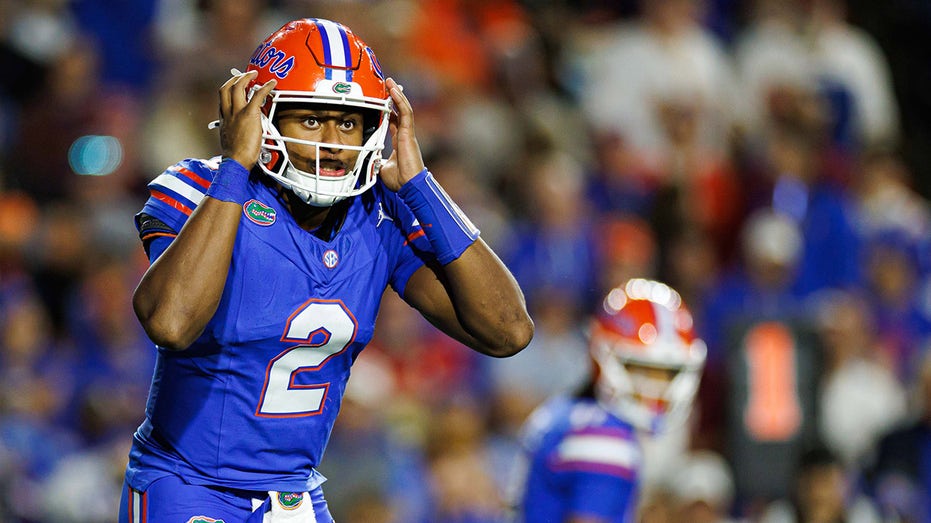
Lagway was not a marginal figure. He was the face of Florida’s offensive future: MaxPreps National Player of the Year, Mr. Texas Football, and a nationally recruited quarterback who chose Florida over multiple powerhouse programs. By the time he announced his intention to enter the transfer portal, he was a proven SEC starter with 2,264 passing yards and 16 touchdowns in 2025 despite a string of injuries.
The key detail: he was reportedly in line to earn more than $3 million in 2026 through name, image and likeness (NIL) deals, with blue-chip partners like Gatorade, Jordan Brand, Mercedes-Benz, Lamborghini Orlando, T-Mobile, and Beats by Dre. When a player walks away despite that kind of NIL portfolio, it signals that the underlying dynamics — coaching stability, trust, system fit, career trajectory — are powerful enough to outweigh even seven-figure incentives.
In other words, this isn’t just a player leaving. It’s a stress test of the NIL-era model for keeping talent, and Florida just failed it.
How We Got Here: From Program Loyalty to Player Leverage
Historically, a player of Lagway’s profile and opportunity would have been almost immovable. Before 2018, transferring typically cost players a year of eligibility at the FBS level unless they secured a waiver. High-profile quarterbacks stuck with their choices longer, often enduring multiple years behind incumbents or in suboptimal systems.
The modern framework emerged in three overlapping waves:
- 2018–2021: The Transfer Portal Era Begins. The NCAA formalized the transfer portal in 2018, then adopted the one-time transfer rule in 2021, allowing players to move once without sitting out. Quarterbacks, in particular, seized on the new freedom, with examples like Joe Burrow (Ohio State to LSU) and Jalen Hurts (Alabama to Oklahoma) redefining transfer success.
- 2021–Present: NIL Supercharges Mobility. When NIL became legal in 2021, the logic of staying put changed dramatically. Players could now monetize their brand, and collectives emerged to structure quasi-marketplace offers around recruitment and transfers.
- 2023–2025: Coaching Volatility Explodes. Power Five programs have shortened patience for rebuilds. Florida’s firing of Billy Napier midseason in 2025 fits a broader pattern: high expectations, big buyouts, and fast trigger fingers. For players recruited specifically to fit one coach’s vision, that volatility is destabilizing.
Lagway is at the intersection of all three forces: empowered by the portal, highly monetizable via NIL, and suddenly playing for a new head coach (Jon Sumrall) he didn’t commit to.
What’s Really Driving Lagway’s Exit
The official statement talks about prayer, reflection, and thoughtful consideration. But the underlying drivers are structural, not sentimental. Three factors stand out:
1. Coaching Change and System Fit
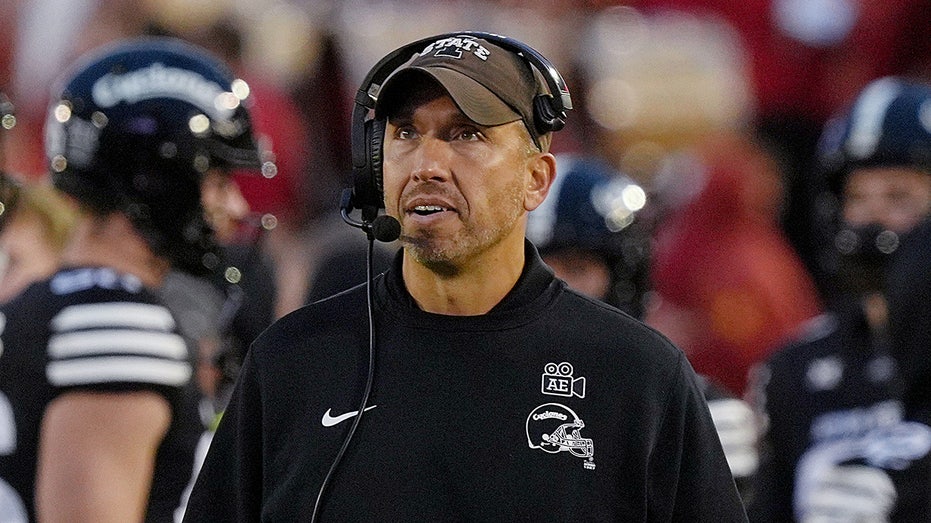
Lagway committed to Billy Napier’s regime, which recruited him as the cornerstone of a long-term rebuild. When Florida fired Napier mid-2025 and hired Jon Sumrall from Tulane, Lagway’s role effectively went back on the negotiating table.
Coaching changes don’t just alter personalities; they alter schemes, play-calling, and roster priorities. A quarterback can go from centerpiece to placeholder overnight depending on whether the new coach prefers a different style — more mobile, more pro-style, more RPO-heavy, or a different tempo. For a player with pro aspirations and limited eligibility, staying in a system that doesn’t fully showcase his strengths is a direct threat to his NFL draft stock.
2. Injuries and Career Management
Lagway’s injury history is already significant: core-muscle surgery, a sore throwing arm, calf strain, and a hamstring issue across the 2024–2025 window. For quarterbacks, especially those with dual-threat elements, the combination of lower-body and core injuries is more than a setback; it’s a warning about usage, protections, and training management.
If Lagway or his camp perceived that Florida’s offensive line, strength and conditioning approach, or usage patterns were putting him at higher risk, leaving becomes less about comfort and more about preservation of a multimillion-dollar future. In the modern era, where NFL teams heavily scrutinize medical history and durability, each season of punishment in the wrong environment carries opportunity cost.
3. The New NIL Calculus: It’s Not Just About the Top-Line Number
On paper, walking away from more than $3 million in NIL at Florida looks irrational. But NIL deals are not traditional guaranteed contracts; they are often contingent on presence, performance, and ongoing market value. If a player believes he can:
- Boost his on-field performance in a different system,
- Increase his national profile (e.g., playoff contention, TV exposure), and
- Raise his eventual NFL draft position,
then the total long-term financial return could easily exceed any near-term NIL loss. For a quarterback, moving from a 2nd–3rd round projection to a 1st-round pick can mean a difference of $10–20 million in guaranteed money under current rookie wage scales.
Lagway’s move underscores that NIL is part of the equation, not the whole. Elite players are starting to treat NIL as a bridge to the NFL, not a substitute for it.
The Bigger Picture: Florida’s Identity Crisis and the Emerging Power Map
Florida’s loss of Lagway fits a broader pattern: traditional powers struggling to adapt to the combined shock of NIL, the portal, and SEC escalation.
- Roster Volatility. Programs that once sold stability and a clear developmental path now operate in an environment where premier talent can opt out after one or two seasons if the trajectory looks off.
- Brand Erosion Risk. When multiple high-profile players depart, it erodes the perception that a program can be trusted with elite careers. Recruits talk, and so do their parents, trainers, and agents.
- Arms Race Pressures. Florida is competing not just with in-state rivals like Florida State and Miami, but with national brands that have better recent track records of turning QBs into first-rounders (think USC, Texas, Ohio State, LSU, Alabama).
The Lagway decision reinforces a harsh reality: reputation and facilities are no longer enough. Programs must demonstrate coherent vision, coaching stability, and proven development pipelines for specific positions. Florida, in the Lagway era, could not make that case convincingly.
Expert Perspectives: How Coaches, Agents, and Economists See This
Sports economists and player representation experts have been anticipating this kind of move.
Dr. Victor Matheson, a sports economist at the College of the Holy Cross, has noted in broader NIL commentary that “we’re watching college football trend toward a quasi-free agency system, where short-term contracts, performance incentives, and mobility create a market that looks much closer to professional sports than the old amateur ideal.” Lagway’s situation fits that description almost perfectly.
On the player side, longtime NFL agent and NIL advisor Leigh Steinberg has said in public discussions that for quarterbacks “the decision matrix now starts with: where can I best position myself for the draft? Money matters, but only in the context of that bigger picture.” Lagway’s willingness to leave a seven-figure NIL environment suggests that calculus is firmly in place.
From a coaching standpoint, former college head coach and analyst Urban Meyer has often emphasized that “if you lose the starting quarterback you built your program around, that’s not just a depth chart issue — that’s a cultural and strategic red flag.” Florida now has to answer those questions in recruiting living rooms across the country.
Data Points: Transfers, NIL, and Quarterback Volatility
While hard NIL contract data is opaque, a few trends help frame Lagway’s decision:
- Transfer Growth. Recent NCAA transfer portal windows have seen thousands of FBS players enter, with quarterbacks one of the most mobile position groups. In some cycles, more than 50 FBS programs have seen their starting or expected starting QB depart within a two-year span.
- Quarterback Success Stories. High-profile transfers like Joe Burrow, Jalen Hurts, Caleb Williams, Michael Penix Jr., and Bo Nix have proven that transferring can revive or elevate careers, not derail them.
- NIL Market Stratification. Industry estimates suggest that top-tier college quarterbacks can command mid- to high-seven-figure annual NIL valuations. But those valuations are highly dependent on visibility, program strength, and the perception of NFL potential.
Lagway’s case aligns with a pattern: quarterbacks who feel misaligned with their current situation increasingly see the portal as a rational step, not a last resort.
What Comes Next: Risks and Opportunities for Lagway and Florida
For Lagway
The upside is clear: he can choose a system and staff that aligns better with his health, skill set, and NFL aspirations. If he lands at a program with a strong track record for quarterback development and protection — and if he stays healthy — he could restore or even enhance his first-round potential.
The risks are real, though:
- System Misfire. Picking the wrong scheme or unstable staff could leave him back in the portal or with a diminished profile.
- Medical Red Flags. If injuries linger or recur, NFL teams may label him as high-risk regardless of production.
- Expectations and Scrutiny. As a high-profile transfer, he will face immediate pressure to justify the move. Short leashes are now part of the landscape.
For Florida
Lagway’s departure is a referendum on the program. It will force Florida to address several questions:
- Can Jon Sumrall quickly build credibility as a quarterback developer in the SEC spotlight?
- Will Florida adjust its NIL strategy and messaging to reassure future recruits that they won’t be stranded if coaching changes occur?
- Can the program articulate a coherent identity — offensively and culturally — to counter the perception of instability?
The opening of the NCAA transfer portal on January 2 for a 10-day window creates a compressed timeline. Florida must simultaneously replace Lagway, protect its remaining core, and convince potential transfers that this is a program trending up, not unraveling.
What Most Coverage Will Miss
Much of the surface-level coverage will focus on speculation about where Lagway might land. But the deeper story is this: the traditional hierarchy of college football power is being re-ordered not just by TV deals and conference realignment, but by individual player decisions like this one.
Lagway’s move illustrates that:
- Even flagship SEC programs are now vulnerable to losing their cornerstone players mid-build.
- NIL, far from stabilizing rosters by showering players with money, may actually be increasing mobility by making players more brand-conscious and strategic.
- The era of four-year face-of-the-program quarterbacks at blue-blood programs is fading; the new norm is shorter tenures and more fluid career arcs.
Looking Ahead: What to Watch
Several developments will reveal the true impact of this decision:
- Lagway’s Destination. If he chooses a program with a recent high draft pick at QB, it will confirm that development and exposure outweighed NIL guarantees.
- Florida’s QB Room Response. Do other quarterbacks follow him out the door? Does Florida successfully lure a portal replacement at similar caliber?
- Future NIL Contract Structures. Expect more schools and collectives to push for performance and retention clauses — and more players to insist on flexibility in case of coaching changes.
- NCAA and Legal Pressure. As NIL disputes and transfer-related conflicts grow (as seen in other NIL litigation and buyout arguments), there could be renewed calls for standardized contracts or federal oversight.
The Bottom Line
DJ Lagway’s decision to enter the transfer portal isn’t just a Florida story. It’s a case study in how the modern college football ecosystem works — or fails to. In a landscape defined by rapid coaching turnover, volatile NIL markets, and empowered players, even a $3 million NIL projection and a blue-blood helmet decal can’t guarantee loyalty.
The programs that will thrive in this new era are not necessarily the ones with the biggest stadiums or the loudest traditions, but the ones that can offer what Lagway went looking for elsewhere: coherent vision, quarterback-centric development, credible stability, and a path that optimizes both short-term NIL opportunity and long-term professional success.
Topics
Editor's Comments
What makes the Lagway story particularly revealing is not just that a star quarterback is transferring — that’s becoming common — but that he’s doing so while attached to a sophisticated NIL ecosystem at a blue-blood SEC program. This undercuts a popular assumption that NIL money would essentially lock in elite players once they arrived on campus. Instead, we’re seeing the opposite: as players become more educated about their market value and long-term earning potential, they’re less willing to treat any single school as an immovable destination. For Florida, this should be interpreted less as an isolated personnel loss and more as a signal that the program’s internal narrative doesn’t match the external brand it still trades on. The next few recruiting cycles will test whether Florida can adapt by building a more coherent quarterback development identity, or whether it will become a cautionary example of a legacy program overtaken by more agile, strategically aligned competitors in the NIL and transfer era.
Like this article? Share it with your friends!
If you find this article interesting, feel free to share it with your friends!
Thank you for your support! Sharing is the greatest encouragement for us.