How Fernando Mendoza’s Heisman Win Signals a New Era for College Football Power Dynamics

Sarah Johnson
December 14, 2025
Brief
Fernando Mendoza’s historic Heisman win at Indiana reveals deeper shifts in college football: transfer portal power, expanded CFP incentives, and how a basketball school became a No. 1 playoff seed.
Fernando Mendoza’s Heisman Isn’t Just a Trophy — It’s a Turning Point for College Football’s Power Map
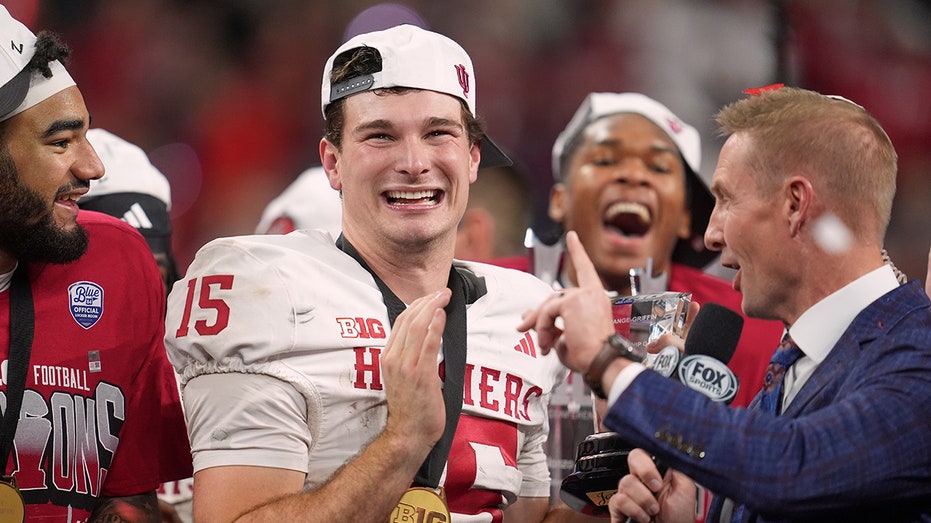
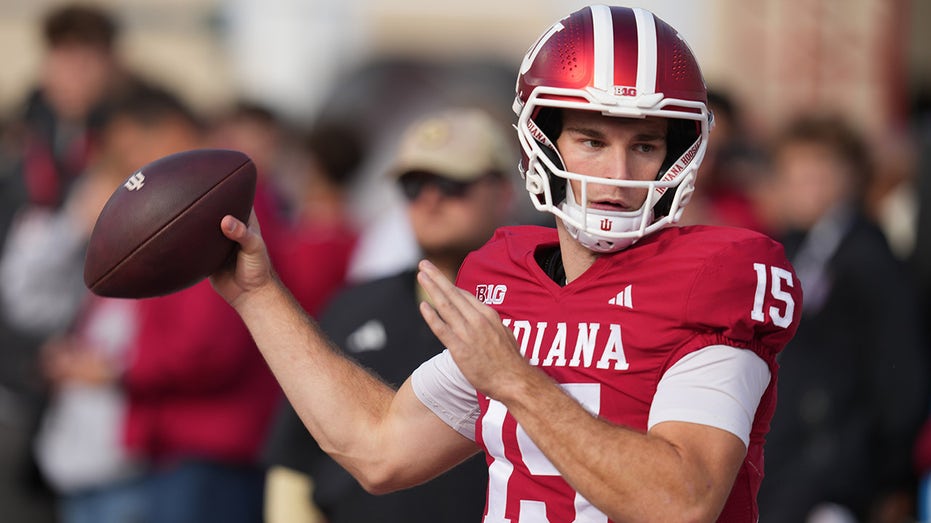
When Indiana quarterback Fernando Mendoza walked off with the 2025 Heisman Trophy, most headlines focused on the feel-good angle: a lightly recruited Miami kid becomes the first Hoosier ever to win college football’s most iconic individual award. That’s a compelling story on its own. But it dramatically understates what this moment actually signals.
Mendoza’s Heisman is a flashing red indicator of three converging forces reshaping college football: the transfer portal revolution, the erosion of traditional blue-blood dominance, and the high-stakes economics of the expanded 12-team College Football Playoff. Indiana — historically an afterthought in the Big Ten pecking order — now has a Heisman winner, a No. 1 ranking, and the top CFP seed. None of that is random.
Indiana’s Heisman Moment in Historical Context
To understand how seismic this is, you have to place Indiana’s breakthrough against nearly a century of Heisman history and Big Ten hierarchy.
The Heisman Trophy has been awarded since 1935. Until Mendoza, Indiana had never produced a winner and had only one previous finalist: running back Anthony Thompson, who finished as the runner-up in 1989. In other words, in 90 years of Heisman history, Indiana had barely been part of the conversation.
Contrast that with the traditional powerhouses. Programs like Ohio State, Notre Dame, Alabama, USC, and Oklahoma have treated Heisman finalists as a semi-regular occurrence and winners as a feature, not a miracle. The Heisman has long doubled as a proxy for which schools sit atop the sport’s talent and publicity pyramid.
Indiana, by almost any metric, was never supposed to be here:
- Historical performance: Indiana has one Big Ten title in the last half-century and a losing all-time record.
- Recruiting rankings: The program has consistently graded out in the bottom half of the Big Ten by blue-chip recruit percentage.
- Brand power: Indiana is widely perceived as a basketball-first school; football was an afterthought in both perception and investment for decades.
Yet in back-to-back seasons, Indiana has produced top-10 Heisman finishers (Kurtis Rourke ninth last year, Mendoza now the winner) and has now set program records in touchdowns and points in consecutive years. That kind of offensive leap rarely happens organically. It usually reflects deliberate structural changes — in scheme, roster construction, and institutional commitment.
The Transfer Portal and the New Talent Economy
One of the most overlooked aspects of Mendoza’s story is where he came from: he was a transfer from California, a once lightly recruited Miami native who didn’t arrive in Bloomington as a five-star savior. He arrived as a second-chance quarterback in a sport that has quietly become the closest thing American college sports has to an open labor market.
The transfer portal, fully normalized over the last five years, has transformed quarterback acquisition. Rather than stockpiling four or five elite high school signal-callers and waiting for them to develop, programs now mine proven talent from other schools — especially players blocked by depth charts at bigger brands or stuck in misfit systems.
Mendoza’s path reflects three broader trends:
- Positional mobility: Quarterbacks are more willing than ever to move if they’re not starting. The days of sitting patiently for three years behind a star are largely over.
- System matching over brand loyalty: Players are increasingly choosing schools that fit their skill set and offer immediate opportunity, rather than chasing logo prestige.
- Portal as a competitive equalizer: Historically mid-tier programs can upgrade quickly if they identify undervalued talent and build systems around those players.
In that context, Indiana’s staff didn’t just “get lucky” with Mendoza. They positioned themselves to benefit from this new reality: an adaptable offensive scheme, proven quarterback development (evidenced by Rourke’s Heisman top-10 last year), and clear opportunity for a QB to be the centerpiece of a high-volume, high-efficiency attack.
Why This Heisman Vote Margin Matters
Mendoza didn’t just win; he dominated. With 2,392 first-place votes, he finished well ahead of Vanderbilt quarterback Diego Pavia (1,435), Notre Dame running back Jeremiyah Love (719), and Ohio State quarterback Julian Sayin (432). That margin tells a story about what voters value in 2025:
- Quarterback centrality: QBs have now won four of the last five Heismans (with Colorado’s Travis Hunter as the rare two-way exception). Mendoza’s 33 passing touchdowns — the most in the nation — and 2,980 passing yards fit the now-familiar statistical profile voters gravitate toward.
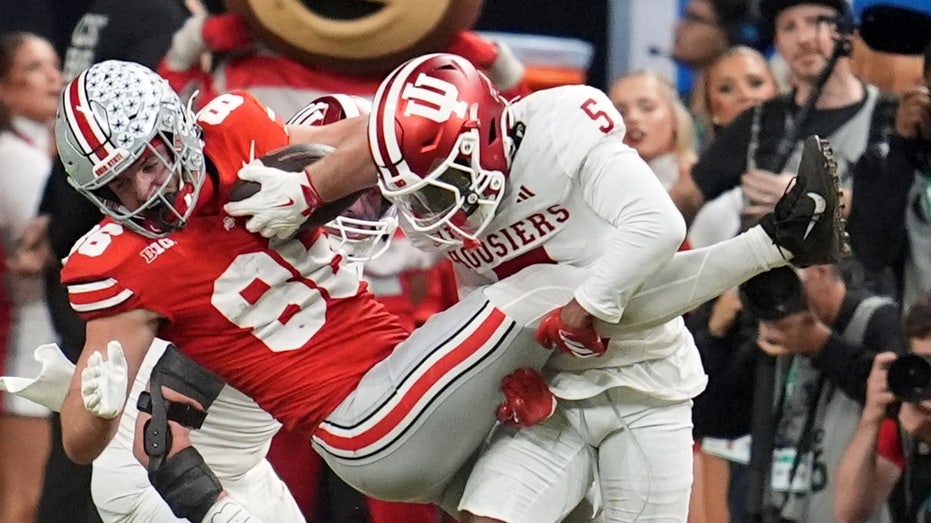
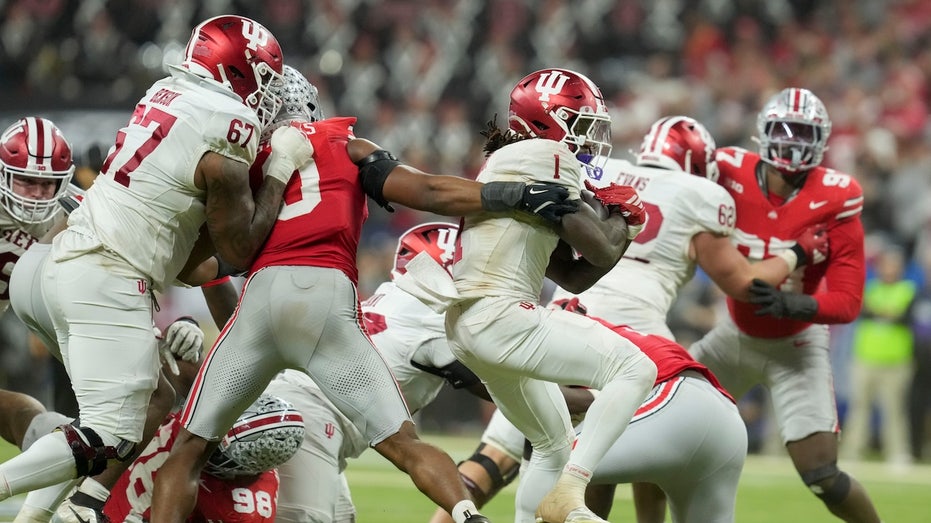
- Team success as a multiplier: Indiana is the nation’s last unbeaten team, ranked No. 1 and the CFP’s top seed. Historically, Heisman winners overwhelmingly come from teams in championship contention. Mendoza’s candidacy was boosted by the Hoosiers’ perfect record and No. 1 ranking.
- Narrative weight: A first-time Heisman from a long-suffering football program on an undefeated run is a narrative voters can’t resist. The award has always blended performance with storyline, and Mendoza had both.
Expert observers note that this year’s vote also continued a subtle trend: non-traditional programs cracking the finalist list more consistently as the sport’s recruiting and talent distribution becomes more fluid.
From Basketball School to Football Contender
Indiana’s rise has broader institutional implications. When a school historically known for basketball suddenly finds itself at the center of the football universe, that doesn’t just change trophy cases — it changes budgets, donor priorities, admissions strategy, and campus culture.
Football, in most major conferences, is the financial engine. A No. 1 ranking and CFP top seed can mean:
- Millions in additional postseason revenue
- Spikes in merchandise sales and licensing
- Increased applications and national visibility (the so-called “Flutie Effect”)
- New leverage in media-rights negotiations as football viewership becomes even more valuable
For Indiana, Mendoza’s Heisman accelerates a potential identity shift: from a school that prides itself on basketball tradition to a dual-sport powerhouse. That’s not merely symbolic; it could influence long-term facilities investments, coaching salaries, and NIL infrastructure priorities.
The Expanded College Football Playoff Factor
It’s not a coincidence that Indiana’s peak season and Mendoza’s breakout coincide with the new 12-team College Football Playoff format. The expanded playoff has changed how programs think about ceilings. In the four-team era, a school like Indiana realistically had to be perfect and lucky to dream of inclusion. In a 12-team model, new pathways exist for rising programs that get hot, recruit creatively, and hit on key transfers.
Indiana didn’t just sneak into the bracket; it grabbed the top seed. That outcome sends two messages across college football:
- Parity is possible, if still limited: While the sport is far from fully egalitarian, the playoff expansion has widened the window enough for a non-traditional power to seize it with the right roster and staff.
- Quarterback acquisition is the fastest way up: As with other recent playoff runs by relative outsiders, a single transformative quarterback — especially a transfer — can accelerate a rebuild from respectability to contention in 1–2 seasons.
Mendoza’s Heisman season thus becomes a case study in how to exploit the expanded CFP world: identify undervalued quarterback talent, build a system that maximizes him, and leverage on-field success into branding and recruiting gains.
What Experts See Behind Mendoza’s Rise
Coaches and analysts who study quarterback play point to several underlying factors beyond the box score numbers:
- System fit: Indiana’s offense appears tailored to Mendoza’s strengths — quick processing, accurate intermediate throws, and enough mobility (six rushing TDs) to punish defenses that over-commit to coverage.
- Continuity and evolution: The fact that Indiana broke scoring and touchdown records two years in a row suggests this isn’t a one-off fluke but the steady maturation of a system now paired with elite execution.
- Psycho-social factors: Being lightly recruited and transferring from another program often fuels a particular kind of chip-on-the-shoulder leadership. Teammates tend to rally around quarterbacks who had to fight their way into the spotlight rather than being anointed at 17.
From a development standpoint, Mendoza’s redshirt junior status matters too. In an era when elite quarterbacks sometimes leave after three years regardless of polish, players with more on-field reps — especially those who had to compete for jobs twice — can actually be more mature leaders and decision-makers.
What This Signals for Recruiting and NIL
Mendoza’s Heisman and Indiana’s No. 1 ranking will echo through recruiting and NIL dynamics, especially in non-traditional recruiting territories like Miami, where Mendoza grew up.
Three likely implications:
- Regional reach expansion: Indiana can now plausibly walk into South Florida living rooms and point to a Miami-born Heisman winner as proof that their program can turn overlooked talent into national stars.
- NIL storytelling: A Heisman winner from a historically modest program is marketing gold. Boosters and collectives can build campaigns around the idea that you don’t need to go to a traditional power to become a national name — which is a compelling pitch to recruits worried about depth charts at blue-blood schools.
- Retention pressure: With success comes poaching. The same portal that delivered Mendoza also makes it easier for current Hoosier stars to leave if they feel under-compensated or under-featured. Indiana’s next test will be using NIL structures to keep its core intact.
Looking Ahead: Is Indiana the New Blueprint or an Outlier?
The crucial question is whether Indiana’s surge — capped by Mendoza’s Heisman — is a repeatable blueprint for the sport or a one-off outlier driven by perfect conditions.
There are reasons to think elements of it are replicable:
- Mid-tier programs can invest in quarterback development and creative offenses to attract portal talent.
- Expanded CFP access incentivizes schools outside the blue-blood elite to make bolder strategic bets.
- Recruiting inefficiencies still exist, especially for late-blooming quarterbacks and players miscast in college schemes.
But there are also structural limits:
- The financial gap between the top of the Big Ten/SEC and everyone else continues to widen.
- Media exposure and entrenched national brands still give traditional powers a substantial advantage in NIL and recruiting.
- Mendoza-level hits in the portal are rare; for every success, there are multiple misses.
The Rose Bowl quarterfinal on Jan. 1 will be more than a playoff game for Indiana; it will be a referendum on whether this version of program-building can hold up under the brightest spotlight. A deep CFP run would embed the Hoosiers into the national consciousness in a way a single Heisman never could.
The Bottom Line
Fernando Mendoza’s Heisman is not just a personal triumph or a feel-good story for Indiana. It’s a revealing snapshot of where major college football is headed:
- Transfer QBs like Mendoza are now central to how programs reinvent themselves.
- Traditional hierarchies are not collapsing, but they are more permeable than they’ve been in decades.
- The expanded CFP is already reshaping who dares to dream, and how those dreams are pursued.
Whether Indiana cements itself as a new-age football power or slides back toward the middle, Mendoza’s 2025 season will be studied in athletic departments across the country as proof that — in this new ecosystem — the distance from irrelevance to the Heisman podium has never been shorter, or more dependent on getting one pivotal decision exactly right.
Topics
Editor's Comments
What’s most striking about Mendoza’s Heisman isn’t just that it came from Indiana, but when it arrived: precisely as college football’s power structure is being renegotiated under pressure from market forces. The expanded playoff, NIL, and the transfer portal are often discussed in isolation, yet Mendoza’s path shows how intertwined they really are. A player once on the margins of the recruiting industrial complex can now move, monetize, and flourish in a system that rewards adaptability more than inertia. The uncomfortable question for traditional powers is whether their old advantages — brand prestige, deep rosters, legacy coaching trees — are actually slowing their ability to pivot in this new landscape. Indiana, with far less historical baggage, may have been freer to design a modern program from the ground up. The contrarian take is that this kind of disruption won’t lead to parity so much as a new stratification: a small group of programs, old and new, that master the portal-NIL-playoff triangle, leaving everyone else even further behind.
Like this article? Share it with your friends!
If you find this article interesting, feel free to share it with your friends!
Thank you for your support! Sharing is the greatest encouragement for us.