Indiana’s First Big Ten Title Since 1945 Shakes the Foundations of College Football

Sarah Johnson
December 7, 2025
Brief
Indiana’s first outright Big Ten title since 1945 is more than an upset. It exposes cracks in college football’s power structure and tests whether underdogs can truly break into the playoff elite.
Indiana’s First Outright Big Ten Title Since 1945 Is About Much More Than a Missed Kick
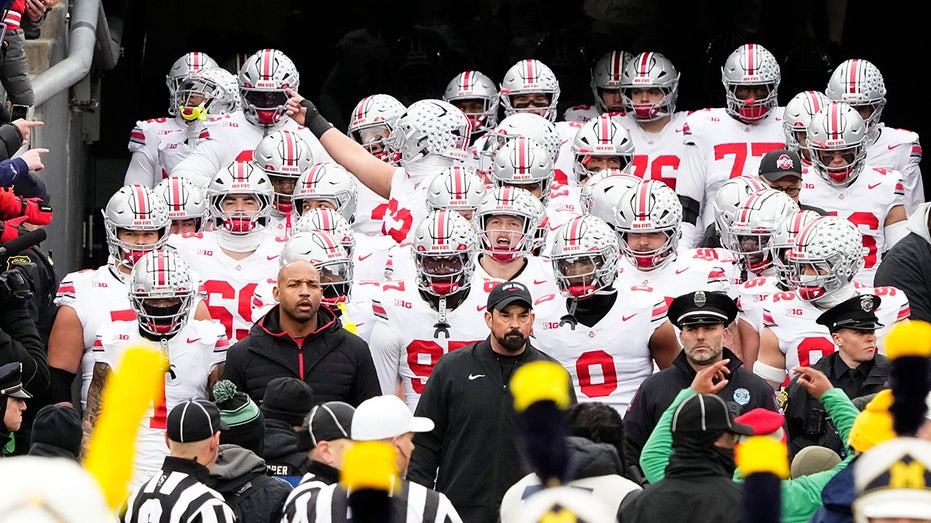
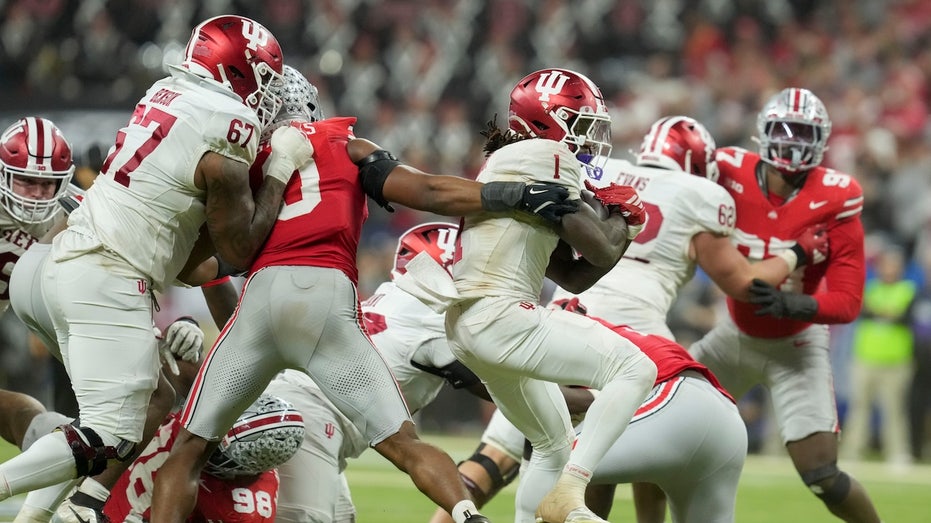
Indiana 13, Ohio State 10 will be remembered in highlight packages as the day a 27-yard field goal went wide and history cracked open. But focusing on a single failed kick misses the larger story: this is a structural earthquake in Big Ten football, the culmination of decades of conference realignment, resource concentration, and playoff politics — and a rare moment when a historical also-ran seized control of a sport dominated by blue bloods.
Why This Upset Matters Beyond the Scoreboard
Indiana’s first outright Big Ten football championship since 1945 snaps one of the longest droughts among Power Five programs. It’s not just a feel-good story; it’s a case study in how a program on the wrong side of history, geography, and money can still break the caste system of modern college football.
At 13–0, Indiana hasn’t just won “a big game.” It has:
- Disrupted the long-standing Big Ten power hierarchy dominated by Ohio State, Michigan, and, to a lesser extent, Penn State and Wisconsin.
- Complicated the College Football Playoff (CFP) seeding calculus, with a non-traditional power now positioned for the No. 1 seed.
- Provided ammunition in the ongoing debate about whether college football has become too stratified to allow real upward mobility.
How We Got Here: A Program Defined by Futility
To understand how shocking this title is, you have to understand Indiana’s historical place in Big Ten football.
- 1945: Indiana wins its first and only outright Big Ten title under Bo McMillin. World War II has just ended; the AP Poll is in its infancy; college football is a regional sport.
- 1967: Indiana shares the conference title and reaches the Rose Bowl, losing to USC. That co-championship stands as an outlier in a half-century of mediocrity.
- 1970s–2010s: The Hoosiers cycle through coaches and brief spikes — notably under Bill Mallory in the late 1980s — but the identity of the program hardens: a basketball school with a football team that usually fills out the bottom of the Big Ten standings.
Over the same period, Ohio State builds an empire:
- Multiple national championships, Heisman winners, and a recruiting footprint that stretches from Ohio and the Midwest to the Deep South.
- Top-5 budgets, cutting-edge facilities, and a national brand that guarantees television visibility and NIL appeal.
In that context, Indiana entering this game as only a four-point underdog to the defending national champions is itself a measure of how far the Hoosiers have come. Winning it — and finishing 13–0 — is something entirely different.
Underdogs in a Rigged Ecosystem
The modern college football landscape is structurally hostile to programs like Indiana. Consider three forces that usually keep underdogs in their place:
- Resource Disparity. According to recent NCAA and public university financial reports, the gap between the top and bottom of the Big Ten in football spending often exceeds $40–50 million annually. That translates into facilities, staff size, analyst support, nutrition, and NIL opportunities.
- Recruiting Gravity. Blue blood schools like Ohio State attract top-100 national recruits almost by default. Indiana has traditionally built rosters mostly from three-star players and occasional regional four-star pickups. To overcome that talent gap requires years of development and a crystal-clear identity.
- Perception Bias. Poll voters and selection committees tend to assume that programs with long track records of success are “better” in close calls. Historically, that’s made it hard for schools like Indiana to get the benefit of the doubt in rankings or playoff debates.
Indiana’s 13–0 season, capped by a conference title over a reigning national champion, is therefore not just about one season’s hot streak. It’s a rare demonstration that development, culture, and continuity can temporarily overwhelm structural disadvantages — something many critics of the sport had quietly stopped believing was possible.
What This Game Actually Showed
On paper, the story will be about Ohio State’s Jayden Fielding missing a 27-yard kick. In reality, that miss only mattered because Indiana denied the Buckeyes the explosive scoring that usually puts games away early.
Indiana’s quarterback Fernandeo Mendoza threw for 222 yards, with one touchdown and one interception — statistically modest in the era of spread offenses, but enough to keep drives alive against a defense built on NFL-caliber athletes. Wide receiver Charlie Becker’s six catches for 126 yards represent the kind of vertical threat Indiana rarely possessed in past decades.
But the real subtext is psychological. When Becker says, “The Hoosiers are real, and we're here,” he’s doing more than celebrating a win. He’s challenging a regional assumption: that Indiana football is destined to be a homecoming opponent and nothing more.
Faith, Culture, and the Language of Upsets
Both Mendoza and Becker gave postgame interviews emphasizing faith — “all glory to God” — a phrase increasingly common in college sports. That’s not just religious expression; it’s a window into how underdog programs cultivate belief when the numbers say they shouldn’t be here.
Sports psychologists note that belief systems — whether framed in faith, culture, or shared mission — can be a competitive advantage when talent gaps exist. They provide a mental framework for:
- Withstanding momentum swings against more talented teams.
- Playing free in high-pressure moments where favorites often tighten up.
- Creating a sense of destiny that keeps players bought in over multiple seasons.
For Indiana, the constant message that “we were never supposed to be in this position” reinforces the underdog identity while turning it into fuel. That’s difficult to quantify, but impossible to ignore when a program with Indiana’s history goes 13–0.
The Playoff Ripple: A New Kind of No. 1 Seed
Assuming the selection committee awards Indiana the No. 1 seed, this will be one of the least traditional top seeds in the CFP era. Previous No. 1s have almost exclusively been national powers with decades of success behind them.
Indiana’s emergence raises thorny questions:
- Scheduling and respect: If Indiana’s non-conference schedule was softer than other contenders, do voters hold that against them, or does an undefeated run plus a win over the defending champion override that?
- TV and ratings pressures: Networks have historically favored brand-name schools for primetime playoff slots. A No. 1 seeded Indiana tests whether the sport will fully embrace merit over brand.
- Ohio State’s positioning: The article suggests Ohio State is still likely to earn a first-round bye despite the loss — a sign that the system remains designed to cushion the fall of top brands.
This dual reality — Indiana as the deserving top seed, Ohio State as a still-protected powerhouse — encapsulates the current playoff era. The door has opened a bit wider, but the old guard hasn’t been pushed out; it’s merely been inconvenienced.
What’s Being Overlooked: The Big Ten’s Identity Crisis
While most coverage focuses on Indiana’s drought ending, a deeper storyline is emerging: the Big Ten’s identity as a conference of haves and have-nots is under scrutiny.
For years, the league has been defined by:
- The Ohio State–Michigan duopoly at the top.
- A middle class (Wisconsin, Iowa, Penn State, Michigan State) capable of occasional title pushes.
- A bottom tier (including Indiana) serving as cannon fodder.
Indiana’s breakthrough challenges that structure in three ways:
- Recruiting Map: A playoff-bound Indiana with a conference title can now walk into living rooms in Indiana, Ohio, and neighboring states with a credible alternative to Ohio State and Michigan.
- Resource Arguments: Administrators at other historically weaker programs can point to Indiana as proof of concept when lobbying for facility upgrades, NIL collectives, or coaching investments.
- Coaching Market Dynamics: Indiana’s success will immediately make its staff targets for richer programs, testing whether this is the start of a sustained rise or a one-coach, one-quarterback era.
Expert Perspectives
Former coaches and analysts often talk about the “gravity” of certain programs.
Urban Meyer, during his broadcasting stint, frequently stressed that the Big Ten runs through Ohio State because of its “talent, culture, and expectation of winning.” Indiana’s win doesn’t erase that legacy, but it demonstrates that expectation can cut both ways: favorites sometimes play not to lose, while underdogs play to make history.
College football analyst Heather Dinich has long argued that the playoff committee must judge “what teams did, not what we thought they would do.” Indiana’s 13–0 record and conference championship make her point unavoidable: pre-season assumptions should now be irrelevant.
Looking Ahead: Can Indiana Sustain This, and What Changes Next?
Several key questions will define the long-term impact of this season:
- Retention vs. Raid: Can Indiana keep its head coach, coordinators, and key players in an era of the transfer portal and aggressive poaching by wealthier programs? One offseason could determine whether this is a one-off miracle or the foundation of a new tier.
- NIL and Institutional Support: A playoff run will attract donors and alumni attention. If Indiana capitalizes with expanded NIL infrastructure, it could lock in a higher long-term baseline for recruiting.
- Ohio State’s Response: Historically, elite programs respond to setbacks by doubling down — new staff hires, strategic changes, and even more aggressive recruiting. Expect Ohio State to treat this loss not as a blip, but as a threat to its regional monopoly.
- Conference Politics: As the Big Ten continues to integrate new members and negotiate billion-dollar media rights, Indiana’s rise comes at a pivotal moment. A more competitive league may boost overall value, but it also complicates the narrative that certain brands are guaranteed yearly contention.
The Bottom Line
Indiana’s 13–10 win over Ohio State is not just about ending a 79-year title drought or booking a likely No. 1 seed in the College Football Playoff. It’s a rare crack in a system that usually protects its own hierarchies.
By winning the Big Ten outright for the first time since 1945, Indiana has forced the sport to confront an uncomfortable possibility: that even in an era of mega-conferences, NIL arms races, and entrenched brands, there is still room — however narrow — for a program with little historical clout to rise, however briefly, to the very top.
Whether this is the start of a new era for Indiana or a beautiful anomaly will depend on what happens next: on the field in the playoff, in donor meetings, on the recruiting trail, and in quiet conversations where powerful programs decide just how much disruption they’re willing to tolerate.
Topics
Editor's Comments
What stands out most about Indiana’s breakthrough is how it exposes the fragility of supposedly permanent hierarchies. For years, we’ve been told that the combination of NIL, mega-media deals, and recruiting monopolies has effectively locked in a small group of perennial contenders. Indiana hasn’t disproved that narrative so much as complicated it. Their run shows that culture, continuity, and a few pivotal recruiting hits can still overcome structural disadvantages in the short term. But that raises uncomfortable questions. Will Indiana be allowed to remain at this level, or will the system reassert itself through coaching poaches, transfer market raids, and resource gaps? And what responsibility do the Big Ten and the NCAA have, if any, to foster the conditions that make stories like this more common, not less? The real test of this season’s significance won’t be the banner they hang, but whether it changes how college football’s power brokers design the future of the sport.
Like this article? Share it with your friends!
If you find this article interesting, feel free to share it with your friends!
Thank you for your support! Sharing is the greatest encouragement for us.