
How Fernando Mendoza’s Breakout Season Is Rewriting College Football’s Power Map

Sarah Johnson
December 14, 2025
Brief
Fernando Mendoza’s Davey O’Brien win is more than an award. It signals a structural shift in college football power, showing how Indiana used the transfer era to crash the sport’s elite tier.
Fernando Mendoza’s Rise Rewrites the Map of College Football Power
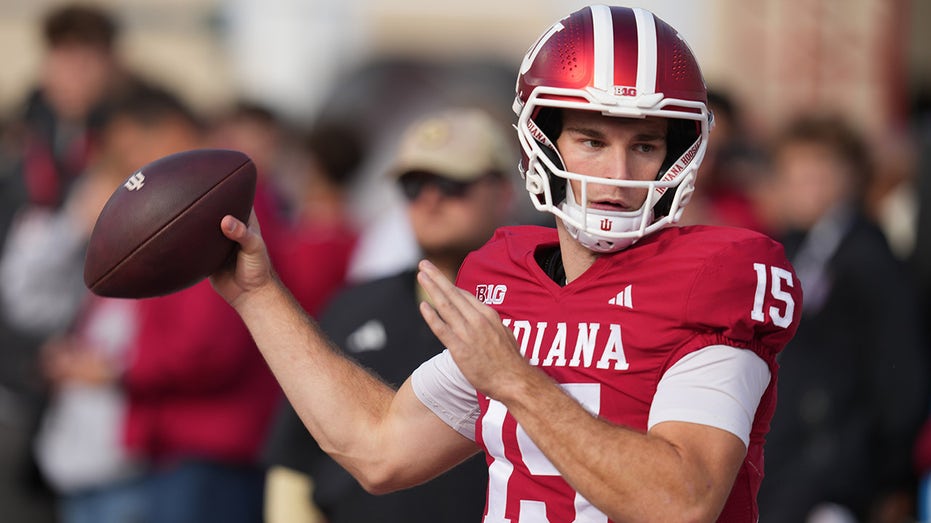
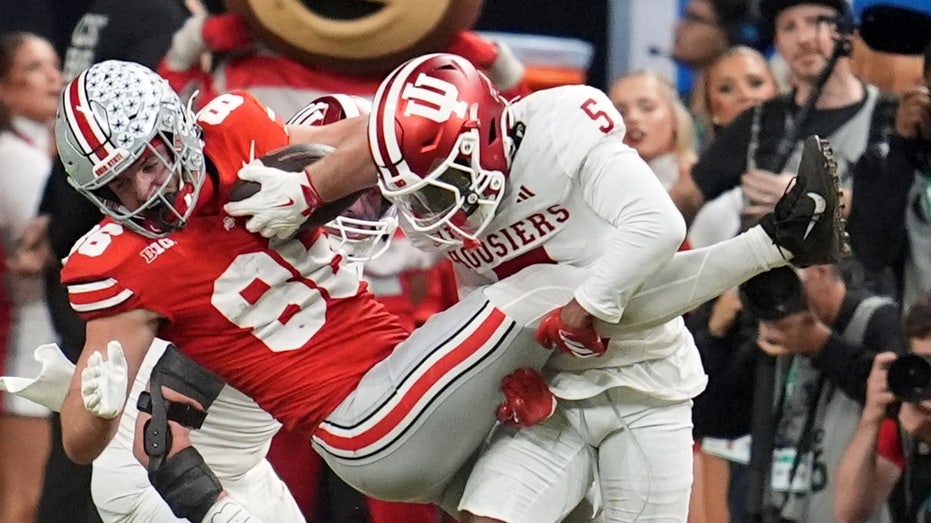
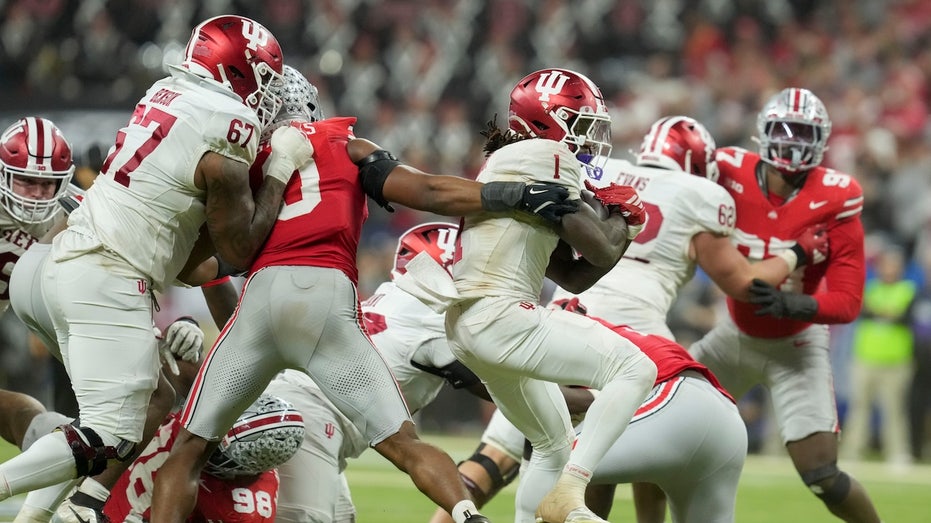
On its face, Fernando Mendoza winning the Davey O’Brien Award looks like a familiar story: a star quarterback from an undefeated team cleaning up in award season and headed toward a likely Heisman. But beneath the surface, this is something much bigger. A California transfer taking Indiana — historically an afterthought in Big Ten football — to 13–0, a league title over Ohio State, the No. 1 seed in the College Football Playoff, and now the nation’s top quarterback award signals a structural shift in how college football power is built, measured, and rewarded.
Mendoza’s emergence is less about one player’s brilliance and more about how the transfer portal, NIL, conference realignment, and evolving offensive schemes have converged to give programs like Indiana a path into a conversation once reserved for bluebloods. This is what makes his Davey O’Brien win — and possible Heisman — a watershed moment.
Why Fernando Mendoza’s Awards Matter More Than the Trophies
Historically, the Davey O’Brien Award has functioned as a validation mechanism for established programs. Since 2000, its winners have overwhelmingly come from national brands: Oklahoma, Texas, Alabama, LSU, Florida, Clemson, Ohio State. Indiana, by contrast, has been a basketball school with sporadic football success and a long record of mediocrity or worse on the gridiron.
So when an Indiana quarterback becomes the program’s first O’Brien winner while leading the Hoosiers to 13–0 and a Big Ten championship over Ohio State, that’s not just an individual accomplishment. It is a signal that:
- Traditional football hierarchies are weakening.
- Player mobility and NIL can rapidly transform a program’s ceiling.
- Quarterback evaluation is shifting away from pedigree and toward production and adaptability.
Mendoza’s season isn’t just elite — 33 touchdown passes against 6 interceptions is the kind of ratio that typically belongs to quarterbacks piloting superpower rosters stocked with five-star recruits. Indiana has improved talent-wise, but it’s not Alabama or Georgia. That discrepancy is where the story really becomes interesting.
The Bigger Picture: From Footnote to Center Stage
To understand the magnitude of this, you have to start with Indiana’s historical baseline. The Hoosiers have spent decades positioned near the bottom of the Big Ten football hierarchy. Prior to recent years, they had:
- Only a handful of winning seasons in the 21st century.
- No Big Ten titles since the conference’s modern era of big money TV deals and national recruiting.
- Minimal national relevance relative to conference peers like Ohio State, Michigan, Penn State, and Wisconsin.
Even their brief spike under Tom Allen in 2019–2020 was treated more as a feel-good anomaly than a sustainable power shift. The structural forces — recruiting pipelines, donor bases, facilities, and brand power — still overwhelmingly favored the traditional elite.
What’s changed is the ecosystem around college football:
- Transfer portal liberalization (post-2021): The one-time transfer rule and portal era made it vastly easier for a player like Mendoza to leave a Pac-12 program in California and immediately reshape a roster in the Midwest.
- NIL (Name, Image, Likeness): Smaller or historically weaker programs can now assemble targeted collectives and pitch high-impact roles plus NIL packages to specific players, especially quarterbacks, who can instantly elevate their brand and their teammates’ visibility.
- Big Ten expansion and media money: As the Big Ten ballooned into a coast-to-coast superconference, even schools like Indiana benefited from upgraded revenue streams, facilities, and exposure — critical ingredients for attracting transfers.
Mendoza’s transfer from a California program into this environment is less a random storyline and more a case study in how mid-tier programs can leverage structural change into competitive relevance.
What This Really Means: A New Template for Building a Contender
Mendoza’s O’Brien win and likely Heisman candidacy crystallize a new formula for non-traditional powers:
- Anchor everything around an elite transfer quarterback.
Programs no longer have to wait three cycles for a high school signee to mature. They can plug in a redshirt junior like Mendoza who has already developed physically and mentally in another system. - Sell immediate control and visibility.
Mendoza isn’t just another star in a constellation of five stars, as he might have been at a traditional powerhouse. At Indiana, he’s the centerpiece, the face of a resurgent program, and the focus of the offense and media attention. That’s an increasingly attractive pitch. - Marry pro-style concepts with college spread flexibility.
Indiana’s ability to keep turnover low (just 6 interceptions) while generating 33 passing touchdowns hints at a system that emphasizes smart reads, high-percentage throws, and careful game planning — the sort of hybrid offense that prepares quarterbacks for the NFL while punishing college defenses. - Use awards and CFP seeding as recruiting tools.
If Indiana parlayed this season into the first O’Brien winner in school history and the No. 1 CFP seed, that becomes a permanent part of its sales pitch: come here, and you can win big honors without being buried on a depth chart.
The implications reach beyond Bloomington. Programs like Iowa State, Louisville, Baylor, or even programs in the expanded ACC and Big 12 can look at Indiana’s Mendoza-led run and see a roadmap instead of a fairy tale.
Expert Perspectives: How Coaches and Analysts See the Shift
Coaches and analysts have been warning that the portal-and-NIL era would create volatility — both positive and negative. For Indiana, that volatility broke in its favor.
Quarterback play analyst and former coach Dan Orlovsky has frequently argued that elite decision-making now matters more than raw arm strength in college spread concepts, noting that, “The quarterbacks who thrive today are the ones who understand leverage, pre-snap pictures, and risk management more than ever.” Mendoza’s 33–6 TD–INT line on an undefeated team is almost a blueprint for that philosophy.
Sports economist and NIL researcher Dr. Ellen Staurowsky has pointed out that NIL doesn’t just concentrate power — it can redistribute it: “If a school outside the traditional elite can focus its resources on a few high-leverage positions, particularly quarterback, it can change outcomes much faster than purely relying on long-term recruiting cycles.” Mendoza is almost a case study in that thesis.
And from a historical standpoint, college football historian Ivan Maisel has often highlighted how rare it is for true outsiders to crash the awards structure: “Awards like the Heisman and the major positional trophies have long reinforced existing hierarchies. When a player from a non-traditional power breaks through, it usually indicates something deeper in the sport is shifting.” Indiana’s situation checks that box.
Data & Evidence: How Mendoza’s Season Stacks Up
Even with limited publicly reported stats in the brief news summary, several points stand out:
- 33 passing touchdowns / 6 interceptions: That’s a 5.5:1 TD–INT ratio. Recent Heisman/O’Brien-winning QBs often sit in the 4–6:1 range, typically at powerhouse programs with superior protection and talent.
- 13–0 record and Big Ten title: Running the table in a deep Big Ten and beating Ohio State in the championship game suggests that Mendoza’s performance translated directly to wins against top defenses, not just padded stats against weaker opponents.
- Top seed in the College Football Playoff: The committee has increasingly valued strength of record and efficiency metrics. Indiana’s placement as the No.1 seed implies national-level dominance, not just a soft-schedule run.
Historically, the combination of undefeated season, conference title, elite TD–INT ratio, and major award recognition has almost always belonged to quarterbacks from entrenched powers: Joe Burrow at LSU, Mac Jones at Alabama, Deshaun Watson at Clemson, and so on. Fernando Mendoza puts Indiana into that company, which is an institutional leap as much as an individual one.
What’s Being Overlooked: Development and Culture
Most coverage will focus on Mendoza’s California-to-Indiana transfer and his stats, but an under-discussed element is developmental culture. Mendoza’s own comments — “a testament to so many people who believed in me, who have helped groom me into the player I am today” — hint at a system that not only recruited him but refined him.
The key overlooked questions are:
- How did Indiana’s coaching staff adapt its scheme to his strengths rather than forcing him into an inherited system?
- What role did sports science, film study, and analytics play in keeping interceptions low and decision-making sharp?
- Did Indiana’s relative lack of historical hype around football actually reduce pressure and allow for more patient, detail-oriented development?
A number of NFL coaches have quietly noted that players from non-glamour programs sometimes arrive more fundamentally sound because they weren’t able to rely solely on superior supporting casts. Mendoza’s season might eventually be reframed as an example of how a strong developmental ecosystem can level the playing field against more talented rosters.
Looking Ahead: The Heisman, the CFP, and the Transfer Market
If Mendoza does secure the Heisman as expected, several ripple effects are likely:
- Recruiting and portal boost for Indiana: Skill players and offensive linemen in the portal will see Indiana as a proven quarterback-friendly destination. High school QBs may now seriously consider a path that doesn’t run through only the top 6–8 brands.
- Pressure on bluebloods to rethink roster management: Programs like Ohio State and Texas A&M (whose quarterbacks Julian Sayin and Marcel Reed were O’Brien finalists) are already portal-savvy. But seeing a peer program lose both the Big Ten title and a major award race to Indiana will increase the urgency to retain their own QBs and refine their development models.
- Heavier scrutiny of NIL collectives: If Indiana’s rise is even partially facilitated by strategic NIL allocations around Mendoza and key offensive pieces, other mid-tier programs will attempt to replicate that formula. Expect more arms-race dynamics around quarterback-centric NIL structures.
- CFP performance as a referendum: The postseason will determine whether Indiana is perceived as a one-season disruptor or a genuine new power. A deep run or title would further erode the notion that only historical giants can finish at the top.
There’s also Mendoza’s personal future. A redshirt junior with this kind of season will quickly become a serious NFL prospect. His decision — declare for the draft or return to Indiana — will send a strong signal about how today’s top players weigh immediate professional opportunity against one more year of NIL-backed stardom and potential legacy-building in college.
The Bottom Line
Fernando Mendoza’s Davey O’Brien Award is not just about the nation’s top quarterback. It’s a pivot point that captures how much the sport has changed in a few short years. A California transfer leading Indiana — not Alabama, Ohio State, or Georgia — to 13–0, a Big Ten title, the No. 1 CFP seed, AP Player of the Year, and now the O’Brien is a vivid demonstration that power in college football is no longer as fixed as it once was.
Whether Indiana becomes a sustained contender or a spectacular outlier, Mendoza’s season will be remembered as one of the first clear proofs that in the era of the portal, NIL, and superconferences, the map of who can matter — and how quickly — has been redrawn.
Topics
Editor's Comments
What’s most intriguing about Fernando Mendoza’s ascent isn’t simply that a historically mediocre football program now has the nation’s top quarterback — it’s that his story crystallizes the contradictions of the current college sports model. Indiana’s rise depends on the same market forces that critics argue are destabilizing the sport: player free agency via the transfer portal, school-aligned NIL collectives, and the arms race triggered by massive media contracts. Yet those tools also democratize opportunity, allowing a school like Indiana to break open a previously closed system. The unanswered question is whether this democratization is broad-based or limited to a few well-positioned ‘non-traditional’ programs that can quickly organize money and infrastructure. If Mendoza’s success becomes a template replicated across multiple conferences, we may be witnessing the end of the old cartel of college football powers. If not, Indiana’s surge risks being remembered as a compelling but isolated proof that the system can produce an outsider champion — without ever truly changing who usually wins.
Like this article? Share it with your friends!
If you find this article interesting, feel free to share it with your friends!
Thank you for your support! Sharing is the greatest encouragement for us.