
Behind the Numbers: How DC’s Crime Stat Scandal Exposes a Deeper Crisis in Policing and Politics

Sarah Johnson
December 16, 2025
Brief
An in-depth analysis of DC’s crime-stat manipulation allegations, revealing how political pressure, weak data safeguards, and federal-local tensions distort public safety numbers and erode trust far beyond the capital.
DC Crime Stat Manipulation Allegations Expose a Deeper Crisis of Trust in Policing and Politics
Allegations that the Metropolitan Police Department (MPD) in Washington, D.C. systematically misclassified crimes to make the city appear safer are not just another police scandal. They sit at the intersection of public safety, data integrity, and bare-knuckle national politics. When crime numbers become a political scoreboard, the public loses the ability to know what is actually happening on their own streets.
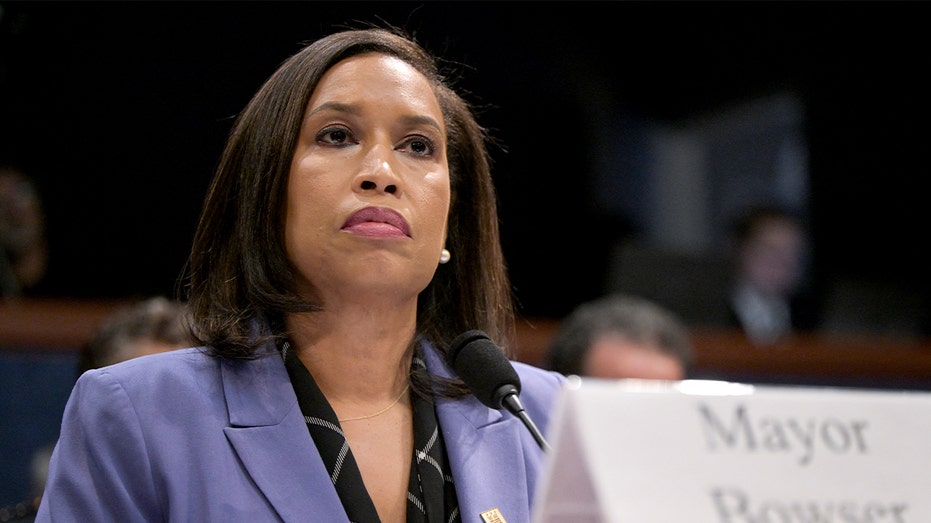
According to the federal review described by U.S. Attorney Jeanine Pirro, thousands of reports were misclassified, resulting in crime statistics that were “artificially lower.” The conduct, she says, doesn’t rise to criminal charges, but it does reveal systemic failures inside MPD’s reporting practices. Layered on top of that, a House Oversight interim report alleges that outgoing Chief Pamela Smith oversaw a “system of intervention” that pressured commanders to downgrade crimes and retaliated against those who reported spikes.
What’s unfolding in D.C. is bigger than one department or one chief. It’s a case study in how political incentives, federal-local tensions, and longstanding weaknesses in crime data reporting can align to produce numbers that look reassuring on paper while obscuring the reality experienced by residents.
The Bigger Picture: Crime Numbers Have Always Been Political
The idea that crime data can be manipulated is not new. For decades, criminologists have warned that the FBI’s Uniform Crime Reporting (UCR) program and, more recently, the National Incident-Based Reporting System (NIBRS) rely heavily on local agencies’ internal classification decisions. Those decisions are shaped by training, technology, and policy—but also by politics and public pressure.
Historic examples include:
- New York City in the 1990s–2000s: Multiple whistleblowers alleged that precinct commanders downgraded felonies to misdemeanors to show sharp crime reductions under high-profile policing strategies like CompStat.
- Los Angeles and other major cities: Periodic internal audits have uncovered misclassified assaults, robberies, and sexual assaults that kept serious crimes off the books.
- Campus and institutional policing: From universities to transit agencies, there is a well-documented pattern of underreporting or reclassifying crime, particularly sexual violence, to protect reputations.
D.C. sits at a unique crossroads: it’s a city, a capital, and a symbolic battlefield in national debates about crime, policing, and urban governance. That makes its statistics especially tempting as proof points—whether to show a federal crackdown is working or to argue that local leadership is failing.
That context is critical here. Pirro’s investigation began after President Donald Trump launched a “federal crime crackdown” in the district and deployed federal law enforcement and the National Guard. Her statement goes beyond technical findings, explicitly framing the misclassification as evidence that Trump’s efforts reduced crime “even more than originally thought.” That’s not just a data critique; it’s a political narrative.
What This Really Means: Three Overlooked Battles Behind the Numbers
1. The Quiet War Over Definitions
The heart of the scandal is “misclassification.” That can sound like a clerical error, but in practice, it’s where policy, discretion, and pressure meet. A gunpoint robbery may be recorded as a simple theft; an aggravated assault might become a lesser offense; a sexual assault might be downgraded in ways that keep it out of headline statistics.
The House Oversight Committee’s allegation that Chief Pamela Smith pressured commanders to downgrade classifications fits a recurring pattern: senior leadership is judged by year-to-year changes in serious crime categories, and those categories are malleable. When budgets, public perception, and political careers ride on those curves, the temptation to bend categories—not just behavior—is immense.
Because the federal review looked at roughly 6,000 reports, we are likely dealing with systemic practices, not isolated errors. Even if the misclassification rate was, say, 10–20% of cases reviewed, that would be enough to materially distort citywide trends, especially for categories like robbery, aggravated assault, and carjacking, where public fear is most acute.
2. Federal Power vs. Local Control
D.C. has been a flashpoint for federal-local tension for decades. Congress can override the city’s laws; federal agencies operate side-by-side with local police; and the city’s governance is often used as a proxy battlefield for partisan struggles.
The timing and framing here are revealing. The probe began as part of a federal crackdown ordered by the president and is now being used to validate that crackdown’s success. Simultaneously, a Republican-led House committee is spotlighting alleged mismanagement by a local police chief and, by extension, D.C.’s Democrat-leaning governance. The message to national audiences: local leaders are failing on crime; federal intervention is necessary and effective.
Local residents, however, experience these dynamics differently. For them, the central question is not whether the president “won” on crime, but whether the numbers they’ve been given actually reflect what they see: carjackings, retail theft, shootings near transit hubs, and neighborhood-level violence that may never trend on cable news but shapes daily life.
3. The Erosion of Trust in Police Data
Trust in policing has been battered in recent years—by use-of-force incidents, uneven accountability, and perceived double standards. Crime data was one of the few remaining tools that still carried a veneer of objectivity. If residents can’t trust that a robbery is recorded as a robbery, the entire informational structure of public safety policy starts to wobble.
Underreporting has at least three major consequences:
- Resource misallocation: If violent crime is understated in certain neighborhoods, those areas may receive fewer officers, less prevention funding, and weaker social services than they actually need.
- Skewed policy debates: Lawmakers and voters rely on the official numbers to debate everything from sentencing policy to juvenile justice reforms. Distorted numbers yield distorted policy.
- Community disengagement: When residents perceive a gap between their lived experience and the data, they are less likely to report crimes, participate in community policing efforts, or trust official messaging after high-profile incidents.
Expert Perspectives: Why Misclassification Happens—and How to Fix It
Criminologists and policing experts have long warned that crime data is only as good as the systems and incentives behind it.
Prof. Franklin Zimring, a leading criminologist who has studied crime declines in major U.S. cities, has repeatedly emphasized that “measurement is the Achilles’ heel of crime analysis.” Without strong internal auditing and external oversight, he argues, “data can become a mirror of institutional priorities rather than a reflection of social reality.”
Policing reform advocates point to structural drivers. Departments frequently tie promotions and performance reviews to reductions in certain crime categories. That creates what some experts call “statistical stress,” where middle managers seek ways to make their numbers look better, often by reclassifying borderline cases.
In response, best-practice models from cities that have tried to clean up their data include:
- Independent crime-stat auditors reporting outside the police chain of command.
- Transparent public dashboards that include error rates, reclassification counts, and audit summaries—not just headline crime totals.
- Whistleblower protections for officers and analysts who flag pressure to manipulate numbers.
- Standardized training tied to national reporting standards, with external certification.
Data & Evidence: Why This Scandal Matters Beyond DC
While the federal probe reviewed almost 6,000 reports, that sample exists within a much larger landscape:
- Nationwide, over 18,000 law enforcement agencies feed data into federal crime statistics. Each uses its own mix of software, training, and internal rules.
- Multiple academic studies have found significant underreporting of certain crimes, particularly sexual assault and domestic violence, with discrepancies between victimization surveys and police reports sometimes exceeding 50%.
- Audits in major cities have previously identified misclassification rates for certain serious crimes in the high single digits to double digits—enough to materially change trend lines.
The D.C. case suggests that even in one of the most scrutinized jurisdictions in the country, with federal agencies literally down the street, systemic misclassification can persist until it aligns with a broader political moment and becomes useful to expose.
Looking Ahead: What to Watch Next
The immediate question is what MPD does internally, now that the U.S. Attorney has stopped short of criminal charges but made clear that misclassification was “significant.” Key indicators to watch:
- Internal reforms and independent oversight: Does MPD invite an outside auditor—perhaps from a university or inspector general office—to review a broader sample of reports and publish findings? Or does it opt for an internal, largely opaque process?
- Leadership accountability: With Chief Pamela Smith already resigning, will the city treat that as closure, or will the council and mayor push for a full accounting of who knew what and when?
- Revised crime numbers: If misclassification is corrected, residents might see a sudden “spike” in reported crime that reflects data correction rather than new offenses. How that is communicated will be crucial to public understanding.
- Federal leverage: The U.S. Attorney’s Office and congressional committees now have a powerful narrative tool: D.C.’s numbers were wrong, and federal scrutiny fixed it. Expect that to feature heavily in future debates over federal policing initiatives and D.C. autonomy.
Longer term, this episode will likely fuel calls for national standards on crime data auditing—especially as cities wrestle with how to present post-pandemic crime trends honestly without jeopardizing investment, tourism, or political capital.
The Bottom Line
The misclassification scandal in Washington, D.C. is not simply about bad bookkeeping. It’s about how institutions manage political pressure, how crime data can be shaped to fit narratives, and how easily public trust can be squandered when the numbers no longer match lived reality.
Whether this becomes a turning point toward more honest, independently verified crime statistics—or just another weapon in the partisan arsenal—will depend on what comes next: genuine structural reforms, or a narrow blame game focused on a single outgoing chief.
Topics
Editor's Comments
One of the most troubling aspects of this episode is how quickly the findings were folded into a political victory lap rather than treated as a wake-up call about the fragility of crime data nationwide. By framing the misclassification as proof that a federal crackdown worked ‘even better’ than previously believed, the U.S. Attorney’s statement risks normalizing a dangerous logic: that if the numbers were worse than reported, then any aggressive intervention must have been a success. That elides two crucial questions. First, how did a major police department in the nation’s capital allow widespread misclassification to persist until it became politically useful to expose? Second, what structural safeguards—independent auditors, robust whistleblower channels, transparent reclassification logs—are being put in place to prevent this from happening again, not just in DC but across the country? The contrarian view here is that we should be less interested in which side gains a rhetorical edge and more focused on building a data infrastructure that neither side can easily bend to its narrative. Until that happens, every shift in crime statistics will be met with justified skepticism from the people who have the most at stake: city residents living with the consequences.
Like this article? Share it with your friends!
If you find this article interesting, feel free to share it with your friends!
Thank you for your support! Sharing is the greatest encouragement for us.