Beyond the Border Fight: What Kristi Noem’s First Homeland Security Grilling Reveals About America’s Security Priorities

Sarah Johnson
December 11, 2025
Brief
Kristi Noem’s first Homeland Security grilling is really a stress test of America’s entire security agenda, revealing deep clashes over borders, terrorism, cyber threats, and civil liberties.
Kristi Noem’s First Homeland Security Showdown: What This Hearing Really Signals About America’s Security Debate
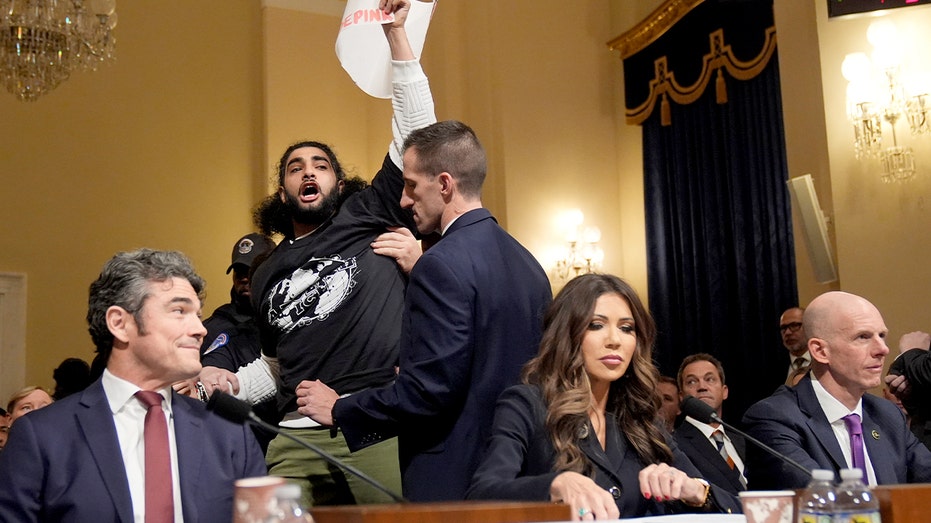
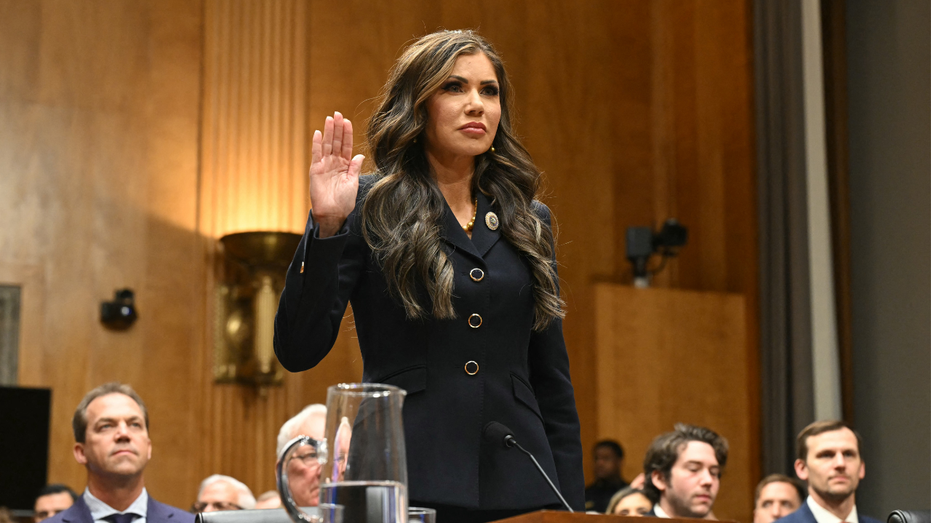
Homeland Security Secretary Kristi Noem’s first major appearance before the House Homeland Security Committee is less about a single hearing and more about a stress test of the entire U.S. national security architecture at a moment of profound transition. Immigration crackdowns, fears of foreign adversaries exploiting vulnerabilities, and internal tensions within the administration are all converging in one highly public session.
What’s happening on Capitol Hill this week is essentially a referendum on how the United States defines “homeland security” in 2025: Is it primarily about the southern border and immigration enforcement? Is it about global terrorism and nation-state threats like China and Iran? Or is it the broader, more complex mix of cyber, domestic extremism, and geopolitical competition that experts have warned about for years?
Why this hearing matters now
The House Homeland Security Committee’s “worldwide threats” hearing is supposed to be an annual, high-level survey of the risks facing the United States. The fact that it hasn’t happened in multiple recent years is itself telling. Oversight has lagged even as the threat landscape has become more fragmented and volatile.
Noem’s testimony, alongside National Counterterrorism Center Director Joe Kent and FBI National Security Branch operations director Michael Glasheen, will unfold against three overlapping backdrops:
- Intense partisan conflict over immigration and border enforcement.
- Growing concern that rivals like China, Iran, and Venezuela are probing U.S. vulnerabilities.
- Internal friction within the administration’s own security team, highlighted by reports of a falling out between Noem and border czar Tom Homan.
That combination means this is not just a routine oversight hearing; it’s an early indicator of whether the administration can maintain a coherent homeland security strategy while battling both external threats and internal divisions.
How we got here: the evolution of “homeland security” since 9/11
To understand the stakes of this hearing, it helps to zoom out. The Department of Homeland Security (DHS) was created after the September 11 attacks, with a mandate to prevent another catastrophic terrorist strike on U.S. soil. For roughly a decade, the department’s work was framed almost entirely through the lens of international terrorism and aviation security.
Over time, that mission expanded and fragmented:
- Post-9/11 era (2001–2010): Focus on Al Qaeda, aviation, intelligence integration, and critical infrastructure protection.
- 2010s: Rise of ISIS-inspired lone-wolf attacks, growing emphasis on online radicalization, cyber threats, and “homegrown violent extremists.”
- Mid-2010s onward: Immigration and border security increasingly politicized, with DHS at the center of major policy fights (DACA, family separation, travel bans, asylum restrictions).
- Late 2010s–2020s: Explicit recognition of domestic violent extremism, including white supremacist violence and anti-government extremism, as a top-tier threat.
The hearing Noem is walking into is the product of these shifting priorities. Republicans on the committee, like Chair Andrew Garbarino, are signaling they want to center the discussion on border security, drugs, and China. Democrats, led by ranking member Bennie Thompson, are telegraphing a focus on civil rights, accountability, and how ICE is carrying out the administration’s aggressive immigration crackdown.
In other words, both parties are using the same platform to argue that their preferred threat is the defining one — and DHS is the stage on which that battle plays out.
The competing threat narratives: terrorists, borders, and civil rights
Garbarino’s comments about “thousands of known and suspected terrorists” crossing the southern border reflect a broader Republican narrative: that border security failures are creating an open door for dangerous actors. While the phrase “known and suspected terrorists” (KSTs) usually refers to encounters with people whose names appear on a watchlist, experts caution that watchlists themselves are imperfect tools that include individuals at vastly different levels of risk.
The underlying concern, however, is real: the potential blending of irregular migration flows with attempts by hostile actors to exploit overwhelmed systems. U.S. Customs and Border Protection has, in recent years, reported increasing encounters with individuals whose names match terrorism databases, most often at ports of entry but also between them. Even if the absolute numbers are small relative to overall migration flows, they resonate politically because they connect two powerful anxieties: terrorism and loss of control at the border.
Democrats, by contrast, are framing the risk differently. Thompson’s accusation that ICE agents are treating people with “total disrespect” because they “look Hispanic” taps into longstanding concerns that aggressive enforcement drifts into racial profiling and due process violations. This is not a hypothetical fear; multiple inspector general reports and civil rights lawsuits over the past decade have documented cases where enforcement surpassed legal boundaries or ignored guidance designed to protect civil liberties.
These competing frames – border as counterterrorism front line vs. border as civil liberties battleground – will strongly influence how Noem is questioned and judged. Her challenge will be to demonstrate that DHS can pursue aggressive security objectives while maintaining constitutional and humanitarian standards, a balance previous secretaries have struggled to convincingly articulate.
The overlooked dimension: cyber and blended threats
Garbarino’s hope that Noem will provide an “update on what’s happening with cybersecurity” is a reminder of how sprawling DHS’s mandate has become. Cybersecurity – particularly the protection of critical infrastructure, election systems, and major private-sector networks – has quietly overtaken traditional counterterrorism as the daily grind of homeland security.
Yet cyber only gets intermittent public attention, usually after a major incident. This is one of the underreported dynamics of the current hearing: the extent to which DHS is being pulled into a 20th-century debate about physical borders while the 21st-century battlefield increasingly involves software vulnerabilities, supply chains, and data theft.
China, Iran, and even Venezuela figure into that cyber picture as much as in the physical realm. China is widely regarded by U.S. intelligence as the most significant long-term strategic competitor in cyberspace, using espionage and intellectual property theft to accelerate its economic and military rise. Iran has leveraged cyber tools to retaliate against sanctions and perceived provocations. Even smaller states or proxy groups can use low-cost cyber operations to create outsized disruption.
The most urgent security problems are not neatly separated: a hostile state actor could combine cyber operations with disinformation and exploitation of migration routes to create layered pressure on U.S. systems. Whether the hearing even touches on that integrated picture will be a key indicator of how sophisticated congressional oversight has become – or hasn’t.
Internal fractures: what the Noem–Homan rift reveals
The reported falling out between Noem and border czar Tom Homan may seem like insider drama, but it raises a deeper question: can the administration coordinate an aggressive border and immigration strategy without splintering into rival power centers?
Homan is a hard-line figure closely associated with maximal enforcement measures. If he and Noem are at odds over tactics, messaging, or authority, that tension will likely surface indirectly during the hearing. Lawmakers on both sides of the aisle may probe perceived inconsistencies in enforcement, policy rollouts, or communications.
Historically, when DHS leadership is divided – as was evident during earlier periods of intense immigration conflict – it undermines the department’s credibility with Congress and the courts. Mixed messaging can also complicate relationships with state and local law enforcement, who rely on clear guidance about how federal crackdowns will be executed in their jurisdictions.
Even if neither Noem nor Homan is in immediate danger of losing their role, the existence of such a rift signals a volatile internal environment at precisely the moment when unity of effort is most needed.
What this really means for U.S. security policy
This hearing will be revealing in at least four critical ways:
- Definition of the top threat: Does Noem emphasize border crossings and terrorism, great-power competition, domestic extremism, cyber risk, or some blend? Her prioritization will guide resource allocation inside DHS.
- Approach to civil liberties: How she responds to Democratic critiques of ICE behavior will signal how much weight this DHS places on oversight, transparency, and the civil rights implications of enforcement.
- Integration with FBI and NCTC: With Glasheen (FBI) and Kent (NCTC) at the table, we’ll see how well the administration presents a unified interagency picture – or whether bureaucratic silos and turf battles remain.
- Congressional oversight depth: The quality of questioning – whether it drills into complex issues like watchlist accuracy, data-sharing, and cross-domain threats, or stays at the level of talking points – will indicate how prepared Congress is to manage modern security risks.
Expert perspectives: a security agenda at a crossroads
Several national security scholars and former officials have warned that the U.S. is in danger of fighting yesterday’s battles while tomorrow’s threats accelerate. Counterterrorism expert Bruce Hoffman has argued that, although mass-casualty jihadi attacks on the scale of 9/11 are less likely today, terrorism has morphed into decentralized networks and lone actors whose detection requires more nuanced, intelligence-driven approaches rather than blunt enforcement surges.
Cybersecurity analysts, such as former CISA Director Chris Krebs, have repeatedly stressed that the most damaging attacks on U.S. society may not come in the form of bombs but through ransomware, infrastructure disruptions, or manipulation of data and trust. If Noem’s testimony relegates cyber to an afterthought, it will reinforce concerns that political incentives still favor visible, physical measures like border walls and large-scale raids over less visible but strategically crucial cyber investments.
Civil liberties advocates, including organizations like the Brennan Center for Justice, have long warned that watchlists, aggressive immigration enforcement, and broad surveillance authorities risk normalizing second-class treatment for certain groups, particularly immigrants and communities of color. Thompson’s focus on respect and discrimination by ICE agents echoes these concerns, raising the question of whether DHS has meaningfully improved its civil liberties safeguards since earlier controversies.
Data points that will shape the debate
While this hearing is political theater, it is also ultimately about numbers and risk. Among the key, often-misunderstood data points likely to be invoked or lurking in the background:
- KST encounters at the border: The number of people encountered at U.S. borders who appear on terrorism watchlists has risen in recent years but remains tiny relative to the overall number of migrants. Nonetheless, any upward trend will be used to justify tougher border measures.
- Overdose deaths and drug flows: Synthetic opioids like fentanyl, often trafficked by criminal networks, have driven record overdose deaths. Most fentanyl seized at the border is intercepted at legal ports of entry, frequently in vehicles driven by U.S. citizens, complicating simple narratives about irregular migrants as the primary vector.
- Domestic extremism trends: Federal threat assessments in recent years have identified domestic violent extremists – including racially motivated and anti-government extremists – as a persistent and lethal threat. How much attention this gets in the hearing will signal whether domestic actors remain a formal priority or are overshadowed by border and foreign threats.
- Cyber incidents and infrastructure risk: Ransomware attacks on hospitals, local governments, and critical infrastructure operators continue to grow. These incidents rarely make national headlines but cumulatively erode resilience and public trust.
What to watch for going forward
This hearing is unlikely to produce immediate legislative breakthroughs, but it will set the tone for several consequential debates in the months ahead:
- DHS funding priorities: Expect the administration’s next budget request – and the committee’s response – to mirror the threat hierarchy Noem articulates in her testimony.
- Immigration enforcement battles: Democrats will likely leverage any controversial ICE operations highlighted in the hearing to push for stronger oversight or statutory limits; Republicans may push in the opposite direction, seeking broader authorities.
- Cybersecurity and infrastructure protection: If lawmakers demonstrate serious interest in cyber vulnerabilities, that could build momentum for additional authorities or resources for CISA and related DHS components.
- Internal DHS and White House dynamics: Future reporting on the Noem–Homan relationship will be easier to interpret once we see how border policy is described at the hearing and whether there are hints of policy divergence.
The bottom line
Kristi Noem’s appearance before the House Homeland Security Committee is about much more than her personal performance. It is an early referendum on how this administration will navigate the increasingly tangled web of border enforcement, counterterrorism, cyber risk, great-power competition, and civil liberties.
If the hearing descends into pure partisan theater, the public will learn little, and DHS will continue to operate under a fragmented, politically driven mandate. But if lawmakers press for specifics on how risks are prioritized, how civil rights are protected, and how agencies coordinate across domains, this could mark the beginning of a more mature, reality-based conversation about what “homeland security” actually means in 2025.
For now, the hearing is best understood as a stress test – not just of Secretary Noem, but of an entire system struggling to keep pace with a rapidly evolving threat landscape.
Topics
Editor's Comments
What’s striking about this moment is how familiar the script sounds, even as the underlying threat environment has transformed. Congress is still arguing about border security largely as if it were 2005—emphasizing physical control, numbers apprehended, and symbolic toughness—while major vulnerabilities increasingly lie in the digital and systemic realm: software supply chains, AI-generated disinformation, and fragile critical infrastructure. The hearing risks becoming a proxy war over immigration ideology rather than a serious attempt to prioritize among fundamentally different categories of risk, each with distinct policy tools and trade-offs. A more forward-looking discussion would force all sides to acknowledge that “homeland security” cannot be reduced to the border, and that an enforcement-first posture, untethered from robust civil liberties safeguards and cyber resilience investments, may ultimately leave the country less secure. The unanswered question is whether any political incentive structure exists on Capitol Hill to reward that kind of nuance.
Like this article? Share it with your friends!
If you find this article interesting, feel free to share it with your friends!
Thank you for your support! Sharing is the greatest encouragement for us.