GOP Divides Over Hegseth’s ‘Double-Tap’ Caribbean Strike amid Deepening Legal Probes

Sarah Johnson
December 3, 2025
Brief
An in-depth analysis of GOP divisions and congressional probes into the legality and ethics of Pete Hegseth's controversial double-tap Caribbean strike targeting drug traffickers.
Opening Analysis
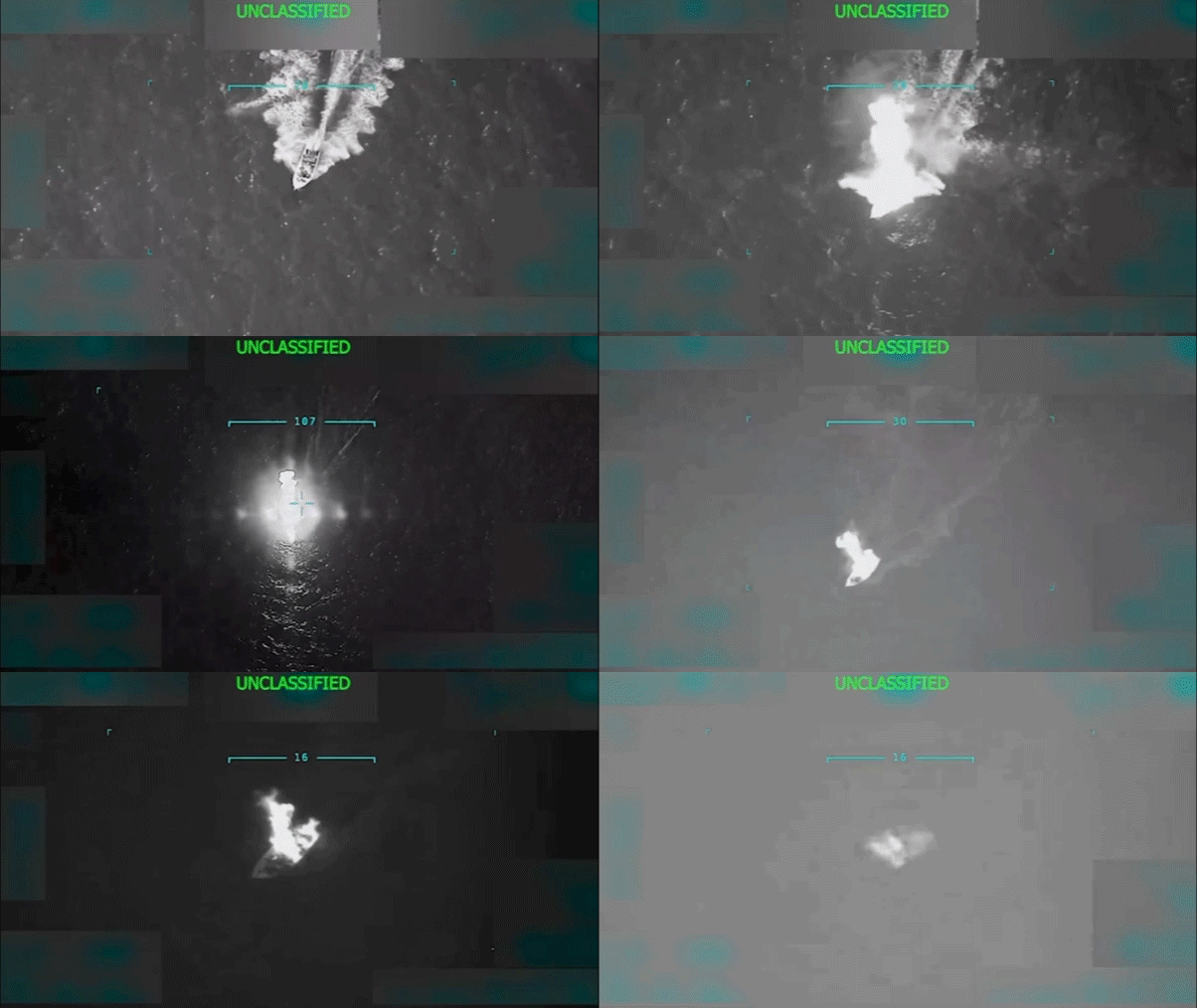
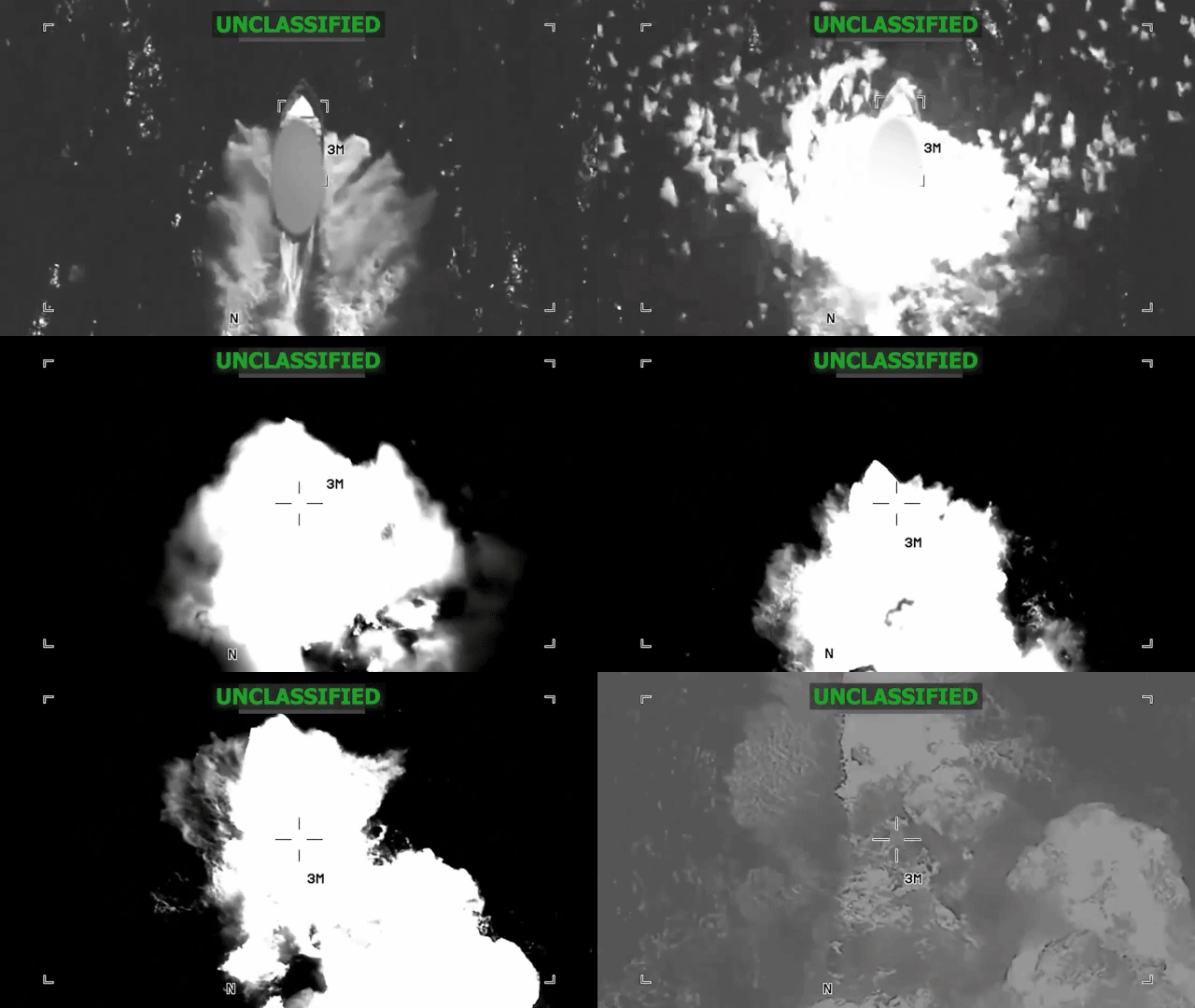
The recent revelations about the "double-tap" strikes authorized by Secretary of War Pete Hegseth against suspected drug boats in the Caribbean have exposed a sharp divide within the Republican Party and intensified congressional scrutiny on the legality and ethics of such military actions. While proponents tout these strikes as aggressive steps to combat drug trafficking and protect American citizens, critics raise urgent questions about adherence to international law, transparency, and the potential for abuse of war powers. This internal GOP friction and bipartisan push for congressional oversight reveal deeper tensions over the scope of executive authority in counter-narcotics operations and the evolving nature of American military engagement below the threshold of conventional war.
The Bigger Picture
U.S. counter-narcotics efforts in the Caribbean and Latin America date back decades, reflecting a long-standing bipartisan commitment to stem the flow of illegal substances entering the country. However, the tactics deployed have evolved amid changing security dynamics and technological advances. The use of drone strikes and Special Operations Command missions to target drug traffickers marks a departure from traditional law enforcement approaches toward militarized interventions often borrowed from counterterrorism playbooks.
The "double-tap" strike—in which an initial attack is followed by a second strike aimed at survivors—is controversial. While drones and targeted strikes enabled by the Obama administration set precedents for remote lethal engagements against non-state actors, these operations primarily focused on counterterrorism rather than drug interdiction. Applying such methods in the context of anti-drug missions raises novel legal and ethical questions concerning the use of force under international law, especially when targets may not pose an imminent threat of violence against U.S. personnel.
The backlash within the GOP is notable because the party has historically favored strong, tough approaches on drug trafficking and border security. Yet, the legal ambiguities and moral concerns surrounding these strikes have prompted some Republican lawmakers, including committee chairs and Senate leadership, to call for thorough investigations and greater oversight—highlighting unease about unchecked military action absent clear statutory authorization.
What This Really Means
This incident underscores a fundamental tension in U.S. policy: balancing aggressive efforts to disrupt transnational criminal networks with respect for legal frameworks designed to constrain military force. The fact that some Republicans champion the strikes as essential to saving American lives while others caution against potential war crimes signals an evolving debate about how far the executive branch can—or should—extend military prerogatives without congressional approval.
The authorization of a "double-tap" strike—particularly the reported directive to "kill them all," whether fully verified or not—raises profound questions about compliance with the principles of distinction and proportionality under the law of armed conflict. If survivors clinging to a disabled vessel were targeted intentionally, this could constitute a violation of both U.S. military codes and international law. Beyond legality, such actions risk damaging America's international reputation and undermining the moral authority the U.S. claims to uphold human rights and the rule of law.
Moreover, the White House's confirmation that Adm. Frank Bradley ordered and directed the second strike emphasizes the complex chain of command and blurs responsibility between political appointees and military leaders. The reluctance of prominent GOP senators to accept press secretary statements at face value and distrust toward media accounts further illustrates the partisan and information challenges inherent in overseeing clandestine operations.
Expert Perspectives
Michael O'Hanlon, Senior Fellow at the Brookings Institution: "The use of lethal force to combat drug operators at sea presents a legal grey area, especially concerning second strikes after the initial engagement. While there is precedent from counterterrorism efforts, drug interdiction typically falls under law enforcement jurisdictions, which demand higher evidentiary and procedural safeguards. Oversight is crucial to maintain legitimacy and prevent mission creep."
Mary Ellen O'Connell, Professor of International Law at Notre Dame: "International humanitarian law forbids attacking survivors who pose no direct threat. If double-tap strikes target individuals incapacitated or surrendering, they risk constituting war crimes. The U.S. must publicly clarify its rules of engagement to uphold the Geneva Conventions and maintain global legal standards."
John Ehrman, Former Deputy Assistant Secretary of Defense: "The chain of command and authorization details in these strikes need thorough review. There must be clear legal justification, especially for extraordinary measures like a second strike. Congressional committees' role in scrutinizing these actions protects American interests and prevents executive overreach."
Data & Evidence
Since 2010, U.S. counter-narcotics operations in the Caribbean and Eastern Pacific have increasingly integrated military assets, including drones and special forces units. According to the Department of Defense, interdiction efforts averaged a 40% increase in drug seizures over the past five years, but metrics on lethal strikes remain classified.
The Obama administration authorized over 500 drone strikes in counterterrorism operations, setting a legal and operational framework rooted in the Authorization for Use of Military Force (AUMF). However, no equivalent public mandate applies explicitly to anti-drug strikes, illustrating a legal void complicating oversight.
Survey data from legal scholars tracking U.S. compliance with international humanitarian law indicates a growing concern among experts that expanding drone use for non-traditional military targets risks eroding norms, especially regarding protection of noncombatants.
Looking Ahead
The upcoming congressional hearings on this incident are set to be a bellwether moment for the future of U.S. counter-narcotics policy and the boundaries of military force. Lawmakers will likely debate the appropriate balance between aggressive interdiction and strict legal compliance, potentially resulting in new statutes curtailing war powers or enhancing transparency requirements.
Executive-legislative relations could intensify if the administration resists disclosure, risking political clashes over separation of powers. International allies and human rights groups will closely monitor outcomes, which could impact bilateral counter-narcotics cooperation and perceptions of U.S. adherence to rule of law norms.
Technological advances in drone warfare and special operations will further complicate oversight efforts, demanding updated frameworks for accountability in covert actions. The GOP’s internal divide may catalyze realignment in defense and drug policy priorities ahead of future elections, as voters and legislators weigh security needs against ethical imperatives.
The Bottom Line
The "double-tap" Caribbean strike controversy represents more than a disagreement over a single tactical decision; it highlights deeper challenges at the nexus of national security, legality, and morality in U.S. counter-narcotics warfare. As Congress probes this incident, the nation confronts vital questions about how democracies balance effective action against threats with the rule of law and accountability. The outcome will shape crucial precedents for executive power, military ethics, and America’s global standing in the years to come.
Topics
Editor's Comments
This situation is emblematic of how evolving security challenges challenge traditional legal and ethical frameworks. The use of military force in the realm of drug interdiction pushes boundaries that have historically separated warfare from law enforcement. It forces us to ask difficult questions about the limits of executive authority and the adequacy of oversight mechanisms. The split within the GOP suggests this is not just about politics but fundamental disagreements over the guardrails of American power. Transparency and accountability will be critical to maintaining public trust and international legitimacy in an era when the lines between combatant and criminal, war and peace, become increasingly blurred.
Like this article? Share it with your friends!
If you find this article interesting, feel free to share it with your friends!
Thank you for your support! Sharing is the greatest encouragement for us.