
Beyond the Headlines: Legal and Strategic Implications of the September Caribbean Drug Vessel Strike

Sarah Johnson
December 4, 2025
Brief
An in-depth analysis of the U.S. military strike on a Caribbean drug vessel, exploring legal controversies, strategic shifts in drug interdiction, and implications for international maritime law and regional security.
Why the September Caribbean Strike Is More Than Just a Military Operation
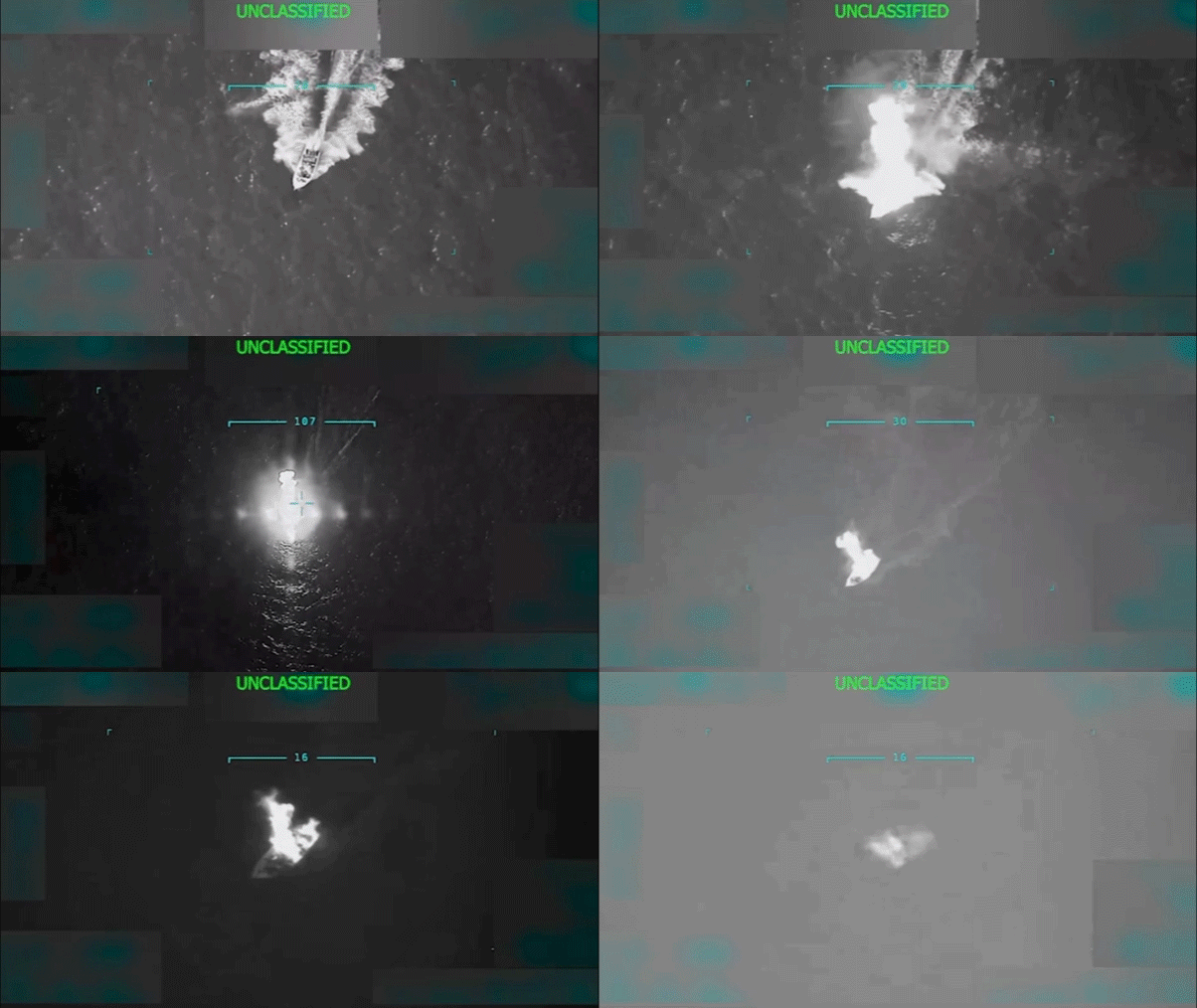
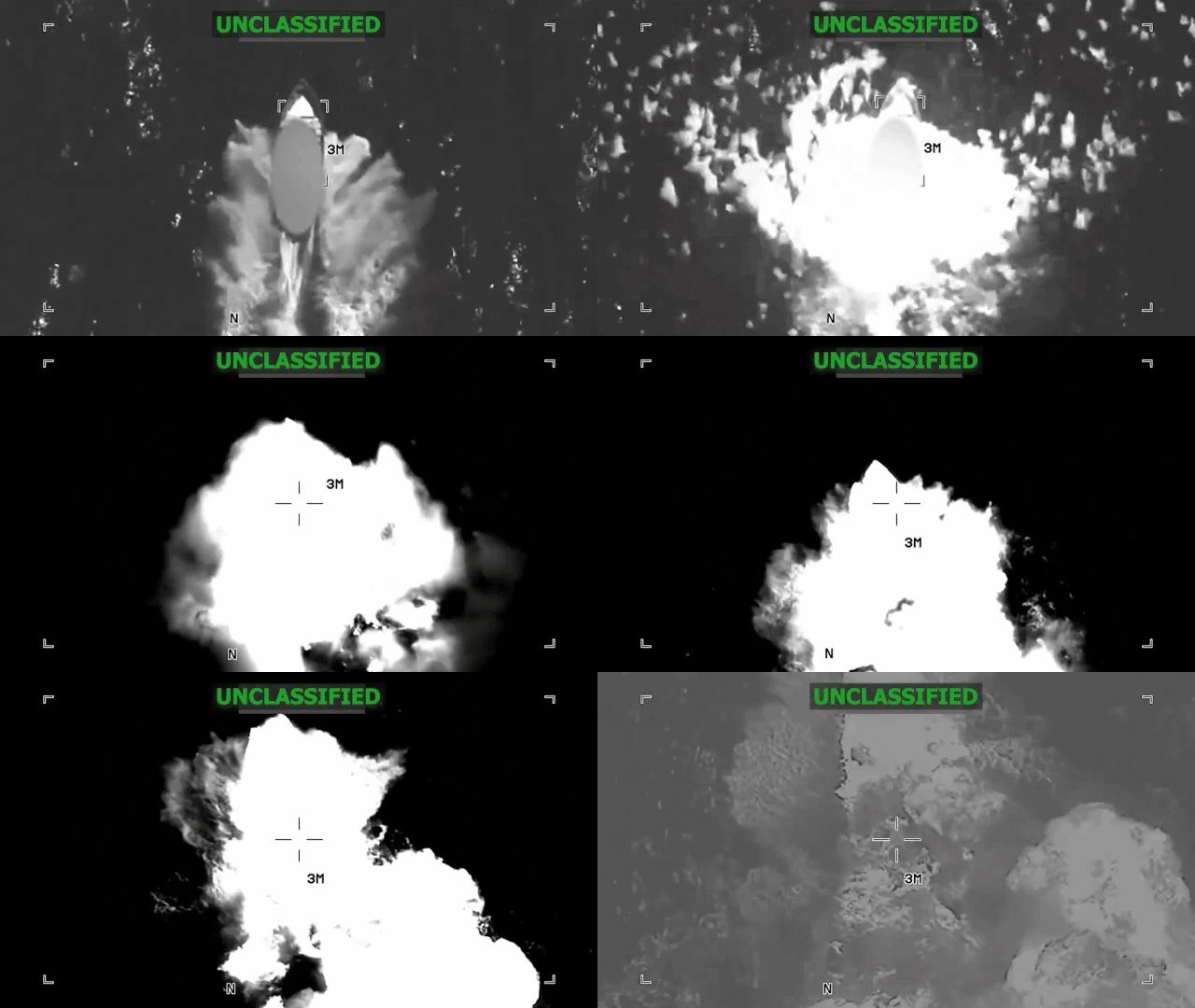
The deadly U.S. military strike on September 2 targeting a suspected drug vessel in the Caribbean represents a significant moment in the evolving U.S. approach to narcotics interdiction and the use of force in international waters. At the heart of the controversy is a follow-up attack ordered against two survivors believed to be continuing a drug smuggling operation, raising complex legal, ethical, and strategic questions. This incident demands deeper scrutiny beyond the headlines to understand what it reveals about America's drug war tactics, military rules of engagement, and regional geopolitical dynamics.
The Bigger Picture: Historical Context of Maritime Drug Interdiction
For decades, the United States has waged a multi-pronged war against narcotics trafficking, particularly focusing on the Caribbean and Latin America as key transit zones for drugs headed to U.S. markets. Historically, interdiction efforts largely relied on coast guard patrols, ship boarding, and arrests. However, rising drug cartel sophistication has increasingly blurred lines between crime and armed conflict, prompting shifts in the operational posture of U.S. forces.
The September strike was notable as it marked the Trump administration’s first direct U.S. military use of lethal force against a suspected drug vessel, signaling a marked intensification. This escalation reflects broader trends since the early 2000s where counter-drug missions have layered on aspects more typical of counterterrorism and counterinsurgency operations. The reliance on elite special operations forces, as in this case under Admiral Frank "Mitch" Bradley’s command of Joint Special Operations Command (JSOC), underscores the militarization of narcotics interdiction programs.
What This Really Means: Legal and Ethical Implications
The decision to order a secondary strike on two survivors has ignited debate around international law, particularly the laws of armed conflict and rules of engagement governing the use of lethal force. Typically, survivors of a disabled vessel—even in illicit activities—are expected to be rescued or detained rather than targeted again. Admiral Bradley’s belief, however, that the survivors were actively communicating with enemy vessels and sought to resume their drug run reframes the situation as an ongoing hostile threat rather than isolated smugglers.
This line of reasoning challenges conventional views of legitimacy in targeting: if individuals are deemed continuing operatives of a criminal network capable of coordinating attacks or evasive maneuvers, do they retain combatant status? Legal experts are split, with some arguing this could set a risky precedent blurring law enforcement and military action, potentially crossing into war crime territory if civilians are imperiled without due process.
Additionally, the explicit authorization from the White House and public backing by Secretary Pete Hegseth articulate strong institutional support for aggressive tactics perceived to protect U.S. national security interests. This institutional imprimatur may embolden future commanders but also risks diplomatic fallout and questions about proportionality and accountability.
Expert Perspectives: Weighing Security and Sovereignty
Naval historian Dr. Laura Martinez notes, "This operation highlights how drug interdiction is increasingly viewed through a military lens, which raises unprecedented complexities about sovereignty, undersea warfare, and civilian protections. The stakes are no longer just law enforcement but geopolitical stability in the region." She suggests this strike could set a new operational template for future U.S. anti-narcotics missions.
From a legal standpoint, international law scholar Professor Richard Klein cautions, "Targeting survivors based on presumed intent to continue illicit activity treads into a gray zone. It requires rigorous evidence and clear procedural safeguards to avoid violations of human rights and maritime law." Klein underscores the importance of oversight mechanisms following such operations to maintain legitimacy.
Data & Evidence: Trends in Drug Smuggling and U.S. Military Engagements
Recent data from the U.S. Drug Enforcement Administration (DEA) shows an upward trajectory in multi-ton shipments moving through maritime routes in the Caribbean, often employing innovative tactics like semi-submersibles and fast boats equipped with encrypted radios. Interdiction success rates hover under 30%, highlighting the challenges faced.
Furthermore, the involvement of Joint Special Operations Command marks an evolution, given JSOC's traditional counterterrorism orientation. The shift indicates the U.S. government’s willingness to deploy elite military units not only against ideological enemies but also transnational criminal networks deemed existential threats.
Looking Ahead: Future Implications and What to Watch
This strike and its fallout herald possible escalation in military involvement in narcotics interdiction. The legal framing used by Admiral Bradley and the White House could open the door to more aggressive engagement rules, potentially blurring the line between crime fighting and warfare.
Political and human rights observers will be watching closely how Congress responds to the justifications presented and whether new oversight or policy adjustments emerge. Regionally, Caribbean and Latin American neighbors may demand clearer protocols to protect their sovereignty and prevent collateral damage.
Additionally, technology used in these operations—communications surveillance, real-time intelligence, and maritime strike capabilities—will be scrutinized for efficacy and transparency.
The Bottom Line
The September Caribbean strike is more than a singular military event; it exemplifies the increasing militarization of the U.S. drug war and raises hard questions about the boundaries of lawful force against transnational crime. Admiral Bradley’s decision to conduct a follow-up lethal strike on survivors based on intelligence assessments reveals a strategic shift toward viewing narcotics traffickers as quasi-military adversaries, with all the attendant complications this entails.
As this case moves through congressional briefings and public debate, it offers a crucial opportunity to reassess the balance between security imperatives and adherence to international norms—a debate central to the future legitimacy and effectiveness of U.S. drug interdiction policies.
Topics
Editor's Comments
This operation illustrates a critical juncture in how the U.S. approaches the drug war—moving from a law enforcement frame toward militarized action with direct lethal consequences. While the decision to target survivors may be legally defensible under certain interpretations, it sets a risky precedent that could erode established maritime norms designed to protect human life at sea. As these types of engagements become more common, rigorous oversight, transparent legal frameworks, and international dialogue will be essential to prevent unintended consequences both for human rights and regional alliances. Policymakers must carefully weigh the strategic benefits of aggressive interdiction against the potential costs to America's global standing and ethical commitments.
Like this article? Share it with your friends!
If you find this article interesting, feel free to share it with your friends!
Thank you for your support! Sharing is the greatest encouragement for us.