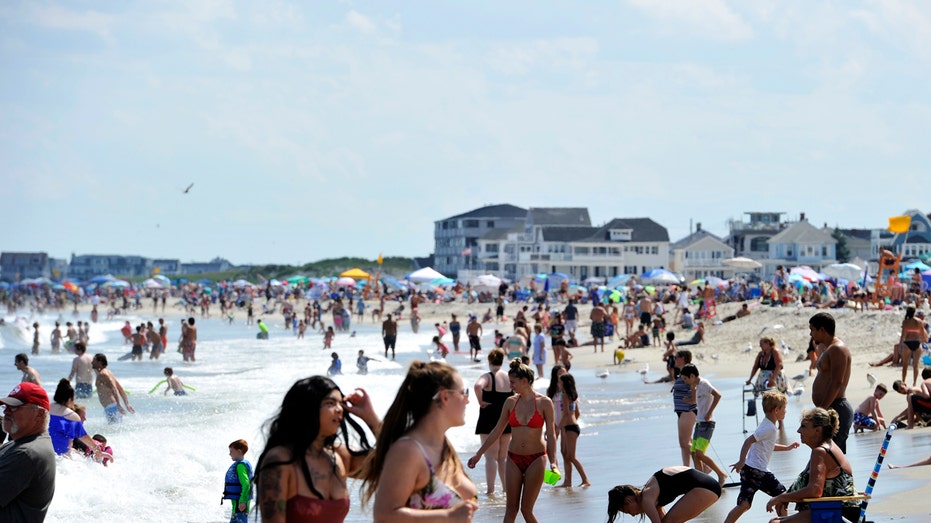
Beyond the Beach: What New Hampshire’s Smoking and Vaping Ban Really Signals

Sarah Johnson
December 16, 2025
Brief
New Hampshire’s proposed smoking and vaping ban at Hampton Beach is more than a beach rule. This analysis explains the deeper public health, cultural, and legal stakes behind the measure.
New Hampshire’s Beach Smoking Ban Push: A Small Rule With Big Public Health and Culture War Implications
At first glance, New Hampshire’s proposed ban on smoking and vaping at Hampton Beach State Park looks like a narrow, local story about beach etiquette. In reality, it’s part of a much larger national shift: the redefinition of what counts as a “right” in shared public spaces, the next chapter in tobacco regulation, and a test of how far communities are willing to go to protect non-smokers from secondhand exposure and environmental harm.
Senate Bill 596, which would prohibit smoking and vaping across Hampton Beach State Park starting in 2027, doesn’t include fines. Instead, it instructs officials to tell people to stop. That might sound toothless—but the absence of monetary penalties is the point. This is less about punishment and more about resetting norms, much like past campaigns that changed behaviors around littering, drunk driving, and indoor smoking.
How We Got Here: From Ashtrays Everywhere to Tobacco-Free Public Life
To understand why a single constituent’s bad beach day can catalyze state legislation, you have to zoom out to the last 50 years of tobacco control in the United States.
- 1964: The U.S. Surgeon General’s landmark report formally links smoking to lung cancer and heart disease.
- 1970s–1990s: Local and state laws begin restricting smoking in workplaces, airplanes, restaurants and bars. What starts as a health concern for workers slowly redefines smoking as an activity that can be legitimately constrained to protect others.
- 2000s–2010s: Comprehensive smoke-free indoor air laws spread. Cities like New York, San Francisco, and Boston expand bans to parks, beaches, and outdoor dining. The argument evolves: limits are not just about indoor air quality, but also about children’s exposure, social norms, and environmental damage.
- 2010s–2020s: Vaping complicates the picture. Initially marketed as harm reduction tools for smokers, e-cigarettes gain popularity among adolescents and young adults. Policymakers begin folding vaping into existing smoke-free ordinances, even as the science around secondhand vapor lags behind what we know about secondhand smoke.
New Hampshire—known for its “Live Free or Die” motto—has historically been slower than many coastal states to adopt aggressive tobacco controls. The Hampton Beach proposal shows how far the tide has turned: even in a state with a libertarian streak, the right to breathe clean air in public spaces is gaining priority over the right to smoke.
Why One Beach Matters: Secondhand Smoke, Vaping, and the ‘Commons’ Problem
The personal story cited by State Senator Debra Altschiller—a parent trying to protect her child from nearby smokers—captures a classic “tragedy of the commons” dilemma. A public beach is a shared resource; one person’s behavior can degrade everyone else’s experience or health.
The World Health Organization estimates that about 1.6 million non-smokers die each year from secondhand smoke exposure. That figure rarely makes it into local debates, but it explains why public health officials increasingly view smoking not just as an individual choice but as a source of involuntary risk imposed on others.
Unlike many indoor bans, this proposal covers both combustible tobacco and vaping products. That reflects three overlapping concerns:
- Health risks from secondhand exposure. For traditional cigarettes, the evidence is overwhelming: secondhand smoke increases risks of coronary heart disease, lung cancer, and respiratory illnesses, especially in children. For vaping, data is still emerging, but studies have found nicotine, fine particulate matter, and volatile organic compounds in exhaled aerosol—enough for many health bodies to recommend precautionary limits.
- Environmental damage. Cigarette butts are one of the most common forms of litter worldwide. Coastal clean-up data consistently show that butts top the list of items collected on beaches. They leach toxic chemicals and plastic microfibers into sand and water. Vapes introduce a new waste stream: lithium batteries, heavy metals, and plastic cartridges.
- Social modeling for youth. Beaches and parks are family-heavy spaces, and public health advocates argue that visible smoking normalizes the behavior for children and teens. Reducing visibility is a deliberate strategy to break the intergenerational cycle of tobacco use.
In that context, Hampton Beach isn’t just a local recreation site—it’s a testing ground for how communities manage shared environments when individual habits pose diffuse but real costs to others.
Enforcement Without Fines: Culture Change by Design
One of the most distinctive aspects of SB 596 is its enforcement model: no fines, no criminal penalties, and no ticket book. Instead, officials are instructed to tell people to stop smoking or vaping.
On paper, critics will call that symbolic. In practice, it’s a calculated attempt to shape behavior through social norms rather than criminalization. There are several advantages—and risks—to this approach:
- Lower risk of inequitable enforcement. Traditional ticket-based enforcement often hits lower-income communities and people of color hardest. A “tell them to stop” model reduces the risk of fines spiraling into warrants, arrests, or court debt.
- Norm-setting over punishment. When combined with clear signage, public education, and staff modeling, gentle enforcement can be surprisingly effective. Think of how many people now automatically put on seatbelts without thinking, or how indoor smoking feels socially out of bounds even where it’s technically allowed.
- Resource constraints. States seldom have the budget to station officers on every stretch of sand. By design, this type of law relies on community enforcement: posted rules embolden bystanders to speak up, and park staff intervene when needed.
- The compliance question. Without fines, will chronic violators simply ignore the rules? That will depend heavily on how consistently staff intervene and whether social pressure backs them up—or undercuts them.
Altschiller’s emphasis on “signage and clear rules” is not a superficial detail; it’s the backbone of this model. Rules only work if people know they exist, believe they are legitimate, and see others following them.
What Mainstream Coverage Misses: Class, Freedom, and Environmental Justice
Most quick-hit stories on this kind of bill frame it as a lifestyle or etiquette issue. That misses three deeper fault lines this proposal touches.
1. The class dimension of tobacco use
In the United States, smoking is increasingly concentrated among people with lower incomes, lower educational attainment, and higher stress levels. That means any restriction on where people can smoke will, in practice, hit marginalized groups harder—even if the rule applies to everyone equally.
The absence of fines in SB 596 softens that impact, but the social signal remains: smoking is increasingly coded as deviant, irresponsible behavior. For some, that’s a public health victory. For others, it’s another way public spaces become subtly less welcoming to those already on the margins.
2. New Hampshire’s ‘Live Free or Die’ identity
New Hampshire markets itself on personal liberty: no state income tax, no sales tax, and a political culture wary of paternalistic regulation. A smoking and vaping ban on one of its most iconic beaches inevitably raises the question: where do residents draw the line between personal freedom and public responsibility?
For supporters, the answer is straightforward: your freedom to smoke ends where my child’s lungs begin. For opponents, this may look like a slippery slope toward overregulation of legal behaviors in outdoor spaces where smoke disperses quickly. How that tension plays out in public hearings and local media will reveal much about how New Hampshire’s libertarian ethos is evolving in the public health era.
3. Environmental justice on the shoreline
Coastal communities already shoulder disproportionate environmental burdens—from storm surge and flooding to pollution. Cigarette butts and vape litter add one more layer of avoidable harm.
Beach bans in other states have significantly reduced tobacco-related litter when combined with education and enforcement. If New Hampshire follows that pattern, Hampton Beach could become a case study in low-cost environmental protection, especially if the state tracks litter trends before and after implementation.
Expert Perspectives: Health, Law, and Public Space
Public health experts tend to view these measures as low-hanging fruit with high impact.
Dr. Stanton Glantz, a longtime tobacco control researcher, has often argued that smoke-free policies do double duty: they protect non-smokers and make it easier for smokers to quit by reducing social cues and opportunities to light up. While not speaking specifically to SB 596, his broader research shows that comprehensive smoke-free environments correlate with reduced hospitalizations for heart attacks and asthma.
Legal scholars emphasize how outdoor bans test the boundaries of state power. Courts have generally upheld smoke-free laws when they are framed as protecting others from harm, not as moral judgments about smokers. The World Health Organization’s position—“there is no safe level of exposure to secondhand tobacco smoke”—strengthens the legal justification for limiting smoking in densely populated outdoor spaces where people cannot easily move away.
Civil liberties advocates, however, caution against what they view as creeping paternalism. They note that scientific certainty around secondhand vapor is not at the level of secondhand smoke, and worry that vaping is being regulated reflexively rather than based on clear evidence of harm to bystanders.
Data Points: How Hampton Beach Fits National Trends
- Secondhand smoke burden: WHO attributes about 1.6 million deaths per year globally to secondhand smoke—illustrating that exposure is not a minor nuisance but a significant public health hazard.
- Policy diffusion: Hundreds of U.S. cities and dozens of states now have smoke-free policies covering beaches and parks. States like California, New York, and New Jersey have already enacted wide-ranging outdoor tobacco restrictions.
- Litter statistics: International Coastal Cleanup data consistently place cigarette butts at or near the top of collected beach litter items every year, contributing to plastic pollution and leaching toxic chemicals.
- Smoking prevalence: U.S. adult cigarette smoking has declined to around 11–12%, but vaping has surged, particularly among young adults. That shift explains why modern laws rarely treat vaping as a separate issue; policymakers are attempting to preempt a new wave of addiction and secondhand exposure.
Looking Ahead: What to Watch If This Bill Moves Forward
If SB 596 advances through the legislature, several questions will determine whether it becomes more than symbolic:
- Will the law expand? Hampton Beach is a high-profile starting point, but advocates may push to extend the ban to other state parks and popular recreation areas, especially those frequented by families.
- How will the 2027 start date be used? A delayed implementation offers time for public education, signage roll-out, and staff training. If used well, compliance could be high from day one. If not, the law risks being ignored.
- Will there be data collection? Few jurisdictions rigorously measure policy impact. If New Hampshire tracks secondhand smoke complaints, beach litter, or public satisfaction before and after the ban, Hampton Beach could become a valuable case study for other states weighing similar policies.
- Could enforcement tighten later? If officials find that a no-fine model yields poor compliance, pressure may build to add penalties. That would fundamentally change the nature of the policy—from soft norm-setting to traditional enforcement.
- How will the vaping industry respond? Vape manufacturers have fought flavor bans and retail restrictions, but less attention has gone to outdoor use rules. If more states start bundling vaping into beach and park bans, industry groups may push back on the grounds of insufficient evidence of harm to bystanders.
The Bottom Line
New Hampshire’s proposed smoking and vaping ban at Hampton Beach is not just about one family’s unpleasant day in the sand. It’s a microcosm of bigger shifts in how Americans think about health, freedom, and shared space.
As secondhand smoke’s toll becomes clearer and vaping complicates the landscape, communities are redrawing the boundaries of acceptable behavior in public. Whether Hampton Beach becomes a model for tobacco-free recreation or a flashpoint in the ongoing tug-of-war between personal liberty and public health will depend less on the text of SB 596 than on how the state implements it—and how residents respond.
Topics
Editor's Comments
One of the most under-examined aspects of policies like New Hampshire’s proposed Hampton Beach ban is the long-term strategic play by public health advocates. This isn’t just about reducing smoke exposure on a particular stretch of sand; it’s about shrinking the social and geographic footprint of tobacco and vaping to the point where nicotine use becomes an increasingly fringe behavior. That raises uncomfortable questions. On one hand, the public health gains—from fewer heart attacks to less cancer and cleaner beaches—are compelling and well documented in the case of secondhand smoke. On the other, we’re inching toward a world where a legal, heavily taxed product is usable only in ever-more limited, often stigmatized spaces. At what point does regulating externalities tip into de facto prohibition for lower-income smokers who lack private spaces to retreat to? Hampton Beach may look like a modest, almost symbolic step, but it sits on a trajectory that leads either to a healthier, smoke-free society—or to deeper social stratification around who gets to fully participate in public life while engaging in disfavored but legal behaviors. Lawmakers should be honest about which destination they’re aiming for, and voters should understand that this beach debate is a proxy for that broader choice.
Like this article? Share it with your friends!
If you find this article interesting, feel free to share it with your friends!
Thank you for your support! Sharing is the greatest encouragement for us.