Beyond ‘Thoughts and Prayers’: What Julian Edelman’s Condemnation of Hate Reveals About Sports in an Age of Violence

Sarah Johnson
December 16, 2025
Brief
Julian Edelman’s response to attacks at Brown University and a Hanukkah event in Sydney reveals how athletes and NFL teams are becoming frontline moral voices in an era of rising hate violence.
When Sports Icons Become Moral Voices: What Julian Edelman’s Response Reveals About Hate, Violence, and Public Grief
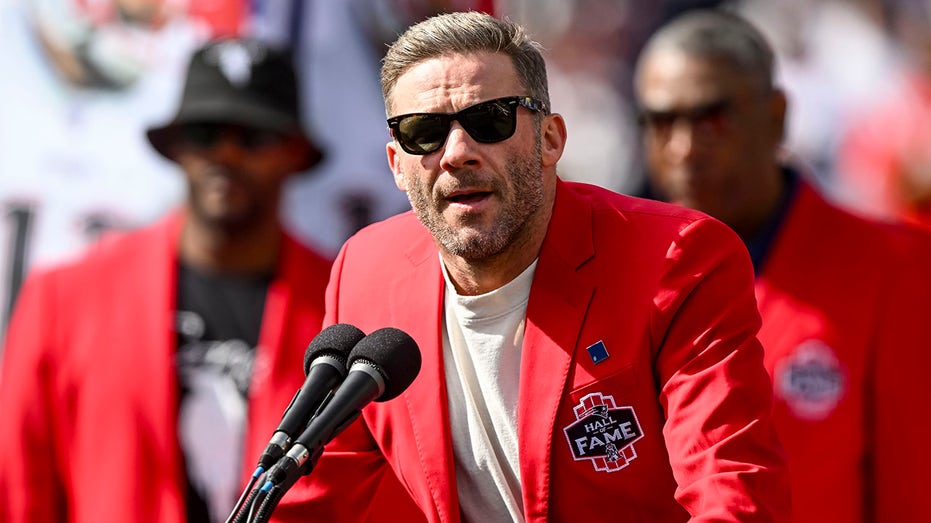
Julian Edelman’s late-night post condemning the Brown University shooting and the Hanukkah terror attack in Australia might look, at first glance, like a routine celebrity statement: thoughts, prayers, and a call for unity. But if we treat it as just another platitude, we miss a much larger story about how sports, identity, and fear are colliding in an age of rising hate violence—and why athletes are increasingly stepping into roles usually reserved for civic and religious leaders.
His words—“Hate is a disease… and has no place in our society”—land at a moment when mass shootings, antisemitic attacks, and politically charged violence are no longer outliers but recurring features of public life. The Patriots’ and Eagles’ pregame tributes underscore that this isn’t just about one player’s conscience; it’s about how entire sports institutions are recalibrating their responsibilities as national rituals unfold against a backdrop of trauma.
The Bigger Picture: Sports, Identity, and a Normalized Crisis
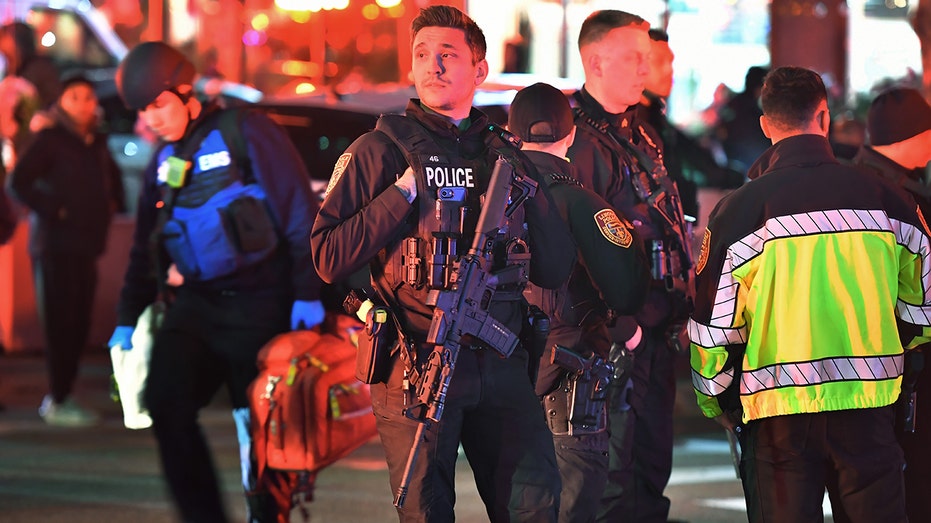
The Brown University shooting and the targeted attack at a Hanukkah event in Sydney are geographically distant but symbolically linked: they represent violence in places that are supposed to be safe—campuses and community religious gatherings. Over the last two decades in the U.S., schools, houses of worship, and public events have increasingly become targets for ideologically driven or grievance-fueled attacks.
Historically, when national tragedies struck, heads of state, clergy, and civic leaders were the primary voices leading the collective response. Today, elite athletes often occupy that symbolic space. This is not entirely new—think of Muhammad Ali refusing the draft in the 1960s or the Olympic Black Power salute in 1968—but the scale and frequency are different. With social media, athletes can speak directly to tens of millions within minutes, shaping narratives before official statements are even drafted.
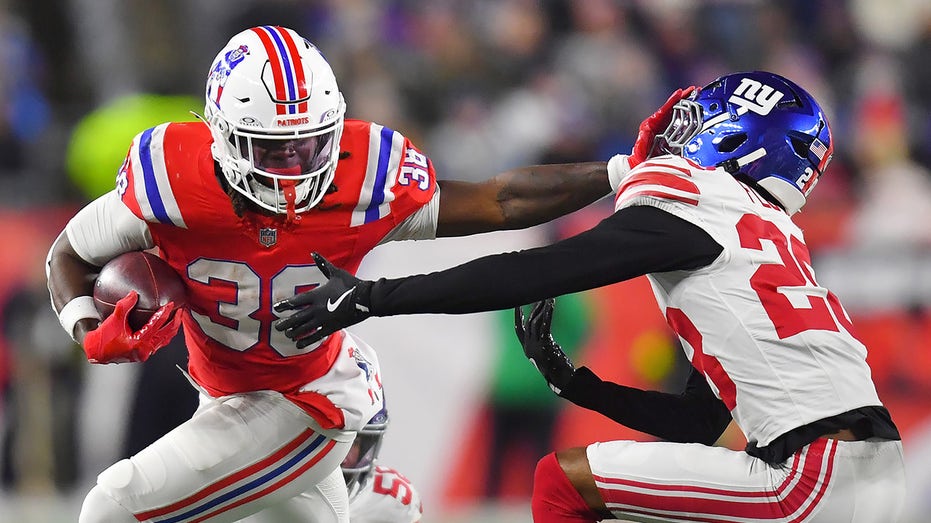
Edelman occupies a particularly meaningful intersection of identities: a Jewish former NFL star associated with a storied franchise whose owner, Robert Kraft, has positioned himself as a prominent advocate against antisemitism. The Patriots’ pregame moment of silence and imagery linking Brown University and Sydney on the stadium video board signal that the team understands its platform as more than entertainment. It is, in effect, acknowledging that football Sundays are now a civic arena where national anxieties are processed.
What This Really Means: The Shift From Neutrality to Moral Responsibility
For decades, professional sports organizations tried to remain “politically neutral,” limiting their public stances mostly to patriotic rituals and military tributes. That posture has been eroding rapidly. From players kneeling during the national anthem to league-wide statements after high-profile police killings, the expectation that sports can remain separate from social conflict has become untenable.
What Edelman and the Patriots did here is part of that shift. Several deeper dynamics are at work:
- Public demand for moral leadership: As trust in traditional institutions—government, media, religious bodies—has declined, polling shows Americans often view athletes and entertainers as more relatable and, in some cases, more trustworthy. Their reactions to crises carry weight precisely because they aren’t seen as career politicians.
- The visibility of Jewish identity in sports: Jewish athletes in major U.S. leagues have historically been reluctant to foreground their identity, especially in violent or polarized moments. Edelman has taken the opposite approach in recent years, speaking openly about antisemitism and Jewish safety. His response to a terror attack at a Hanukkah event is therefore not incidental; it’s an extension of a deliberate public identity.
- Institutional branding in an age of hate: The Patriots and Eagles statements are not merely compassionate; they are also reputational. In an environment where sponsors, fans, and players scrutinize silence as much as speech, teams are incentivized to demonstrate clear opposition to targeted hate and mass violence.
Calling hate a “disease” is more than rhetorical. It aligns with a growing body of academic work that treats extremist ideology and hate-based violence as phenomena that spread through social networks and media ecosystems much like contagion—fueled by grievance, misinformation, and social isolation.
Data & Evidence: The Rising Tide of Hate and Targeted Violence
To understand why these statements resonate, we need to set them against the numbers:
- Mass shootings: In the United States, databases maintained by organizations such as the Gun Violence Archive have documented hundreds of mass shooting events annually in recent years, with schools and public gatherings frequently targeted. While definitions vary, the trend line is unmistakably upward compared to the late 20th century.
- Antisemitic incidents: The Anti-Defamation League has reported record or near-record levels of antisemitic incidents in the U.S. in multiple recent years, including assaults, harassment, and vandalism. Globally, spikes in antisemitic attacks often correlate with geopolitical flashpoints and social media-driven conspiracy narratives.
- Hate crime trends: Law enforcement and independent research groups across Western democracies have documented a rise in reported hate crimes targeting religious and ethnic minorities, including Jews, Muslims, and migrants. Places of worship and associated events are recurring targets.
The Sydney attack, specifically described as a targeted assault on a Jewish community event tied to Hanukkah, fits an established pattern: extremist individuals or cells choosing moments of religious observance, when communities are gathered and vulnerable, to maximize psychological and symbolic impact.
On campus violence, universities like Brown have long imagined themselves as relatively insulated from lethal attacks, even as K–12 schools and large universities like Virginia Tech and Michigan State have faced deadly shootings. Each new incident chips away at the assumption that elite academic spaces are inherently safer, particularly for young adults.
Expert Perspectives: Why Voices Like Edelman’s Matter
Security and extremism researchers increasingly argue that preventing hate-fueled violence requires more than law enforcement; it demands cultural counter-narratives.
Social psychologist and radicalization researcher Dr. Arie Kruglanski has long noted that individuals drawn into violent extremism often seek significance and belonging. High-profile figures publicly condemning hate—and modeling solidarity across communities—can slightly shift the symbolic rewards away from violence and toward inclusion.
Sports sociologists point out that teams and athletes occupy a rare position: they command loyalty across political, religious, and social lines. When Edelman, the Patriots, and the Eagles denounce hate and violence, their messages reach fans who might not engage with similar content from human rights organizations or religious leaders.
At the same time, experts caution against over-romanticizing celebrity impact. Statements alone do not dismantle radical networks or address the structural drivers of violence. But they can alter the social climate by making it harder for hateful ideologies to claim mainstream legitimacy.
What’s Being Overlooked: The Limits and Risks of Symbolic Solidarity
What gets less attention in mainstream coverage are the constraints—and potential backlash—around these gestures.
- Selective visibility: Attacks that occur in or near media centers, elite institutions, or Western countries often get broad attention and thus prompt high-profile statements. Similar or worse violence in less-covered regions or marginalized communities may receive far less acknowledgment from sports figures, creating a perceived hierarchy of whose suffering counts.
- Fan polarization: Even seemingly uncontroversial condemnations of hate can trigger backlash, with some fans accusing teams and athletes of “politicizing” sports. This can discourage sustained engagement beyond one-off tributes.
- Short attention cycles: Moments of silence and social media posts exist within a hyper-accelerated news cycle. Without follow-through—support for affected communities, advocacy for prevention policies, or educational initiatives—these gestures risk becoming emotionally satisfying but substantively thin rituals.
There’s also a tension between universalist language (“violence is never the answer”) and the specific vulnerabilities of certain communities. Jewish organizations, for example, often stress that generic condemnations of hate must be matched by concrete measures: improved security for synagogues and community centers, accountability for online platforms hosting extremist content, and robust education about antisemitism and other forms of bigotry.
Looking Ahead: From Statements to Sustained Engagement
The trajectory of the last decade suggests that these episodes are not anomalies but part of a persistent pattern. The role of sports in responding to that pattern is likely to deepen in several ways:
- Formalized protocols: Leagues and franchises may develop more structured responses to mass violence and hate attacks—standardized pregame tributes, coordinated social campaigns, and partnerships with victim-support organizations.
- Education and training: Some teams could expand internal education on antisemitism, racism, and extremism for players and staff, enabling more informed and nuanced public engagement.
- Community-level initiatives: Expect more team-backed programs focused on youth resilience, conflict de-escalation, and cross-community dialogue in cities where franchises wield outsized influence.
- Pushback and politicization: As sports institutions step further into these debates, opposition will grow, particularly from those who see any mention of hate or targeted violence as coded political messaging. Navigating this tension will become part of organizational identity management.
If “hate is a disease,” as Edelman put it, then sports are both exposed to and influential within the social body where that disease spreads. Stadiums, locker rooms, and fan communities can either mirror the polarization of the outside world or become partial inoculation—spaces that explicitly reject the normalization of bigotry and violence.
The Bottom Line
Edelman’s statement and the NFL teams’ tributes are not mere gestures of sympathy. They are indicators of a deeper realignment in how we process public violence and who we look to for moral framing. In an era where hate incidents and mass attacks are disturbingly frequent, sports figures and organizations are being drawn—some willingly, some reluctantly—into the role of civic conscience.
Whether that role evolves into sustained, practical engagement or remains largely symbolic will shape not just the image of professional sports, but also the broader cultural struggle over whose safety matters and how societies confront the persistence of hate-fueled violence.
Topics
Editor's Comments
One unresolved tension in episodes like this is whether we are unintentionally normalizing a new civic script: tragedy, statement, tribute, and then rapid forgetting. The Patriots’ and Eagles’ actions are morally commendable and culturally significant, but they also fit a pattern that can feel increasingly ritualized. We’ve seen similar cycles after school shootings, synagogue attacks, and other mass-casualty events. The danger is that the language of ‘thoughts and prayers’—even when upgraded with bolder phrases like ‘hate is a disease’—becomes a kind of emotional release valve that allows the public and institutions to feel responsive without engaging the harder questions: What policies are we willing to fight for? What online ecosystems are we prepared to regulate? Which communities will we consistently protect, even when the cameras are gone? Athletes and teams can’t solve these structural issues, but they can choose whether to remain at the level of symbolic solidarity or leverage their influence to push for deeper, sometimes uncomfortable, change.
Like this article? Share it with your friends!
If you find this article interesting, feel free to share it with your friends!
Thank you for your support! Sharing is the greatest encouragement for us.