Beyond the ‘Animal’ Remark: What the Brown University Shooting Exposes About America’s Campus Security Crisis

Sarah Johnson
December 16, 2025
Brief
The Brown University shooting and Trump’s “animal” remark reveal a deeper crisis: universities are being forced to manage America’s gun violence problem without the power to fix its root causes.
Trump’s Reaction to the Brown University Shooting Exposes a Deeper Crisis in How America Responds to Campus Violence
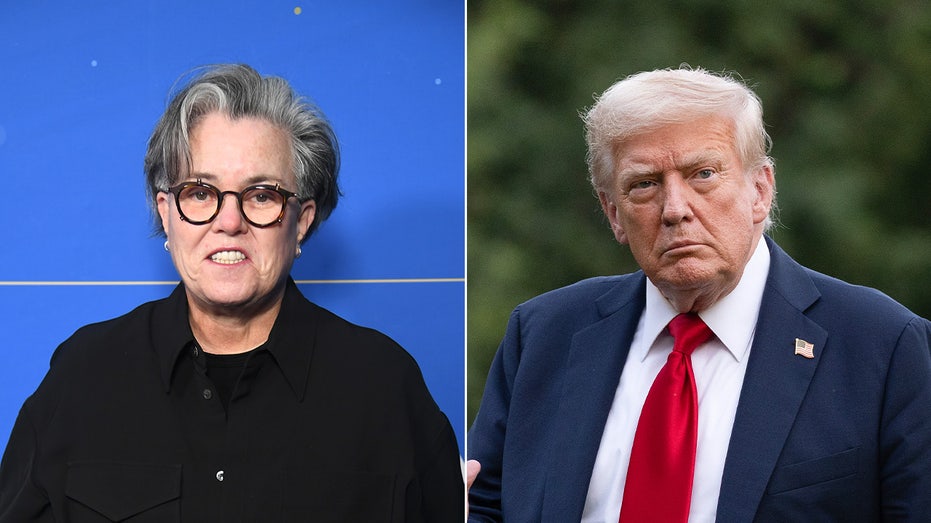
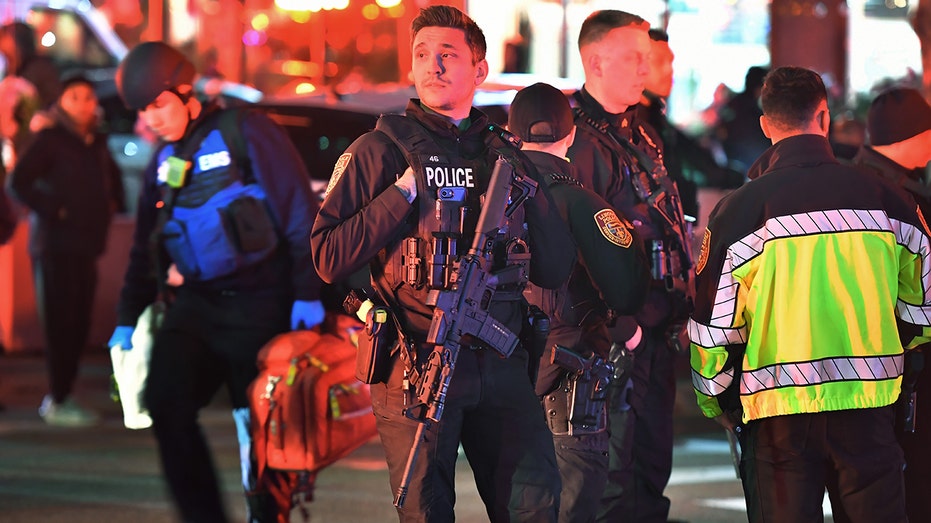
The Brown University classroom shooting that left two students dead and nine injured is not just another entry in America’s grim mass-shooting ledger. The way it is being framed—by political leaders, media outlets, and law enforcement—reveals a widening gap between emotional rhetoric and substantive solutions. President Donald Trump’s comments calling the at-large gunman an “animal,” and shifting scrutiny from federal investigators to the university itself, are a case study in how the political response to campus violence has evolved in the past decade—and why the public conversation remains stuck.
Two of the victims have already become symbols of intersecting American narratives: Ella Cook, a sophomore from Alabama and vice president of the Brown University College Republicans; and Mukhammad Aziz Umurzokov, a naturalized U.S. citizen from Uzbekistan living in Virginia. Their stories encapsulate the crosscurrents of partisan identity, migration, and the promise of higher education that mass violence continues to shatter.
The Bigger Picture: How Campus Shootings Became a Structural, Not Isolated, Problem
To understand why this incident matters, it has to be placed in a longer history of campus violence and the shifting expectations placed on universities. Since the mass shooting at Virginia Tech in 2007, colleges and universities have been pushed—through policy, lawsuits, and public pressure—into becoming quasi-security agencies as much as educational institutions.
Key turning points include:
- Virginia Tech (2007): 32 killed. The aftermath led to major changes in campus emergency notification systems, threat assessment processes, and federal guidance under the Clery Act.
- Umpqua Community College (2015): Renewed national attention on campus vulnerability and mental health interventions.
- Parkland / Marjory Stoneman Douglas High School (2018): While a high school, the political fallout over “hardening schools” and arming staff heavily influenced expectations of all educational institutions, including universities.
Over time, a pattern emerged: after each incident, institutions were told to do more—more guards, more cameras, more drills, more coordination with law enforcement. Yet national gun laws changed little, and the availability of firearms continued to climb. Research by the Small Arms Survey and U.S. think tanks estimates there are now more guns than people in the United States, with civilian-held firearms well over 390 million.
In this context, Trump’s claim that “this was a school problem” doesn’t just deflect from federal responsibility—it reflects a broader policy trajectory that has pushed the burden of managing lethal risk down to the local level, while leaving the structural drivers (firearms access, online radicalization, social isolation, and fragmented mental-health systems) largely intact.
What Trump’s Language Reveals About the Politics of Violence
Calling the suspect an “animal” fits a pattern in Trump’s rhetoric when addressing violent crime. He has often used dehumanizing language to describe perpetrators—from gang members to terrorist suspects. This language serves several political functions:
- Moral clarity without policy complexity: Branding the shooter as “evil” or “animalistic” allows leaders to appear tough and emotionally aligned with victims, while sidestepping thorny debates over gun law reform, mental health funding, or intelligence-sharing failures.
- Individualizing a systemic problem: By focusing on the deviance of a lone actor, the broader systemic failures—access to weapons, gaps in early intervention, or online radicalization—fade into the background.
- Creating distance from institutional accountability: When Trump says the FBI “came in after the fact” and points the finger at Brown, he’s reinforcing a hierarchy of blame that puts universities on the front line while insulating federal agencies and lawmakers who shape the legal landscape.
The absence of a declared motive, at least so far, further complicates the picture. In the current polarized media environment, the temptation will be to retrofit a narrative once more information emerges—whether it’s ideological, personal, or entirely idiosyncratic. The fact that one victim was a College Republican and another a Muslim immigrant-turned-citizen from Uzbekistan almost guarantees that competing political camps will try to claim or instrumentalize the tragedy for their own narratives.
The ‘Soft Target’ Framing: Security Logic vs. Campus Reality
A criminal profiler described Brown University as a “soft target,” language that has become standard in both law enforcement and media coverage. The term implies that an institution has insufficient physical security to deter or repel an armed attacker.
But this framing has serious limitations:
- Universities are designed to be open: Unlike airports or federal buildings, campuses are built around openness—intellectual, physical, and social. Turning universities into hardened zones with checkpoints and pervasive surveillance fundamentally conflicts with their core mission.
- Security theater vs. real risk reduction: Digital access controls, more guards, and active-shooter drills can mitigate some harms but have limited impact against a determined attacker with a firearm and insider knowledge of campus routines.
- Resource inequality: Wealthy private universities like Brown can invest more heavily in security infrastructure than community colleges or underfunded public institutions, raising equity and access questions.
Evidence also suggests that while security upgrades can contribute to response effectiveness, they do relatively little to address the underlying probability of a shooting occurring in the first place. A comprehensive 2018 report from the U.S. Secret Service’s National Threat Assessment Center emphasized early behavioral intervention, information sharing, and community-based threat assessment teams as more critical than physical fortification alone.
Victims at the Crossroads of America’s Culture Wars
The identities of the two students killed add a volatile layer to how this incident will be interpreted:
- Ella Cook: A conservative student leader at an elite Ivy League campus, a demographic often portrayed as embattled in liberal academic spaces. Her death will likely become a talking point in debates over political bias, campus speech, and conservative safety on campus—even if the eventual motive has nothing to do with politics.
- Mukhammad Aziz Umurzokov: A naturalized citizen from Uzbekistan. Given past patterns, any link—real or speculative—to foreign origins or religious identity can quickly morph into narratives about immigration, vetting, or Islamist extremism, even in the absence of evidence.
That both students chose Brown—a symbol of American meritocracy and cosmopolitanism—underscores the broader stakes: universities are still perceived as ladders of upward mobility and integration, whether from rural Alabama or post-Soviet Central Asia. When violence pierces these spaces, it destabilizes not just a campus, but a powerful narrative of American possibility.
What This Really Means for Law Enforcement and Accountability
The fact that the suspect remains at large days after the shooting, and that an initially detained man was released, raises questions about investigative capacity, evidence thresholds, and public communication.
Several dynamics are at play:
- Complex crime scenes: Classroom shootings on busy campuses generate multiple witnesses, conflicting accounts, and chaotic physical evidence. Sorting reliable from unreliable information slows suspect identification.
- Digital forensics and privacy constraints: Investigators now rely heavily on phone data, social media, and digital traces. Accessing this information requires legal processes that can take time, especially if suspects use encryption or privacy tools.
- Pressure to quickly name a suspect: Post-incident, both the public and media demand rapid answers. Misidentification can destroy an innocent person’s life and erode trust, which likely contributed to the decision to release the initially detained person.
Trump’s framing that this is a “school problem” obscures a more complex reality: preventing and resolving such attacks requires layered coordination between campus police, local departments, federal agencies, and digital platforms—none of which are structured or funded to operate as a single integrated system.
Data & Trends: Why Incidents Like This Keep Happening
While full details of this case are still emerging, it sits in the middle of well-documented trends:
- The nonprofit Gun Violence Archive has consistently recorded over 600 mass shooting events per year in the United States in recent years, using a definition of four or more people shot or killed, excluding the shooter.
- Higher education settings represent a small but symbolically powerful subset of these incidents. Studies of school and campus shootings show recurring patterns: prior concerning behavior, access to firearms, and, in many cases, leakage of intent to peers or online audiences.
- Despite expanded threat assessment programs, most states still lack universal requirements for secure firearm storage, comprehensive background checks, or robust red-flag laws at scale.
In other words, universities are being asked to manage the downstream consequences of national policy choices over which they have little control.
Looking Ahead: What to Watch
Several key questions will shape the long-term implications of this tragedy:
- Motive and narrative construction: Once investigators identify a suspect and a motive, watch how quickly political actors align it with preexisting narratives—about immigration, ideology, mental health, or campus politics. The risk is that one aspect of the suspect’s identity becomes the whole story.
- Liability and institutional response: Families of victims may pursue legal action against Brown, alleging negligence in security or threat assessment. Past cases show that even when universities win in court, the discovery process often exposes internal emails and risk assessments that reshape public debates about campus safety.
- Policy proposals: Expect renewed calls for both “hardening” campuses (more police, metal detectors, surveillance) and for broader reforms, such as gun control measures or expanded mental-health funding. The balance struck by federal and state lawmakers will signal whether this is treated as a one-off tragedy or another catalyst for systemic change.
- Impact on campus climate: For Brown’s students—especially students of color, international students, and politically active groups—this incident may deepen fear and mistrust. It could chill political expression, intensify demands for security, or spark debates over arming campus police.
The Bottom Line
The Brown University shooting and Trump’s response highlight a familiar American cycle: a horrific act of violence, a wave of condemnation, calls to capture the “monster,” and a quick leap to blaming institutions closest to the scene. What remains under-examined is the systemic architecture that ensures such tragedies remain likely: access to weapons, fragmented security responsibilities, uneven mental-health care, and a political culture more comfortable with outrage than with structural change.
Until that gap is confronted, universities will continue to be asked to play an impossible double role: guardians of open inquiry and front-line managers of a national gun violence crisis they did not create and cannot solve alone.
Topics
Editor's Comments
What’s most striking in this case is not just the horror of another campus shooting, but how tightly scripted the public response already feels. We know the political beats before they happen: condemnation of a “monster,” a focus on institutional security gaps, and then a return to business as usual once the news cycle moves on. The danger is that the repetition dulls our capacity to see each incident as both uniquely tragic and structurally revealing. Brown is an elite institution with significant resources, yet it is still vulnerable in ways that look very similar to less wealthy campuses. That should challenge the assumption that better-funded schools can simply buy their way into safety through more guards or better cameras. The real fault lines run through national choices around guns, social fragmentation, and the offloading of security responsibilities onto institutions whose main mission is education, not counterterrorism. Until the debate shifts from how universities react to why they must, we’re chasing symptoms, not causes.
Like this article? Share it with your friends!
If you find this article interesting, feel free to share it with your friends!
Thank you for your support! Sharing is the greatest encouragement for us.