Beyond the Crime Scene: What the Obamas–Reiner Tragedy Exposes About America’s Polarized Grief

Sarah Johnson
December 16, 2025
Brief
The killing of Rob and Michele Reiner, and the Obamas’ planned visit that night, reveal how polarized America now processes grief, tragedy, and celebrity activism in a permanent culture war.
What the Obamas–Reiner Tragedy Reveals About America’s Polarized Grief
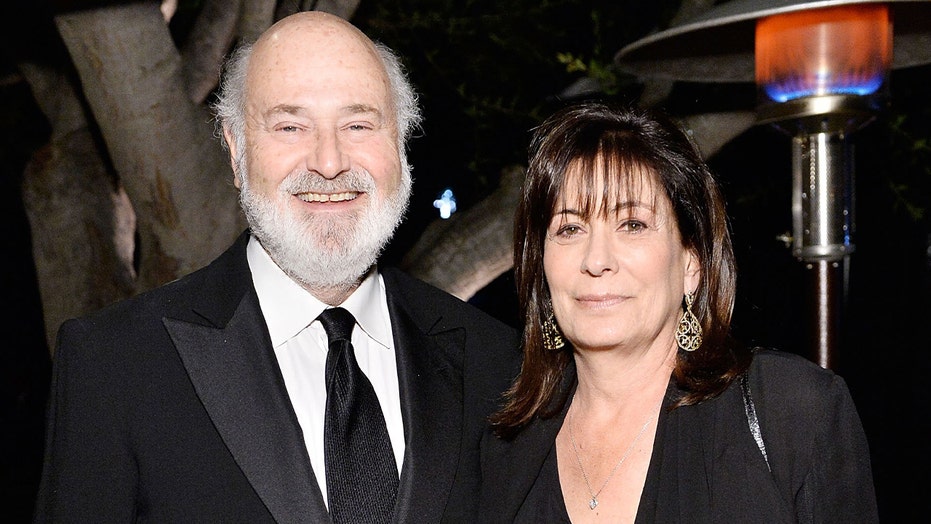
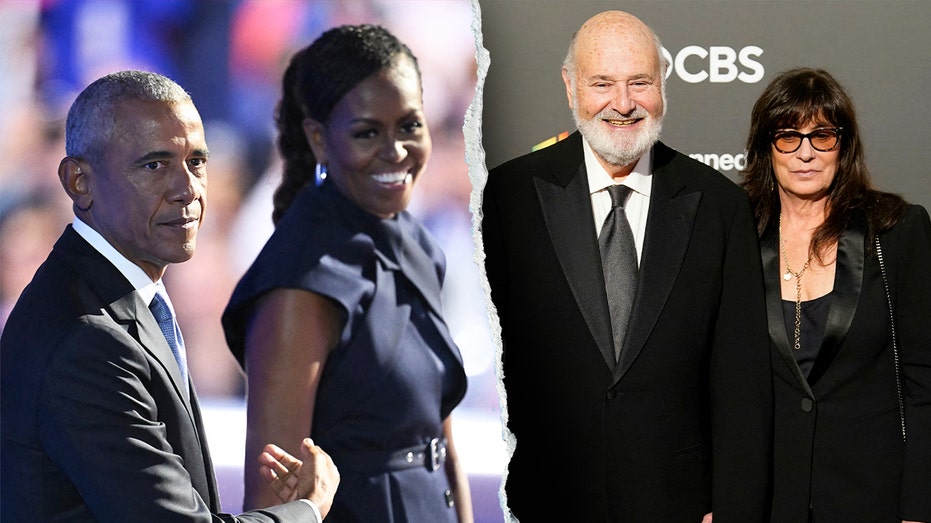
The shocking killing of filmmaker Rob Reiner and his wife Michele would have been a major cultural story even without the Obamas’ connection. But the detail that the former president and first lady were scheduled to see the couple the very night they died turns this from a celebrity-crime narrative into a revealing X‑ray of American politics, culture, and the way we now process tragedy.
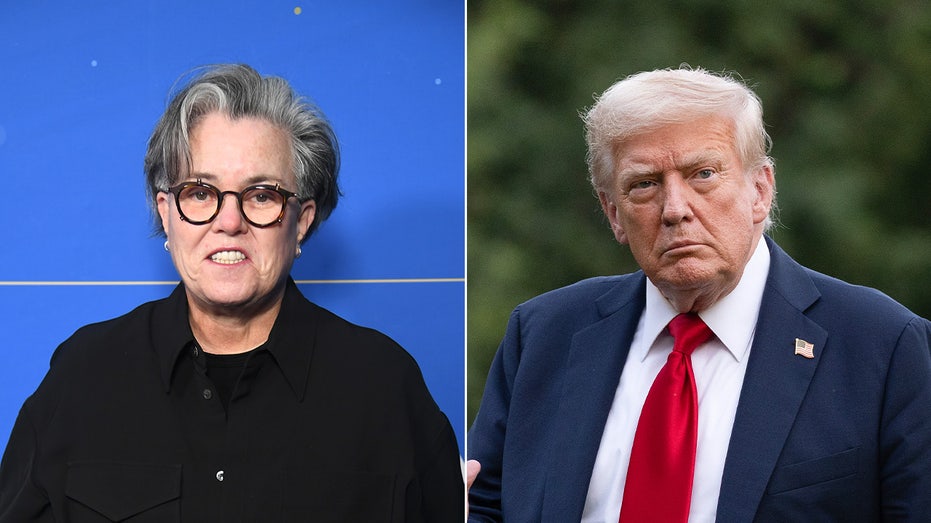
On late-night television, Michelle Obama framed the Reiners as “decent, courageous” people who cared about fairness and equity. Within hours, Donald Trump publicly suggested – without evidence – that Reiner’s death was in some way connected to “Trump derangement syndrome.” One side turned to personal loss and civic virtues; the other folded the killing into the ongoing culture war.
That split-screen reaction is the real story here. It tells us how thoroughly partisan identity has colonized not just our politics, but our grief, our art, and even our sense of what counts as “cause” in a tragedy that appears, at least so far, to be a family crime.
The cultural weight of Rob Reiner – and why his death hits so hard
Rob Reiner wasn’t just a Hollywood name. His filmography is a map of late 20th-century American pop culture: When Harry Met Sally, Stand by Me, A Few Good Men, The Princess Bride, Misery, This Is Spinal Tap. For multiple generations, Reiner’s work shaped how Americans saw friendship, love, justice, and power.
That alone would make his killing – allegedly at the hands of his own son – a cultural earthquake. But in the last decade, Reiner also became a loud and consistent critic of Donald Trump and a prominent liberal activist. He produced political documentaries, funded voting rights efforts, and used his platform to call Trump an existential threat to democracy. He was emblematic of a broader trend: the overt politicization of cultural elites in the Trump era.
That dual identity – beloved storyteller and combative political voice – is why this case sits at the junction of three big American fault lines:
- The ongoing crisis of family violence and mental health.
- The hyper-politicization of public discourse, where even a murder becomes fodder for partisan narratives.
- The evolving role of celebrity activists and their relationships with political leaders.
How we got here: politicizing private pain
Historically, when public figures died violently, politicians treated their deaths as a rare moment to suspend partisan warfare. After the assassinations of Martin Luther King Jr. and Robert F. Kennedy in 1968, leaders across the spectrum expressed grief and called for unity. Even during the deeply divided 1990s, there was a bipartisan consensus in mourning figures like Princess Diana or John F. Kennedy Jr.
That norm has been eroding for at least two decades. The culture wars of the 1990s, the post‑9/11 security state, and the social media era all chipped away at boundaries between public and private, tragedy and talking point. But the Trump era accelerated it dramatically. Public grief increasingly became a test of political loyalty:
- After mass shootings, immediate fights over gun control routinely overshadowed the victims.
- During COVID-19, even death counts became polarized claims, with some minimizing, others amplifying, often along partisan lines.
- Celebrity deaths – from Anthony Bourdain to Kobe Bryant – were quickly reframed in terms of race, gender, privilege, or political symbolism.
Within that context, Trump’s response to Reiner’s death – insinuating, without evidence, that Reiner may have died because his criticism inflamed others – is not an aberration; it’s the logical endpoint of a politics where every event is raw material in a permanent campaign. The message to his followers is clear: even in death, critics are not people first, but antagonists in a narrative about loyalty and betrayal to Trump.
The Obamas, the Reiners, and the new political–Hollywood alliance
Michelle Obama’s comments highlight a different transformation: the increasingly tight fusion of political power and cultural capital. The Obamas and the Reiners were not simply friends; they were part of a broader ecosystem in which Hollywood storytelling, Democratic politics, and civic advocacy now exist in symbiosis.
Since leaving office, the Obamas have built their own production company, won an Oscar for a documentary, and effectively entered the same industry Reiner dominated. Their friendship with the Reiners symbolizes a longer arc:
- From the 1960s onward, Hollywood gradually aligned with liberal politics, but the relationship was often arm’s length.
- By the Obama era, cultural figures weren’t just donors and surrogates; they were co‑architects of narratives about democracy, race, and equality.
- The Trump era further cemented this alliance as many creatives saw opposition to Trump as a moral obligation rather than a political preference.
Michelle Obama’s description of the Reiners – emphasizing fairness, equity, and courage – is not just personal tribute; it is value signaling. She is implicitly defending a worldview in which engaged, outspoken criticism of Trump is an act of patriotism, not pathology. That’s why her aside about “unlike some people” and “not deranged or crazed” matters: it’s a direct rebuttal to the “Trump derangement syndrome” framing that has been used for years to discredit critics as emotionally unhinged rather than substantively concerned.
Family violence, mental health, and what’s being overshadowed
The alleged involvement of the Reiners’ son in their deaths points to a crisis that rarely gets the same level of sustained attention: lethal family violence driven by untreated mental illness, addiction, or long‑term conflict. In the U.S., nearly 1 in 5 homicide victims are killed by a family member, and adult children killing parents – known as parricide – is uncommon but not rare.
Criminological research suggests that parricide often involves complex mixtures of mental illness, substance abuse, long‑standing family conflict, or histories of abuse. Yet in high-profile cases, these factors are frequently flattened into either a sensational true-crime narrative or a political talking point. In this case, Trump’s reference to “anger he caused others” moves the focus yet further away from the likely personal and psychological dynamics within the Reiner family.
What’s being overlooked is that the Reiners’ deaths fit into a broader pattern: a country with high rates of homicide, persistent gaps in mental health care, and a media ecosystem that rewards spectacle over structure. The same nation that debates mass shootings endlessly often pays little sustained attention to the more common, quieter forms of family violence that play out behind closed doors.
Why Trump’s ‘derangement’ framing is so consequential
The use of the term “Trump derangement syndrome” is not just an insult; it’s a strategic reframing. By labeling critics as “deranged,” it delegitimizes dissent and recasts political disagreement as a kind of mental illness. In psychological terms, it’s a form of pathologizing opposition.
That has at least three implications:
- It normalizes dehumanization of opponents. If critics are “deranged,” empathy for their suffering – even in the face of murder – becomes optional.
- It hardens echo chambers. Followers are encouraged to see any critical narrative as evidence of pathology rather than a signal to re‑evaluate their views.
- It distorts causal thinking. Suggesting that Reiner’s activism caused his death directs attention away from real causal factors (family dynamics, mental health, crime) and toward a conspiratorial moral lesson: criticize Trump at your own peril.
Over time, this kind of rhetoric erodes shared norms about tragedy. If death itself no longer commands a baseline of decency across partisan lines, the space for any common moral language narrows dramatically.
Data points that frame this moment
- Polarization of emotions: Survey data from recent years consistently show that partisans report feeling not just disagreement but disgust and dehumanization toward the other side. When political opponents are seen as immoral or inhuman, empathy in tragedy declines.
- Violence and mental health: The U.S. has seen rising concerns about serious mental illness and treatment gaps. According to national data, a significant portion of those with severe mental illness receive no consistent care, a pattern associated with higher risks of family conflict and, in extreme cases, violence.
- Celebrity activism: Studies of political behavior show that celebrity endorsements and activism can significantly shape opinions among younger and less politically engaged voters, amplifying both their influence and the intensity of backlash they face.
What this really tells us about America right now
At its core, this story is about whether we still have any zone of shared humanity that stands outside partisan warfare. The answer, judging by the reactions, is increasingly no.
The Obamas’ grief and praise for the Reiners underscore a belief that public service, activism, and cultural storytelling can be grounded in decency and civic purpose. Trump’s response underscores an alternative worldview: that opposition itself is a kind of sickness, and that even death does not erase ideological enmity.
For ordinary citizens, the danger is that we begin to internalize this logic. When every death is scanned for political angles, we lose the capacity to sit with tragedy as tragedy – to ask non‑partisan questions about mental health systems, family stress, or community safety. Instead, we default to: what does this prove about “our side” versus “their side”?
Looking ahead: what to watch
Several developments in the coming weeks and months will be telling:
- How the investigation unfolds. Details about the Reiner family’s dynamics, the son’s mental health history, and any prior interventions will shape whether this becomes a case study in systemic failure or remains a sensational one‑off.
- Whether political actors de‑escalate or double down. We will see if leaders across the spectrum resist the urge to weaponize this tragedy further, or if it becomes a recurring reference point in campaign rhetoric.
- Media framing. Serious outlets and cultural institutions could use this moment to examine family violence, caregiving, and stress in aging households, rather than only replaying partisan clips.
- Hollywood’s response. Given Reiner’s stature, there may be renewed discussion within the entertainment industry about how artists navigate intense political engagement and personal vulnerability in an era of constant online vitriol.
The bottom line
The planned dinner that never happened crystallizes the overlap between politics, culture, and private life in 21st‑century America. The Obamas’ grief, Trump’s attack, and the alleged role of the Reiners’ son in their deaths together reveal a country where even our most intimate tragedies are filtered through partisan narratives, while the underlying crises – family violence, mental health, and the erosion of shared norms of empathy – struggle to command sustained attention.
If there is any constructive lesson here, it is this: we can choose to treat the Reiners’ deaths as another data point in a culture war, or as a moment to reassert that some aspects of human suffering should sit outside of that battlefield. Which path we take will say as much about the state of American democracy as any election poll.
Topics
Editor's Comments
One uncomfortable question this story poses is whether we, as a public, still recognize any moral red lines in our political discourse. There was a time when the violent death of a public figure—especially under circumstances suggesting family tragedy—would have prompted at least a temporary ceasefire in partisan sniping. Trump’s response to Rob Reiner’s killing demonstrates how far that norm has decayed: instead of laying off an adversary in death, he retrofits the tragedy into a warning about the supposed pathology of his critics. What worries me is less the individual statement than the audience reaction it seeks to elicit. If supporters cheer this kind of rhetoric, we edge closer to a politics where the suffering of opponents is not only tolerated but enjoyed. That’s not just corrosive; it’s historically the kind of dehumanization that precedes broader social and, sometimes, physical violence. The real test will be whether other leaders push back and reassert a basic principle: there are moments when our shared humanity should trump our loyalties.
Like this article? Share it with your friends!
If you find this article interesting, feel free to share it with your friends!
Thank you for your support! Sharing is the greatest encouragement for us.