Brown University Shooting Exposes the New Reality of Campus Safety in America

Sarah Johnson
December 14, 2025
Brief
An in-depth analysis of the Brown University shooting that examines why elite campuses are no longer insulated from gun violence, what’s being overlooked, and how this reshapes the future of campus safety.
Brown University Shooting: Why an Ivy League Campus Became the Latest Front Line in America’s Gun Crisis
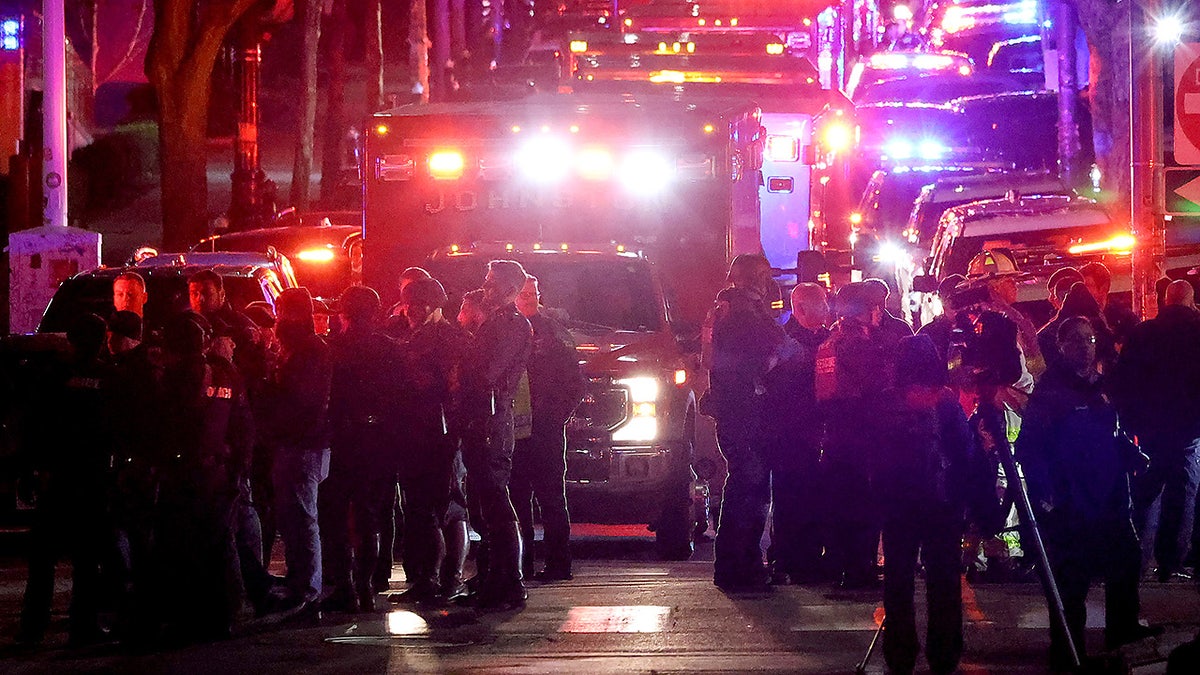
The shooting at Brown University, which left at least two people dead and nine injured, is not just another tragic incident in the long list of American mass shootings. It represents a convergence of trends that have been building for years: the normalization of gun violence on historically insulated campuses, the limits of traditional campus security models, and a political stalemate that has shifted the burden of managing gun risk from lawmakers to institutions and individuals.
With a person of interest now in custody and the immediate threat contained, the urgent questions move beyond who and how toward the more consequential: Why does this keep happening, even in places once thought safe by design, and what does it mean for the future of higher education and public safety?
Elite Campuses Are No Longer Symbolically ‘Off‑Limits’
For decades, elite universities like Brown implicitly benefited from a perception of distance from day‑to‑day American violence. Campus incidents were more likely to involve alcohol, hazing, or mental health crises than gunfire. That’s changed.
Historically, the landmark campus mass shootings—such as the 1966 University of Texas tower shooting or the 2007 Virginia Tech massacre—were seen as horrific outliers. They prompted waves of security upgrades and emergency response planning, but they didn’t fundamentally redefine everyday campus life nationwide.
In the last decade, however, the pattern has shifted in three important ways:
- Frequency: School and campus shootings have become an expected part of the news cycle rather than rare shocks. Advocacy groups like Everytown for Gun Safety have documented hundreds of shootings on or near college campuses since 2013.
- Geography: Incidents increasingly span the full spectrum of institutions—from community colleges to elite private universities—undercutting the idea that certain places are inherently safer.
- Spillover violence: Many recent campus shootings appear tied less to on‑campus disputes and more to off‑campus or community conflicts that spill into university spaces.
Brown, headquartered in Providence but drawing students and staff from around the world, sits at the intersection of urban life and elite academia. What this episode underscores is that the protective halo once assumed to surround Ivy League institutions is largely psychological, not structural. Guns move freely across jurisdictional lines; risk does too.
Why the ‘Person of Interest’ Detail Matters
Police say a person of interest was located at a hotel in Coventry, about 17 miles from Providence. That detail hints at key dynamics in modern mass shootings:
- Mobility of suspects: The quick relocation to a different city underscores how easily individuals can leave a crime scene and move through a regional hotel economy without immediate detection.
- Law enforcement strategy: The language of “person of interest” rather than “suspect” reflects both legal caution and the early phase of evidence gathering. Departments now routinely avoid early categorical statements to reduce legal risk and public misinformation.
- Multi‑jurisdictional coordination: The link between Providence and Coventry shows why campus security plans must be integrated with broader metropolitan policing strategies, not treated as standalone systems.
The fact that Providence’s police chief declined to say whether the person in custody is affiliated with Brown is also significant. It reflects two systemic pressures: protecting the integrity of an investigation and managing public fear. If the individual turns out not to be a student or employee, Brown’s community may frame the incident as externalized risk—violence “from outside.” If they are affiliated, it will intensify scrutiny of campus culture, mental health screening, and internal threat‑assessment processes.
How This Fits Into the National Gun Violence Landscape
To understand why incidents like this keep occurring, it’s necessary to situate Brown within the wider American gun environment.
- The U.S. has about 120 guns for every 100 residents, the highest civilian gun ownership rate in the world.
- Public mass shootings have risen significantly over the past decade, though they remain a small fraction of overall gun deaths, which are dominated by suicides and urban homicides.
- States like Rhode Island have comparatively stricter gun laws than many parts of the country, yet they are not immune, because guns and people cross state lines.
The Brown shooting highlights a key paradox: local restrictions can reduce risk but cannot fully insulate institutions from a national system that remains porous and polarized. The governing reality is that a university can invest in security, but it cannot meaningfully control the upstream supply of firearms or the broader cultural conditions that normalize their presence.
Campus Security Has Quietly Shifted from Prevention to Damage Control
Universities have spent the last 15 years quietly reengineering themselves around one core premise: it is no longer possible to assume that a shooting won’t happen here.
Most major campuses now maintain:
- Mass notification systems for shelter‑in‑place orders and all‑campus alerts
- Active shooter drills and training modules for students, faculty, and staff
- Dedicated threat‑assessment teams that monitor behavioral concerns and potential red flags
- Real‑time coordination protocols with municipal police, EMS, and nearby hospitals
At Brown, the rapid issuance and then lifting of the shelter‑in‑place order fits this newer model of crisis playbook: contain, inform, secure, then de‑escalate. But these systems are largely reactive. They’re designed to minimize casualties once a shooter is active, not to guarantee that such incidents won’t occur.
In practice, this means that much of the burden of “security” has shifted to how quickly institutions can communicate and guide people through surviving an attack rather than preventing one outright. The Brown incident underscores the ethical unease of this model: students come for education and community; they receive, as a matter of course, instruction in how to barricade doors and treat gunshot wounds.
The Psychological Toll: Students Living in a Permanent State of Contingency
One under‑reported dimension of repeated campus shootings is the cumulative psychological effect on students who have grown up with active shooter drills from elementary school onward. For many Brown students, this may not be their first brush with such lockdown protocols.
This creates a generation with three intersecting experiences:
- Normalization of crisis: Shelter‑in‑place alerts become another notification alongside class updates and weather warnings.
- Learned hypervigilance: Students internalize mental maps of exits, “safe corners” in classrooms, and personal evacuation strategies.
- Political disillusionment: Repeated exposure to gun incidents without corresponding legislative action fosters a sense that public institutions are either unwilling or unable to respond at a structural level.
Mental health services, already strained post‑pandemic, now must absorb the trauma of direct survivors, witnesses, and the wider campus community. For students at Brown and similar universities, the message is clear: academic excellence no longer immunizes you from the most destabilizing features of American public life.
What Policymakers and University Leaders Are Likely to Do Next
In the short term, three responses are likely:
- Security audits and visible presence: Brown will almost certainly commission an internal or external review of its security protocols and physical infrastructure, accompanied by an increased visible police and security presence on and around campus.
- Communications and community healing: Expect town halls, listening sessions, and campus‑wide emails emphasizing resilience, solidarity, and mental health resources. These are now standard components of institutional crisis management.
- Policy positioning: University leadership may issue statements calling for broader gun reform or, more cautiously, for bipartisan efforts to address gun violence. The tone will reflect Brown’s identity as a politically engaged but also risk‑averse institution.
At the state level, Rhode Island officials may push for incremental changes—tighter restrictions on high‑capacity magazines, enhanced background checks, or funding for violence‑interruption programs. But in a national context of divided federal government and strong gun rights advocacy, sweeping change remains unlikely without a broader realignment.
What’s Being Overlooked: The Off‑Campus Ecosystem
Most coverage of campus shootings centers on university grounds, but the Brown case—with a person of interest found miles away at a hotel—exposes how tightly campus safety is interwoven with the surrounding regional ecosystem.
Key overlooked dimensions include:
- Hotel and lodging policies: Hotels rarely feature in public safety discussions but often serve as transient spaces where individuals can lay low between a crime and arrest.
- Transit routes and surveillance gaps: Movement between Providence and Coventry reflects how regional transit and road networks can enable quick dispersal after an incident.
- Town–gown dynamics: The health and safety of campuses is deeply tied to local conditions—poverty rates, gun trafficking routes, and policing practices in surrounding communities.
If Brown and Rhode Island officials respond by focusing solely on on‑campus measures, they will miss a critical reality: the front line of prevention lies as much in regional collaboration and upstream violence‑reduction strategies as in campus‑specific hardware or protocols.
Expert Perspectives: Beyond the Immediate Manhunt
Experts in public safety, gun policy, and higher education emphasize that events like Brown’s are symptoms of deeper systemic choices.
Criminologist and mass violence researcher Jillian Peterson has long argued that most mass shooters “leak” intent through social media posts, conversations, or behavioral changes before attacking, suggesting that prevention depends heavily on bystander reporting and institutional follow‑through.
Campus safety specialists note that Ivy League and other highly selective campuses face a unique bind: they are expected to be open, porous intellectual communities, yet are increasingly being asked to function as quasi‑secured spaces. That tension has no easy solution without fundamentally altering the culture and architecture of American higher education.
Looking Ahead: What to Watch as the Investigation Unfolds
As more details emerge, several questions will shape both public interpretation and policy responses:
- Affiliation: Was the person in custody a student, staff member, or unaffiliated individual? This will influence where blame and responsibility are directed.
- Motive and target: Was this a targeted attack, a personal dispute that escalated, or a more indiscriminate assault? Each scenario has different implications for prevention strategies.
- Weapon source: How was the firearm obtained? Tracing its origin could highlight gaps in background checks, storage practices, or illicit gun markets.
- Prior warning signs: Were there previous complaints, threats, or concerning behaviors that went unaddressed—or were addressed but unsuccessfully?
The answers will determine whether this incident becomes a case study in missed warning signs, broader systemic failure, or simply another brutal illustration of what happens when high gun availability intersects with human volatility.
The Bottom Line
The Brown University shooting is not an aberration but an extension of current American realities into a space that once felt insulated by prestige and geography. With a person of interest now in custody, the country is left with familiar questions—and an increasingly uncomfortable recognition that the tools we’ve invested in, from active shooter drills to campus alerts, manage the symptoms of gun violence rather than the disease itself.
Absent deeper structural changes—in gun policy, mental health access, and the social conditions that incubate violence—elite campuses will remain part of a national landscape where safety is provisional, and where even the most privileged students learn to study under the shadow of lockdown alerts.
Topics
Editor's Comments
What stands out in the Brown University shooting isn’t only the horror of the event but how familiar the institutional response already looks. We now have a well-rehearsed choreography: alerts, lockdowns, press conferences, emotional statements, then a gradual return to “normal” that quietly incorporates the next layer of security hardware and protocols. This normalization should worry us. It suggests that universities—and by extension, society—have tacitly accepted a baseline of recurring, unpredictable gun violence as something to be managed rather than fundamentally reduced. The person of interest in custody will draw immediate focus, but centering the narrative on individual pathology risks obscuring structural forces: national gun availability, interstate trafficking, underfunded mental health systems, and political incentives that reward gridlock over compromise. The more often this cycle repeats, the easier it becomes to treat each campus as a discrete failure rather than a symptom of a wider, systemic choice not to act at scale. That framing may be the most dangerous development of all.
Like this article? Share it with your friends!
If you find this article interesting, feel free to share it with your friends!
Thank you for your support! Sharing is the greatest encouragement for us.