Buried City Beneath Gothenburg: How Nya Lödöse Captures Sweden’s Leap into the Modern Age

Sarah Johnson
December 16, 2025
Brief
Beneath modern Gothenburg, the lost port of Nya Lödöse reveals how Sweden used a frontier city to break Danish control, centralize trade, and step into the early modern global economy.
Buried Beneath Gothenburg: How a ‘Forgotten’ City Reveals the Birth of Modern Sweden
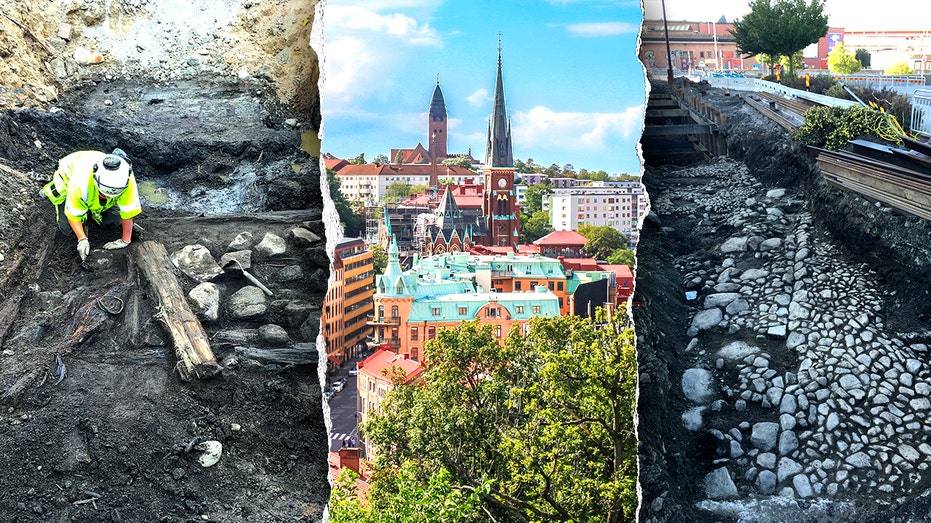
Beneath one of Scandinavia’s busiest urban hubs, archaeologists have uncovered the remains of Nya Lödöse, a 16th‑century trading town born out of war, power politics, and an emerging global economy. Far from being just another picturesque medieval curiosity, this buried city offers a rare, almost laboratory‑like snapshot of the moment Sweden pivoted from a marginal northern kingdom to an assertive European power.
What makes this excavation so consequential isn’t simply that a lost town has been found. It’s that the site captures — in just 150 years of tightly bounded urban life — the collision of three transformations: the militarization of the Nordic region, the rise of state‑controlled trade, and the social leveling (and new inequalities) of early modern Europe.
A Frontier City on the Edge of Empire
Nya Lödöse was founded in 1473 by Swedish regent Sten Sture the Elder, not as a quaint port, but as a strategic weapon. At the time, Sweden was locked in the Kalmar Union, a political entity dominated by Denmark and formally uniting Denmark, Norway, and Sweden under one crown since the late 14th century. Swedish elites repeatedly tried to break free, and one of the biggest levers of independence was trade.
The original medieval town of Lödöse, further inland along the Göta River, had been a key trading point with access to the North Sea. But its location was vulnerable to Danish interference and regional conflict. Nya Lödöse, closer to the sea and near today’s Gothenburg, represented a deliberate attempt to create a more defensible outlet to the Atlantic and to reroute economic flows into Swedish hands.
In other words, this wasn’t just a town — it was an early economic sanctions policy in brick, wood, and earthworks. By shifting the commercial geography westward, Swedish rulers were trying to break Danish chokeholds and plug themselves more directly into the North Sea and, eventually, Atlantic trade networks.
From Medieval Market Town to Proto-State Project
The excavations in Olskroken show that Nya Lödöse was laid out as a typical late-medieval market town: a grid system, a central marketplace, a town hall, and relatively uniform plots with wooden houses. That uniformity matters. It suggests a deliberate planning logic at a time when many European towns still grew more organically.
Archaeologist Mattias Obrink notes that almost all buildings were wooden and similar in size and style, with architecture that “didn’t show different social and economic status.” That’s strikingly different from the stark material contrasts often seen in contemporaneous cities such as Lübeck or Antwerp, where elite stone houses and lavish façades visibly telegraphed hierarchy.
Yet, as the team points out, class differences still surface in the objects: imported ceramics, a mid‑16th century pocket watch, and other items of surplus and status. The landscape may look egalitarian in its built form, but the material culture says otherwise. This mismatch between standardized urban planning and emerging consumption-based inequality is a hallmark of the early modern shift: power moves from feudal landholding to trade, capital, and access to global goods.
In that sense, Nya Lödöse mirrors broader European trends, where rulers increasingly shaped towns as instruments of the state — for taxation, control, and defense — even as merchant elites accumulated wealth in ways that blurred older social categories.
Conflict, Borders, and the Politics of Ports
The town’s short life span — thriving in the 16th century, largely abandoned by 1624 — reflects its role as a frontier settlement in a contested region. Positioned close to the Danish-Norwegian border and the Kattegat, it was both a gateway and a vulnerability.
Repeated wars between Denmark-Norway and Sweden in the 1500s, culminating in the Northern Seven Years’ War (1563–1570) and later conflicts, made this coastline one of Northern Europe’s most militarized zones. Ports here were not neutral economic spaces; they were strategic infrastructure. Swedish efforts to consolidate power after finally breaking the Kalmar Union were inseparable from controlling routes to the Atlantic and the Hanseatic trading world.
Nya Lödöse’s eventual replacement by Gothenburg — a heavily fortified city founded in 1621, backed by Dutch engineers and capital — shows an important shift. Where Nya Lödöse was a relatively modest fortified town, Gothenburg was conceived almost from scratch as a state project: walls, bastions, moats, and a harbor designed to serve a rising Swedish great power in the 17th century.
Seen that way, the burial of Nya Lödöse beneath modern Gothenburg is more than an archaeological curiosity. It is a literal layering of Sweden’s political evolution: from tentative independence project to confident imperial actor.
What the Artifacts Reveal About Everyday Life in a World in Flux
The most revealing aspect of this excavation is the window it opens onto daily life in a town caught between medieval habits and early modern innovation.
- Imported ceramics indicate integration into broader European trade networks, likely through Hanseatic merchants and Dutch and German traders, even as Sweden sought more direct control of its commerce.
- A mid‑16th‑century pocket watch is particularly telling. Timekeeping was expensive technology, associated with high-status individuals and commercial precision. Its presence suggests not only wealth, but the growing importance of punctuality and coordination in trade and governance — hallmarks of what historians call the “disciplining” of time in modern societies.
- A leather glove, wooden barrels, cesspits, and street pavements reveal a tightly packed, workaday environment: dense construction, functional infrastructure, and the logistical challenges of sanitation in early modern towns.
Meanwhile, analysis of buried inhabitants — though not detailed in the basic news report — typically yields data on diet, disease, childhood stress, and mobility. In similar Nordic urban excavations, isotopic analyses have shown that many residents were migrants from other regions, while skeletal remains reveal high levels of infectious disease and physical stress.
If those patterns hold in Nya Lödöse, they would underscore how such frontier trade towns functioned as magnets for mobile labor and risk-tolerant merchants, even as war and instability made them precarious places to live.
Why This Site Is So Unusually Valuable to Archaeologists
Researchers emphasize that they have excavated an “exceptionally large portion” of the town, with material spanning only about 150 years. That tight timeframe is crucial. Many European cities grew over centuries, with older phases destroyed, built over, or heavily disturbed, creating complex, overlapping layers that are difficult to disentangle.
Nya Lödöse, by contrast, is almost like a self-contained case study of one transformative century — from the late 1400s to the early 1600s — then abruptly closed and overbuilt by Gothenburg. That makes it a rare controlled sample for studying:
- How quickly trade patterns shifted in response to political conflict
- The speed with which new consumer goods penetrated non-elite households
- Changes in diet, craft production, and urban planning over just a few generations
- How a frontier town adapts — or fails to adapt — to intensifying warfare and state centralization
Because large, intact urban excavations of this period are relatively rare in Northern Europe, Nya Lödöse is likely to become a key comparative site for studying similar port towns around the Baltic and North Sea.
Connecting to Global Shifts: Reformation, Empire, and the Atlantic World
Obrink situates the story of Nya Lödöse against the broader 16th‑century backdrop: the discovery of the Americas, the Reformation, and the rise of powerful princely states. That isn’t just scene‑setting. The town’s material remains can illuminate how these huge macro-historical shifts actually landed in a small Nordic port.
- Reformation: Sweden embraced Lutheranism in the 1520s–1530s. Changes in religious practice, church property, and visual culture should leave traces in the town’s churches, burial customs, and everyday religious objects. Comparing early and late phases of Nya Lödöse could show how quickly religious reforms transformed daily life.
- Rise of princely states: The move from locally dominated, semi-autonomous medieval towns to tightly controlled state towns is written in the very urban fabric: standardized plots, fortifications, and the presence of royal administrators. Nya Lödöse’s planned layout and later replacement by Gothenburg fit this trajectory.
- Atlantic and global trade: While Sweden was not a major colonial power in the 1500s, the goods flowing through ports like Nya Lödöse — ceramics, metalwares, luxury items — increasingly came from or through globalized networks stretching to Iberia, the Mediterranean, and eventually colonial markets. Tracing the origins of these finds can show how global the “periphery” already was.
In other words, this small town offers a local archive of how world history felt on the ground, far from the courts of kings and popes.
Why Sweden Is Suddenly in the Archaeological Spotlight
This discovery comes amid a string of high-profile finds in Sweden: a lost monastery located via a strange map symbol, a massive medieval treasure hoard unearthed by an angler digging for worms, and now a buried port city under Gothenburg. It would be easy to treat this as a run of good luck, but there are deeper reasons.
Three forces are converging:
- Urban development pressure: Major infrastructure and housing projects in and around Gothenburg have triggered extensive rescue archaeology. When you dig deeper and wider than previous generations, you find more.
- Technological advances: Ground-penetrating radar, LIDAR, GIS-based planning, and more refined dating methods make it easier to detect subtle remains and to target excavations strategically.
- Citizen involvement: The monastery and hoard were located with help from non-professionals — a metal detector hobbyist and an angler. Nordic countries have longstanding traditions of amateur engagement with heritage, and when paired with professional follow-up, it dramatically increases discovery rates.
Taken together, these factors suggest that what we’re seeing in Sweden is less an anomaly than a preview of what’s likely to happen elsewhere as climate change, infrastructure expansion, and new tech expose long-buried urban layers.
Looking Ahead: What This Could Change in Our Understanding of Sweden’s Rise
As analysis of Nya Lödöse continues, several big questions will shape how important this site ultimately becomes:
- Trade routes and partners: Systematic sourcing of ceramics, metals, and glass could refine maps of Sweden’s pre‑Gothenburg trade connections, potentially rebalancing how historians see the roles of Hanseatic vs. Dutch, English, and German merchants.
- Social mobility and inequality: Combining artifact distribution with bioarchaeological data (diet, health, origin) may reveal whether newcomers and lower‑status households gained access to imported goods and new technologies, or whether those remained concentrated among a small elite.
- Impact of conflict on urban life: Evidence of burning, hurried repairs, or sudden abandonment in particular quarters could be aligned with known wars and raids, showing how warfare reshaped urban geography and demographics.
- Transition to Gothenburg: Comparing final-phase Nya Lödöse with early Gothenburg could illuminate the mechanics of state-driven urban replacement: who moved, who was displaced, and how property and power shifted.
Beyond academia, there are contemporary implications. Modern Gothenburg’s identity as a cosmopolitan port city — with automotive, shipping, and tech industries — rests on centuries of maritime trade. Unearthing Nya Lödöse invites residents to see their city not just as a 17th‑century Dutch‑influenced fortress-port, but as the latest iteration in a much longer story of borderland commerce, risk, and reinvention.
The Bottom Line
The excavation of Nya Lödöse is not simply about rediscovering a lost town. It’s about capturing, in unusually sharp focus, the moment Sweden stepped onto the stage as an independent trading state — and about watching, layer by layer, how big historical forces like war, religion, and globalization reshaped the lives of ordinary people on a contested shoreline.
Topics
Editor's Comments
What’s striking about Nya Lödöse is how clearly it exposes the politics of infrastructure in an early modern setting. We tend to think of trade policy today in terms of tariffs, shipping regulations, and digital supply chains, but in the 16th century, the decisive instruments were physical: where you place your port, how you fortify it, and which routes you try to steer merchants through. Nya Lödöse was Sweden’s attempt to redraw the map in its favor, much like contemporary states sponsor new ports, canals, or logistics hubs to bypass rivals. At the same time, the town’s rapid eclipse by Gothenburg is a reminder that big state projects can be ruthlessly iterative — one expensive, planned city can be sacrificed for a newer, more strategic one within a few generations. The ethical question, largely invisible in the record, is what this meant for the people caught in between: traders, artisans, and laborers whose livelihoods were bound to a town the state ultimately decided to supersede.
Like this article? Share it with your friends!
If you find this article interesting, feel free to share it with your friends!
Thank you for your support! Sharing is the greatest encouragement for us.