Columbia’s Antisemitism Crackdown and the Mamdani Family: How Campus Bias Policies Became a Proxy War Over Dissent

Sarah Johnson
December 16, 2025
Brief
Columbia’s antisemitism crackdown, Mahmood Mamdani’s accusations, and Zohran Mamdani’s rise as NYC mayor-elect reveal how universities are becoming battlegrounds for defining hate, dissent, and political power.
Columbia’s Antisemitism Crackdown, the Mamdani Family, and the New Politics of Campus Speech
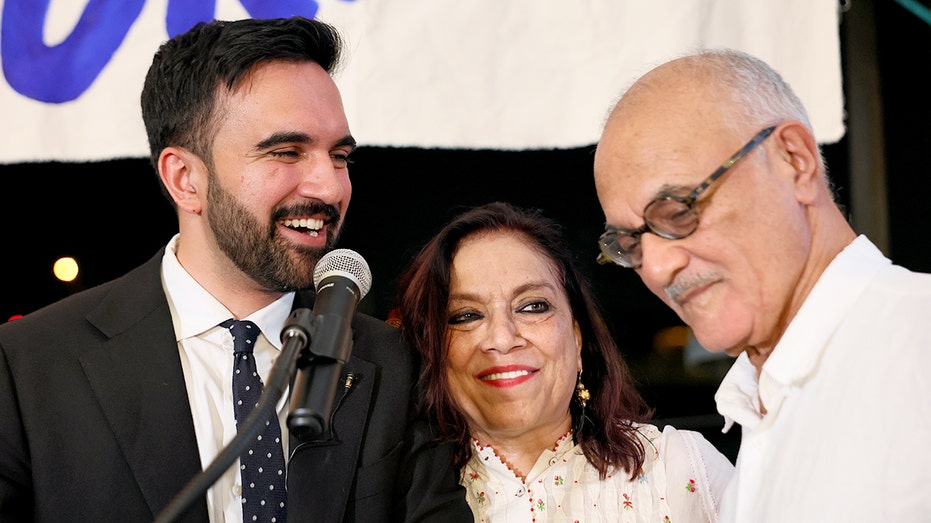
Columbia University’s struggle over antisemitism and pro-Palestinian activism has now collided with New York City power politics. Mahmood Mamdani – a prominent scholar and father of mayor‑elect Zohran Mamdani – is accusing the university of using antisemitism policies as a tool to “terrorize” anti‑Israel student activists. His intervention exposes a deeper, unresolved question: where does legitimate anti‑discrimination enforcement end and political repression begin?
To understand why this matters, you have to look beyond one campus and one family. This fight is reshaping how universities define antisemitism, Islamophobia, and political dissent – and it is happening under intense pressure from donors, lawmakers, and a polarized public.
The Bigger Picture: How We Got to This Flashpoint
Columbia has been at the center of campus conflicts over Israel–Palestine for nearly two decades. In the mid‑2000s, the university faced heated accusations that Middle East studies faculty were bullying pro‑Israel students. That episode foreshadowed the current moment: external political pressure, internal investigations, and a shifting line between hostile learning environments and academic critique.
Three structural changes since then have raised the stakes:
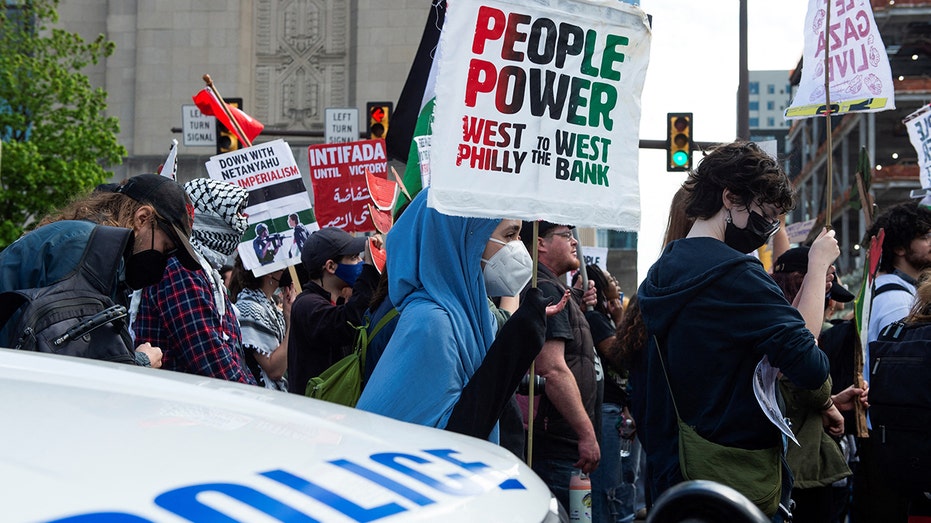
- The post–Oct. 7 environment: The Hamas attacks and Israel’s subsequent war in Gaza triggered unprecedented campus protests and counter‑protests. Universities, especially elite ones, are under microscope-level scrutiny from Congress, state legislatures, and the media.
- The expansion of discrimination law into campus speech: Title VI of the Civil Rights Act now explicitly covers antisemitism and Islamophobia in educational settings. That gives federal authorities new leverage to demand action when students say they feel harassed or marginalized.
- Donor and political leverage: High‑profile donors have frozen or threatened to withdraw funding from universities perceived as too tolerant of antisemitism. Simultaneously, civil liberties groups warn that universities are overcorrecting by surveilling and disciplining student activists.
Mahmood Mamdani’s critique sits exactly at this intersection. He’s not an outside agitator; he’s a heavyweight insider – a renowned political theorist whose work on colonialism, identity, and state power is widely taught. When someone like him invokes “divide and rule” and British colonialism to describe Columbia’s antisemitism policies, he’s signaling that what’s at stake is not just campus climate but the broader architecture of how power is being reconfigured in higher education.
What Mamdani Is Really Arguing – and Why It Resonates
Strip away the rhetoric and Mamdani’s central claim is this: Columbia’s response to antisemitism has morphed from protecting Jewish students into selectively criminalizing pro‑Palestinian dissent, creating a chilling effect on one side of a deeply political debate.
He makes three key moves:
- From protection to punishment: He describes students as “terrified” and “terrorized,” facing suspensions and expulsions for “the smallest move.” Whether every case fits that description is debatable, but the language captures a widespread perception among activists that any criticism of Israel, or visible support for Palestinian causes, is now treated as suspect.
- From antisemitism to a hierarchy of grievances: Mamdani notes Columbia created an antisemitism task force and only later entertained parallel efforts on Islamophobia or other forms of bias. He sees this as institutionalizing a hierarchy of whose pain counts first – and most.
- From anti‑discrimination to ‘divide and rule’: By invoking British colonial tactics, Mamdani suggests that singling out antisemitism as a discrete administrative project, rather than embedding it in a broader anti‑racist, anti‑Islamophobic, and anti‑bigotry framework, risks pitting Jewish and Muslim/Arab students against one another.
For many Palestinian, Arab, and Muslim students nationally, this resonates with their lived experience. They see university leaders moving swiftly on antisemitism – often after donor or political pressure – while appearing slower or less forceful in response to Islamophobic incidents or calls for Palestinian dehumanization.
At the same time, the antisemitism task force report includes allegations that cannot be dismissed as mere discomfort with political disagreement: an Israeli student allegedly told she should be considered “one of the murderers” because she served in the IDF; a teacher reportedly talking about Jewish donors “laundering blood money” and referring to “so‑called Israel.” These are the kinds of incidents that, under existing law and institutional policy, universities are almost compelled to address.
This is the heart of the conflict: both claims can be true at once. Jewish students may be facing real, documented hostility. Pro‑Palestinian activists may also be facing disproportionate surveillance and punishment. The challenge is designing a system that can confront the former without defaulting to the latter.
The Legal and Political Squeeze on Universities
Columbia and its peers are not operating in a vacuum. Three external pressures are converging:
- Federal enforcement: The U.S. Department of Education’s Office for Civil Rights (OCR) has opened dozens of investigations into alleged antisemitism and Islamophobia on campuses. The message is clear: inaction can carry legal and financial consequences.
- State-level interventions: Some states have moved to adopt broad definitions of antisemitism – often aligned with the International Holocaust Remembrance Alliance (IHRA) definition – that critics say conflate criticism of Israel with antisemitism. This raises the risk that universities will err on the side of censoring political speech rather than litigating nuanced distinctions.
- Congressional scrutiny and donor pressure: High‑visibility hearings and donor revolts have pushed university leaders into what one university president recently called “survival mode.” Settlements, consent decrees, and public shaming are reshaping administrative priorities.
Within this environment, an antisemitism task force can quickly become something more than a fact‑finding body. It becomes a signal to regulators, donors, and the public that the university is taking “decisive action.” That creates strong incentives to produce visible outcomes – disciplinary cases, new codes of conduct, training programs – whether or not those outcomes are evenly applied across all forms of prejudice.
Defining Antisemitism vs. Policing Anti‑Zionism
Much of the current confusion stems from a conceptual problem: the line between antisemitism (hostility toward Jews as Jews) and anti‑Zionism (opposition to the ideology of a Jewish nation‑state, or to Israeli policy more broadly).
Universities are now being asked to operationalize this distinction in real time:
- Is accusing an Israeli student of being “a murderer” because of IDF service antisemitic, or simply deeply offensive and personalizing state violence?
- Is calling Israel a “settler‑colonial state” a legitimate political critique or a coded denial of Jewish self‑determination?
- Is referring to “so‑called Israel” a rejection of a state’s legitimacy, or a rejection of Jewish existence?
Those questions don’t have easy answers, but the stakes of misclassification are high. If universities define antisemitism too narrowly, they fail to protect Jewish students from genuinely threatening environments. If they define it too broadly, they risk suppressing political dissent – disproportionately affecting Palestinian, Arab, and Muslim students and faculty.
Mamdani is effectively warning that Columbia is drifting toward the latter: using antisemitism frameworks not only to curb hate, but to delegitimize one side of a geopolitical argument. His critics, especially among Jewish students who say they’ve been harassed or ostracized, would argue the opposite – that universities have tolerated or minimized antisemitic hostility under the cover of “political speech” for too long.
What’s Being Overlooked in the Debate
Two crucial elements are often missing from mainstream coverage of this controversy:
- The mental health and identity shock among all students: Jewish, Muslim, Arab, and other students are not simply activists or combatants; they’re 18‑ to 24‑year‑olds navigating profound identity shocks in real time. For many Jewish students, watching footage from Israel and Gaza – alongside campus chants they interpret as calling for their erasure – can feel existentially threatening. For Palestinian and Arab students, seeing mass civilian casualties and hearing their grief pathologized as “extremism” or “terror support” is equally destabilizing. Policy debates rarely take seriously how trauma on both sides fuels escalation.
- The collapse of legitimate spaces for difficult dialogue: As administrators move into crisis‑management mode, they often default to compliance frameworks: task forces, reporting systems, investigative procedures. Those are necessary but not sufficient. Genuine forums where students can confront each other’s histories, fears, and red lines – with skilled facilitation and psychological support – are scarce. Without them, disciplinary systems become the only mechanism for handling conflict, guaranteeing that each side views itself primarily as a victim of institutional bias.
Looking Ahead: What This Means for Columbia, New York, and Beyond
This isn’t just a story about a professor criticizing his employer. It’s also a story about power in New York City.
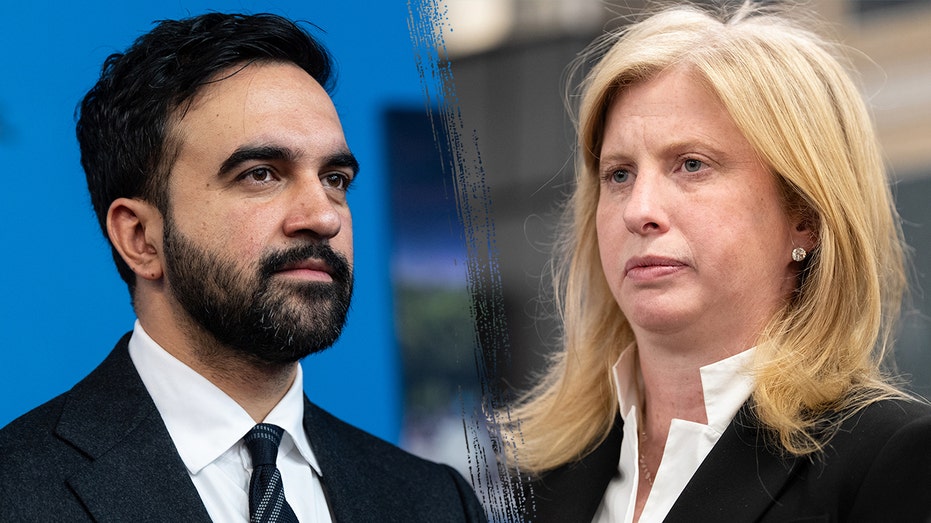
- A mayor-elect whose family is at the center: Zohran Mamdani’s upcoming mayoralty will unfold under a spotlight already trained on his family’s views on Israel–Palestine. Jewish students are reportedly “scared” by his election; pro‑Palestinian activists see it as a breakthrough. His father’s framing of Columbia as “vindictive” and “colonial” will inevitably shape expectations about how City Hall approaches school safety, protest policing, and relations with the city’s powerful Jewish institutions.
- New fault lines in liberal coalitions: New York’s progressive coalition has long included both left‑leaning Jews and strong pro‑Palestine voices. The campus antisemitism debate is stressing those alliances. How city leaders respond to accusations of both antisemitism and Islamophobia will influence coalition politics from the City Council to state races.
- A template for other universities: What Columbia does next – whether it broadens its framework to include parallel task forces, creates joint Jewish–Muslim problem‑solving bodies, or doubles down on strict enforcement – will be closely watched by other institutions trying to navigate the same terrain.
At a minimum, universities will need to rethink three things:
- Transparency around discipline: Aggregate data on who is being investigated or disciplined for speech‑related incidents – broken down by type of alleged bias – could reveal whether enforcement is indeed skewed.
- Substantive, not symbolic, parallelism: If there is an antisemitism task force, there should be equally empowered mechanisms addressing Islamophobia, anti‑Palestinian racism, anti‑Black racism, and other biases – not as a token afterthought, but as a coordinated ecosystem.
- Independent oversight: To maintain trust, universities may need external ombudspersons or review panels able to evaluate whether antisemitism enforcement is sliding into content‑based viewpoint discrimination.
The Bottom Line
Columbia’s response to antisemitism and Mahmood Mamdani’s sharp critique illuminate a broader transformation of American higher education. Under extraordinary political and legal pressure, universities are being pushed to act as quasi‑regulators of contested political speech. In doing so, they risk turning anti‑discrimination – originally designed to remove barriers to participation – into a new site of ideological policing.
Jewish and Israeli students deserve protection from harassment and dehumanization. So do Palestinian, Arab, and Muslim students. The question is whether universities can build systems that defend both without turning the fight against bigotry into a proxy war over Middle East politics. The answer will shape not only campus life, but the emerging political landscape of cities like New York – where the personal, the academic, and the geopolitical are increasingly impossible to disentangle.
Topics
Editor's Comments
One unresolved tension in this story is how much discretion universities should have in defining the boundaries of protected political speech when that speech is deeply entangled with identity. External actors—from Congress to major donors—are effectively demanding that institutions draw harder, faster lines around what counts as antisemitism and what does not. That pressure tends to flatten nuance precisely where nuance is most needed. A contrarian perspective worth considering is whether universities should step back from some of this role, rather than deeper into it. Instead of continually expanding investigative and disciplinary machinery, they could invest more heavily in independent mediation, restorative processes, and intellectually serious forums where difficult ideas are engaged rather than policed. This would not eliminate the need for sanctions in clear cases of harassment or threats, but it might reduce the tendency to treat every political clash as a compliance problem. The risk of the current trajectory is that universities become less spaces of inquiry and more quasi-judicial bureaucracies arbitrating global conflicts they can’t possibly resolve.
Like this article? Share it with your friends!
If you find this article interesting, feel free to share it with your friends!
Thank you for your support! Sharing is the greatest encouragement for us.