Bondi, Antisemitism, and Political Blame: What the Sydney Attack Exposes About Democratic Blind Spots

Sarah Johnson
December 16, 2025
Brief
The Bondi Beach Hanukkah shooting has triggered a war of words between Israel and Australia. This analysis explains how rising antisemitism, political choices, and systemic gaps combined to make the attack tragically predictable.
Bondi, Antisemitism, and Political Blame: What the Sydney Attack Reveals About a Global Failure of Prevention
The public clash between Israeli officials and the Australian government after the Bondi Beach Hanukkah shooting isn’t just a diplomatic spat. It’s a stress test of how democracies are handling a fast-evolving ecosystem of antisemitism, polarizing protest politics, and online radicalization—and whether existing tools for prevention are fundamentally outdated.
A tragedy that was also a stress test
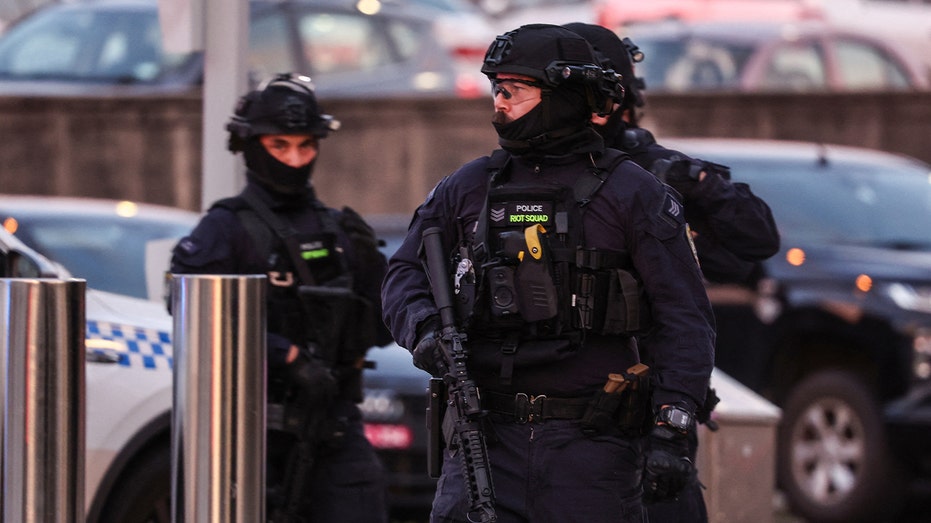
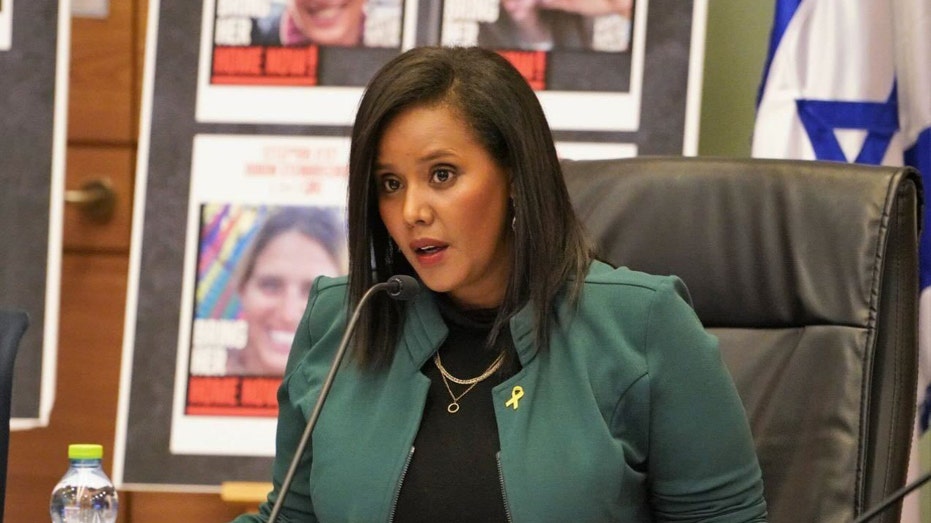
In the wake of the Sydney attack—gunmen targeting a Hanukkah celebration, killing and injuring worshippers—Israeli Knesset member Pnina Tamano‑Shata and other officials accused Canberra of effectively giving a “green light” to antisemites by failing to act on escalating warning signs: hate speech, graffiti, harassment, firebombings of Jewish institutions.
On one level, this is familiar: after nearly every major hate‑motivated attack—Pittsburgh, Christchurch, Halle, Paris—victims point to a long trail of ignored signals. On another level, the Bondi attack sits at the intersection of three accelerants:
- the post–October 7 surge in antisemitism worldwide,
- the weaponization of Israel‑Palestine debates in domestic politics, and
- a structural reluctance by liberal democracies to intervene early against extremist rhetoric that still falls short of explicit incitement.
The controversy is not just whether Australian authorities “did nothing,” but whether the current model of “react after violence occurs” is itself no longer viable.
How we got here: a long fuse, not a sudden explosion
Australian Jewish leaders are explicit that this attack didn’t happen in a vacuum: “It started with hate speech… then graffiti… then public demonstrations… then firebombing synagogues,” as Dionne Taylor put it. That escalation sequence echoes a grim historical pattern.
Historically, antisemitic violence rarely appears suddenly. It typically emerges through stages:
- Delegitimization and demonization in rhetoric and media
- Symbolic attacks—graffiti, slogans, harassment in public spaces
- Attacks on property—synagogues, schools, community centers
- Direct violence against individuals
This pattern was visible in Europe in the 1930s, in post‑Soviet Russia in the 1990s, and more recently in France and Germany, where monitoring agencies documented spikes in hate speech and vandalism long before deadly attacks on Jewish targets.
In Australia, warning signs have been mounting for years: annual reports by communal security bodies and academic researchers have consistently shown increases in antisemitic incidents. Post–October 7, those trends intensified, echoing global data. The Anti‑Defamation League recorded a three‑ to four‑fold surge in antisemitic incidents in multiple Western countries in the months after the Hamas attacks; Europe’s Fundamental Rights Agency found similar patterns after previous Gaza conflicts.
What is different now is the density of the ecosystem feeding that escalation: social media virality, cross‑pollination with other extremist movements, and the way Israel‑Palestine has become a proxy battlefield for domestic culture wars.
The political blame game: more than a bilateral shouting match
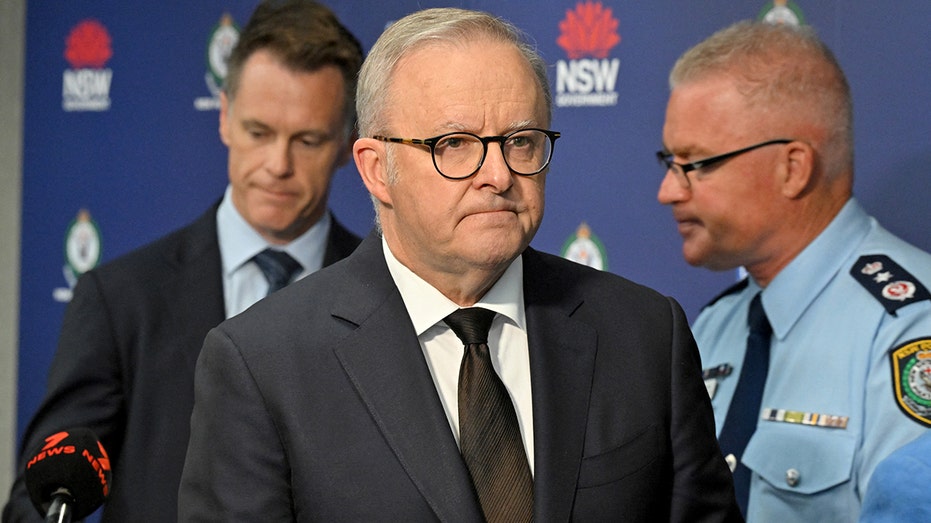
Benjamin Netanyahu’s public letter to Prime Minister Anthony Albanese goes beyond a security critique, framing Australia’s decision to recognize Palestinian statehood as “pouring fuel on the antisemitic fire” and “rewarding Hamas terrorists.” That framing is doing several things at once:
- Externalizing blame: By insisting the primary problem is foreign leaders’ recognition of Palestine, Israeli officials partially shift attention away from Israel’s own internal debates and security failures leading up to October 7.
- Collapsing distinctions: It elides the difference between 1) legitimate support for Palestinian self‑determination, 2) harsh criticism of Israeli policy, and 3) antisemitic incitement. This conflation is politically potent—but analytically dangerous.
- Pressuring diaspora host governments: The stark language—“you replaced weakness with weakness and appeasement with more appeasement”—is meant not only for Canberra but for every Western government weighing recognition of a Palestinian state or tolerating intense street protests.
From Canberra’s perspective, there is a competing imperative: upholding free expression, avoiding the securitization of political protest, and preventing Muslim and Arab communities from being stigmatized as latent terrorists. Governments that have cracked down heavily on pro‑Palestinian demonstrations—France, for instance—have faced accusations of double standards and suppression of civil liberties.
The collision point in Australia is where these imperatives meet: when does protecting free speech become complicity in a climate that emboldens would‑be attackers? And can governments credibly distinguish between robust criticism of Israel and antisemitic incitement in a polarized environment where both sides routinely accuse the other of bad faith?
What’s being overlooked: systems, not just speeches
Much of the public debate is focused on rhetoric—leaders’ statements, protests, recognition of Palestine. Several critical structural issues are getting far less attention:
- Capability gaps in early‑stage threat detection
Law enforcement agencies are still largely organized around traditional threats: organized terror networks, identifiable extremist groups. Yet many recent attacks—from Halle to Buffalo to Christchurch—have been carried out by self‑radicalized individuals absorbing a blend of online propaganda, local grievances, and global narratives.
In that environment, relying on community complaints about graffiti or hate speech as the main early‑warning system is almost guaranteed to be too slow. - Policy ambiguity on hate speech vs. incitement
Liberal democracies, including Australia, tend to criminalize direct incitement to violence while allowing quite toxic forms of hate speech to circulate. The ladder described by Dionne Taylor—hate, graffiti, vandalism, arson, murder—exposes the cost of this narrow threshold.
Yet broadening “incitement” risks serious free‑speech infringements. The missing piece is often non‑criminal intervention: education, platform pressure, civil penalties, robust monitoring and public reporting—tools that fall between doing nothing and arresting people. - Fragmented responsibility
Tackling antisemitism usually sits at the intersection of interior/security, justice, education, and multicultural affairs. Without a strong central coordinator, each department can plausibly argue that the others should act first. That bureaucratic diffusion is often what victims experience as “they did nothing,” even when small, siloed steps were being taken.
How antisemitism is mutating—and why that matters
Tamano‑Shata’s claim that “anti‑Israel ideas and antisemitism – it is the new antisemitism” reflects a genuine concern, but it’s imprecise. The reality is more complicated and more dangerous:
- Legitimate criticism of Israeli government policy (settlement expansion, Gaza operations, constitutional changes) is not antisemitic per se; suppressing it would erode democratic debate.
- Delegitimization and demonization—arguing that Israel should not exist as a state uniquely among nations, or using classic antisemitic tropes (global cabals, blood libels, dual loyalty) in the guise of “anti‑Zionism”—is where antisemitism is being laundered through political discourse.
- Transference onto local Jews: When anger at Israel is displaced onto Jews in Sydney, Paris, or New York—targeting synagogues, schools, and businesses—that is textbook antisemitism, regardless of the attacker’s stated justification.
What’s new is the speed with which this transference happens. Historically, it could take months or years for overseas conflicts to inflame diaspora communities. Today, a single viral video, algorithm‑driven outrage, and highly networked activist scenes can turn an event in Gaza into a protest slogan—and then into a local attack—within days.
Expert perspectives: security, law, and social cohesion
Security specialists argue that governments need a more integrated approach. Rather than viewing antisemitism as a niche “community relations” issue, they see it as a bellwether of broader democratic health.
Counter‑terrorism analyst Dr. Greg Barton (Deakin University) has long warned that attacks on religious minorities are often “canaries in the coal mine,” signaling wider radicalization currents. When hate incidents against one group escalate unaddressed, others often follow—targeting Muslims, refugees, LGBTQ+ communities, and political officials.
Legal scholars, meanwhile, highlight the inadequacy of merely “condemning” antisemitism without embedding it into policy. Comparative studies of countries that have reduced antisemitic violence—such as certain Western European states after their 2000s wave of attacks—point to a mix of:
- specialized hate crime units with community liaison officers,
- mandatory incident reporting and public annual scorecards,
- funded security for vulnerable religious sites, and
- curricular reforms that integrate Holocaust and antisemitism education into a broader framework of democratic citizenship.
Australia has some of these measures, but implementation and visibility remain uneven. That gap is where both Israeli officials and local Jewish leaders are directing their anger.
Data points that change the narrative
Several quantitative realities complicate the simplistic “did nothing” versus “overreacting” dichotomy:
- Incident under‑reporting: International studies suggest that only about 20–40% of hate incidents are reported to police. If Australian Jewish leaders were sounding the alarm based on community‑collected data, the true scale of the problem could be significantly larger than official records.
- Cross‑community spillover: Where antisemitic rhetoric intensifies, anti‑Muslim and anti‑Arab incidents frequently rise as well. Ignoring one form of hatred almost never protects other minorities; it normalizes hostility as a political tool.
- Radicalization timelines: Case studies from recent lone‑actor attacks show that many perpetrators move from first exposure to extremist content to violent action within 12–24 months. That means governments responding only to actual violence are constantly chasing the last cohort, not preventing the next one.
Looking ahead: what a serious response would actually require
Beyond the harsh rhetoric, the real test for Australia will be whether the Bondi attack leads to structural changes or simply more statements and short‑term security measures.
A serious response would likely include:
- A national antisemitism (and broader hate) strategy with clear targets, timelines, and transparent public reporting, rather than ad hoc condemnations.
- Dedicated, well‑funded security support for Jewish (and other at‑risk) institutions, developed in partnership with communities rather than imposed from above.
- Enhanced online monitoring and platform engagement, focused not on criminalization of opinion but on rapid response to explicit threats, doxxing, and glorification of violence.
- Legal refinement of hate speech and incitement laws to create meaningful civil and administrative tools—orders, fines, mandatory education—short of criminal prosecution.
- Education that treats antisemitism as a live, evolving phenomenon, not a historical footnote wrapped solely around Holocaust remembrance.
Politically, Canberra will also need to defend a clear and nuanced position: that supporting Palestinian rights and statehood cannot and will not entail any tolerance for antisemitism or attacks on Jewish Australians. That clarity has often been missing in the heat of protest politics.
The bottom line
The Bondi Beach Hanukkah shooting is being framed as proof that Australia “did nothing” in the face of rising antisemitism. The reality is more complex—and more troubling. Australia did something, but not nearly enough, not nearly fast enough, and not nearly as strategically as this moment demands.
What this episode exposes is a wider democratic blind spot: a reluctance to treat antisemitism and other forms of hate as systemic security threats rather than sporadic community grievances, and a failure to update prevention strategies for an era where online radicalization and global conflicts can turn local within days.
Unless that blind spot is addressed, the debate over who said what, and when, will repeat after the next attack—whether in Sydney, London, or New York—while the underlying conditions remain largely unchanged.
Topics
Editor's Comments
One of the most troubling aspects of this story is how quickly the conversation calcified into a binary: either Australia is complicit in antisemitism because it recognizes Palestinian statehood, or Israeli officials are exploiting a tragedy to shut down legitimate criticism of their policies. Both narratives miss the more urgent point—our institutional tools for managing hate, radicalization, and diaspora tensions are clearly lagging behind the realities of a hyper-connected, polarized world. Focusing on whether Albanese’s rhetoric was sufficiently forceful risks letting everyone off the hook for deeper systemic failures. The more productive questions are: Who is accountable for mapping and responding to hate escalation? What triggers meaningful policy change before violence, not after? And how do we protect both Jewish communities and democratic protest rights without treating them as competing values? Until governments start answering those questions concretely, each new attack will be followed by the same cycle of blame, defensiveness, and, ultimately, drift.
Like this article? Share it with your friends!
If you find this article interesting, feel free to share it with your friends!
Thank you for your support! Sharing is the greatest encouragement for us.