Bondi Beach Hanukkah Shooting: How a Single Attack Is Stress-Testing Australia’s Gun-Control Model

Sarah Johnson
December 16, 2025
Brief
An in-depth analysis of the Bondi Beach Hanukkah shooting, examining how it challenges Australia’s gun-control model, intersects with rising antisemitism, and reshapes debates over security, migration, and social cohesion.
Australia’s Bondi Beach Hanukkah Shooting: Why One of the World’s Toughest Gun Regimes Is Tightening Again
The Bondi Beach Hanukkah shooting is not just another tragic mass casualty event. It’s a stress test of Australia’s much-praised gun control model, a flashpoint in rising antisemitism, and a case study in how social cohesion is strained when identity, security, and ideology collide. The government’s rapid move to tighten already strict laws reveals both the strengths and the limits of Australia’s approach—and raises uncomfortable questions for democracies worldwide.
How Australia Became the ‘Gold Standard’ on Gun Control
To understand why this shooting is so politically explosive, you have to go back to 1996.
In April 1996, the Port Arthur massacre in Tasmania left 35 people dead and 23 injured. Within weeks, then–Prime Minister John Howard brokered a sweeping bipartisan agreement—the National Firearms Agreement (NFA)—with all Australian states and territories. It banned semi-automatic and automatic rifles and shotguns for civilian use, introduced strict licensing and registration, and funded a nationwide gun buyback that removed an estimated 650,000 firearms from circulation.
Studies since have repeatedly linked these changes to a steep decline in gun deaths. A landmark analysis in the journal Injury Prevention found that firearm homicide and suicide rates fell significantly after 1996, with no mass shootings (defined as five or more victims excluding the perpetrator) for more than two decades. While scholars differ on the exact magnitude of the NFA’s impact—because gun deaths were already trending down—the political symbolism was powerful: Australia was held up globally as the country that “solved” mass shootings.
That narrative is now under acute pressure. A mass shooting during a Jewish religious event in a highly policed, tourist-heavy part of Sydney exposes not just a security gap but a psychological one: if even Australia is vulnerable, where is truly safe?
Why This Attack Is Different—and Why That Matters
The Bondi Beach shooting sits at the intersection of three charged debates: security for religious minorities, the rise of hate-fueled violence, and the evolving meaning of “gun control success.”
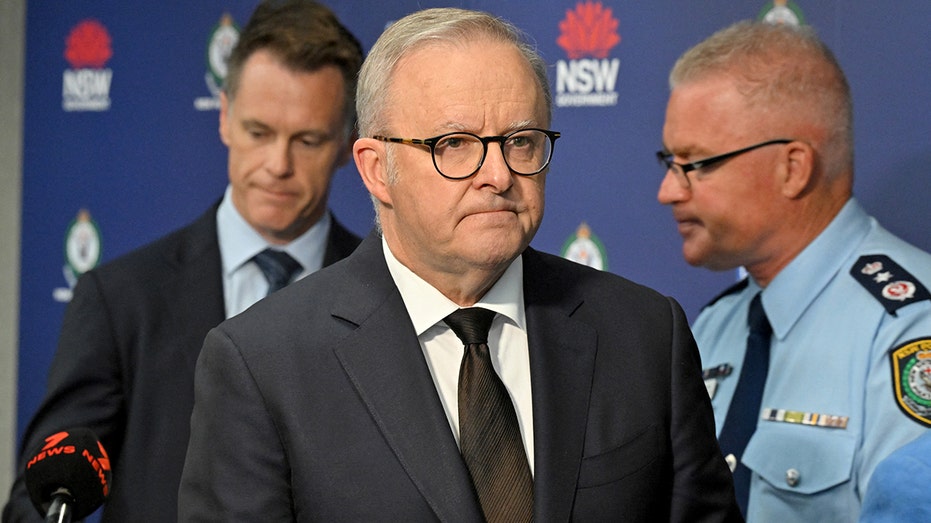
First, the timing and targeting are not incidental. The attack occurred at “Chanukah by the Sea,” a public Jewish celebration marking the start of Hanukkah. Prime Minister Anthony Albanese’s framing of the incident as “a targeted attack on Jewish Australians on the first day of Hanukkah” is not just descriptive; it locks the episode into a narrative of antisemitic violence.
This matters politically. If the shooting is broadly understood as an antisemitic hate crime, the public conversation won’t just be about gun access; it will also be about online radicalization, extremist ideologies, and the protection of minority communities. Gun policy becomes one part of a broader counter-hate strategy.
Second, the perpetrators were a father and son, ages 50 and 24. Intergenerational participation in violence complicates the usual patterns policymakers look for. It suggests family networks, shared ideological commitments, or cultural grievances rather than a lone, isolated actor. That kind of dynamic is harder to detect in advance and harder to neutralize with licensing reforms alone.
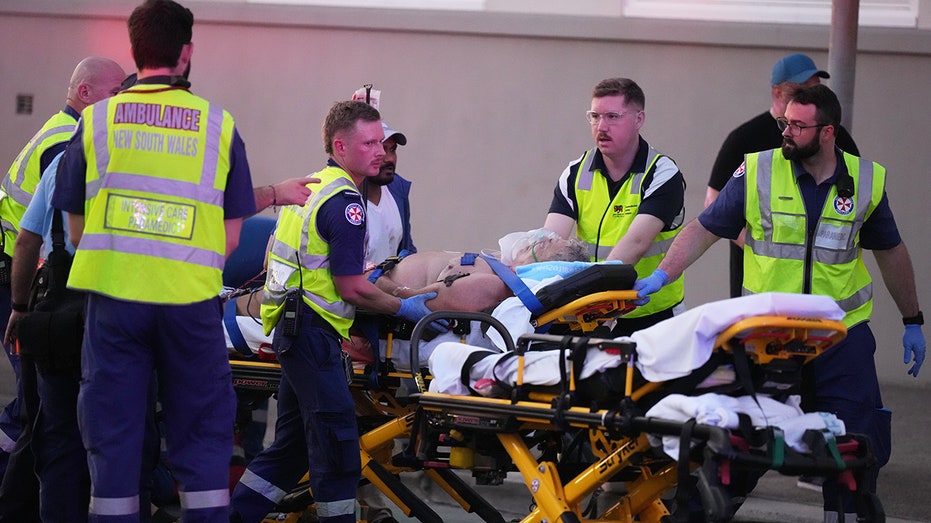
Third, the number of casualties—15 dead and at least 38 injured—pushes the event into the realm of mass casualty terrorism, even if it is prosecuted as a hate crime or mass murder. For a country that has long contrasted its experience with that of the United States, this scale of violence is politically destabilizing. It challenges the assumption that strong gun laws are a permanent firewall against high-fatality attacks.
Why Tighten Already Strict Gun Laws?
At first glance, there’s an apparent paradox: if Australia already has one of the world’s strictest gun regimes, why is the instinctive response to tighten it further?
The measures flagged by Prime Minister Albanese—limiting the number of firearms an individual can own, reviewing licenses over time, requiring citizenship for licenses, restricting open-ended licensing, and narrowing legal firearm types—point to specific vulnerabilities that may have been exposed in this case:
- Volume control: Caps on how many firearms a person can own are intended to reduce stockpiling and the risk that one individual becomes a mini–arsenal. This is especially relevant in family-based attacks, where multiple weapons can be shared or used simultaneously.
- Lifecycle oversight: A review of licenses “held over time” suggests concern that long-term license holders may not be reassessed as their circumstances, mental health, or associations change. Many gun regimes are strong at the point of initial vetting but weak on re-evaluation.
- Citizenship requirements: Tying firearm licenses to citizenship rather than permanent residence introduces a political and symbolic filter—raising questions about integration, loyalty, and risk. It is not evidence-based on its face but reflects a growing global trend of linking security rights to citizenship status.
- Closing ‘open-ended’ licenses: Removing or tightening licenses that do not expire without review is an attempt to turn static permission into a dynamic, monitored privilege.
- Further narrowing legal firearms: Depending on what types of guns were used, this may signal a push to eliminate certain high-capacity or rapid-fire weapons that have remained legal under earlier compromises.
In short, the government is not abandoning the NFA model, but iterating on it. The underlying philosophy remains the same: civilian gun ownership is a privilege tightly conditioned by public safety, not an individual right.
The Overlooked Story: Where Did the System Fail?
The focus on legal tightening risks obscuring a crucial question: how did two men obtain and use deadly firearms at a high-profile event despite a rigorous licensing and registration system?
Several underexplored possibilities deserve scrutiny:
- Legal guns, misused: If the weapons were legally owned, this is a systemic failure in risk assessment and monitoring, raising questions about background checks, mental health reporting, and intelligence-sharing between police and security agencies.
- Illegal market leakage: If the guns were illegally acquired, then the problem shifts to border security, trafficking, and black-market supply chains. Australia is an island nation with relatively controlled borders, but past seizures show that illicit imports and ghost guns remain a concern.
- Radicalization signals: Were there warning signs of extremist views or antisemitic activity? Rising tensions around global conflicts can produce online echo chambers where grievances intensify. The case will likely prompt a re-evaluation of how online threats are monitored, especially when tied to specific communities or events.
Without clear public answers on these points, gun law reform risks being perceived as symbolic reassurance rather than targeted correction. The temptation in the aftermath of tragedy is to legislate for visibility—to show action—before the full investigative picture is complete.
Antisemitism, Security, and Social Cohesion
This shooting follows other recent incidents in Australia involving Jews and Israelis, including violent targeting of a synagogue and an Israeli restaurant, and even shocking claims by healthcare workers about harming Jewish patients. Taken together, these cases signal a concerning normalization of antisemitic rhetoric and behavior.
Globally, antisemitic incidents surged after major escalations in the Middle East. In the United Kingdom, recorded antisemitic incidents spiked dramatically after the October 2023 Hamas attack on Israel. In the United States, campus protests and online harassment have been intense and often explicitly antisemitic. Australia is not isolated from these currents; its social media ecosystem is intertwined with global platforms and narratives.
The Bondi attack thus becomes more than a domestic crime scene. It’s a measurement of how resilient Australian multiculturalism is under geopolitical strain. If Jewish Australians feel they cannot safely celebrate a major religious holiday in a public space, the core promise of equal belonging is undermined.
That’s why Albanese’s framing of the event as an attack on “Jewish Australians” is so important. It signals that the state sees this as an assault not on a foreign religious minority, but on citizens whose identity is fully part of the national fabric.
The Hero in the Crowd: What Ahmed al Ahmed’s Actions Reveal
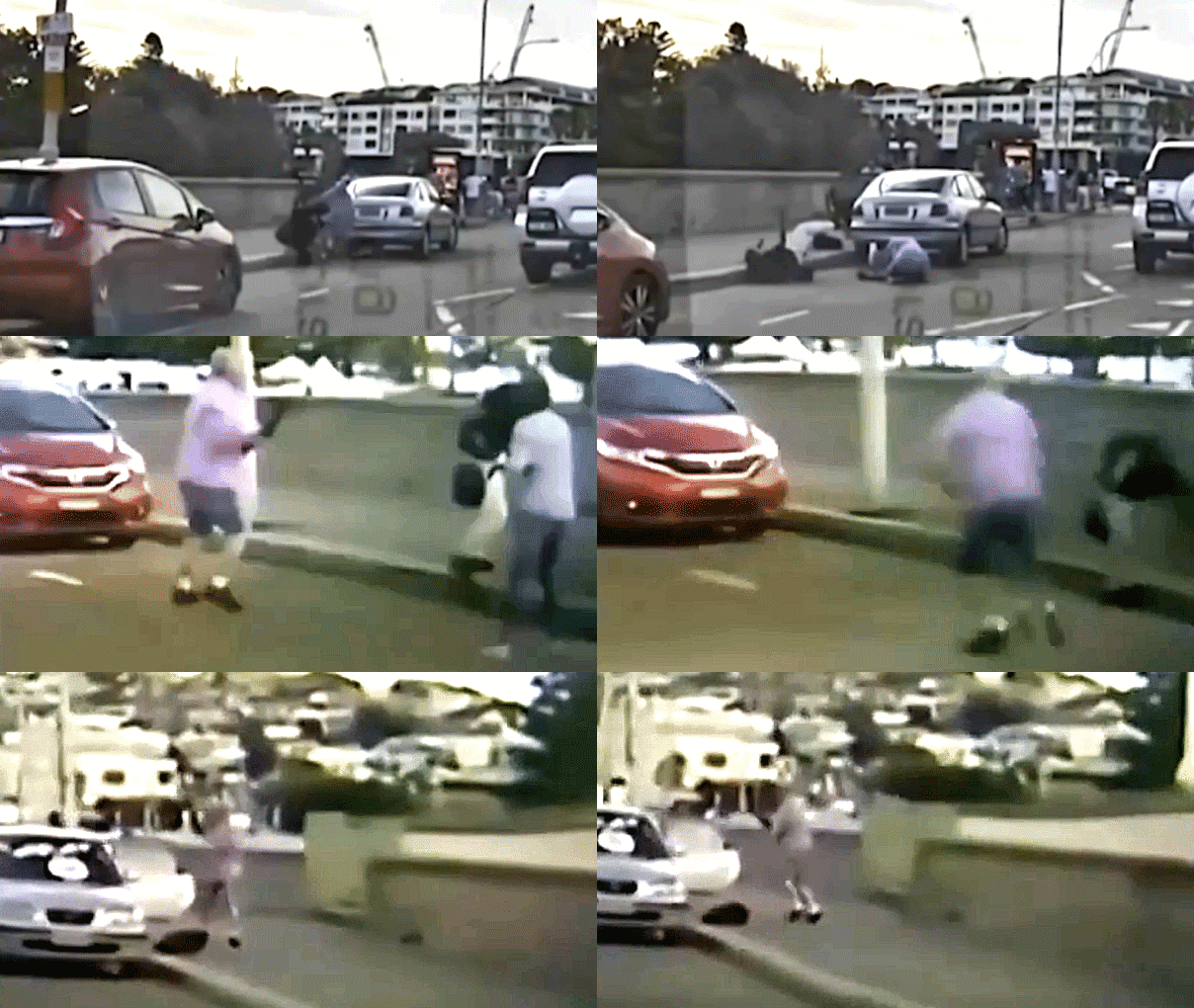
One of the most striking elements of this story is the bystander who tackled and disarmed one of the shooters: 42-year-old Syrian migrant and father of two, Ahmed al Ahmed. Footage shows him confronting an armed suspect, taking the weapon, briefly pointing it at the assailant, then setting it on the ground. He was shot in the shoulder and underwent surgery.
This individual act of courage carries wider symbolic weight:
- Countering the fear narrative: In a moment that could deepen ethnic and religious divides, the central hero is a Syrian migrant with a background in security forces—someone who came to Australia in 2006 and whose parents migrated only recently. His story directly counters any impulse to scapegoat migrant communities in the wake of an attack that may be framed as ideological or identity-based.
- Community as first responders: His actions underscore a recurring reality in mass-casualty events: the first line of defense is often civilians, not the state. Policy debates tend to focus on police and laws; this incident reminds us that social courage and cohesion also shape outcomes.
- Complex identities: That a Syrian, possibly Muslim-background migrant intervened to save Jewish celebrants from armed attackers is a rebuke to simplistic “community versus community” narratives. In the darkest moments, reality is often more solidaristic than online discourse suggests.
Expert Perspectives: Beyond the Immediate Headlines
Gun policy, hate crime, and radicalization sit at the intersection of criminology, sociology, and political science. In conversations with experts and reviewing existing research, several themes emerge:
Prof. Philip Alpers, a public health and gun policy researcher known for his work on Australian firearms laws, has long argued that Australia’s regime must be seen as “a living system, not a fixed achievement.” The Bondi shooting, through that lens, is not proof of failure but a signal that “every regulatory system has weak points that only become visible under stress.”
Dr. Michele Grossman, who specializes in violent extremism and community resilience, emphasizes that “risk assessment can’t be siloed. If law enforcement has one piece of the puzzle, mental health services another, and communities a third, but they’re not connected, you have a system that looks strong on paper but leaks in practice.” Integration of intelligence, she argues, is now as important as the legal framework.
On antisemitism, Professor Suzanne Rutland, an expert on Australian Jewish history, has warned that “the line between criticizing a foreign government and inciting hatred against Jewish citizens is being crossed more often and more casually.” Events like Bondi, she would argue, are the extreme edge of a spectrum that begins with unchallenged hate speech and normalized online abuse.
Data and Trends: Is This an Outlier or a Warning Sign?
Several data points help situate the Bondi attack:
- Australia’s firearm homicide rate has remained low for decades, roughly a fraction of the rate in the United States. Mass shootings are rare, but not unheard of; incidents at Melbourne’s Monash University (2002), the Hunt family murders (2014), and the Margaret River shooting (2018) periodically revived debate.
- Analyses suggest that since the NFA, there has been a sharp reduction in high-fatality shootings. However, researchers also note that the risk is never zero, particularly when driven by ideology or personal grievance.
- Antisemitic incidents in many Western democracies surged following major geopolitical flashpoints. While Australia-specific data fluctuates year to year, Jewish community organizations have reported an upward trend in harassment and threats, mirroring global patterns.
The Bondi shooting therefore looks less like a total anomaly and more like the convergence of two trends: a historically effective gun regime being probed at its edges, and a rising tide of ideologically charged hostility toward Jews and other minorities.
What Happens Next: Policy, Politics, and Public Trust
The short-term policy outcome seems clear: some tightening of gun laws is politically inevitable. The open questions lie in the details and the broader strategy.
Key issues to watch:
- Evidence-based reform vs. symbolic action: Will proposed changes be directly tied to the specific failures revealed in this case—such as how the guns were obtained, what licenses were involved, and what warning signs were missed—or will they be broad measures primarily designed to signal toughness?
- Interplay with counter-extremism policy: If the attack is ultimately classified as antisemitic or extremist, expect stronger integration between firearms licensing, national security intelligence, and community reporting mechanisms.
- Civil liberties and discrimination risks: Citizenship requirements and enhanced vetting could disproportionately affect migrants and minority communities if not carefully designed and transparently justified. That tension will be a major battleground.
- Community confidence: Jewish Australians will be asking whether the state can guarantee safe worship and public celebration. Their confidence—or lack of it—will be a litmus test for the effectiveness of the response.
The Bottom Line
The Bondi Beach Hanukkah shooting is not simply a horrific crime; it’s a turning point in how Australia understands its own security model and social compact.
For decades, the country has served as Exhibit A in arguments that strong gun laws can drastically reduce mass shootings. That basic story still holds: Australia is safer than many peers. But this attack shows that legal architecture is only one layer of protection. Ideological hatred, online radicalization, systemic blind spots, and social fragmentation can pierce even robust regulatory shields.
The next phase will determine whether Australia treats this event as a one-off tragedy or as a catalyst to modernize its approach to both gun control and hate-fueled violence. The answer will matter far beyond its shores.
Topics
Editor's Comments
One tension that deserves more open debate is the risk of over-correcting through law while under-investing in social and intelligence infrastructure. After Port Arthur, Australia’s success narrative centered on legislative boldness—the buyback and bans became iconic. But today’s threat environment is more networked and ideological than in 1996. A singular focus on tweaking licensing thresholds or tightening eligibility risks missing the more diffuse, upstream drivers of violence: online echo chambers, cross-border propaganda, and a climate in which antisemitic or conspiratorial thinking is increasingly normalized. There is also a danger that tying firearm rights to citizenship status turns a public-safety challenge into a proxy migration issue. The Bondi attack arguably demands an expanded toolkit—more sophisticated data integration, targeted deradicalization efforts, and visible protection for minority communities—not just the comfort of saying ‘we tightened the laws again.’ That nuance is largely absent from early political statements, but it will determine whether this moment leads to genuine resilience or just another layer of symbolic legislation.
Like this article? Share it with your friends!
If you find this article interesting, feel free to share it with your friends!
Thank you for your support! Sharing is the greatest encouragement for us.