Bondi Beach Hanukkah Attack: How Heroic Bystanders and an ISIS-Inspired Plot Will Remake Australia’s Security Debate

Sarah Johnson
December 16, 2025
Brief
An in-depth analysis of the Bondi Beach Hanukkah terror attack, exploring bystander heroism, antisemitism, Australia’s gun laws after Port Arthur, and how this incident will reshape security and social cohesion.
Bondi Beach Hanukkah Attack: What Heroic Bystanders Reveal About Terror, Community Resilience, and Australia’s Next Reckoning
The Bondi Beach Hanukkah shooting is being framed, understandably, as a story of horror and heroism: an ISIS-inspired terror attack, 15 dead, and ordinary people—Boris and Sofia Gurman, and Ahmed al Ahmed—who ran towards danger instead of away from it. But beneath the immediate tragedy lie deeper questions about how terrorism is evolving, what it does to social cohesion, and whether Australia’s post–Port Arthur model is still equipped for the threats of the 2020s.
This is not only a story about extremist violence. It is also a story about how communities respond in real time, what governments do after the cameras leave, and how overlapping crises—antisemitism, online radicalization, and trust in institutions—intersect in one of the world’s most gun-restrictive democracies.
The Bigger Picture: Australia’s Long Shadow from Port Arthur to Bondi
To understand why the Bondi attack hits such a raw nerve, you have to go back to 1996. The Port Arthur massacre in Tasmania—35 people killed, 23 wounded—led to one of the most sweeping gun control reforms in modern history. The National Firearms Agreement (NFA) banned most semi-automatic rifles and shotguns, mandated registration, and funded a massive buyback of more than 600,000 firearms.
In the decades since, Australia has often been held up as the counterexample to the United States: tougher laws, fewer guns, no large-scale mass shootings. Until now.
The Bondi Beach attack—carried out by a 50-year-old father and his 24-year-old son reportedly inspired by ISIS, armed with rifles, homemade explosives, and ISIS flags—shatters the narrative that Australia had “solved” mass shootings. It also confirms a growing pattern seen across Europe and North America: lone or small-cell jihadist-inspired attacks targeting Jews and Jewish events, often tied to online propaganda rather than formal organizational membership.
It’s significant that the attack targeted a Hanukkah celebration. That choice is not incidental—it situates this event at the intersection of terrorism, antisemitism, and identity politics. The fact that a rabbi killed in an earlier Sydney Hanukkah incident had already warned the prime minister about rising antisemitism shows that this was not a bolt from the blue. It was part of a trend line authorities had been told to watch.
What the Bystanders’ Actions Really Tell Us
The actions of Boris and Sofia Gurman and of Ahmed al Ahmed are understandably being described as heroic. But beyond the laudatory headlines, their behavior also tells us something critical and less comfortable: civilians increasingly find themselves on the front line of security failures.
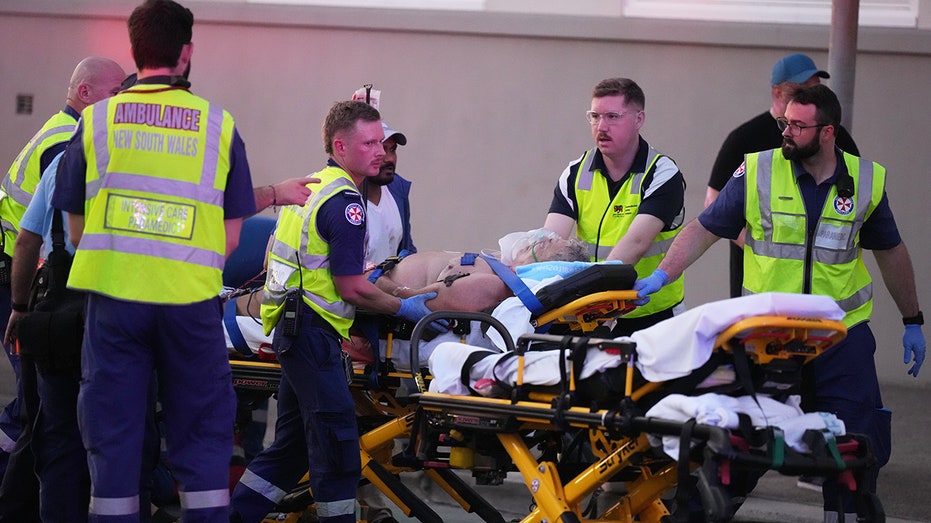
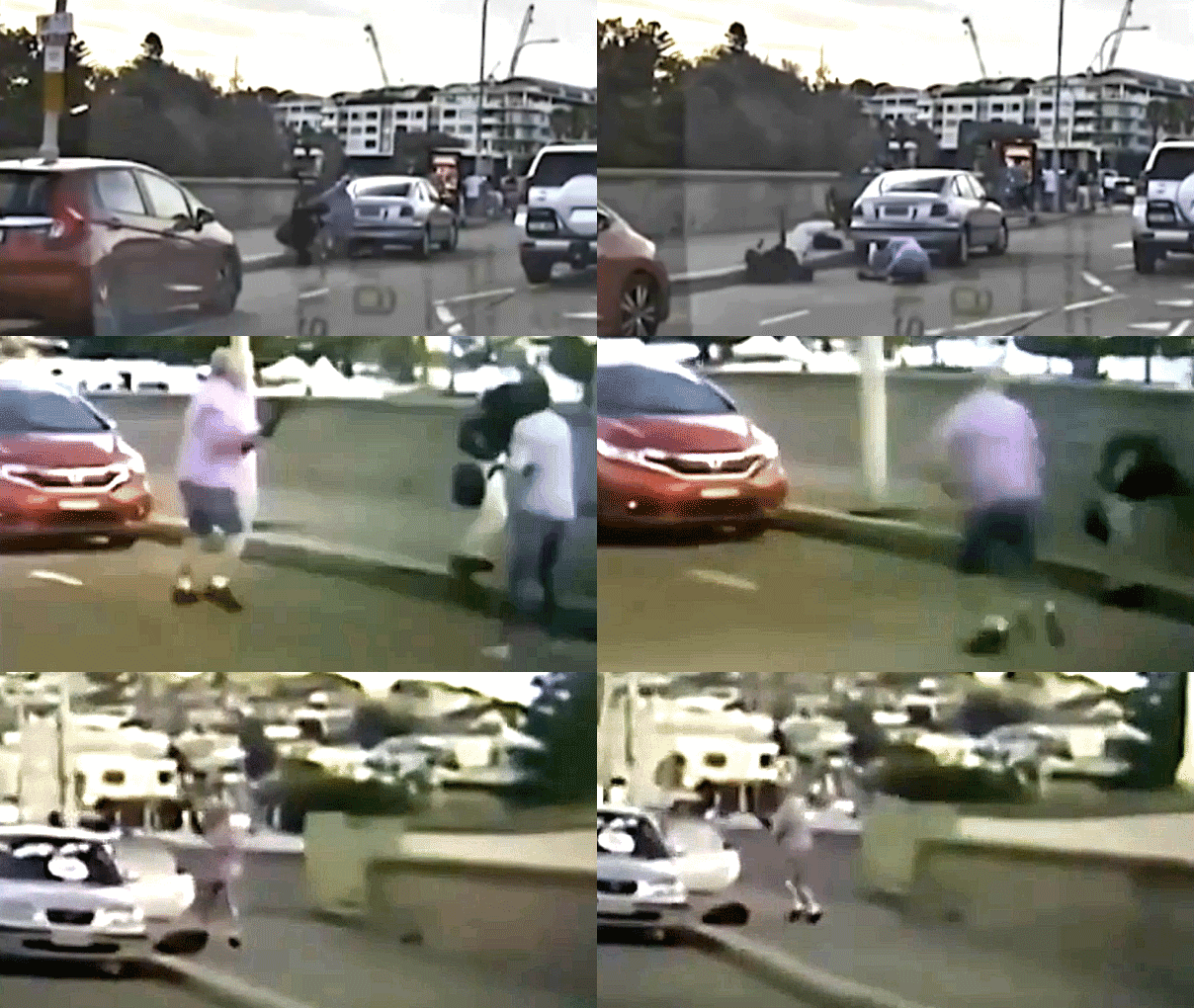
The Gurmans, simply passing by, saw the attacker exiting a vehicle and intervened before the shooting even started. Boris reportedly gained control of one rifle briefly; the attacker then accessed a second weapon and killed them both, making them the first victims. Ahmed, an immigrant to Australia, physically wrestled a gun away from one of the shooters, and now may lose his arm after being “riddled with bullets.”
These details matter because they highlight three hard truths:
- Response time is measured in seconds, not minutes. Even in countries with competent policing, the most critical moments in a mass attack unfold before law enforcement can arrive. Bystanders often become de facto first responders.
- Spur-of-the-moment heroism is filling a structural gap. In an era of small, fast-moving terror attacks, no security apparatus can fully prevent or neutralize all incidents. The state implicitly relies on public vigilance—but offers relatively little training or support in return.
- Immigrants and minorities are not just subjects of security debates—they are often the people saving lives. Ahmed’s story undercuts simplistic narratives that link migration with insecurity. It shows how quickly those narratives fall apart when tested against lived reality.
There’s also a psychological dimension. Social psychologists have long studied the “bystander effect”—the tendency for individuals to freeze or not intervene when others are present. Yet high-profile cases from the 2019 Christchurch mosque attacks in New Zealand to the 2015 Thalys train attempted attack in Europe show that in modern terror incidents, the opposite sometimes happens: members of the public tackle, disarm, or distract attackers, often at enormous personal risk.
The Bondi footage will now join that evolving canon. It will shape how Australians think about courage, responsibility, and the unwritten social contract between citizens and the state.
Gun Laws Under Pressure: Can a 1990s Framework Handle 2020s Threats?
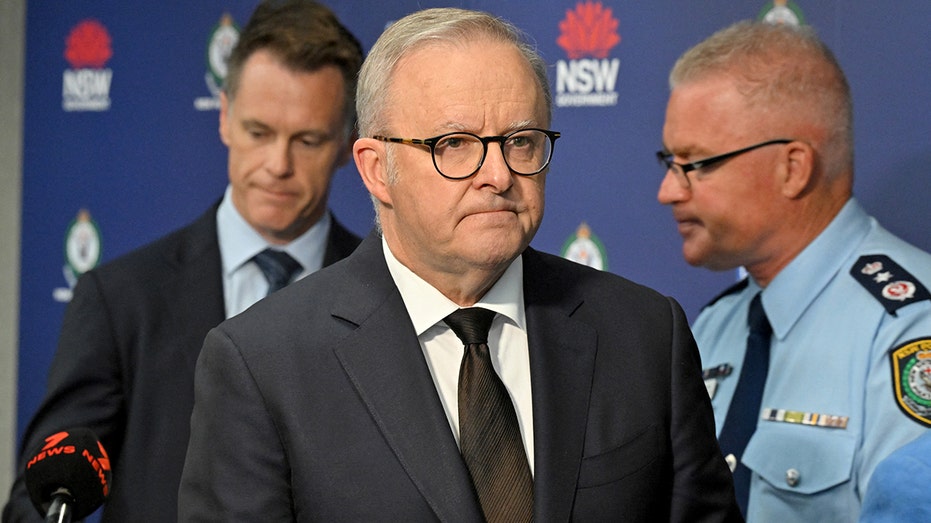
Australian leaders have already vowed to tighten what were already among the world’s strictest gun laws. Prime Minister Anthony Albanese flagged limits on how many guns an individual can own and signaled broader willingness to strengthen regulations.
What’s striking is that this attack appears, at least from early reports, to have been carried out within a context where:
- Firearm ownership is tightly regulated and heavily scrutinized;
- Rapid-fire weapons are largely outlawed;
- Background checks and licensing are standard.
So what went wrong?
Three possibilities, not mutually exclusive, deserve scrutiny:
- Leakage within the system. Were the weapons legally owned, stolen, or trafficked? If they were legally held, how did licensing and monitoring fail to flag risk factors? If not, where did the security perimeter break—border controls, theft from legal owners, or a black-market pipeline?
- Focus on hardware, not intent. Australia’s model is excellent at controlling categories of weapons but less nimble at recognizing the transition from extremist sympathies to operational planning. If the attackers were already on any watchlists—or should have been—that will raise questions similar to those asked after other Western terror attacks over the past decade.
- Complacency after success. Nearly three decades without a major mass shooting can create a sense that the problem has been “solved.” That can mean underinvestment in intelligence, deradicalization, and community trust-building—precisely the softer tools required to tackle ideologically driven violence.
Any new round of gun reforms will collide with political realities. Australia has already done the politically easiest part—removing the most dangerous classes of firearms and raising the bar for ownership. What remains is more complex: dealing with cumulative ownership, storage and diversion risks, and better integration of firearms data with intelligence about extremism and domestic threats.
Terrorism, Antisemitism, and the Targeting of Jewish Life
The explicit targeting of a Hanukkah event places this attack squarely within the rise of antisemitic violence in Western democracies. Over the past decade, Jewish communities in France, Germany, the U.S., and the U.K. have faced attacks on synagogues, kosher markets, and public celebrations.
Australia has not been immune. Jewish organizations have been warning about rising antisemitic incidents—harassment, vandalism, online threats—often tied to global events in the Middle East. A rabbi killed in a separate Sydney Hanukkah incident had reportedly warned the prime minister about this trend. That prior warning is crucial context: it suggests authorities were not unaware of the risk but may have underestimated the likelihood of a lethal attack.
That raises a difficult set of questions:
- Are security resources for Jewish events calibrated to the actual level of threat?
- How effectively are police and intelligence services sharing information with community organizations?
- Have political debates about Israel and Palestine blurred into a permissive environment for coded antisemitism?
The attackers reportedly had ISIS flags and improvised explosives in their vehicle, aligning them with a global jihadist ideology that explicitly identifies Jews as priority targets. Yet the language used by political leaders in the coming weeks will matter: whether they frame this solely as “terrorism” or as both terrorism and antisemitic violence will influence how policy is shaped and how safe Jewish Australians feel participating in public religious life.
The Overlooked Story: Community Cohesion Under Strain—and Strengthened
There’s a narrative risk here. Terrorist attacks often fuel polarization: between religious communities, between immigrants and native-born citizens, between security hawks and civil liberties advocates. The Bondi attack, however, complicates these lines.
An immigrant, Ahmed, nearly gave his life to stop the attackers. A Jewish community was the explicit target. The attackers were reportedly ISIS-inspired. That combination undercuts simplistic “us versus them” stories and instead highlights overlapping “us” categories—Jews, Muslims, Christians, secular Australians, immigrants—all dependent on each other for safety in public spaces.
What mainstream coverage often misses is how these events reverberate quietly after the immediate shock:
- Jewish families may reconsider attending public religious gatherings or sending children to visibly Jewish schools.
- Muslim and Arab Australians may fear backlash or collective blame, despite having no connection to the perpetrators.
- Immigrants in general may feel their loyalty questioned, even as people like Ahmed demonstrate a very literal, physical commitment to their adopted country.
The way political leaders and media outlets tell this story—who is named, who is thanked, whose suffering is centered—will shape whether the attack becomes a wedge or a bridge.
Data, Trends, and the Emerging Pattern of Small-Cell Terror
Globally, the profile of jihadist-inspired attacks has shifted since the height of ISIS territorial control around 2014–2016. With the group’s physical caliphate dismantled, its influence has migrated online, where propaganda encourages sympathizers to act locally with whatever means available.
Key trends relevant to Bondi include:
- Decentralization. Fewer large, complex plots; more small-scale, quickly executed attacks with minimal planning and simple weapons.
- Family cells. Father–son or sibling participation has appeared in other cases, complicating detection because the radicalization process is “in-house.”
- Symbolic targeting. Attacks on religious holidays, cultural festivals, or iconic public spaces (like Bondi Beach) ensure maximum psychological impact.
Australia’s law enforcement agencies have disrupted multiple plots since 2014, and the country’s overall rate of terrorist incidents remains low compared to Europe. But low frequency can breed vulnerability: each successful attack carries outsized symbolic weight and puts pressure on institutions that rarely have to operate in crisis mode.
Looking Ahead: What to Watch Beyond Gun Law Headlines
In the coming months, several fault lines will determine whether this tragedy leads to meaningful resilience or just another cycle of outrage and amnesia.
- Substance of gun reforms. Will changes focus narrowly on numeric limits (how many guns per person) or more deeply on risk-based licensing, storage, and integration of firearms databases with intelligence about extremist activity?
- Scrutiny of intelligence and prevention. Were there prior signals about the attackers’ radicalization? How effective are current deradicalization programs, and are communities willing and able to flag concerns without fear of stigmatizing their own?
- Support for victims and heroes. What long-term medical, financial, and psychological support will be provided to people like Ahmed, who will live with the consequences of their split-second decisions for decades?
- Protection of Jewish life. Will security for synagogues, schools, and public holiday events be quietly upgraded—and funded—or will communities be left to self-fund their own protection?
- Public discourse on antisemitism and extremism. Can political leaders draw a clear, principled line against antisemitic violence without conflating it with legitimate criticism of Israeli government policies or fueling anti-Muslim sentiment?
The Bottom Line
The Bondi Beach Hanukkah attack is a brutal reminder that even societies with strong gun laws and relatively low levels of violent crime are not insulated from global waves of ideological extremism and antisemitism. The heroism of Boris and Sofia Gurman and of Ahmed al Ahmed underscores both the best of community solidarity and the uncomfortable truth that ordinary people are increasingly pushed into extraordinary roles in moments of crisis.
What happens next—how Australia reforms its laws, rethinks its security posture toward minority communities, and narrates the roles of immigrants and bystanders—will determine whether this tragedy deepens social fractures or becomes a turning point toward a more honest, resilient approach to modern terrorism.
Topics
Editor's Comments
What’s most troubling about the Bondi attack is not simply that it happened despite Australia’s stringent gun laws, but that it fits so neatly into a pattern we already understand—and still seem unprepared for. We know that jihadist propaganda disproportionately targets Jews; we know that attacks are increasingly low-tech and quickly executed; we know that minority communities often sound the alarm about rising hate before it turns lethal. Yet, after each incident, policy debates default to familiar grooves: tighten gun ownership, boost policing, hold vigils. What’s rarely tackled head-on is the connective tissue between antisemitism, online radicalization, and the subtle political incentives to downplay threats until they explode. A contrarian reading of Bondi is that this is less a failure of laws than of imagination: an unwillingness to fully accept that protecting pluralism in the 21st century requires treating security for minority communities not as a niche concern, but as a central test of the social contract.
Like this article? Share it with your friends!
If you find this article interesting, feel free to share it with your friends!
Thank you for your support! Sharing is the greatest encouragement for us.