Beyond Bondi: How a Hanukkah Massacre Sparked a High-Stakes Clash Between Israel and Australia

Sarah Johnson
December 16, 2025
Brief
A deep dive into the Bondi Beach Hanukkah shooting, Israel’s harsh accusations against Australia, and what this clash reveals about rising antisemitism, imported conflicts, and Western democratic vulnerability.
Bondi, Blame, and the Battle Over Antisemitism: What the Sydney Shooting Reveals About a Global Political Fault Line
The Bondi Beach shooting at a public Hanukkah event is more than a horrific local attack; it is fast becoming a test case for how democracies grapple with rising antisemitism, imported Middle East conflicts, and the politics of blame between allies. Israel’s leadership has chosen a remarkably confrontational response, publicly accusing the Australian government of effectively enabling the attack through “appeasement” and inaction. That escalation tells us as much about Israel’s geopolitical strategy and domestic pressures as it does about Australian security policy.
To understand why this matters, we need to step back from the immediate tragedy and look at three overlapping dynamics: the historic patterns of antisemitic violence in Western democracies, Australia’s evolving stance on Israel–Palestine and domestic extremism, and Israel’s new diplomatic doctrine of calling out allies in stark, moralistic terms when it judges them insufficiently supportive.
How a Local Attack Became a Diplomatic Flashpoint
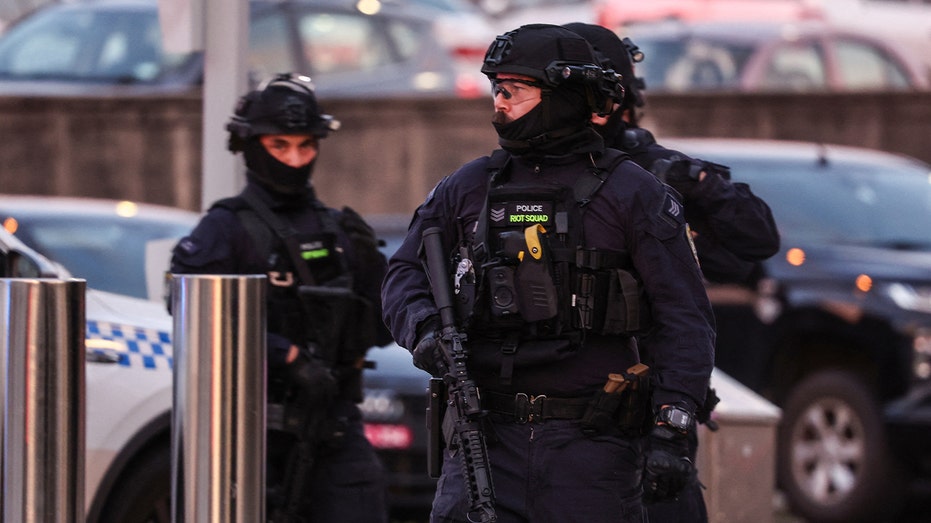
At one level, the story is grimly familiar: a Jewish community event targeted by armed attackers, at least 11 killed and dozens injured, alleged gunmen with apparent access to weapons and improvised explosive devices, and early indications of ideological motivation. That pattern echoes Pittsburgh (2018), Halle (2019), Copenhagen (2015), and other attacks where Jewish spaces became the symbolic battlefield for broader extremist grievances.
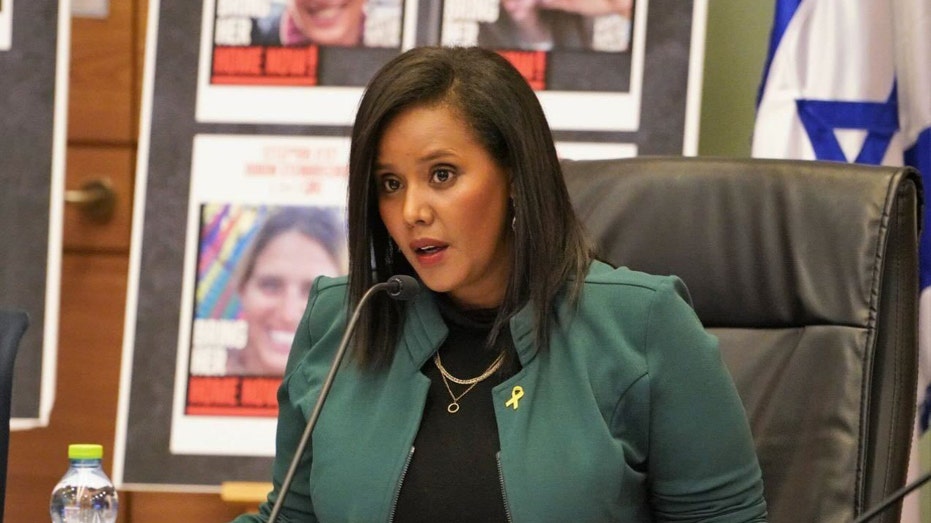
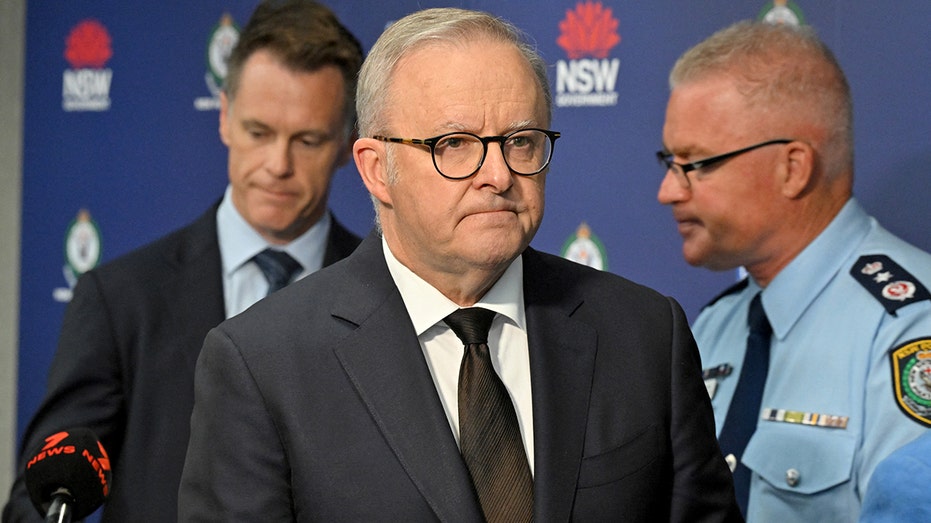
What is unusual here is how quickly the tragedy has been internationalized. Within hours, Israel’s prime minister and president issued not just condolences, but an indictment of an allied democratic government. Benjamin Netanyahu’s letter — accusing Prime Minister Anthony Albanese of “replacing weakness with weakness” and allowing “cancer cells” of antisemitism to grow — goes far beyond normal diplomatic language between partners. President Isaac Herzog and Foreign Minister Gideon Saar reinforced the message, explicitly linking the attack to pro-Palestinian slogans like “Globalize the Intifada” heard on Australian streets.
This is not simply emotional rhetoric. It reflects a deliberate Israeli strategy that has hardened since the October 7 Hamas attacks and the ensuing Gaza war: treat antisemitism abroad not only as a security and moral issue, but also as a litmus test of political loyalty.
Australia’s Record: A ‘Safe Haven’ Under Strain
Australia has historically been viewed as one of the safer Western countries for Jewish communities. Incidents of violent antisemitism have been significantly lower than in parts of Europe. But that reputation has been eroding:
- Jewish community monitoring in Australia has reported multi-year increases in antisemitic incidents, particularly since the 2014 Gaza war and again after October 7.
- The growth of online hate and conspiracy theories during the pandemic created fertile ground for both antisemitic tropes and broader radicalization.
- Pro-Palestinian mobilization, especially among younger Australians, has intensified and sometimes blurred into antisemitic expression, including calls for “Intifada” and rhetoric that denies Jewish self-determination entirely.
At the same time, the Albanese government has tried to walk a narrow line: condemning Hamas, expressing concern for Palestinian civilians, and signaling support for a future Palestinian state — broadly in line with long-standing European positions and past Australian Labor Party platforms. For many in Israel’s current leadership, that balance is no longer acceptable. In their framing, any recognition of Palestinian statehood in the current climate is seen not as diplomacy but as reward for terrorism and fuel for antisemitism.
The gap between how Canberra and Jerusalem understand causality is crucial. Australian officials see antisemitism as a criminal and social problem to be managed through law, policing, and education, alongside an independent foreign policy on Israel–Palestine. Israeli leaders, especially post–October 7, increasingly see foreign policy positions as directly shaping domestic security risks for Jews abroad. When Netanyahu says support for a Palestinian state “pours fuel on the antisemitic fire,” he is collapsing the distinction between foreign policy signaling and domestic extremism.
Is Israel Right About ‘Countless Warning Signs’?
Israel’s charge that the Australian government ignored “countless warning signs” contains both truth and oversimplification.
Where the criticism has grounding:
- Security services in multiple Western countries have warned that Jewish communities are high-probability targets when Middle East tensions spike. That is not new, and it demands proactive protection, especially for large public events like the Bondi Hanukkah celebration.
- The normalization of aggressive protest rhetoric — including “Globalize the Intifada” — has blurred lines for law enforcement. Governments across Europe and North America have wrestled with when protected political speech crosses into incitement. Australia is no exception, and Jewish community leaders have repeatedly flagged this grey zone as a threat.
- Resource gaps in community security are real. Synagogues and Jewish schools have often had to fund their own protection, with varying levels of public support.
Where the argument overreaches:
- There is no evidence yet that the attacker(s) were directly motivated by Albanese’s support for Palestinian statehood. The investigation will need to establish ideology, networks, and triggers before causation can be responsibly claimed.
- Antisemitism in Australia predates the current government, and spikes in anti-Jewish incidents map more closely to Middle East flare-ups and online radicalization patterns than to specific Canberra policy statements.
- Conflating pro-Palestinian political positions with antisemitism risks both misdiagnosing the threat and alienating potential allies against genuine Jew-hatred.
In other words, Israeli officials are right that warning signs existed — rising incidents, radical slogans, an increasingly toxic online environment. But attributing the Bondi attack to a single foreign policy stance is more political narrative than established fact.
From ‘Never Again’ to ‘Always On’: The Historical Arc
To see what’s different now, it’s useful to frame this moment in a longer history of post-Holocaust commitments and their erosion:
- In the decades after World War II, many Western democracies adopted a “Never Again” posture that combined Holocaust education, legal protections for minorities, and strong rhetorical support for Jewish communities.
- From the 1990s onward, a series of crises — the second Intifada, the 2006 Lebanon war, multiple Gaza conflicts, and rising far-right nationalism — re-politicized perceptions of Jews and Israel, especially on campuses and in protest movements.
- After the 2015–2016 wave of jihadist attacks in Europe, Jewish institutions were placed under heavy guard, but the pace of threats did not decrease. Instead, Jewish communities became accustomed to living behind visible security infrastructure.
- October 7, 2023, was a psychological shock on par with 9/11 for many Jews worldwide. The ferocity of the Hamas attack, combined with harsh criticism of Israel’s Gaza response, created a sense that the old social contract — that liberal democracies would reliably protect Jewish life — was fraying.
Israel’s current rhetoric toward Australia should be seen in this context. It is an expression of accumulated frustration and fear that “Never Again” has become conditional — that allies will stand with Israel and Jewish communities only up to a point, especially when it clashes with domestic political calculus or foreign policy positioning.
The Domestic Politics Behind the Blame
Both governments have internal political incentives shaping their public reactions.
For Netanyahu and the Israeli leadership:
- Projecting toughness on antisemitism abroad shores up support among right-leaning Israelis who already view parts of the West as hypocritical or hostile.
- Externalizing blame for Jewish insecurity helps deflect scrutiny from Israel’s own policies and intelligence failures before October 7, which remain central in Israeli domestic debates.
- Equating criticism of Israel or support for Palestinian statehood with antisemitism simplifies a complex diplomatic landscape into a moral binary — useful in mobilizing both Israeli and diaspora supporters.
For Albanese and the Australian government:
- The government must demonstrate it can protect minorities without appearing to criminalize dissent over Gaza, a highly sensitive issue among progressive voters and key migrant communities.
- Admitting to security failures too quickly could expose it to domestic political attacks, yet underreacting to the antisemitism charge risks losing trust from Jewish Australians and international partners.
- Australia’s aspiration to play an independent middle-power role in global affairs makes it reluctant to be seen as simply aligning with one side’s narrative in the Israel–Palestine conflict.
The result is a dangerous mismatch: Israel speaking in existential terms about antisemitism, and Australia framing the debate in terms of civil liberties, policing, and balanced foreign policy. Both frameworks are incomplete on their own.
What Mainstream Coverage Is Missing
Much of the initial coverage has focused on the starkness of Israel’s accusations and on the horror of the attack. Less attention has been paid to three crucial underlying issues:
- The blurring of domestic and foreign policy. Western governments increasingly face a situation where foreign policy positions toward Israel and Palestine have immediate domestic security implications — not only for Jewish communities but also for Muslim and Arab communities. That feedback loop is rarely acknowledged honestly.
- The shift from security to symbolism. Public arguments over slogans like “Globalize the Intifada” are important, but they can overshadow more practical questions: Were community security requests funded? Was intelligence sharing adequate? Did police treat Jewish events as high-risk targets?
- The risk of weaponizing antisemitism. When charges of antisemitism are deployed as blunt tools in foreign policy disputes, there is a risk of cynicism setting in. That ultimately harms genuine efforts to combat antisemitism by making the term seem partisan or opportunistic.
What Needs to Change After Bondi
Regardless of how the investigation into the Bondi attack ultimately characterizes the attackers’ motives, several policy implications are already clear:
- Security protocols for Jewish events need to be treated as critical infrastructure. Major public Jewish gatherings, especially in periods of heightened tension, require proactive planning, visible policing, and clear community liaison structures.
- Governments must draw sharper lines between legitimate protest and incitement. That requires precise legal standards, consistent enforcement, and clear guidance to police — not ad hoc decisions driven by media storms.
- Antisemitism strategies cannot be siloed from broader extremism policy. The same ecosystems that fuel antisemitic attacks often also radicalize toward Islamophobia, homophobia, and other violent hatreds. Addressing one without the others is both morally and practically flawed.
- Allies need a more mature dialogue about criticism of Israel. Democratic debate on Israel’s policies must be protected, but so must Jewish communities. That means developing shared definitions and red lines — for example, distinguishing criticism of government policy from rhetoric that delegitimizes Jewish peoplehood or justifies violence against Jews.
Looking Ahead: Three Key Questions
In the coming weeks, three questions will determine whether the Bondi attack becomes a turning point or just another grim entry in a growing list of tragedies:
- Will Australia treat this as a one-off failure or a systemic warning? If the response focuses only on the specific perpetrators, the deeper vulnerabilities — in community security, policing thresholds, and extremism monitoring — will remain.
- Will Israel recalibrate its rhetoric toward allies? Publicly berating friendly governments may satisfy domestic audiences, but it can erode goodwill and complicate the very cooperation that protects Jewish communities abroad.
- Will Jewish and Muslim communities in Australia resist being pulled into a proxy war? The most hopeful scenario is one where local leaders jointly insist on both safety and nuanced debate, rejecting attempts to import the full polarization of the Middle East into Australian streets.
The Bondi shooting is a tragedy first and foremost for the victims and their families. But it is also a mirror held up to Western democracies — forcing hard questions about how seriously they take antisemitism, how they manage imported conflicts, and whether they can protect vulnerable communities without sacrificing the open, pluralist values they claim to defend.
The bottom line: Israel’s anger taps into a real and growing fear that Jewish life is becoming precarious again, even in established democracies. But turning that fear into blanket accusations against allied governments risks obscuring the harder, less dramatic work that actually makes communities safer — sustained investment in security, principled policing, and a political culture that refuses to let foreign wars determine which citizens feel at home.
Topics
Editor's Comments
One of the most unsettling aspects of the Bondi shooting is how quickly it was drafted into a broader geopolitical blame game. Israel’s leadership is not wrong to be furious; Jewish communities worldwide have legitimate reasons to feel abandoned as antisemitic incidents spike. But when an ally’s government is publicly accused of ‘appeasement’ within hours of an attack, it blurs two critical tasks: finding out what actually went wrong in security and preventing the next attack. There’s a risk that Canberra responds more to the optics of Israeli criticism than to the underlying vulnerabilities in its own systems. Conversely, if Australian officials react defensively and frame Israel’s complaints as mere political theater, they may miss an opportunity to confront uncomfortable truths about how antisemitism has been minimized or misunderstood. The contrarian view worth holding onto here is that both narratives can be partly right: Israel can be overreaching in its rhetoric while still highlighting a real pattern of complacency in Western democracies. The challenge is to translate that tension into better policy rather than deeper polarization.
Like this article? Share it with your friends!
If you find this article interesting, feel free to share it with your friends!
Thank you for your support! Sharing is the greatest encouragement for us.