Beyond Heroism: What a Muslim Syrian Immigrant’s Courage Reveals About Australia’s Fight Over Antisemitism and Belonging

Sarah Johnson
December 16, 2025
Brief
The Syrian Muslim immigrant who tackled an antisemitic gunman in Australia exposes deeper truths about citizenship, antisemitism, security failures, and the future of multiculturalism far beyond a single act of heroism.
How a Muslim Syrian Immigrant Became the Face of Australian Solidarity After an Antisemitic Attack
The story of Ahmed al Ahmed – a Muslim Syrian immigrant who nearly lost his life tackling a gunman during an antisemitic terror attack in Australia – is about far more than individual heroism. It is a stress test of Australia’s social fabric at a moment when antisemitism, Islamophobia, and anxieties about immigration are surging worldwide.
In a single, chaotic act – running toward gunfire to protect Jewish victims during Hanukkah – Ahmed collapsed several narratives at once: that Muslims and Jews are inevitable enemies, that immigrants are security risks rather than security assets, and that multiculturalism is a naïve experiment rather than a lived reality held together by ordinary people in extraordinary moments.
Understanding why his actions matter requires looking beyond the footage and headlines to the deeper story: decades of debate over immigration and integration in Australia, the global rise in antisemitic violence, and the often-overlooked role of immigrants as first responders in democratic societies under strain.
The Bigger Picture: Australia’s Multicultural Experiment Under Fire
Australia has long sold itself – domestically and abroad – as a successful multicultural democracy. Since the dismantling of the White Australia policy in the 1970s, the country has seen one of the fastest demographic transformations in the developed world. Today, over 30% of Australians are foreign-born, and more than half have at least one parent born overseas.
That transformation has been accompanied by recurring flashpoints:
- 2005 Cronulla riots, when Anglo-Australian mobs targeted people of Middle Eastern appearance in Sydney’s beach suburbs – an early warning that multiculturalism was far from settled.
- Post-9/11 and ISIS years, when Muslim communities were heavily securitized, surveilled, and politically instrumentalized.
- Recent spikes in antisemitism linked to Middle East conflicts, with Jewish Australians reporting increased threats, vandalism, and harassment around synagogues and schools.
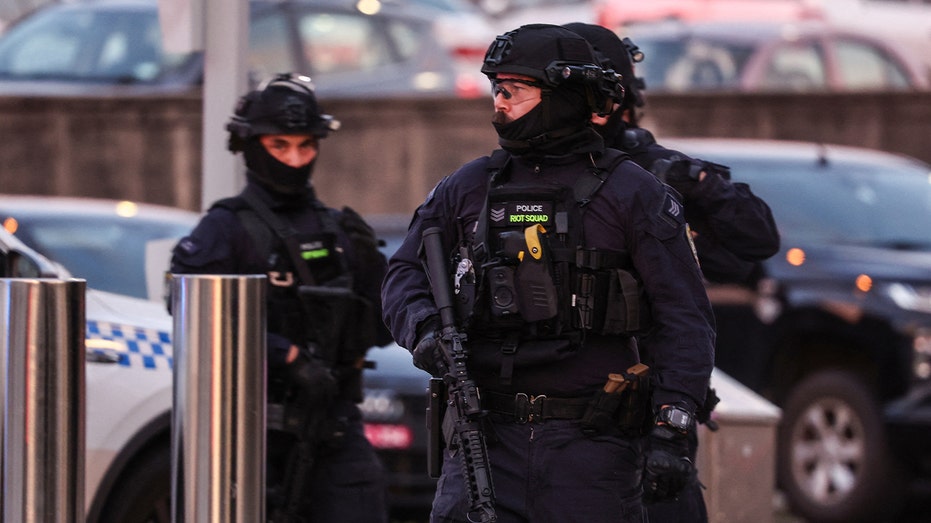
The Bondi-area attack – which Prime Minister Anthony Albanese called an act of “pure evil,” “antisemitism,” and “terrorism” aimed at the Jewish community on the first day of Hanukkah – is part of this trajectory. It sits within a global pattern of targeted violence against Jews, from Pittsburgh and Poway in the United States to attacks in Paris, Brussels, and Copenhagen.
But this attack also exposed another fault line: accusations from Jewish community leaders and an Israeli Knesset member that Australian officials “did nothing” amid rising antisemitism before the shooting. That charge doesn’t just question security policy; it questions whether Australian institutions truly understood the escalation in both rhetoric and risk.
Why Ahmed’s Story Cuts Against the Simplest Narratives
Ahmed’s background matters. He fled Syria, arriving in Australia in 2006, and only received citizenship in 2022, after years in a country where debates over refugee intake – especially from Muslim-majority countries – have been highly politicized. His lawyer describes him as a humble man who acted out of gratitude to Australia and a sense of duty to his community.
That combination – Muslim, Syrian, immigrant, father of young daughters, now “riddled with bullets” after intervening to protect Jewish targets – turns the usual security narrative inside out:
- Instead of the immigrant as risk, he becomes the citizen who absorbs the risk that others would have faced.
- Instead of Muslim and Jewish communities in a purely adversarial frame, we see a Muslim man physically placing himself between an antisemitic gunman and Jewish victims.
- Instead of the state as sole provider of security, an ordinary resident becomes the last line of defense when violence erupts.
These reversals will complicate public debate – and that’s precisely why they’re so important.
Security, Antisemitism, and a Failure to Read the Warnings
Jewish leaders have been blunt: they say they “warned” authorities about rising antisemitism before this attack. Those warnings didn’t come out of nowhere. Over the past decade, Jewish communities in Western democracies have increasingly shifted from asking for recognition to pleading for protection.
Some key patterns are relevant here:
- Institutional hesitancy to label threats as antisemitic terrorism until after an attack, often out of fear of inflaming community tensions or mischaracterizing lone actors.
- Online radicalization, where antisemitic content spreads across platforms faster than law enforcement can track, normalizing hate long before it translates into violence.
- Politicized responses, where calls to address antisemitism get tangled in foreign policy debates over Israel and Palestine, making basic security measures seem partisan.
The criticism now facing Australian authorities is not just that they failed to prevent a specific attack, but that they failed to take a pattern seriously enough: escalating antisemitic incidents, warnings from community leaders, and a polarized environment where Jewish institutions increasingly require heavy physical protection.
The fact that one of the most effective interventions came not from heavily armed police but from an unarmed immigrant bystander will intensify questions about whether Australia’s counterterrorism and community policing models have kept pace with the threat.
What This Really Means: Citizenship, Courage, and the Politics of Gratitude
Ahmed’s lawyer framed his action as a form of gratitude toward Australia: a man who “gets that gratitude from being in Australia,” who felt compelled “as a member of the community” to protect it. That language of gratitude is powerful – but it’s also politically loaded.
In many Western societies, immigrants are quietly expected to perform higher levels of loyalty and assimilation than native-born citizens in order to be seen as “fully belonging.” Ahmed’s heroism will undoubtedly be celebrated. But there is a risk that his story is subtly framed as: this is the kind of immigrant we want – grateful, self-sacrificing, apolitical.
The deeper question is whether we can recognize his act not as repayment of a debt but as an exercise of equal citizenship. He didn’t act for Australia as a supplicant; he acted as Australia – as someone who has as much stake in public safety and communal dignity as any other citizen.
Hero narratives matter. They shape who we see as capable of protecting “us,” and who is permanently seen as “them.” In this case, the hero is a Muslim, protecting Jews, in a country where both groups have, at different times, been treated as outsiders. That alone challenges entrenched mental maps of who is under suspicion and who is under protection.
Expert Perspectives: Security, Social Cohesion, and Interfaith Implications
Security analysts will likely focus on operational questions: how the gunman obtained weapons, what advance signs were missed, whether the target location had adequate protection. But sociologists and conflict scholars will see something else in the footage of Ahmed tackling the shooter.
Interfaith and extremism researchers have long argued that the most powerful antidote to sectarian narratives is visible, cross-community solidarity when it matters most. After the 2019 Christchurch mosque attacks in New Zealand, Jewish groups worldwide openly condemned the violence and organized support for Muslim communities. Here, the script is reversed: a Muslim risking his life to save Jews during a Jewish holiday, in an attack defined explicitly as antisemitic.
For extremists on all sides, that kind of solidarity is intolerable. Their narratives depend on cleanly divided “civilizational” fault lines. Ahmed’s actions blur those lines in the most inconvenient way possible – in blood and on camera.
Data & Evidence: A Global Spike in Hate, a Local Test of Resilience
While precise national numbers on antisemitic incidents in Australia vary by reporting source, the broader global context is clear: Jewish communities in North America and Europe have reported record-high levels of antisemitic harassment, vandalism, and violence in recent years. In multiple countries, security around synagogues and Jewish schools now resembles that of embassies.
Australia has not been immune. Jewish advocacy groups have documented increases in online abuse and threats, particularly during flare-ups in the Israel–Palestine conflict. At the same time, Muslim communities have reported spikes in Islamophobic incidents after global terror attacks linked, fairly or not, to Islamist extremists.
The Bondi-area attack fuses these two strands: antisemitic violence likely to intensify fears within Jewish communities, and the heroism of a Muslim immigrant likely to complicate narratives that equate Muslim presence with insecurity.
Looking Ahead: What to Watch for in Australia’s Response
What happens after the vigils and front-page tributes to Ahmed will tell us how deeply Australia is prepared to learn from this moment. Several key inflection points are coming:
- Security policy shifts: Expect calls for stronger protection at Jewish institutions, clearer thresholds for designating attacks as terrorism, and more aggressive monitoring of extremist networks, including online hate ecosystems.
- Community relations strategies: Authorities will be under pressure to engage simultaneously with Jewish and Muslim communities in ways that acknowledge both antisemitism and Islamophobia without treating either as negotiable or secondary.
- Immigration and integration debates: Politicians may cite Ahmed’s story as proof that integration “works” – or instrumentalize it to argue that only certain types of immigrants deserve welcome. Watch closely for how his narrative is invoked in future immigration policy arguments.
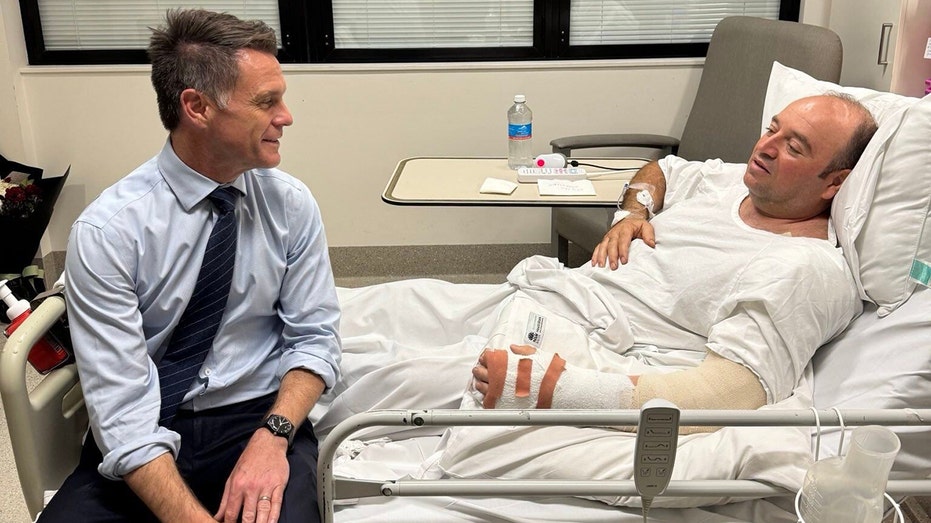
- Mental health and long-term support for civilian heroes: Ahmed is already described as “riddled with bullets” and “struggling.” Public fascination with heroism often fades long before the physical and psychological consequences do. Whether he receives sustained support will signal how seriously Australia values the people who stand between civilians and violence.
There’s also a symbolic question: does Australia formally recognize his courage – through honors, sustained support for his family, and public remembrance – or does the system quietly move on once the news cycle shifts?
The Bottom Line
Ahmed al Ahmed’s decision to run toward an antisemitic gunman is not just an act of personal bravery. It’s a referendum on some of the hardest questions facing democracies today: who belongs, who is protected, who is suspected, and who is willing to risk everything to defend strangers.
If Australia chooses to see his story only as a feel-good exception, it will miss the lesson. If it recognizes his courage as a model of shared citizenship – Muslim, Jewish, and otherwise – it may yet turn a moment of terror into a catalyst for a more honest, resilient multiculturalism.
The measure of that choice won’t be in the speeches delivered this week, but in the policies adopted, communities supported, and stereotypes challenged in the months and years to come.
Topics
Editor's Comments
What stands out most in this story is how quickly the public conversation has gravitated toward hero worship without grappling with the structural failures that made such heroism necessary. Ahmed’s courage is undeniable, but it unfolded in an environment where a Jewish community felt sufficiently threatened to issue repeated warnings, and where those warnings appear not to have translated into adequate protection. There’s a danger that celebrating an immigrant hero becomes a moral alibi for institutions that did not fully do their job. Another underexplored angle is the psychological aftermath for Ahmed himself: a father now living with serious injuries, potential trauma, and a media narrative that may not leave space for his vulnerability or anger. If we truly value what he did, the next step is not just symbolic honor but a hard, uncomfortable audit of security practices, political complacency about antisemitism, and the everyday biases that decide whose fears are treated as actionable intelligence and whose are dismissed as overreaction.
Like this article? Share it with your friends!
If you find this article interesting, feel free to share it with your friends!
Thank you for your support! Sharing is the greatest encouragement for us.