Cooper Flagg’s 42-Point Breakthrough: What His Record Night Really Says About the Mavericks and the Modern NBA

Sarah Johnson
December 16, 2025
Brief
Cooper Flagg’s 42-point record night at 18 is more than a milestone. This analysis explains what it reveals about modern player development, Mavericks strategy, and the NBA’s youth-driven future.
Cooper Flagg’s 42-Point Night Isn’t Just a Record — It’s a Signal of Where the NBA Is Headed
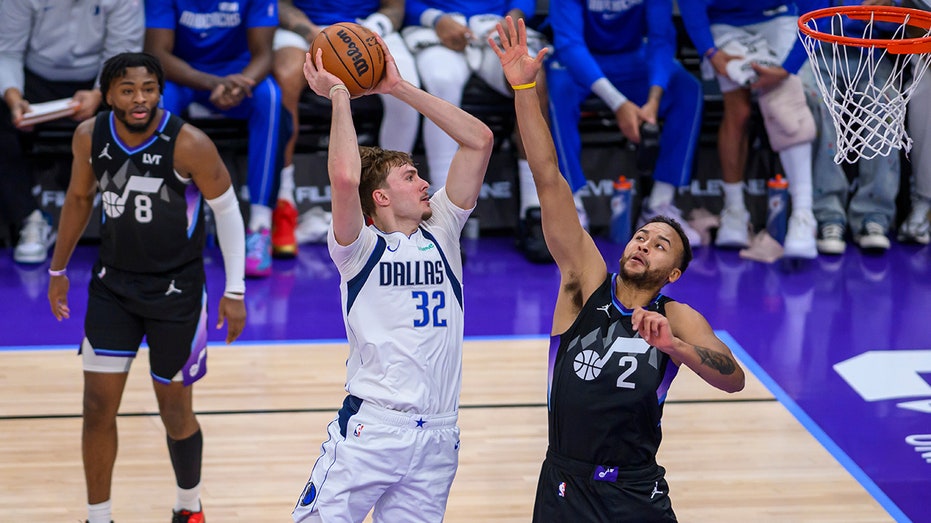
Cooper Flagg’s 42-point performance in the Dallas Mavericks’ overtime loss to the Utah Jazz will be remembered for the record it broke: the most points ever scored by an 18-year-old in an NBA game, surpassing LeBron James’ mark from 2003. But focusing on the box score alone risks missing the larger story. This isn’t just about one prodigy having a big night — it’s about how the league is evolving, how franchises are recalibrating around precocious stars, and what it means when a teenager can carry an offense while his team sits near the bottom of the standings.
Flagg’s night crystallizes three converging trends: the acceleration of player development, a strategic shift toward giving young stars the keys earlier than ever, and the widening gap between individual excellence and team success in an era of hyper-polarized rosters.
The Bigger Picture: From LeBron’s 2003 to Flagg’s 2025
When LeBron James dropped 41 points as a 19-year-old rookie in December 2003, the NBA still treated teenage phenoms as rare outliers. High school-to-pros stars existed — Kobe Bryant, Kevin Garnett, Tracy McGrady — but teams were cautious. These players might flash brilliance, yet their usage and responsibility were often gated by veteran hierarchies and slower developmental philosophies.
Flagg’s achievement, technically just a record on paper, lands at a very different moment in league history. Several contextual shifts stand out:
- Rule and spacing revolution: Since the mid-2000s, rule changes limiting hand-checking, the rise of pace-and-space offenses, and the three-point explosion have made it easier for offensively gifted players to put up numbers early. An 18-year-old today steps into an ecosystem optimized for scoring.
- Development infrastructure: Modern prospects come through advanced pipelines: elite AAU circuits, NBA-sponsored academies, and high-level prep, G League Ignite-style programs, or pro pathways abroad. Many arrive functionally as second- or third-year pros in terms of reps and training sophistication.
- Data-driven trust in youth: Analytics departments have made it easier for teams to quantify impact and risk, encouraging franchises to test young players in high-usage roles earlier instead of burying them behind veterans simply out of deference.
So while the LeBron comparison is inevitable, the more interesting question is: what does it say about the modern NBA that a teenager can not only score 42 but also post 7 rebounds and 6 assists as a primary engine — while playing for a 10–17 team that clearly needs him to be that engine?
What This Really Means for the Mavericks
On its face, Flagg’s quote — “Obviously, we didn’t win… It’s tough for me to want to be happy” — reads like textbook competitor-speak. But in the context of this Mavericks season, it’s also a quiet indictment of where the franchise stands strategically.
Dallas is 10–17 and 12th in the Western Conference. That record matters more than the points column if you’re trying to understand the pressure ecosystem around a teenage star. Historically, when a generational-level prospect arrives on a struggling team, there are two broad trajectories:
- The LeBron 1.0 / Luka path: Team quickly reorients around the star, accumulates complementary pieces, and moves at least into playoff contention within two to three years.
- The early Kevin Durant / Anthony Davis path: Star puts up enormous numbers, but organizational missteps, defensive holes, and poorly constructed rosters delay (or derail) contender status.
Flagg’s ability to put up 40–5–5 as a rookie — becoming just the fifth rookie in the last 15 years to hit that threshold — suggests Dallas has the kind of offensive centerpiece teams usually dream about. But their 10–17 record suggests this season is less about winning now and more about accelerated on-the-job training. That’s a delicate psychological balance: you’re asking an 18-year-old to care more about winning than about records while surrounding him with a roster that isn’t yet built to win consistently.
His insistence on being “present, day to day” and not focused on records hints at a maturity teams desperately want in a franchise cornerstone. The risk is that if the losing compounds over multiple seasons, that mindset can be tested in ways that have reshaped league landscapes before — from LeBron’s first Cleveland exit to Anthony Davis’ departure from New Orleans.
A New Prototype: The Rookie as Offensive Hub, Not Just Scorer
The 42 points are the headline, but the more telling numbers are the 7 rebounds and 6 assists. Flagg didn’t just score; he functioned as a multi-dimensional hub. Over the past decade, the league has increasingly valued stars who can bend the game in three ways: scoring, playmaking, and positional versatility.
In that sense, Flagg’s line fits with a growing archetype:
- Luka Dončić: Came into the league at 19 already functioning as a primary creator, averaging 21–8–6 as a rookie.
- LeBron James: From his first year, combined scoring and playmaking responsibilities at a level that redefined the wing position.
- Cade Cunningham / LaMelo Ball: High-usage rookies immediately tasked with running offenses rather than being eased in as secondary options.
Flagg’s performance — particularly the comment about “letting the game come to me” and getting “more and more comfortable” — suggests he’s already reading defenses well enough to oscillate between scorer and facilitator. That’s precisely the skill set that becomes dangerous in year two and year three, once the game slows down and the roster around him stabilizes.
What’s Being Overlooked: Jazz, Keyonte George, and the Rookie Arms Race
Most coverage will understandably spotlight Flagg’s record, but Utah’s side of this game may be just as telling about where the West is headed.
Keyonte George dropping 37 points with five three-pointers, alongside Lauri Markkanen’s 33 points and 16 rebounds, underscores a quiet reality: the Western Conference is fast becoming a laboratory for teams building around multi-layered cores of young or mid-prime scorers. Utah, like Oklahoma City and Houston, is trying to stack scalable offensive engines rather than relying on a single star.
That matters for Dallas. In a conference where your peer franchises are developing depth and flexibility around their youth, building around a prodigy like Flagg without a robust support structure risks recreating the one-star-heavy models that have struggled to break through in the modern era.
Expert Perspectives: Pressure, Development, and the Weight of Records
Flagg’s early success invites comparison, but it also invites pressure. Several experts have long warned about what happens when achievements like this become the baseline expectation.
Sports psychologist Dr. Kensa Gunter has noted in past work on young stars that, “When statistical milestones become part of a young athlete’s identity in the public eye, any regression — which is natural — can feel like failure rather than part of growth.” That danger is magnified when the player consistently says he cares more about winning while being placed in situations where winning is structurally difficult.
On the basketball side, analytics-focused observers point to the sustainability question. High-usage teenage brilliance can mask systemic flaws. If Dallas leans too heavily on Flagg’s scoring to keep games close, they risk delaying the tougher work: building defensive schemes, secondary creators, and late-game sets that don’t always require their youngest player to bail them out.
Data & Evidence: Rookies, Records, and Team Trajectories
To understand the stakes, it helps to look at how teams historically fare after landing a rookie who posts this kind of output.
- Rookie outlier performances: Over the past 15 years, only a small handful of rookies have posted 40–5–5 or better in a game. Several went on to All-NBA or All-Star careers, but the team outcomes in the first three years were mixed, often tied directly to front-office decisions rather than just player talent.
- Team records in star rookie seasons: LeBron’s Cavs went 35–47 in his rookie year. Luka’s Mavericks: 33–49. Both franchises pivoted aggressively after seeing proof of concept, reshaping rosters within two seasons. Dallas’s current 10–17 mark puts them on a similar early trajectory record-wise, but what happens next will define whether Flagg’s night is a preview of contention or another entry in the “empty stats on a bad team” narrative that has haunted past stars.
Looking Ahead: What to Watch Over the Next 18 Months
Flagg’s historic game is less a destination and more a timestamp: the moment it became undeniable that Dallas has a foundational piece. Several inflection points are coming:
- Usage vs. efficiency curve: Will the Mavericks reduce his burden slightly to keep efficiency and health high, or will they treat this season as a stress test of how much he can carry?
- Roster recalibration: This type of performance gives front offices license — and pressure — to accelerate their timelines. Expect increasing scrutiny on trades, draft picks, and cap management designed to complement Flagg’s strengths.
- Mental load and leadership arc: How he responds publicly to losing, slumps, and game-planning adjustments will shape both his locker-room authority and his league-wide reputation. Right now, his refusal to celebrate empty records plays well. But that stance will be tested if the Mavericks’ win-loss trend doesn’t turn.
- The West’s youth arms race: With players like George, Shai Gilgeous-Alexander, Anthony Edwards, and others anchoring rising cores, Flagg’s development isn’t happening in a vacuum. Dallas isn’t just building a team around him; they’re building it for a conference where 40-point nights will be necessary but not sufficient.
The Bottom Line
Cooper Flagg’s 42-point record at 18 is more than a historical footnote. It’s a stress test of how the modern NBA handles precocious greatness. It spotlighted a franchise that clearly has its next star — but has not yet constructed the ecosystem that turns individual brilliance into sustained winning.
If Dallas uses this moment as a turning point — a clear signal to accelerate serious roster-building — this game might someday be remembered the way LeBron’s or Luka’s early explosions are: as early evidence of an era in the making. If not, it risks joining a growing catalog of gaudy rookie stat lines that did more to expose organizational shortcomings than to announce team arrival.
Topics
Editor's Comments
What stands out most about Cooper Flagg’s night isn’t just the number 42; it’s the way it exposes the structural tensions inside modern NBA rebuilds. We glorify the arrival of a generational prospect, but we rarely interrogate what it means to drop that level of talent into a half-finished ecosystem. Dallas now faces a narrowing window of moral credibility: you can only tell a player who openly prioritizes winning to ‘be patient’ for so long before it becomes a euphemism for organizational drift. The Jazz’s side of this game is instructive. With George and Markkanen, Utah looks like a team trying to build optionality around multiple engines instead of overloading one. If Dallas doesn’t move decisively, Flagg’s early heroics could age less like the start of a dynasty and more like a warning label on how not to handle a prodigy in a hyper-competitive conference.
Like this article? Share it with your friends!
If you find this article interesting, feel free to share it with your friends!
Thank you for your support! Sharing is the greatest encouragement for us.