Desmond Bane vs. OG Anunoby: The Viral Play That Exposes the NBA’s New Sportsmanship Tightrope

Sarah Johnson
December 8, 2025
Brief
Desmond Bane’s odd ball launch at OG Anunoby was more than a viral clip. This analysis unpacks the NBA’s fragile balance between intensity, sportsmanship, injuries, and image control.
Desmond Bane’s Bizarre Ball Launch at OG Anunoby Exposes the NBA’s Growing Sportsmanship Tightrope
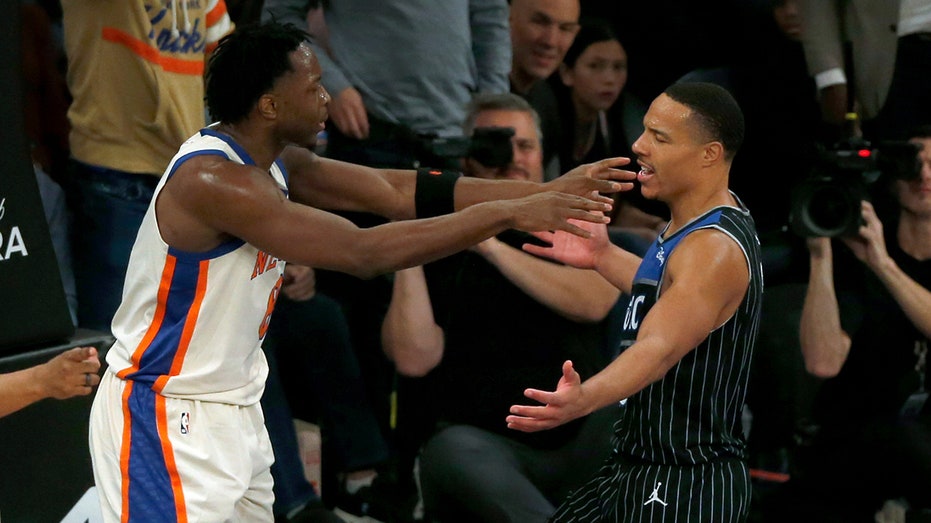
On the surface, Desmond Bane rifling a ball into OG Anunoby’s torso as he lay out of bounds is a strange but isolated NBA moment—technical foul, brief flare-up, postgame hug, end of story. Underneath, it’s a snapshot of a league walking a narrowing line between hyper-competitive edges, escalating frustration, gambling-fueled scrutiny, and an evolving culture of player-to-player respect.
This wasn’t a playoff game, a rivalry, or a season-defining sequence. Yet it lit up social media, talk shows, and fan discourse, not because of the scoreboard impact, but because of what it revealed about how we expect NBA players to behave—and what happens when those expectations collide with real-time emotion.
The bigger picture: When ‘heads-up plays’ turn into flashpoints
What Bane did has roots in basketball logic. For decades, players have been taught a simple trick: if you’re under pressure near the sideline, you can save possession by firing the ball off an opponent who’s out of bounds or not expecting it. It’s a standard play at every level—from high school gyms to the NBA.
Historically, there are plenty of precedents:
- Players routinely bounce the ball off a defender’s legs to avoid turnovers near the baseline.
- In the 1990s and 2000s, physical plays—hard fouls, body checks, even some borderline cheap shots—were normalized as part of a “tough” identity.
- Only the most egregious incidents, like Chris Paul’s low blows or Draymond Green’s kicks, turned into bigger narratives about intent and sportsmanship.
The difference here is not purely the act, but the context: Anunoby was already down and out of bounds. Bane had secure possession and wasn’t trapped. This wasn’t a bang-bang desperation play to save a possession; it looked more like a frustrated, unnecessary decision, even if it technically aligned with the rules about who the ball went out on.
That’s where the disconnect lies. The rulebook logic says: ball off Anunoby, Magic ball. The cultural logic of today’s NBA says: hitting a prone player with the ball crosses an unwritten line.
What this really means: The unwritten rules and ‘respect economy’ of today’s NBA
Modern NBA players compete in what might be called a respect economy: reputations, relationships, and perceived intent matter as much as the literal action. The hug between Bane and Anunoby after the game wasn’t a throwaway gesture—it was a reputational reset in real time.
Several deeper dynamics are at play:
1. The league’s image: physicality vs. control
The NBA has spent the last decade tightening up on flagrant fouls, bench-clearing altercations, and anything that resembles a fight. After the Malice at the Palace (2004), the league went into image-protection mode, adding stricter penalties for aggressive behavior and fighting. While Sunday’s incident is nowhere near that level, it lives along the same continuum: the league wants intensity, not hostility.
Bane’s technical foul wasn’t just about the ball; it was about the message: you can’t escalate physicality in ways that feel retaliatory or disrespectful, even if the play is technically legal.
2. Player fraternization and conflict management
In the 80s and 90s, grudges often lasted years. Today, we routinely see opponents train together in the offseason, share agents, and potentially become future teammates given the fluidity of free agency. That changes how conflicts are handled.
Anunoby’s immediate shove and Bane’s technical fit the emotional moment. But the postgame hug matters just as much. It signaled to the league, fans, and media: this is handled; don’t blow it up into a long-term feud.
3. The camera age: every moment is a narrative
A borderline play in the 1990s might get a replay on SportsCenter and disappear. In 2025, it becomes a viral clip replayed thousands of times, slowed down, memed, and dissected on podcasts. That amplifies pressure on both players and the league to react, explain, and perform contrition when necessary.
The fact that this sequence—a single out-of-bounds situation in a regular-season game—became a talking point shows how fragile the line is between competitive edge and perceived malice in the modern NBA.
Expert perspectives: Sportsmanship, frustration, and optics
Sports psychologists and former players increasingly argue that these moments are rarely about the specific play and more about accumulated stressors: minutes load, injuries, expectations, and the hyper-visible nature of today’s NBA.
Desmond Bane is known as a tough, competitive guard, not a dirty player. That matters. In the absence of a history of malicious acts, most players and coaches will treat this as a poor decision in the moment, not a character indictment. The NBA ecosystem is constantly sorting behavior into these categories: “heat of the moment” vs. “this is who he is.”
OG Anunoby’s response also shaped the interpretation. He pushed Bane, clearly upset, but didn’t escalate further. Postgame, the hug reframed the incident: this was a moment, not a war.
Data & evidence: Why these moments resonate now
Several broader trends help explain why this seemingly small incident drew outsized attention:
- Technical fouls and league control: The NBA has made a point of quickly penalizing gestures and actions that hint at escalation—taunting, ball slams near opponents, and overt emotional outbursts. Technical fouls for non-basketball gestures have steadily increased over the past decade as part of a control-first officiating philosophy.
- Gambling and micro-moments: With legal sports betting expanding and in-game props becoming mainstream, every possession matters more financially to fans. That raises the emotional temperature around even minor plays. The article itself sits adjacent to a link about a Hall of Famer warning of a “crisis” in sports gambling—a reminder that the stakes of tiny moments are no longer purely emotional or competitive.
- Injury context and team pressure: The Magic losing Franz Wagner to a lower left leg injury in the first quarter is not disconnected from the emotional tone of the game. Wagner, averaging 23.4 points per game, is central to Orlando’s offense. A team dealing with a sudden major injury often plays under a cloud of frustration, urgency, and anxiety. That atmosphere can shape how players react to contact and borderline plays.
What’s being overlooked: The intersection of frustration, injuries, and identity
The mainstream highlight is the ball-to-body moment. What’s largely missing is how this incident fits into Orlando’s broader story:
- The Magic are trying to establish themselves as a serious Eastern Conference presence, built around a young core. Losing Wagner, even temporarily, stresses that trajectory.
- Close losses like 106–100 to a Knicks team led by Jalen Brunson (30 points, 9 assists) and supported by OG’s 21 and Josh Hart’s 17 and 12 only deepen the sense of a missed opportunity.
- In that context, Bane’s decision may be less about animosity toward Anunoby and more about an outlet for accumulated frustration in a game that suddenly became much harder without a key scorer.
There’s also a subtle identity struggle: teams like Orlando, still forming their competitive identity, often lean into physical, edgy, high-effort basketball. The risk is that their competitive edge occasionally spills into questionable moments that the league will quickly punish.
Looking ahead: How the NBA will quietly process this
There likely won’t be a suspension or major disciplinary fallout from this single play. But there are several ways this incident could shape the near future:
- Officiating emphasis: Expect referees to be even quicker to call technicals on ball-related gestures that feel targeted or aggressive—like firing the ball near or into an opponent after the whistle or when they’re on the ground.
- Coaching points: Coaches will use this clip as teaching tape: you can be smart with the ball, but not at the expense of optics and sportsmanship. Saving a possession isn’t worth a technical foul or potential ejection in a close game.
- Player dialogue: Behind the scenes, veterans and union reps will have ongoing conversations about lines of acceptable physicality. Moments like this help refine the unwritten norms in the locker room: what’s okay, what’s “too much,” and how to de-escalate.
- Media framing of physical plays: As more of these borderline events become viral content, we’ll likely see a renewed debate over whether the NBA is becoming too soft, or appropriately protective of players.
The bottom line: A small play with outsized symbolic weight
Bane’s decision to launch the ball at a downed OG Anunoby was technically explainable but culturally misaligned with where the NBA is today. The immediate technical foul and the quick postgame reconciliation captured the dual nature of modern basketball: intensely physical but heavily policed, emotional but image-conscious, hyper-competitive but built on a growing ethic of mutual respect.
The real story isn’t whether this was dirty or just dumb; it’s how thin the margin has become between hard-nosed and out-of-bounds—in a league where every act is slowed, replayed, and judged by millions, and where one impulsive decision can briefly redefine a player’s narrative.
Topics
Editor's Comments
What makes this incident worth deeper attention is not the act itself, but how quickly everyone involved worked to contain its narrative impact. The technical foul, the shove, the hug—those are three distinct stages of conflict management in a hyper-mediated league. The NBA, players, and even broadcasters now operate with a constant awareness that any isolated frame can become emblematic of larger culture-war arguments about ‘softness’ versus ‘thuggery.’ Bane and Anunoby resolving things on the court is as much a media-savvy move as a human one. It preempts the multi-day debate cycle that often follows ambiguous physical plays. The more interesting question is whether this kind of reputational self-policing ultimately reduces genuine rivalries and emotional honesty—or whether it’s simply the cost of doing business in a sport that has become both a global entertainment product and a gambling platform with billions at stake.
Like this article? Share it with your friends!
If you find this article interesting, feel free to share it with your friends!
Thank you for your support! Sharing is the greatest encouragement for us.