‘Go Out Hitting’: What Jaxson Dart’s Treatment Reveals About the NFL’s Concussion Paradox

Sarah Johnson
December 18, 2025
Brief
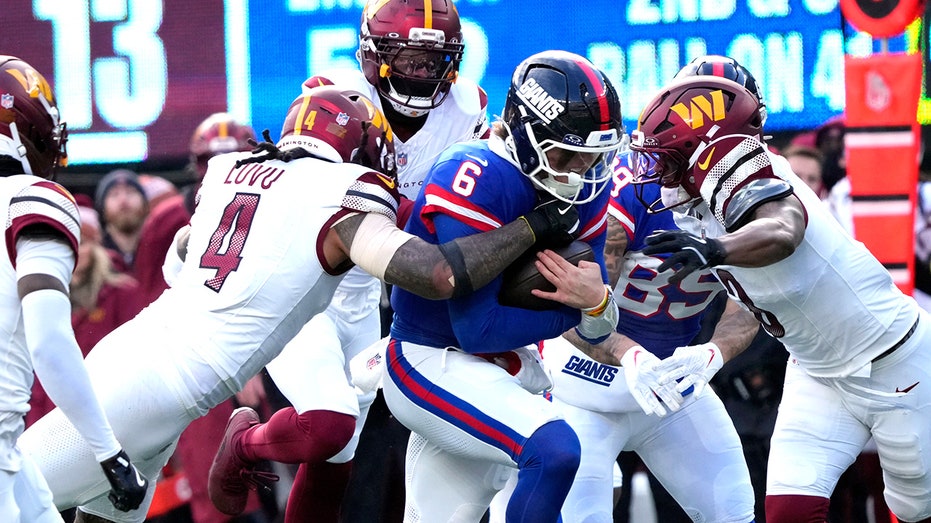
Jaxson Dart’s clash with Washington’s “go out hitting” strategy exposes the NFL’s deeper concussion paradox around dual-threat quarterbacks, risk incentives, and how much player safety has really changed.
Jaxson Dart, ‘Go Out Hitting,’ and the NFL’s Quiet Concussion Contradiction
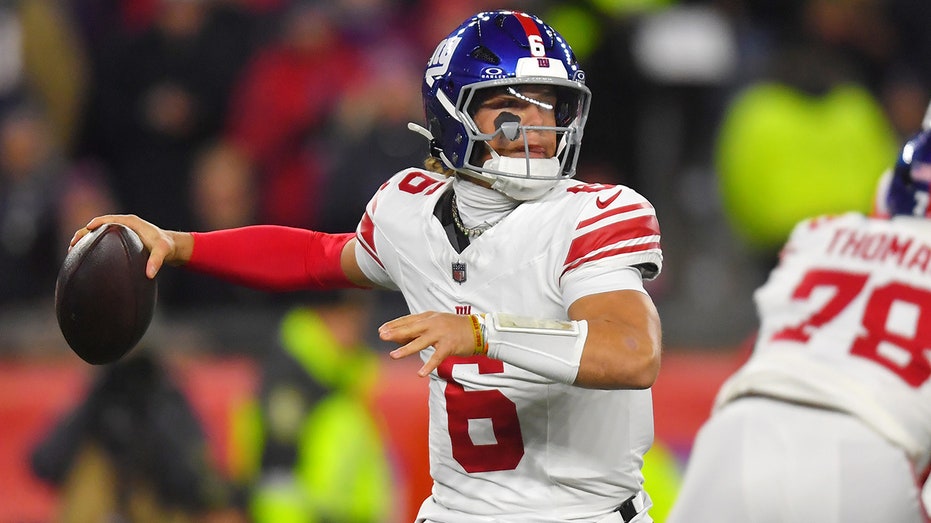
When a head coach is caught on national television telling his defense to “go out hitting” a rookie quarterback who has already been checked for five concussions since preseason, it’s more than a game-plan soundbite. It’s a window into the NFL’s central contradiction: a league that has spent a decade marketing player safety while still rewarding the most violent edges of the sport.
Jaxson Dart’s reaction — essentially, this is nothing new, I’ve heard it from Kirby Smart, Nick Saban, everybody — is equally revealing. It shows how deeply normalized this risk calculus has become for dual-threat quarterbacks, from the SEC to the NFL. Dart isn’t shocked; he’s fluent in the language of being treated like a running back with a quarterback’s job description.
That’s the real story behind the clip from “Hard Knocks.” Not that Washington wanted to hit Dart. They’re supposed to hit Dart. It’s about how close this rhetoric skates to the line between legitimate, physical football and something that looks disturbingly like targeted exploitation of a known medical vulnerability.
The bigger picture: Quarterbacks, mobility, and violence as strategy
The NFL has been moving toward dual-threat quarterbacks for more than a decade. From Cam Newton to Russell Wilson, Lamar Jackson, Josh Allen, Jalen Hurts, and now younger players like Dart, mobility is no longer a bonus — it’s a core trait.
Historically, the league’s rules and culture divided players into two categories:
- Protected assets: pocket passers who live behind strict roughing-the-passer rules, and
- Exposed runners: ball carriers, regardless of position, treated as fair game once they leave the pocket or tuck the ball.
Dart lives in the gray zone. Washington’s staff spelled that out clearly on camera:
- Dan Quinn: “When he’s out here, he is a running back first… He is not looking to go down and get in the slide. We got to go out hitting, fellas.”
- Joe Whitt Jr.: “He will try to run you over… He doesn’t slide a whole bunch. We can get the ball off of him.”
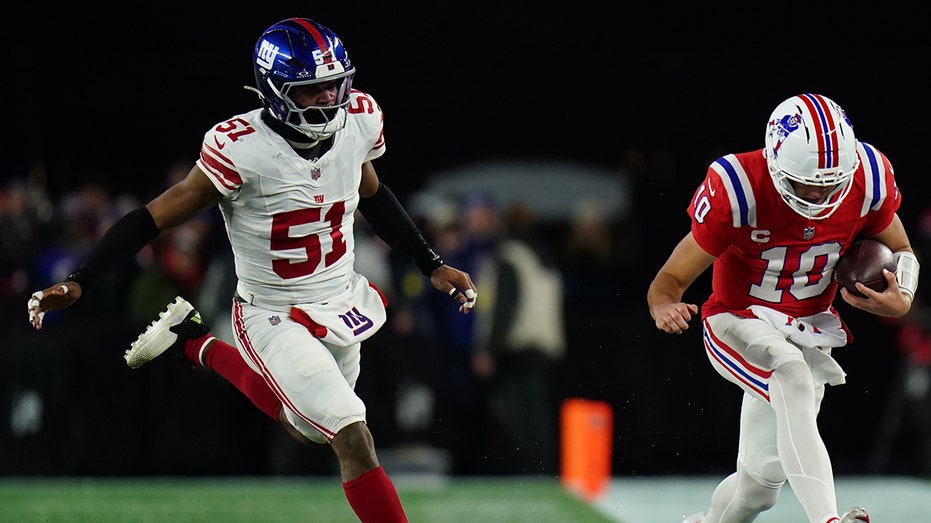
This is classic defensive coaching language: treat the quarterback like a runner when he plays like a runner; attack his aggressiveness; separate him from the ball. But in Dart’s case the context is different: a rookie with multiple recent concussion evaluations and one confirmed concussion before his first full NFL season is even underway.
That context matters, because it blurs the line between a legitimate tactical read (“he doesn’t slide, so finish your tackles”) and exploiting a known medical risk (“this guy has a concussion history, and he won’t protect himself, so make him pay”). What the cameras captured isn’t new, but the visibility is.
Why Dart’s concussion history changes the calculus
Dart’s situation is unusual in two ways:
- The volume and timing of head impacts: Being checked for five concussions and diagnosed with one before the end of his rookie season is a red flag from a neurological standpoint. Studies have shown that repetitive sub-concussive blows – not just diagnosed concussions – are strongly associated with long-term cognitive decline.
- His playing style is central to his value: Dart has 400 rushing yards on 80 carries with seven touchdowns. That’s not a side dish; it’s central to his role and the Giants’ offense. Asking him to fundamentally alter his style is not a small tweak — it’s asking him to become a different player.
That tension — between self-preservation and career value — is why his dismissive response is so telling. When he says this is nothing new, he’s signaling that the entire system from college to the pros runs on this bargain: if you’re a dual-threat quarterback, you must both embrace danger and downplay its consequences to be taken seriously as a competitor.
What’s really being said in the Commanders’ meeting rooms
Stripped of football jargon, Washington’s defensive meetings were essentially about three things:
- Physical intimidation: Emphasizing that Dart tries to run defenders over is a challenge to their pride. It invites them to physically assert dominance and discourage him from running as the game wears on.
- Turnover creation: “We can get the ball off of him” reframes Dart’s aggressive running as a ball security vulnerability, not a brain health concern. The incentive is not to injure him, but to strip the ball. The problem is: the mechanics of hitting to dislodge the ball and the mechanics of high-velocity contact that increases concussion risk are often identical.
- Rule-based justification: By repeatedly calling him a running back when he’s outside the pocket, the coaches are reminding players they have more legal leeway. It’s a way of saying: hit him as hard as the rules allow.
The NFL has always functioned this way: violence is regulated, not removed. But Dart’s concussion history makes that regulatory framework look inadequate. The league’s rules handle where and how you can hit a quarterback. They don’t account for who is more neurologically vulnerable based on prior injury.
Expert perspectives: Risk, rhetoric, and responsibility
Sports neurologists and player-safety researchers tend to see these situations differently than coaches and players.
Multiple clinical reviews have suggested that a history of concussions is associated with increased susceptibility to future concussions, often with less force required. The NFL’s own 2017 study estimated that players who had one concussion were more likely to sustain another, and those with multiple concussions faced greater long-term risks, including depression and cognitive impairment.
In other words, a player like Dart is not just another mobile quarterback; he’s somebody whose brain may already be on a shortened clock, even if he feels fine and clears protocols.
At the same time, retired players and coaches will point out a different reality: you can’t run a defense that treats a known starter like fragile glass because of his injury report. Defensive game plans are built on stress-testing the opposing team’s most valuable assets — the quarterback, the left tackle, the ballcarrier who moves the chains. If a quarterback’s value is tied to his legs, the defense will attack his legs, his leverage, and his decision to stay upright after contact.
That’s the ethical gap the league hasn’t closed: medically, some players are more vulnerable; culturally and competitively, all starters are targets.
Why Dart’s attitude is both admirable and alarming
Dart’s response — referencing Kirby Smart, Nick Saban, and other college coaches who said the same thing about him — serves two purposes:
- Public toughness: He’s telling teammates, coaches, and fans that he’s not rattled by the idea of defenses “going out hitting.” In a league where availability and perceived toughness affect contracts, that’s understandable.
- Normalization of risk: By framing this as typical and expected, he implicitly signals that repeated concussion checks are just part of the job, not a structural problem that demands change.
That’s where the alarm bells ring. The league’s entire concussion protocol apparatus is built on the idea that concussions are serious, deserve careful monitoring, and should trigger conservative decisions. But when a rookie can credibly say “this is nothing new” about being targeted as a runner despite repeated head checks, it raises a bigger question: how much of the safety system is medical, and how much is PR layered over a largely unchanged football culture?
Overlooked angles: incentives, contracts, and play-calling
Much of the public debate focuses on rules — targeting, roughing the passer, sliding, and so on. But three quieter forces matter just as much:
1. Contract structures
Rookie quarterbacks, especially those whose value is tied to their running, often have little leverage to push back against how they are used. They’re trying to prove they belong. If the coaching staff leans into QB runs and option concepts, a young player risks being labeled as soft or uncoachable if he resists or starts sliding early and often.
2. Play design and coaching philosophy
Teams can dial down or dial up exposure. Designed QB power runs, read-options, and RPO keepers inherently increase hits on the quarterback. The Giants’ willingness to lean on Dart’s legs — 80 carries already, with seven TDs — suggests a strategic choice: they’re trading long-term health for short-term offensive production in a league where coaches are judged week-to-week.
3. Defensive reputations and league-wide copycat behavior
Once one staff is seen on a national stage saying “he’s a running back first,” others will echo that language. If Washington had success by being especially physical with Dart, expect future opponents — like the Vikings, mentioned in the original report — to borrow that template. That compounds the risk over the course of a season.
Looking ahead: What this means for Dart, the Giants, and the league
In the short term, the incentives are clear. Dart’s running ability is a major part of the Giants’ offense, evidenced by his rushing production and red zone impact. As long as he’s effective, coaching staffs will keep using him this way, and defenses will keep trying to make him pay for it between the tackles and along the sideline.
Medium term, three things bear watching:
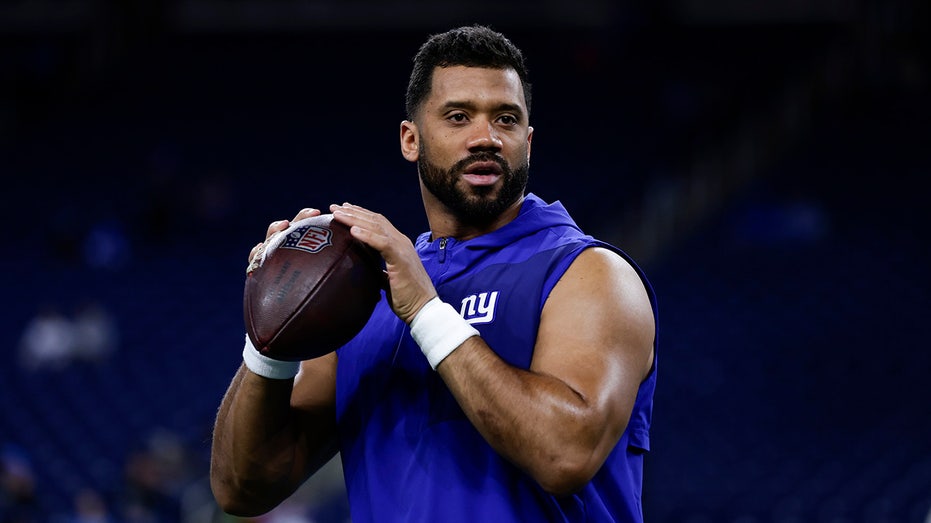
- Sliding and self-protection habits: If the hits accumulate and the concussion checks continue, does Dart adapt? Do we start seeing film breakdowns highlighting improved sliding, stepped-out-of-bounds decisions, and fewer head-first finishes? Quarterbacks like Russell Wilson extended their careers by making those adjustments; others, like Cam Newton, never fully did and paid a physical price.
- Organizational philosophy: The Giants’ front office and coaching staff will quietly have to ask: are we comfortable with this level of exposure for a cornerstone player? Do they shift to more quick-game passing, more running back carries, and fewer designed QB runs to preserve Dart, or do they double down?
- League-wide scrutiny: If another high-profile concussion or scary hit occurs involving Dart (or any similar dual-threat QB), expect renewed attention on how teams talk about and game-plan against players with known concussion histories. The “Hard Knocks” clip could become Exhibit A in a broader debate about whether the league needs new protections or guidelines.
Long term, this episode underscores a structural question the NFL hasn’t fully answered: can a league that increasingly relies on dual-threat quarterbacks protect them at the level their economic and competitive importance demands, without fundamentally altering the nature of the sport?
The bottom line
Dart’s exchange with the Commanders’ rhetoric isn’t just a spicy pregame subplot; it’s a case study in the NFL’s unresolved concussion paradox. A rookie quarterback with a concerning early head-injury profile is simultaneously the engine of his offense, a magnet for defensive punishment, and the face of a league that claims to be safer than ever.
The Commanders’ plan to “go out hitting” and Dart’s shrugging response are two sides of the same cultural coin. Until the incentives, schemes, and rhetoric around dual-threat quarterbacks change, the league will continue to live in this space — where concussion protocols are more sophisticated than ever, but the most important players on the field are still rewarded for playing as if they’re indestructible.
Topics
Editor's Comments
What stands out most in this story isn’t that Washington’s coaches told their defense to hit a mobile quarterback hard — that’s the sport as it’s been coached for generations. The revealing part is how quietly the concussion context gets sidelined once strategy is on the table. Dart’s history of head trauma is treated as background color in coverage, not as a central variable in how he’s used by his team or targeted by opponents. This mirrors a broader trend: the NFL’s safety revolution has been largely procedural (better protocols, more spotters, high-tech helmets) rather than structural (rethinking how high-risk roles like dual-threat quarterbacks are coached and incentivized). The uncomfortable question the league still hasn’t answered is whether it’s willing to sacrifice any entertainment or tactical advantage to meaningfully reduce exposure for its most vulnerable stars, or whether the true expectation is that young players like Dart will simply absorb the risk as part of the bargain for stardom.
Like this article? Share it with your friends!
If you find this article interesting, feel free to share it with your friends!
Thank you for your support! Sharing is the greatest encouragement for us.