Heathrow Pepper-Spray Robbery Exposes a Dangerous Blind Spot in Airport Security

Sarah Johnson
December 8, 2025
Brief
Heathrow’s pepper-spray robbery reveals a deeper problem: airports are hardened against terrorism but exposed to ordinary crime that can quickly become mass-casualty events. Here’s what security planners are missing.
Heathrow Pepper-Spray Robbery Exposes a Growing Weak Spot in Airport Security
On its face, the pepper-spray robbery at Heathrow’s car park looks like an isolated, ugly dispute that spiraled out of control: a stolen suitcase, 21 people injured, including a 3‑year‑old, and hours of delays. But the details point to something larger and more troubling: a structural blind spot in how major airports think about security, the blurring line between ordinary crime and mass-casualty risk, and the psychological fragility of travel systems still living in the long shadow of terrorism.
What happened at Heathrow is not just about one argument in an elevator. It’s about where airports are investing their security resources, how criminals are adapting, and why the next incident like this might not be so easily dismissed as “not terrorism.”
From Hijackings to Car Parks: How Airport Threats Have Shifted
For more than two decades, airport security in the UK and globally has been built around preventing a specific kind of catastrophe: hijackings, bombings and large‑scale terror attacks on aircraft. Billions have gone into passenger screening, explosive detection, and intelligence sharing.
But the Heathrow incident — like a growing number of events in landside areas (zones outside the secure airside perimeter) — highlights a mismatch between where the threat is perceived and where people are actually vulnerable.
Several points of context matter here:
- Landside vulnerability is a known problem. After attacks targeting airport check‑in areas in Brussels (2016) and Istanbul (2016), security experts repeatedly warned that the “soft zones” — entrances, drop‑off points, parking garages — are high‑density, low‑protection spaces.
- Most crime at airports is not terrorism. British and European data show that theft, fraud, and interpersonal violence vastly outnumber terror incidents, even at strategic hubs like Heathrow. Yet these crimes can still cause mass disruption and trauma.
- Crowd psychology is a force multiplier. In any airport, an irritant spray, a loud noise, or a visible police response with long guns can cascade into panic, stampedes, and injuries that far exceed the original incident.
This is why a robbery that begins as a targeted dispute between people “known to each other” can rapidly become a system-level event. Once pepper spray is released in a crowded, enclosed elevator and surrounding area, the line between a personal conflict and a public safety crisis disappears.
Why a Pepper-Spray Robbery Matters More Than It Seems
Three elements of this incident stand out for their wider significance:
- The use of chemical irritants in a confined public space. Pepper spray is widely viewed as a self‑defense tool, but in a crowded airport structure it behaves more like a crowd-control weapon. Twenty‑one casualties, including a toddler, demonstrate how quickly a “non‑lethal” substance can escalate into a mass‑exposure event.
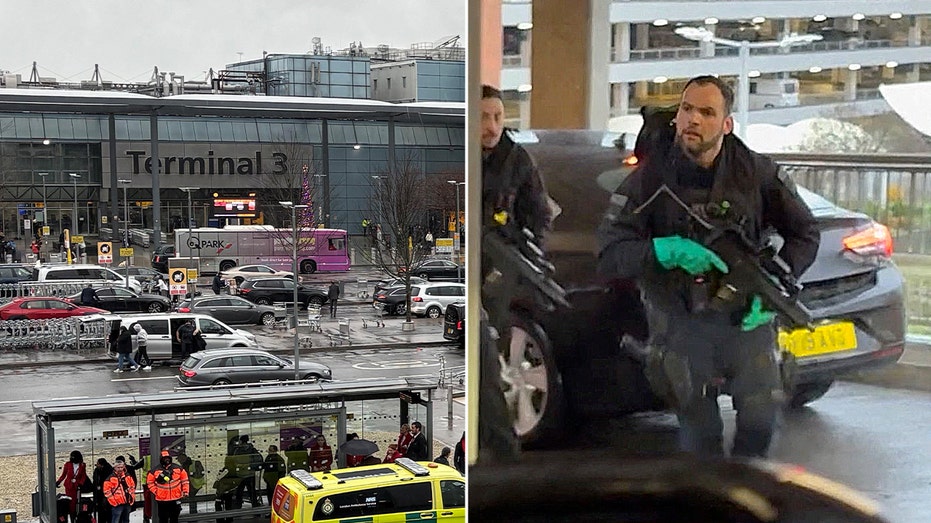
- The setting: an airport car park in a high‑alert environment. Airports are not normal public spaces. Every disturbance is instantly filtered through the lens of terrorism. The sight of armed officers rushing through a garage with long guns reinforces both public fear and the reality that any serious incident is treated as a potential mass threat until proven otherwise.
- The friction between crime classification and public perception. Police moved quickly to state that this was not terrorism. Operationally, that matters. Psychologically, it changes little for passengers who experienced a sudden chemical exposure, emergency response, and extended delays. For them, the distinction between “terrorism” and “violent crime involving 21 victims” is academic.
In other words, the Heathrow attack exposes how dependent our sense of safety is on narrow legal definitions, while our actual vulnerability is shaped by the crowded, high‑value environments we’ve built.
The Overlooked Risk: Ordinary Disputes in Strategic Places
Authorities have said the victim and suspects knew each other and that an argument escalated. That detail may cause the story to fade quickly from headlines, but it should instead trigger deeper scrutiny.
The security model at most major airports implicitly assumes that the greatest risk comes from ideologically motivated, externally organized attackers. Yet in recent years, a different pattern has emerged:
- Disputes and domestic conflicts spilling into public transport hubs. In the UK and elsewhere, police have reported rises in assaults and domestic‑related incidents on trains, buses, and at stations.
- Criminal groups exploiting transitional spaces. Car parks, elevators, and connecting walkways are prime targets for opportunistic theft because travelers are distracted, holding luggage, often jet‑lagged, and less aware of exits or escape routes.
- “Known to each other” does not mean “low risk.” Interpersonal conflicts involving weapons or irritants can be just as disruptive in a crowded environment as a politically motivated attack, even if the intent is narrower.
This is the blind spot: when a high‑risk environment like an airport intersects with very ordinary human conflict, the system treats it as minor crime, but the consequences can look a lot like a security incident.
Expert Perspectives: Security, Criminology, and Public Health
Security specialists, criminologists, and emergency medicine experts would interpret Heathrow’s pepper‑spray robbery through significantly different lenses, but their conclusions converge on a similar warning: the system is not designed for this kind of blended risk.
Dr. Lucia Zedner, a criminology professor at the University of Oxford, has long argued that “security architectures built around extraordinary threats often leave societies under‑prepared for the far more frequent, mundane harms that occur at the same sites.” Heathrow’s incident fits that pattern: massive capacity to prevent explosives getting onto planes, but far thinner layers of protection against a canister of irritant spray in a parking elevator.
From a security operations standpoint, experts like former counter‑terror policing lead Sir Mark Rowley have previously emphasized that the UK’s “protective security” must adapt to “any hostile actor,” not simply terrorists. Criminal groups or angry individuals wielding weapons in crowded places can trigger emergency responses almost indistinguishable from those for terror threats.
Public health specialists add another dimension. The mass exposure of 21 people, including a very young child, raises questions about how well first responders are equipped and trained for chemical irritant incidents in tight, poorly ventilated spaces. Rapid triage, decontamination, and communication are critical to avoid secondary harm — for instance, patients leaving the scene while still contaminated and spreading the irritant to vehicles or enclosed terminals.
Data Points: What We Know About Crime and Airports
While comprehensive global data on airport crime is sparse, several trends and statistics provide context:
- Growing passenger volumes, growing exposure. Heathrow handles around 80 million passengers a year in pre‑pandemic conditions. Even small increases in crime rates translate into high absolute numbers when so many people pass through a single hub.
- Two‑tier security. Studies of transport hubs in Europe have found that resources are heavily concentrated on airside security, while landside spaces — especially remote car parks — rely more on CCTV and occasional patrols than on visible, proactive policing.
- Weapons and irritants. UK law tightly controls pepper spray, treating it as a prohibited weapon. Yet seizures of illegal sprays and similar devices have risen over the last decade, according to Metropolitan Police weapons operations data.
None of this proves that airports are becoming crime hotspots, but it does underline how even one incident can ripple through the system: twenty‑one casualties, hospitalizations, a visible armed response, and hours of disruption from a single canister of spray and one suitcase.
How This Changes the Conversation on Airport Security
The reaction to this incident will likely follow a familiar pattern: a brief spike of concern, a police reassurance that terrorism was not involved, and a rapid return to business as usual. That would be a missed opportunity.
There are several deeper implications worth watching:
1. Rethinking Landside Security as a Public Space Issue
Heathrow’s car parks are both part of a critical national infrastructure and ordinary public spaces where people meet, argue, and commit opportunistic crime. This dual nature is often ignored in security planning.
Instead of treating car parks as peripheral, they need to be integrated into the core security concept of operations: better lighting, clearer sight lines, real‑time monitoring of enclosed areas like elevators, and rapid response protocols for chemical exposure or crowd panic.
2. The Blurring Line Between Crime and Terror
Authorities were quick to assert that this was not terrorism. That distinction matters for legal frameworks, political messaging, and resource allocation. But for risk management, the boundary between a criminal attack with 21 victims and a terror incident is thin.
The same systems — emergency medical response, passenger communication, traffic management — are stressed in both scenarios. A mature security approach needs to focus less on the motive and more on the capacity for harm in crowded, critical spaces.
3. Communication, Panic, and Public Trust
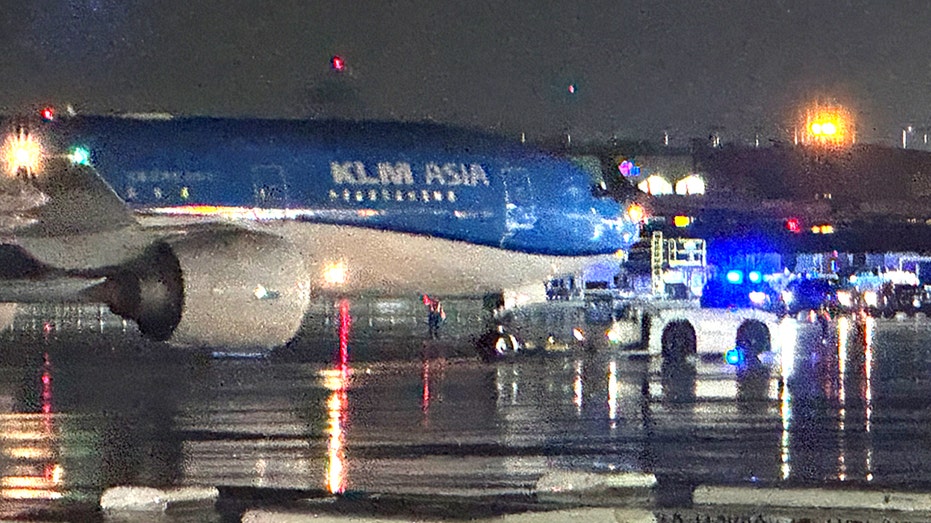
What passengers saw were armed officers with long guns rushing into a parking structure, ambulances treating victims, and services delayed for hours. In an era of viral video clips, that visual is likely to spread far beyond the UK.
For airports, the challenge is balancing rapid, transparent communication with the need to avoid fueling panic. Passengers increasingly expect real‑time updates via apps, social media, and in‑terminal announcements — not hours of uncertainty and rumor.
What Needs to Change: Practical and Policy Implications
If we take this incident seriously as a warning, several shifts become urgent rather than merely desirable:
- Integrated risk assessments. Airport security audits should explicitly include scenarios involving criminal use of chemical irritants, bladed weapons, or firearms in car parks and other landside areas, regardless of motive.
- Designing out vulnerability. Simple environmental design changes — more transparent elevator walls, fewer blind spots, better signage, clearly marked emergency exits — can reduce the opportunity for both theft and mass exposure.
- First responder training for chemical irritants. Ambulance and police teams that cover airports should have dedicated protocols and equipment for rapid decontamination and child‑specific care after irritant exposure.
- Data‑driven policing. Systematic tracking of crimes in and around airports — from petty theft to serious assaults — can help allocate resources where risk is actually concentrated rather than where it is traditionally imagined to be.
Without these changes, incidents like the Heathrow pepper‑spray attack will continue to be filed away as anomalies, even as they quietly reveal systemic weaknesses.
Looking Ahead: What to Watch
Several questions will determine whether this story marks a turning point or becomes another forgotten scare:
- Will Heathrow and the Metropolitan Police publish lessons learned? Transparency about what worked and what failed in the response would signal a willingness to adapt.
- Will there be visible changes in car park security? More patrols, better cameras, or redesigned spaces in the coming months would show that landside risks are being taken seriously.
- Will regulators broaden their focus? Aviation and transport regulators may need to update standards to explicitly address non‑terror mass‑casualty risks in airport public areas.
- Will travelers’ behavior change? Awareness of these vulnerabilities could push more people toward official taxis, airport hotels, or escorted parking — and could influence how families with young children navigate airport infrastructure.
The Bottom Line
A 3‑year‑old choking on pepper spray in a Heathrow elevator is not just collateral damage from a petty crime. It’s a stark illustration of how vulnerable we are in the most controlled environments we’ve built, and how our security systems still privilege spectacular, rare threats over the messy, everyday conflicts that can be just as disruptive in the wrong place at the wrong time.
Until airports and policymakers treat landside crime as a serious security and public‑health issue — not a distraction from the “real” work of counterterrorism — incidents like this will keep catching us off guard.
Topics
Editor's Comments
What’s most striking about the Heathrow pepper-spray incident is how quickly it was rhetorically downgraded once the label “not terrorism” was applied. That’s politically convenient—it reassures the public and protects broader narratives about airport safety—but analytically it misses the point. Twenty-one people harmed, including a toddler, in a critical transport hub is not a minor event, whatever the motive. The fact that this arose from a dispute among people who knew each other should worry us more, not less, because it suggests the system is vulnerable to the most common kind of violence rather than the rarest. The real question is whether we can redesign security thinking to be motive-agnostic: to focus on what can cause serious harm and disruption in crowded spaces, and to treat a can of pepper spray in a car park with the same strategic seriousness that we devote to far more exotic threats at the checkpoint. Until that shift happens, our security model will remain impressive on paper but brittle in practice.
Like this article? Share it with your friends!
If you find this article interesting, feel free to share it with your friends!
Thank you for your support! Sharing is the greatest encouragement for us.