Iran’s Missile Drills Near Persian Gulf: Unpacking the Strategic Signals and Regional Stakes

Sarah Johnson
December 6, 2025
Brief
In-depth analysis of Iran's missile drills near the Persian Gulf reveals strategic signaling, regional power dynamics, and implications for global energy security beyond headline news.
Iran's Missile Drills in the Persian Gulf: A Strategic Signal Amid Regional Turbulence
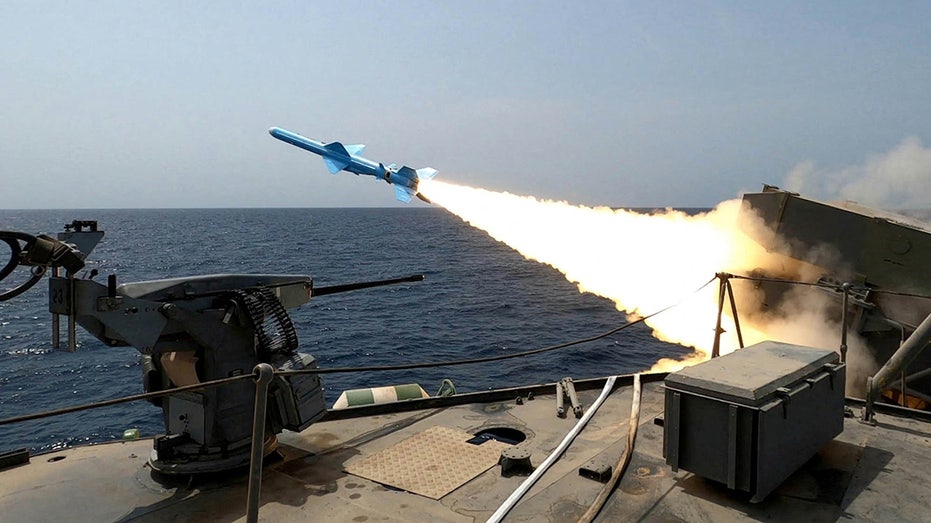
Iran’s recent ballistic and cruise missile exercises near the Persian Gulf are a vivid demonstration of Tehran’s intent to solidify its deterrence posture in a region simmering with unresolved conflicts and strategic rivalries. Conducted by the Islamic Revolutionary Guard Corps (IRGC) Navy, these drills come in the wake of a brutal war with Israel that devastated Iranian military key assets and fueled an accelerated military buildup. Far from mere displays of force, these exercises illustrate broader geopolitical dynamics influencing Iran’s military doctrine, regional power projection, and global energy security.
The Bigger Picture: Historical and Strategic Context
The Persian Gulf and the Strait of Hormuz have long been focal points of geopolitical tension—owing largely to their status as chokepoints for global oil shipments. Roughly 20% of the world’s oil transits through this narrow strait, making it a flashpoint that can rapidly escalate wider economic and security crises if disrupted. Iran’s geographic proximity to this corridor allows it to exert outsized influence on maritime security and global energy prices.
The Revolutionary Guards’ thrust to conduct missile launches targeting simulated threats in these waters follows a distinct pattern shaped by decades of strategic competition with the United States and regional rivals, principally Saudi Arabia and Israel. Tehran’s ongoing threats to close the Strait of Hormuz in past crises underscore how it leverages maritime geography for strategic leverage. The IRGC, established post-1979 revolution as a parallel military force to Iran’s regular army, has specialized in asymmetric warfare tactics, notably deploying small fast boats and missile capabilities to challenge larger naval powers in confined waters.
This drill—only the second since the intense Israel-Iran conflict months earlier which resulted in extensive casualties on both sides including high-profile Iranian nuclear scientists—reflects Iran’s drive to rapidly recuperate and surpass its pre-war military capabilities. The reported missile launches of the Qadr series—Qadr 110, 380, and 360—are consistent with Iran’s increasing emphasis on ballistic and precision cruise missile technology that extends its reach beyond immediate borders.
What This Really Means: Iran’s Evolving Deterrence and Regional Ambitions
These missile drills highlight several critical shifts in Iran’s strategic posture. First, they underscore a move from reactive defense toward more proactive power projection. By showcasing sophisticated missile strikes near critical maritime zones, Iran signals it possesses credible conventional deterrent capabilities capable of complicating any naval intervention from adversaries.
Second, the mixed use of ballistic and cruise missiles reveals advancements in Iran’s missile technology, enabling more versatile engagement options. Cruise missiles can be stealthier and more precise, evading missile defenses, while ballistic missiles offer longer range and heavier payloads. This dual-capability approach complicates enemy countermeasures, providing Tehran with tactical flexibility in conflict scenarios.
Third, the drills serve domestic propaganda functions by broadcasting an image of "unwavering spirit and resistance" from the Revolutionary Guard’s naval forces, aiming to bolster national morale and unity amid economic pressures and international sanctions that continue to bite. After the high human toll of the Israel-Iran war, maintaining public support for the military apparatus and its preparedness is a strategic priority.
Expert Perspectives
Dr. Emile Hokayem, a Middle East security expert at the International Institute for Strategic Studies, notes, "Iran’s maritime capabilities, especially missile deployments near the Strait of Hormuz, are designed to deter not only U.S. regional naval forces but also to signal to Gulf Arab states and Israel that Tehran remains a formidable regional actor despite recent setbacks. This dual signaling complicates efforts to stabilize the Gulf security environment."
Naval analyst Rear Admiral (Ret.) Samuel L. Collins adds, "The Revolutionary Guard’s control of the Strait of Hormuz has long been underestimated. These missile exercises demonstrate an integrated approach to combining naval swarming tactics with missile strikes—posing significant risks to freedom of navigation that global maritime powers cannot ignore."
Data & Evidence
- Approximately 20% of the world’s oil supply passes through the Strait of Hormuz.
- Iran's ballistic missile arsenal reportedly includes hundreds of intermediate-range ballistic missiles capable of striking targets across the Middle East.
- The IRGC launched its first naval missile drill in the region only months ago (August 2025), indicating rapid operational tempo.
- The Israel-Iran war in June 2025 resulted in nearly 1,100 Iranian casualties and 28 Israeli deaths from missile attacks, showing the intensity of recent conflict.
Looking Ahead: Regional Stability and Global Implications
Iran’s missile exercises are likely to complicate efforts by the U.S. and its allies to maintain stability in Gulf waters, increasing risks of accidental escalation. Continued Iranian demonstration of anti-access/area deny (A2/AD) capabilities near the Strait of Hormuz could incentivize enhanced naval presence and joint exercises by Gulf Arab states and Western navies, raising the stakes for confrontation.
Energy markets remain vulnerable to these developments—any credible threat to close or disrupt the strait sends ripple effects through global oil prices. As Iran rebuilds and potentially expands its missile arsenal, international stakeholders must weigh diplomatic engagement against deterrence strategies to prevent another cycle of violent clashes in this volatile region.
The Bottom Line
Iran’s recent missile drill is more than a military rehearsal; it is a strategic message of resilience, deterrence, and regional ambition. By deploying a sophisticated mix of ballistic and cruise missiles near one of the world’s vital maritime chokepoints, Iran underscores its capability and willingness to challenge adversaries and influence global energy security dynamics. The delicate balance in the Persian Gulf remains precarious, demanding astute policy responses that blend military preparedness with diplomatic avenues to reduce risks of future conflict escalation.
Topics
Editor's Comments
Iran’s latest missile drills serve as a stark reminder that the Persian Gulf remains a tinderbox with global ramifications. What’s especially notable is how Tehran uses these exercises not just for military readiness but as calculated messaging to multiple audiences—from domestic supporters to regional rivals and international powers. In a post-war environment where Iran claims to have “far surpassed” its pre-conflict missile capabilities, this signals a dramatic acceleration in military modernization that Western policymakers must reckon with. It also raises important questions about how U.S. regional strategy can balance deterrence without provoking a spiral toward wider conflict. The coming months will be critical, as these missile drills may become a norm rather than an exception, requiring nuanced diplomatic engagement alongside military vigilance.
Like this article? Share it with your friends!
If you find this article interesting, feel free to share it with your friends!
Thank you for your support! Sharing is the greatest encouragement for us.