
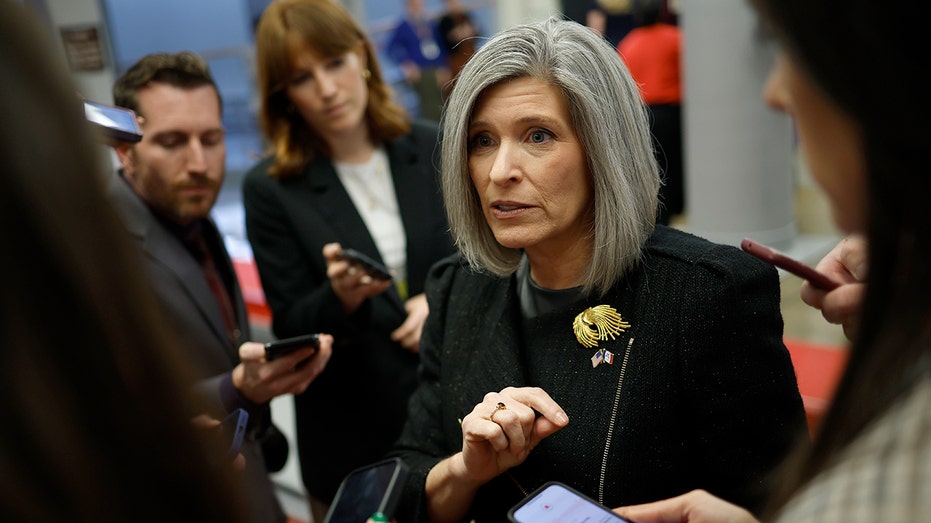
The Real Stakes Behind Joni Ernst’s ‘Where’s WALDO’ Federal Employee Transparency Push

Sarah Johnson
December 18, 2025
Brief
Joni Ernst’s “Where’s WALDO” bill is more than a directory of federal workers. It’s a test of how far transparency should go, and how it may reshape the modern administrative state.
Beyond ‘Where’s WALDO’: How a Federal Employee Directory Could Reshape the Administrative State
The fight over Sen. Joni Ernst’s proposed “Where’s WALDO” Act isn’t really about a website listing federal employees. It’s about who controls the modern administrative state, how transparent government should be in the age of big data, and whether public sector pay and power are drifting out of democratic reach.
On the surface, the bill is straightforward: require the Office of Personnel Management (OPM) to build a public directory of federal employees and contractors, listing names, job titles, duty locations, pay, and start dates. Underneath that simple mandate sit decades of unresolved tensions over privacy, politicization of the civil service, budget accountability, and the ever-expanding reach of federal agencies.
The bigger picture: A very old fight in a very new form
Public disclosure of who works for the government is not a radical concept in itself. The United States has long treated public employment as a public act. The Supreme Court’s 1989 decision in Department of Justice v. Reporters Committee for Freedom of the Press famously articulated a distinction between the privacy of private citizens and the transparency owed by public officials, including many civil servants, when performing public functions.
Most states publish extensive data on public employees, and federal salary information has been partially accessible for years through FOIA-based reporting and pay tables. Yet the current system is fragmented, delayed, and riddled with exemptions. Ernst’s bill attempts to consolidate this information into a single, near-comprehensive, and easily searchable directory.
Historically, changes in civil-service transparency have often accompanied broader political shifts:
- Post-Watergate reforms (1970s) emphasized disclosure and ethics rules aimed at restoring trust in institutions.
- The 1990s and early 2000s saw the rise of e-government and FOIA-based databases, making once-obscure records readily searchable online.
- Post‑9/11 security concerns led to increased redactions and the growth of a shadow ecosystem of contractors whose roles are less visible than those of direct federal employees.
Ernst’s proposal is the latest iteration of this tug-of-war: transparency advocates pushing for real-time, standardized data; security and privacy advocates warning against overexposure; and politicians using the size and cost of the bureaucracy as a proxy battlefield over the role of government itself.
What the numbers tell us—and what they don’t
The Open The Books report that underpins the bill paints a vivid picture: nearly 2.9 million civil service employees, a payroll of roughly $270 billion (plus about 30% for benefits), and almost $1 billion per day in total workforce costs. It highlights that payroll has grown much faster than headcount since 2020, with sharp increases in the number of employees making $200,000–$300,000+.
Those figures raise real questions, but they’re incomplete without context:
- Composition of the workforce: Higher salary bands often reflect growth in specialized fields—cybersecurity, data science, health care, defense acquisition—where the private sector pays aggressively and government must compete.
- Cost vs. value: A billion dollars a day sounds shocking without comparing it to the federal budget (~$6 trillion), the cost of outsourced contracting, or the cost of program failures caused by understaffing or under-qualified staff.
- Inflation and geography: Post‑2020 wage and price inflation, particularly in high-cost metropolitan areas where many federal jobs are located, has pushed salaries upward across the board.
What the Open The Books report does underscore, however, is a transparency gap: hundreds of thousands of redacted names and an opaque contractor ecosystem that has grown for decades. That opacity is where the Where’s WALDO Act aims to strike hardest.
Why this push is happening now
The timing of this bill reflects several intersecting trends:
- Populist skepticism of “the swamp”: For both right-populist and some left-populist constituencies, the “administrative state” has become a symbol of unaccountable power—regulators, rule writers, and program managers who are unelected yet deeply influential.
- Post-pandemic remote work backlash: COVID‑19 normalized telework across the federal government. That shift has fed a perception—fair or not—that some public employees are “missing in action,” especially when agency performance or wait times lag.
- Data transparency norms: The broader open-data movement has primed the public to expect searchable databases for everything from campaign donors to police stops. A centralized federal workforce directory fits that trajectory.
- Escalating fiscal pressure: With debt servicing costs rising and both parties talking (at least rhetorically) about spending discipline, the federal payroll is a tempting political target. Explicit line-item visibility makes it easier to argue that the bureaucracy itself should be “on the table.”
What this really means: Power, privacy, and politicization
A national, name-by-name directory of federal workers and contractors sounds like a transparency upgrade, but it also carries real risks that most headlines gloss over.
1. The accountability upside
A well-designed directory could deliver several tangible benefits:
- Budget oversight: Journalists, watchdogs, and lawmakers could map staffing and pay to program outcomes more easily, flagging duplicated roles, unusual pay spikes, or “phantom” positions.
- Contracting scrutiny: Including contractors would illuminate the ballooning “shadow workforce” that often performs core governmental functions with less transparency than civil servants.
- Policy evaluation: Researchers could track where agencies are investing in expertise (e.g., climate scientists, AI specialists, epidemiologists) and where they are hollowed out.
- Equity and pay fairness: Detailed data enable analysis of pay gaps by gender, race, occupation, and geography, potentially strengthening cases for reform.
2. The chilling effect on the civil service
The same data that enable accountability can also enable retaliation. In a polarized era, line-level career employees working on contentious issues—immigration enforcement, reproductive health policy, gun regulation, voting rights, climate rules—are already facing online harassment and real-world threats. Public directories can become targeting lists.
That concern isn’t hypothetical. School board members, local election workers, and public health officials have all been subjected to doxxing campaigns in recent years. Extending detailed name-by-duty-station disclosure to millions of federal employees risks similar outcomes unless carefully constrained.
There’s also a more subtle risk: employees might become more cautious about working on controversial assignments or whistleblowing against misconduct if they believe their names and work details can be instantly cross-referenced by activists, employers, or future vetting processes.
3. Politicization of hiring and firing
Paired with other efforts to weaken traditional civil-service protections, a comprehensive directory can function as infrastructure for political purges or patronage. Change the rules so more positions are easily terminable, and a searchable database quickly becomes a blueprint for who to remove—and where to insert loyalists.
In that context, transparency isn’t just a neutral tool; it can be a force multiplier for whichever political faction temporarily controls the levers of power.
Expert perspectives: Transparency vs. protection
Scholars and practitioners who’ve spent careers studying the bureaucracy tend to support transparency in principle, but they emphasize the need for guardrails.
Paul C. Light, a long-time scholar of public service, has warned for years that the federal workforce is simultaneously overloaded and hollowed out in key areas. Greater visibility, he argues, could help realign staff toward mission-critical tasks—but only if the goal is capacity-building rather than simple downsizing.
On the privacy and safety side, civil liberties advocates point to case law under the Privacy Act of 1974 and FOIA Exemption 6, which allows withholding personnel and medical files when disclosure would be a clearly unwarranted invasion of personal privacy. The open question is where Ernst’s bill draws the line: Who is fully disclosed? Who is partially redacted? Under what criteria?
Intelligence and law-enforcement veterans underscore that some roles simply cannot be fully transparent. Even seemingly benign data like duty station and job title can, when aggregated, reveal sensitive operational patterns.
Data, evidence, and what’s missing from the debate
Several critical pieces of empirical context are largely absent from the political messaging around the bill:
- Comparative pay levels: Research by the Congressional Budget Office has found that federal workers at lower education levels often earn more than private-sector counterparts, while highly educated specialists frequently earn less. A public directory may show high absolute salaries without conveying those market differentials.
- Bureaucratic performance metrics: It’s difficult to assess whether a $270 billion payroll is “too big” without rigorous, program-by-program performance data. Are backlogs shrinking? Are error rates falling? Are regulatory decisions being issued on time? Salary data alone can’t answer that.
- Shadow workforce scale: Estimates suggest that contractors and grantees number in the millions, often performing work functionally equivalent to civil servants. If the directory treats them lightly or excludes many categories, the transparency picture will remain incomplete.
- Security-based redactions: The Open The Books report notes 383,000 redacted names. But there’s little public breakdown of why those names are withheld—are they mostly intelligence and law enforcement, or routine administrative roles shielded by broad agency policies?
Without this nuance, the debate is in danger of devolving into a simple morality play: “anonymous bureaucrats” versus “taxpayers,” rather than a serious discussion about how to right-size and restructure a complex workforce.
Looking ahead: What to watch if the Where’s WALDO Act advances
The real story will be in the implementation details and political follow-on, not just whether the bill passes.
- The scope of coverage: Will the directory truly include federal contractors, and if so, which categories? Will subcontractors be included? How will sensitive functions be handled?
- Privacy and safety carve-outs: How does the bill balance transparency with protections for law enforcement, intelligence, and high-risk roles? Will there be a process for employees facing harassment to request additional confidentiality?
- Data granularity and update frequency: Real-time or near-real-time updates would dramatically increase the directory’s power—for both oversight and potential misuse. Annual static snapshots are far less sensitive but also less useful.
- Integration with performance metrics: The highest-value outcome would be connecting workforce data to actual program outcomes. Without that, the conversation risks staying stuck at the level of outrage over individual salaries.
- Precedent for state and local governments: A federal directory could accelerate pressure on states and municipalities to standardize and expand their own transparency measures, creating a nationwide norm of employee-level disclosure.
The bottom line
Ernst’s Where’s WALDO Act captures a foundational tension in modern democracy: citizens are demanding more visibility into how government power and money are used, even as the people who make that machinery run are increasingly vulnerable to politicized harassment and partisan purges.
Handled thoughtfully, a federal workforce directory could become a powerful tool for understanding and improving the administrative state—highlighting where money is well spent, where duplication thrives, and where critical missions are understaffed or overpaid. Mishandled, it could deepen polarization, undermine civil-service neutrality, and turn millions of public employees into pawns in a permanent campaign.
The key question isn’t whether taxpayers have the right to know who works for them—they do. It’s whether lawmakers are prepared to pair transparency with safeguards strong enough to protect both democratic accountability and the people tasked with carrying it out.
Topics
Editor's Comments
One underexamined dimension of the Where’s WALDO debate is how it intersects with the long-term hollowing out of expertise in government. For years, agencies have struggled to recruit and retain specialists in areas like cybersecurity, AI, climate modeling, and biosecurity because private-sector salaries are far higher and political interference is a constant risk. A fully public directory that foregrounds individual salaries could cut both ways. On one hand, it might strengthen the case that government is underpaying the people it most needs to recruit, especially when compared to industry benchmarks. On the other, it may intensify political attacks on those very specialists, framing them as part of an elite, unaccountable class. If lawmakers are serious about using transparency to improve government, they will need to pair any directory with protections for expertise—strong whistleblower safeguards, clear anti-retaliation rules, and a commitment to insulating technical roles from partisan warfare. Otherwise, the most capable people may choose to stay far away from public service, undermining the very performance improvements transparency is supposed to drive.
Like this article? Share it with your friends!
If you find this article interesting, feel free to share it with your friends!
Thank you for your support! Sharing is the greatest encouragement for us.