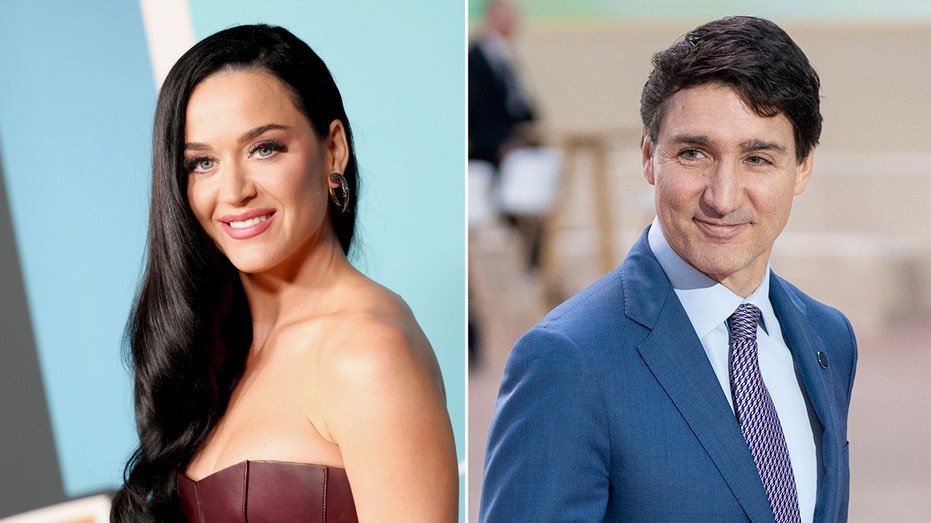
Katy Perry, Justin Trudeau, and the New Politics of Celebrity Power

Sarah Johnson
December 7, 2025
Brief
Katy Perry and Justin Trudeau’s romance is more than celebrity gossip. It reveals how ex-leaders, pop stars, and soft power are converging into a new, post-office influence machine.
Katy Perry, Justin Trudeau, and the New Power of Celeb–Ex-Politician Romances
Katy Perry posting intimate tour photos with former Canadian Prime Minister Justin Trudeau looks, on the surface, like classic celebrity gossip. But beneath the selfies in Tokyo and the sushi shots lies a revealing story about how power, politics, and pop culture are rearranging themselves in the post-office age – and why relationships like this are becoming far more consequential than they appear.
Why This Story Matters Beyond the Celebrity Angle
Justin Trudeau is not just a famous ex. He’s a former G7 leader who left office with a global brand: young, progressive, climate-minded, and deeply media-savvy. Katy Perry is not just a pop star; she’s one of the most commercially successful artists of her generation with a longstanding political footprint – especially in U.S. Democratic politics.
Their relationship crystallizes several modern trends:
- The rise of the “post-office politician” who remains globally influential even after leaving power.
- The fusion of celebrity culture and political capital into a single influence ecosystem.
- The normalization of private romantic ties that intersect with public diplomacy, soft power, and brand-building.
What most coverage misses is that this is not just a romance story; it’s an emerging template for how ex-leaders and cultural icons extend and intertwine their influence in a world where social media engagement often matters more than formal titles.
From Red Carpets to G20: A Brief History of Celebrities and Statesmen
Celebrity–politics overlap is not new, but it has changed in form and intensity.
Historically, we saw three main models:
- Celebrity as spouse to political power: Think Nancy Reagan (former Hollywood actor) or Carla Bruni, the Italian-French singer-songwriter who married French President Nicolas Sarkozy in 2008. The celebrity typically adapted to institutional expectations of statecraft.
- Celebrity as activist ally: Bono and the late Archbishop Desmond Tutu on debt relief; George Clooney and Sudan; Angelina Jolie and the UNHCR. Here, celebrities amplify causes while politicians retain formal authority.
- Celebrity becoming the politician: Ronald Reagan, Arnold Schwarzenegger, Volodymyr Zelenskyy, and, most starkly, Donald Trump. Fame became the on-ramp to office.
The Perry–Trudeau pairing suggests a fourth model: the ex-political leader as global celebrity partner, where formal power is gone but symbolic power, networks, and soft-diplomatic relevance remain very much alive.
What This Really Signals About Power After Politics
Trudeau’s appearance in Perry’s Tokyo photo carousel isn’t just romantic visibility; it’s a demonstration of how ex-leaders reposition themselves in the attention economy. Instead of fading into quiet board seats and occasional speeches, he is effectively co-branding with one of the most recognizable figures in global pop culture.
This matters for several reasons:
1. The New Lifespan of Political Influence
In the 20th century, leaving office usually meant a gradual step out of public life. Today, ex-leaders often retain or even grow their influence:
- Barack and Michelle Obama built a media and production empire.
- Jacinda Ardern moved from New Zealand politics into global initiatives, including roles with tech companies and academic institutions.
- France’s François Hollande and the UK’s David Cameron have stayed visible via memoirs, consulting, and media.
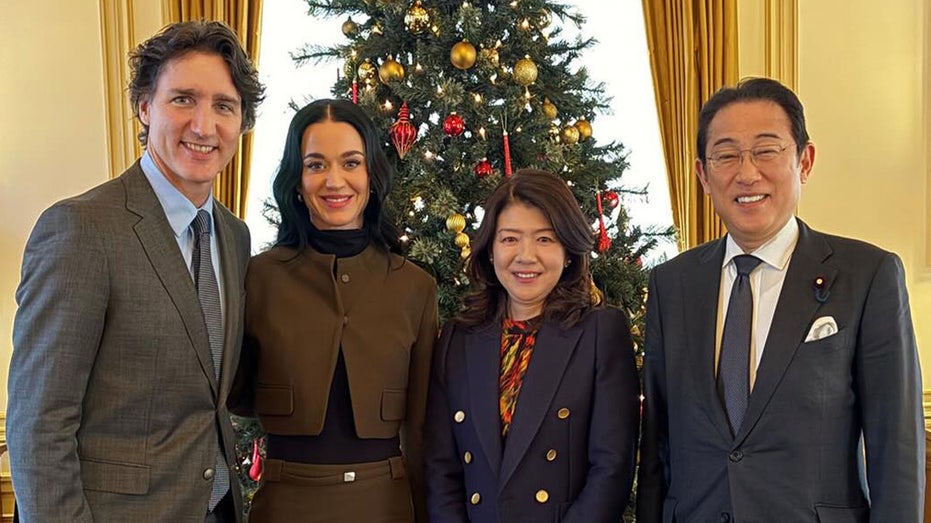
Trudeau dating a world-famous artist while still appearing at high-profile lunches with figures like former Japanese Prime Minister Fumio Kishida underscores the blurred line between political retirement and ongoing soft diplomacy. Even stripped of formal office, he can show up in quasi-diplomatic spaces, now accompanied by a partner who has tens of millions of social followers.
2. The Privatization of Soft Power
Soft power – a country’s ability to influence others through attraction rather than coercion – used to be tied largely to state institutions, cultural exports, and diplomacy. What we’re seeing now is a privatized, personality-driven version.
Katy Perry and Justin Trudeau are both brands in their own right. Together, they become a transnational soft-power node that’s loosely attached to, but not controlled by, any government. A single Instagram post from Perry can reach more people than a traditional diplomatic communique – and it wraps that message in aesthetics, emotion, and lifestyle.
When they attend a lunch with Kishida, the optics are striking: two ex-heads of government and a major pop icon convening in a setting that is neither clearly diplomatic nor purely social. It’s a reminder that much of the world’s “informal diplomacy” now happens in private rooms between people whose power is partly derived from their followings.
3. Emotional Narratives as Political Capital
Perry’s brand has long blended personal narrative with politics – notably her vocal support for Hillary Clinton in 2016 and her appearances at campaign events. Trudeau’s brand, especially early in his tenure, relied heavily on symbolism: gender-balanced cabinets, photo ops with refugees, and climate promises framed through values and empathy.
A shared public romance amplifies emotional storytelling. Their Japan photos communicate warmth, global mobility, cultural curiosity, and a certain aspirational cosmopolitanism. That imagery reinforces the kind of moral-aspirational narrative that progressive political projects often rely on, even if neither of them currently holds office.
What Most Coverage Overlooks
Most entertainment reporting will focus on timing, outfits, and the “hard launch” of the relationship. Underneath that are several under-examined dynamics:
- Gender and power optics: Perry is not simply the partner of a former prime minister; she’s arguably the larger public draw. This flips older patterns where the male political figure overshadowed the celebrity spouse.
- Cross-border narrative building: An American pop star and a Canadian ex-leader together create a kind of North American soft power partnership at a time when U.S. politics are polarized, and Canada’s own political future is in flux.
- Normalization of dual-role public figures: Both have children, high-profile exes, and complicated public histories. Their relationship will be consumed not just as romance but as a blended-family, second-chapter story – a narrative that resonates with many voters and fans.
Expert Perspectives on the Celeb–Ex-Politician Nexus
Political communication scholars and pop culture analysts have been tracking the convergence of fame and governance for years. Several themes stand out.
Dr. Pippa Norris, a noted political scientist, has written extensively on political trust and media. While not commenting on this couple specifically, her research suggests that in low-trust environments, citizens increasingly look to “relatable” figures rather than institutions. A relationship like Perry and Trudeau’s plays directly into that dynamic: two people whose public personas are built around emotional accessibility and performative authenticity.
Cultural critic Henry Jenkins has described how fans form “affective publics” – communities organized around shared emotional investment in media figures. When those figures enter political discourse, they carry those affective publics with them. Traversing a world tour and high-profile political lunches, Perry and Trudeau are walking conduits between fan culture and policy-adjacent circles.
From a diplomacy standpoint, former ambassadors often note that informal relationships can smooth or complicate ties between countries. While Trudeau no longer represents Canada officially, his personal relationships with current and former leaders – visible through engagements like the Kishida lunch – keep him in the peripheral diplomatic orbit, now with Perry as an added vector of attention and goodwill.
The Data: Influence by the Numbers
To understand why this pairing matters, consider the scale:
- Katy Perry has historically ranked among the most-followed musicians on major platforms, with tens of millions of followers across Instagram, X, and other networks.
- Justin Trudeau’s social media following, while smaller, is still significant for a political figure. Even after leaving office, ex-leaders often retain large digital audiences.
- Public polling over the last decade in multiple democracies shows declining trust in institutions but relatively stable or even increasing engagement with celebrity voices on political issues, particularly among younger voters.
In that context, a public relationship that merges those audiences isn’t trivial; it creates a blended sphere of influence that can be activated around causes, campaigns, or cultural moments.
Potential Future Implications
Speculation needs guardrails, but several plausible trajectories are worth watching.
1. Issue Advocacy and Philanthropy
Both Perry and Trudeau have histories with cause-driven work: Perry with LGBTQ+ rights and voter turnout initiatives; Trudeau with climate change, gender equality, and refugee policy. Together, they could:
- Launch joint philanthropic or advocacy campaigns that draw on their combined networks.
- Appear at global forums – climate conferences, UN side events, tech or education summits – as a duo, blurring lines between entertainment and policy advocacy.
- Influence how younger audiences perceive global challenges by framing them through personal storytelling and couple branding.
2. Redefinition of the Ex-Leader Role
If this relationship becomes long-term and increasingly public, Trudeau could become an archetype of a new kind of ex-leader: less a retired statesman and more a hybrid of activist, speaker, and celebrity partner. That might encourage other former leaders to lean further into pop-cultural affiliations after office, which has upsides (greater reach) and downsides (further trivialization of politics).
3. Media’s Incentive Problem
The more attention a story like this gets, the more incentives media outlets have to cover politics through the lens of personality and relationships rather than policy and governance. That’s already a problem; this kind of coupling accelerates the trend.
The risk is that complex debates – about climate, inequality, war, or technology – increasingly get filtered through the micro-dramas of public figures’ private lives. The opportunity, conversely, is that such figures can use their visibility to bring undercovered issues into mainstream conversation.
What to Watch Next
- Joint public commitments: Do Perry and Trudeau attach their names to specific causes, campaigns, or organizations as a couple?
- Event choices: Beyond concerts and private dinners, do they show up at summits, charity galas, or political conventions together?
- Messaging shifts: Do their social media feeds begin to interweave more overt political messaging with relationship content?
- Public reception: How do Canadian and U.S. audiences interpret Trudeau’s evolving role – as a former leader, celebrity partner, or both?
The Bottom Line
Katy Perry and Justin Trudeau’s relationship is not just another celebrity romance to be consumed and forgotten. It sits at the intersection of several 21st-century trends: the celebrity-ization of politics, the influencer-ization of diplomacy, and the extension of political life far beyond the official end of a term in office.
Whether they choose to lean into activism, remain mostly private, or become fixtures of a new global elite culture circuit, their partnership underscores a central reality of modern public life: power now travels less through institutions and more through networks of people whose reach is measured in followers, streams, and viral images.
Those Japan photos, softly lit and seemingly casual, are part of that new architecture of influence. They’re not just memories; they’re narrative-building tools in a world where the personal and the political are increasingly indistinguishable.
Topics
Editor's Comments
What makes the Perry–Trudeau pairing uniquely revealing is not the age gap, the timing, or the paparazzi narratives, but the structural shift it highlights: power is increasingly platform-based rather than office-based. Trudeau, freed from parliamentary arithmetic and electoral cycles, can now operate as a kind of roaming moral entrepreneur and brand ambassador. Perry, meanwhile, continues a long trajectory of pop stars moving closer to politics not by running for office, but by shaping the emotional climate in which politics unfolds. The open question is whether this convergence deepens civic engagement or accelerates a slide into politics as lifestyle content. If they eventually anchor their shared public story in concrete, measurable initiatives—say, on climate financing or digital rights—that could justify the attention. If not, their romance may become another chapter in the ongoing spectacle that distracts from, rather than illuminates, structural problems. Either way, the relationship is a useful lens on how power is reassembling itself in our celebrity-saturated democracies.
Like this article? Share it with your friends!
If you find this article interesting, feel free to share it with your friends!
Thank you for your support! Sharing is the greatest encouragement for us.