
From Swimsuits to Newsom: What an Entertainment Newsletter Reveals About Power, Pain, and Politics

Sarah Johnson
December 7, 2025
Brief
A celebrity-heavy entertainment newsletter doubles as a map of how modern media monetizes politics, pain, religion, and women’s bodies. This analysis unpacks the deeper power dynamics and cultural shifts it reveals.
Clickbait, Culture Wars, and Celebrity Politics: What an Entertainment Newsletter Reveals About America
The entertainment newsletter summarized above looks, at first glance, like pure fluff: swimsuits, red carpet drama, old Hollywood gossip, and a dash of royal pain. But read it as a cultural document, and it offers a surprisingly sharp X‑ray of where American media, politics, and celebrity culture are headed — and of what’s being sold to audiences as “news.”
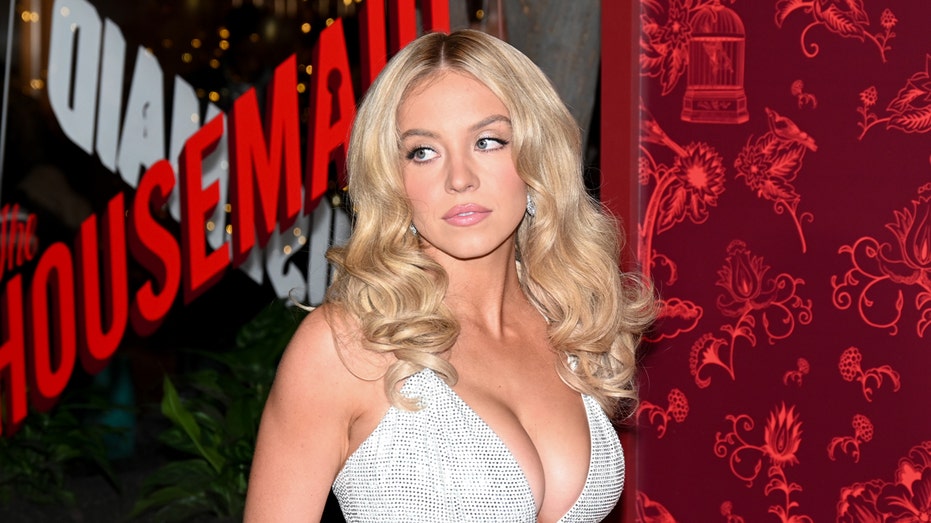
From Sydney Sweeney’s swimsuit weekend to Halle Berry publicly questioning Gavin Newsom’s presidential prospects, the newsletter quietly traces four major shifts: the politicization of celebrity, the commodification of pain, the algorithm-driven packaging of morality tales, and the rebranding of women’s bodies as both empowerment and product. None of this is accidental; it’s a strategic editorial design built to thrive in an attention economy.
Beyond the Swimsuit: What This Collection of Stories Is Really Doing
On the surface, the newsletter is a grab bag of unrelated items:
- A young star (Sydney Sweeney) framed through her body and personal life
- An established Black actress (Halle Berry) critiquing a Democratic governor eyeing national office
- Hollywood resentment (George Clooney vs. Brad Pitt) and nostalgia (Frank Sinatra)
- Intergenerational royal trauma (Prince William and Princess Diana)
- Health struggle and weight loss (Amy Schumer)
- Female sexuality and motherhood norms (Kristen Bell)
- Posthumous exploitation (Matthew Perry)
- Pop music and immigration enforcement (Sabrina Carpenter vs. ICE video)
- Religious subculture turned entertainment spectacle (‘Mormon Wives’)
Yet grouped together and packaged with a series of links to follow, subscribe, and “click here for more,” they serve a deeper set of functions:
- They monetize outrage, desire, and curiosity in the same feed.
- They blur the lines between political commentary and lifestyle gossip.
- They frame moral conflict (who’s right, who’s wrong, who’s “too sexy,” who’s greedy) as bite-size entertainment.
In other words, the newsletter is not just a list of stories — it’s a worldview, one that reflects and reinforces how American audiences are increasingly trained to experience politics and social issues as celebrity-driven narratives.
How We Got Here: A Brief History of Celebrity as Political and Moral Proxy
None of this emerged overnight. Three historical arcs are converging in this newsletter:
1. The Long Fuse of Celebrity Politics
Celebrity interventions in politics have a long history, from Frank Sinatra’s work for John F. Kennedy in 1960 to Ronald Reagan’s journey from actor to governor to president. But the modern era of celebrities as political validators exploded with the rise of cable news, talk shows, and now social media.
By the 2000s, figures like Oprah Winfrey endorsing Barack Obama, or musicians like Bono lobbying on global poverty, made celebrity political capital explicit. Today, when Halle Berry says Gavin Newsom “probably should not be our next president,” it isn’t just gossip — it’s treated as part of the wider speculative conversation about the 2028 presidential field. Her fame becomes a form of political commentary, especially valuable in a fragmented media environment where public attention is the rarest resource.
2. Tabloid Logic Comes to Mainstream News
The structure of this newsletter — a cascade of short, emotionally charged teasers — follows a tabloid logic refined in the 1990s and industrialized by digital media. Each item offers:
- A hook: shock, sex appeal, anger, or sentiment
- A promise: click to see what really happened
- A framing: moral judgment embedded in the label (e.g., “GREEDY JACKALS”)
This style, once confined to supermarket racks, is now a dominant template across digital outlets regardless of ideological bent. What’s important isn’t just the information, but whether it can be packaged as an emotional hit optimized for feeds.
3. Trauma and Intimacy as Content
Stories about Prince William’s “wound that will not heal,” Amy Schumer’s serious illness, and Matthew Perry’s exploitation lean heavily on trauma. The audience is invited to consume intimate details of pain — psychological, physical, and familial — as ongoing serial content.
This follows a decade-long trend where memoirs, reality TV, and Instagram confessions have blurred the line between therapeutic disclosure and consumption. The newsletter format intensifies that: deep pain becomes another clickable tile between a swimsuit and a red dress.
Power, Gender, and the Politics of the Female Body
A striking undercurrent in this newsletter is how women’s bodies are framed as battlegrounds — for desire, morality, and control.
Sydney Sweeney and the Economics of Sexualization
The lead tease highlights Sydney Sweeney “stunning” in a white swimsuit, framed in the context of her time with high-profile music manager Scooter Braun. This is a familiar pattern: a young female star’s professional achievements (Sweeney is an acclaimed actor and producer) are subordinated to erotic spectacle and relationship gossip.
But the economics underneath are key: images of women’s bodies drive clicks, clicks drive ad revenue, and ad revenue sustains the outlet. The swimsuit isn’t incidental; it’s a monetization strategy structured around attention.
Kristen Bell and the “Too Sexy” Dress
The Kristen Bell story offers a second act in this pattern, but with a twist: her daughters reportedly ask her to change out of a “too sexy” red dress. That becomes a headline about defiance and maternal authority.
This pits intergenerational norms against each other in a neatly packaged vignette:
- How should mothers present their sexuality?
- Are daughters internalizing conservative or judgmental ideas about women’s bodies?
- Is defiance empowering, or simply a new performance expectation placed on women?
Instead of a substantive discussion about gendered dress codes and double standards, the debate is channeled into a clickable micro-drama: Who’s right in this family conflict?
Halle Berry, Race, and Political Legitimacy
Halle Berry’s critique of Gavin Newsom is framed as “stunning the crowd,” positioning her as a disruptor of presumed liberal consensus around the California governor. The subtext is more complex.
As a Black woman and long-time Hollywood figure, Berry’s skepticism about a high-profile Democratic leader intersects with deeper tensions: the Democratic Party’s relationship with Black voters, West Coast elites, and the Hollywood fundraising machine. The newsletter doesn’t explore that, but the choice to highlight Berry’s comment is telling. It places celebrity criticism of a potential future presidential candidate in front of an entertainment audience, not a political one — a sign of how the parties’ future narratives are being test-marketed in pop culture spaces.
From Sinatra to ‘Mormon Wives’: Nostalgia and Norm-Breaking as Content Engines
The newsletter also leans heavily on stories that tap into two powerful emotional drivers: nostalgia and norm violation.
Nostalgia as Safe Transgression
Paul Anka confirming a “legendary Frank Sinatra rumor that made Hollywood blush” is classic nostalgia bait. It offers the thrill of transgression — a blush-worthy secret — but at a safe historical distance. Sinatra is long gone; nothing is really at stake. The payoff is emotional, not civic.
Nostalgia content like this serves a dual function:
- It bridges generations (older readers who lived through Sinatra, younger ones who know him as a symbol).
- It reinforces the myth of a more glamorous, simpler Hollywood past — even as it surfaces its scandals.
‘Mormon Wives’ and the Appetite for Religious Transgression
The mention of ‘Mormon Wives’ “clashing with core LDS values” taps into a longstanding pattern: mainstream fascination with religious communities that have strong behavioral codes, especially around sex and gender. Shows about polygamy, fundamentalist sects, and reality-TV faith families have been staples for years.
What’s new is how explicitly this is described as something “America is eating up.” The subtext: there is a robust market for watching religious norms bent or broken, especially when women push against or play with those rules on camera. This raises larger questions about:
- Where the line lies between representation and exploitation of religious communities.
- How media stereotypes shape public perceptions of minority faiths like the LDS Church.
- Why rule-breaking in conservative spaces is so monetizable.
Trauma, Illness, and Exploitation as Clickable Narratives
Three stories in particular point to a troubling dynamic: the audience’s appetite (and the industry’s willingness) to turn real pain into serial content.
Prince William’s “Wound That Will Not Heal”
Reporting on Prince William’s lingering trauma from the notorious 1995 BBC interview with Princess Diana fits a familiar royal narrative: inherited pain, unresolved grief, institutional failure. The piece, as summarized, centers William’s “wound that will not heal,” echoing decades of coverage that present the royal family as both privileged and perpetually damaged.
There’s no doubt that the interview — and Diana’s death — left a profound impact on William. What’s overlooked is how often that trauma has been reprocessed for public consumption: documentaries, books, dramatizations like “The Crown,” and now another round of analysis. The monarchy is increasingly sustained as a global media franchise whose currency is vulnerability dressed in ceremony.
Amy Schumer’s Illness and Weight Loss
Amy Schumer “dropping 50 pounds” to battle a disease that “can kill you” if untreated is framed in part as an inspirational survival narrative — but the newsletter’s hook foregrounds the weight loss figure. This mirrors a broader pattern in media coverage of women’s health: the clinical story is intertwined with body size as a point of fascination.
For Schumer, who has long critiqued beauty standards and misogyny in comedy, this dynamic is particularly ironic. Her serious health issue becomes content not just about mortality and medicine, but about transformation — the before-and-after logic that sells endlessly online.
Matthew Perry and Posthumous Exploitation
The story about Matthew Perry’s family decrying “greedy jackals” who exploited him, and begging for maximum sentences, shines light on one of the most uncomfortable truths of modern celebrity: the vulnerabilities that addiction creates around them, and the criminal ecosystems that can grow up to profit from those vulnerabilities.
Yet even this coverage participates in a double economy: condemning exploitation while profiting from the public’s appetite for details about Perry’s struggles and death. The family’s outrage highlights a broader ethical question: how do we distinguish between journalism that holds enablers accountable and storytelling that turns a dead man’s suffering into another clickable morality play?
When Pop Songs Collide with Policy: The Sabrina Carpenter–ICE Clash
Another story points to a growing trend: pop culture artifacts being repurposed in political and law-enforcement messaging, and artists pushing back. Sabrina Carpenter objecting to an ICE-related video using her song, and the White House “firing back,” fits into a longer trajectory that includes:
- Artists objecting to their music at political rallies.
- Debates about whether law enforcement should borrow trends from TikTok and pop music to reach audiences.
- Larger fights over who controls the meaning of a cultural product once it goes viral.
The important point: pop music is not just entertainment; it’s symbolic capital. When a government agency uses a song, it is implicitly harnessing an artist’s brand and emotional resonance to legitimize its own messaging. Artists increasingly see that as a political act done without their consent.
What This Newsletter Tells Us About the Future of Media
Viewed together, these items point to several larger trends that will shape media and politics in the next decade:
- Entertainment spaces are becoming testing grounds for political narratives. Halle Berry’s comment about Newsom, or the immigration-adjacent fight over Sabrina Carpenter’s song, introduce political frames to audiences who may not seek out traditional political coverage.
- The line between personal trauma and monetizable content is eroding. From royal wounds to celebrity illness, pain is packaged as serial storytelling.
- Women’s bodies remain central commodities in the attention economy. Swimsuits and “too sexy” dresses are not incidental—they are the thumbnail images of a business model.
- Religious and moral transgression is a growth market. Shows like ‘Mormon Wives’ flourish because norm-breaking in conservative spaces is both narratively rich and culturally profitable.
None of this means entertainment coverage is inherently trivial. It means we need to read it with the same critical eye we bring to political reporting, because the two are increasingly intertwined.
Looking Ahead: What to Watch
Several questions will determine how this ecosystem evolves:
- Will celebrities increasingly act as de facto political surrogates, especially in early-stage speculation cycles about future presidential candidates?
- Will there be any meaningful pushback — regulatory, ethical, or audience-driven — against the relentless monetization of celebrity pain?
- Can religious communities shape their own narratives in the face of highly profitable, often sensationalized portrayals?
- Will artists gain more legal leverage over how their work is used by political actors and government agencies?
For readers, the power lies in recognition: seeing these patterns clearly is the first step toward not being passively shaped by them.
The Bottom Line
This entertainment newsletter is more than a collection of celebrity tidbits. It’s a compact map of how the modern media economy fuses desire, outrage, politics, and pain — and sells it back to us as daily distraction. Understanding that doesn’t mean we stop consuming this content. It means we start asking harder questions about who benefits, who gets hurt, and what kind of civic culture we’re building when the front lines of politics now run straight through our entertainment feeds.
Topics
Editor's Comments
One of the most striking aspects of this newsletter is what it reveals about editorial priorities. Notice which stories get top billing: a young actress’s body, a high-profile celebrity criticizing a potential presidential contender, and a reality show clashing with religious norms. Each sits at the intersection of visibility, controversy, and monetization. What’s largely absent is structural context—no serious exploration of the political implications of Newsom’s ambitions, the economics of streaming that drive shows like ‘Mormon Wives,’ or the systemic failures around addiction that contributed to Matthew Perry’s fate. Instead, complex systems are reduced to personal moments and judgments. The risk is not that audiences become ‘dumb’ but that they are constantly invited to respond emotionally rather than analytically. If this is one of the primary ways people encounter our shared public life, we need to ask whether media organizations bear a responsibility to rebalance these incentives, even at the cost of a few clicks.
Like this article? Share it with your friends!
If you find this article interesting, feel free to share it with your friends!
Thank you for your support! Sharing is the greatest encouragement for us.