Liam Neeson and the High-Stakes Politics of Celebrity in the Vaccine Wars

Sarah Johnson
December 14, 2025
Brief
Liam Neeson’s vaccine controversy reveals how celebrity voices now shape public trust, blur lines between pharma skepticism and anti-vax narratives, and redefine the ethics of high-profile documentary work.
Liam Neeson, Vaccine Politics, and the New Battle Over Celebrity Legitimacy
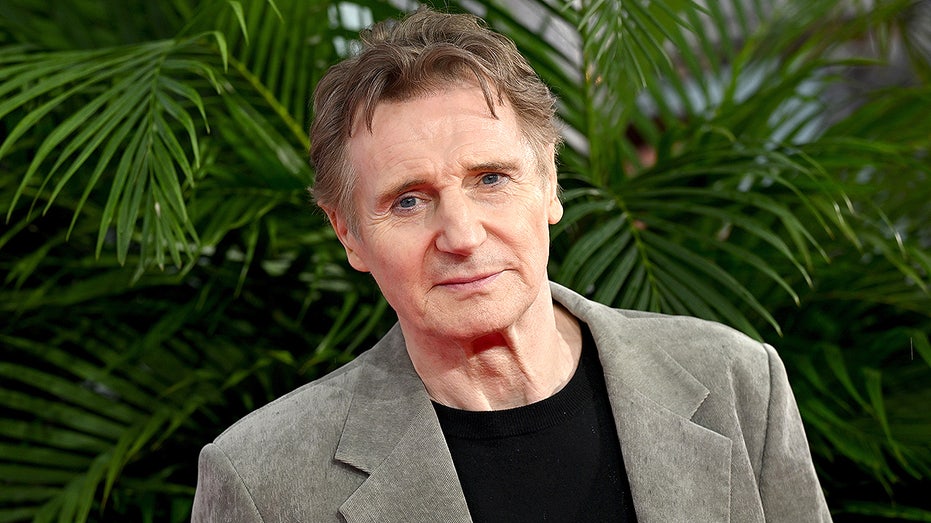
Liam Neeson’s decision to narrate a documentary critical of the pharmaceutical industry—followed by his public insistence that he is not anti-vaccine—is about far more than one actor’s reputation. It exposes a deeper fault line in how we assign trust, how public-health debates are weaponized in culture wars, and how celebrity involvement now carries a different kind of moral and political weight in the wake of COVID-19.
At the center of this controversy is a simple tension: Can you lend your voice to a project that strongly challenges vaccine safety without implicitly endorsing its message? In 2010, that might have been a largely academic debate. In 2025, after a global pandemic, mass disinformation campaigns, and politicized vaccine mandates, the answer has become a cultural Rorschach test.
The Bigger Picture: From Pharma Skepticism to Vaccine Tribalism
Skepticism of the pharmaceutical industry long predates COVID-19. From the 1960s thalidomide scandal to the more recent opioid epidemic, the public has seen repeated examples of corporate malfeasance, regulatory capture, and deceptive marketing.
But historically, that skepticism was often compatible with support for vaccines. Many mainstream critics of “Big Pharma” have simultaneously praised vaccination as one of the most cost-effective, lifesaving public health tools ever developed. That’s essentially the stance Neeson is now articulating: corruption can exist in pharma, but that doesn’t logically imply vaccines are bad.
The COVID era blurred that distinction. Several forces converged:
- Polarization of public health: Masking, lockdowns, and vaccination became partisan identity markers in many countries, particularly the United States.
- Social media radicalization: Platforms incentivized emotionally charged, simplified narratives—"vaccines are dangerous" vs. "all criticism is anti-science"—leaving little space for nuanced critique.
- Institutional mistakes and messaging shifts: Early missteps and evolving guidance by health agencies, while often scientifically justified, eroded trust among some populations.
Into this environment enters Neeson’s narration of “Plague of Corruption,” a project associated with Judy Mikovits, a figure widely criticized by mainstream scientists and fact-checkers for spreading misleading and false claims about vaccines and COVID-19. For many viewers, Neeson’s voice does more than describe—it legitimizes.
What This Really Means: The New Ethics of Celebrity Voice Work
The backlash Neeson is facing is not just about vaccines. It’s about shifting expectations of what it means to be a globally recognized public figure whose brand is tied to humanitarian work.
Critics argue that he cannot credibly claim to be "just the narrator." The underlying assumption is that fame now carries a kind of civic responsibility: if your voice has disproportionate reach and emotional resonance, you are accountable for where it is used.
This reflects a broader transformation in the entertainment–politics–media triangle:
- From neutral talent to moral actor: In the past, narrating a controversial documentary might have been framed as “work for hire.” Today, the public increasingly interprets such roles as moral endorsements, especially on issues intertwined with life-and-death public health outcomes.
- Brand consistency as a new standard: Because Neeson has been a UNICEF ambassador and a high-profile advocate for global vaccination, audiences expect his professional choices to align with that track record.
- The collapse of the separation between ‘role’ and ‘belief’: Social media commentary reveals a diminishing tolerance for the idea that artists can separate their craft from the political consequences of a project.
The deeper issue is that in a low-trust information ecosystem, people rely on recognizable faces and voices as cognitive shortcuts. A respected actor narrating a film that challenges vaccine safety doesn’t just “tell a story”—it modulates how seriously some viewers take that story.
Data & Evidence: Why This Fight Over Narration Matters
To understand why Neeson’s participation in this type of project is so charged, it helps to look at how fragile and uneven vaccine trust remains:
- In the U.S., surveys from 2023–2024 regularly found that roughly 20–30% of adults either declined COVID-19 vaccination entirely or were deeply hesitant, depending on age and region.
- Global agencies estimate that routine childhood immunization disruptions during the pandemic contributed to tens of millions of children missing basic vaccines like measles, leading to resurgent outbreaks in multiple regions.
- Disinformation studies show that exposure to emotionally compelling anti-vaccine content—even a single video—can measurably reduce vaccine intentions among some viewers, especially those already distrustful of institutions.
In that context, a film that foregrounds alleged vaccine dangers doesn’t exist in a vacuum. It enters an ecosystem where public health workers are trying to repair trust and restore routine immunization. Neeson’s previous UNICEF campaigns explicitly celebrated vaccines as a “remarkable human success story” that have protected billions of children. His voice is not just familiar; it has been used as an instrument of pro-vaccine advocacy.
This makes the documentary choice uniquely fraught: the same persona that once guided audiences toward UNICEF messages is now guiding viewers through a narrative that many experts say undermines confidence in vaccines.
Expert Perspectives: Free Expression, Disinformation, and Responsibility
Public health and media ethics experts see this episode as emblematic of a new set of dilemmas.
Dr. Elise Thomas, a public health communication specialist at a major university, explains: “When a high-trust figure participates in a project built around scientific controversy, the question is not just ‘Do they believe this?’ but ‘How will their participation reshape public risk perception?’ Even neutrality can shift the needle.”
Media ethicists also note that celebrities may not always fully grasp the reputational stakes. Documentary narration is often pitched as a professional gig, with scripts arriving late in the process and editorial decisions already locked. If Neeson’s representative is accurate that he “did not shape the film’s editorial content,” this raises broader questions about due diligence: What should actors be expected to know—or demand—before lending not just their talent, but their credibility?
On the other side, civil liberties advocates warn against conflating participation with ideological purity tests. They argue that casting any involvement in pharma-critical content as “anti-vax” risks chilling legitimate scrutiny of powerful industries.
The line between healthy skepticism and harmful doubt is thin, and many actors—quite literally in this case—are discovering how hard it is to walk it in public.
What’s Being Overlooked: Nuance vs. Binary Labels
Much of the online discourse around Neeson has been binary: either he’s a secret anti-vaxxer or he’s being unfairly attacked by an intolerant pro-vaccine establishment. That framing misses several subtler, more consequential dynamics:
- The collapse of the “nuance middle ground.” Neeson’s official statement essentially occupies a nuanced position—corruption exists in pharma, vaccines are vital, he didn’t control the edit. Yet the public debate is rushing to slot him into a camp. This mirrors wider polarization, where complex positions (“pro-vaccine, anti-monopoly,” for example) are difficult to sustain in algorithm-driven discourse.
- The strategic use of celebrity by anti-establishment movements. The enthusiasm from figures aligned with vaccine-critical circles—celebrating Neeson as being “on our side” even after he denies anti-vax beliefs—highlights how a single association can be leveraged symbolically regardless of his stated intent.
- The risk of over-correcting. If any engagement with pharma criticism is treated as inherently dangerous, mainstream institutions risk reinforcing the narrative that they are above scrutiny, which can itself feed conspiracy thinking.
Looking Ahead: What This Signals About Post-Pandemic Culture
Neeson’s situation is likely a preview of future controversies involving actors, musicians, and influencers navigating highly politicized scientific issues—from climate interventions to AI safety to genetic technologies.
Several developments are worth watching:
- Industry norms: Talent agencies and studios may begin building more robust vetting processes for documentary and advocacy projects, especially on health and science topics. That could include formal risk assessments and consultations with subject-matter experts.
- Platform policies: As streaming services face pressure over hosting misleading or harmful content, celebrity-fronted documentaries will likely receive heightened scrutiny.
- Public literacy: Long-term, the most constructive outcome would be a shift away from treating celebrity endorsement as a proxy for truth—toward a culture where viewers interrogate sources, evidence, and scientific consensus rather than simply who’s narrating.
For public health, the key question is whether episodes like this reinforce the idea that vaccine debates are primarily cultural and ideological, rather than empirical and evidence-based. Every time that line blurs, it becomes harder for health authorities and frontline workers to make fact-based appeals.
The Bottom Line
Liam Neeson’s insistence that he is pro-vaccine while narrating a documentary that questions vaccine safety highlights a growing tension in our media environment: celebrity voices have become powerful instruments in battles over truth, trust, and institutional credibility. The controversy isn’t just about whether Neeson personally opposes vaccines. It’s about how much responsibility high-profile figures bear for the downstream effects of their artistic choices in an era where disinformation can spread at the speed of a share button.
Pharmaceutical corruption and vaccine safety are not inherently the same issue—but in polarized post-pandemic politics, they are increasingly treated as inseparable. Neeson’s case shows how difficult it has become to engage one without being assumed to have taken a side on the other.
Topics
Editor's Comments
What’s striking about the Liam Neeson episode is how it illustrates the shrinking space for nuanced positions in public life. His statement is essentially: pharma can be corrupt, vaccines are vital, and a narrator doesn’t control the edit. That is a defensible, even reasonable stance. Yet the online reaction pushes him toward one of two caricatures: either secret anti-vaxxer or hapless tool of a dangerous movement. We should ask whether our media ecosystem is capable of handling the idea that a person can be both pro-vaccine and critical of industry power, or whether we’ve constructed a culture where every action is treated as a purity test. If the latter is true, we may inadvertently be driving legitimate critics—and even cautious skeptics—toward fringe spaces that happily accept them, further deepening polarization rather than addressing underlying concerns about accountability, transparency, and trust.
Like this article? Share it with your friends!
If you find this article interesting, feel free to share it with your friends!
Thank you for your support! Sharing is the greatest encouragement for us.