Lonely in a Connected Age: Why Camping Is Becoming America’s New Community Lifeline

Sarah Johnson
December 16, 2025
Brief
Americans are flocking to campgrounds not just for nature, but to fight loneliness and rebuild community. This analysis uncovers the deeper social forces driving camping’s new role as a social lifeline.
Americans Are Lonely—and Headed for the Woods: Why Camping Is Becoming a Social Lifeline
New data from a camping marketplace suggests something deeper than a travel trend: Americans are increasingly turning to campgrounds not just for relaxation, but as an antidote to isolation and a way to rebuild community in an era of fraying social ties.
On its face, the finding that 75% of travelers crave a stronger sense of community might sound like predictable marketing. But beneath the glossy travel language is a stark social reality: a nation wrestling with record levels of loneliness, work-life imbalance, and digital fatigue—and improvising new ways to feel human again.
Why this matters now
Over the last decade, loneliness and social disconnection have moved from personal struggle to public health crisis. In 2023, the U.S. Surgeon General issued a landmark advisory calling loneliness as dangerous to health as smoking up to 15 cigarettes a day. At the same time, organized community life—church attendance, union membership, bowling leagues, neighborhood associations—has steadily declined.
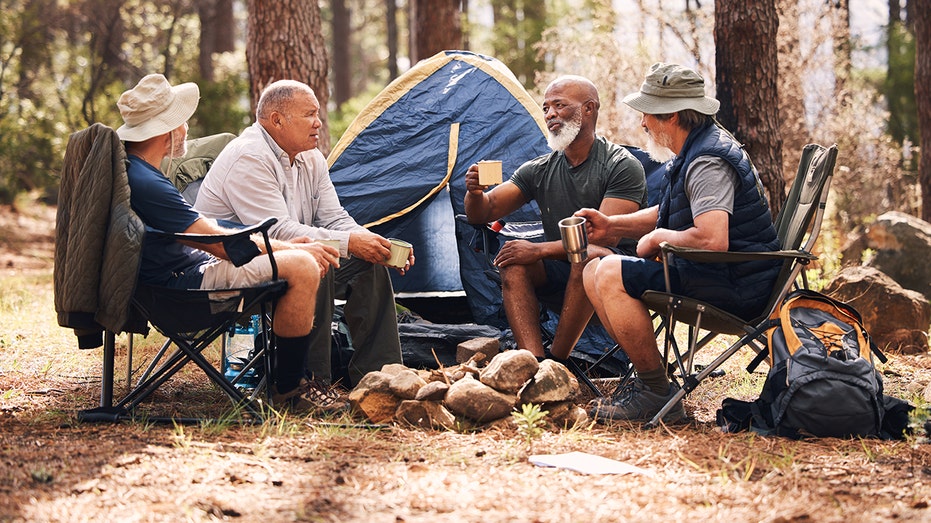
Camping is emerging as one unlikely replacement for those lost civic spaces: a temporary, low-stakes community where people arrive as strangers and leave with stories, shared challenges, and in many cases, new friends.
The bigger picture: How we got here
To understand why campgrounds suddenly feel like emotional lifelines, you have to trace three overlapping trends:
1. The long decline of everyday community
Sociologist Robert Putnam’s famous work documented the erosion of American “social capital” beginning in the latter half of the 20th century. Over the past 40 years, rates of participation in civic organizations, religious congregations and informal groups have all dropped. People report having fewer close friends and less frequent face-to-face contact.
At the same time, geography has shifted. Suburbanization and car dependence have made spontaneous, walkable community rare. More of life is mediated by private spaces—homes, cars, screens—than shared public places.
2. The digital paradox
Smartphones and social media have promised connection but often deliver its imitation: constant contact without deep belonging. Studies from institutions like the American Psychological Association have repeatedly linked heavy social media use with higher rates of anxiety, depression, and loneliness, especially among young adults.
When travelers in the Campspot data blame “increased screen time” and “fewer shared experiences” for their lack of connection, they’re capturing this paradox: we’re never alone, but often profoundly lonely.
3. The pandemic reset
The COVID-19 pandemic accelerated everything. Lockdowns shattered routines, reduced casual social contact, and intensified isolation. But they also pushed millions outdoors. National parks saw historic surges once restrictions eased; sales of RVs, camping gear, and rooftop tents spiked.
For many, that first camping trip wasn’t just a vacation—it was a safe way to be around other humans again. That emotional memory has lingered. Camping became associated not just with nature, but with belonging after separation.
What’s really happening at the campground
The expert quoted in the story, psychologist Argie Allen-Wilson, points to something subtle but powerful: campgrounds operate under different social rules than daily life.
Fewer labels, less performance
In everyday life, interactions are heavily scripted by roles: employee, manager, parent, customer, political identity. Online, those labels get even louder—bios, hashtags, hot takes.
At a campsite, those identities fade. Your job title doesn’t matter when you’re wrestling with a sagging tent or a broken camp stove. Age, income, and political affiliation become harder to read and less relevant. What matters is whether someone has a spare lighter, an extra tarp, or advice about the trail ahead.
This is partly what Allen-Wilson means by the “playing field” being leveled. People are relieved of the pressure to perform their usual roles and can interact more as humans than as job descriptions or online personas.
Shared mild adversity as social glue
The Reddit anecdotes in the story inadvertently reveal something social scientists have documented for years: shared challenges—especially when they’re mildly uncomfortable but not traumatic—create strong social bonds. A tent collapsing, rain soaking your gear, or a surprise swarm of bees are the kind of low-stakes problems that invite group problem-solving, humor, and storytelling.
Psychologists sometimes call this “collective coping.” Facing small obstacles together builds trust, creates memories, and gives people a sense of being on the same team—something that’s harder to find in daily life, where individual performance is often rewarded over collaboration.
Temporal, voluntary communities
Campgrounds are also unique in that they are temporary, voluntary communities. Everyone chose to be there, and everyone knows the end date. That impermanence paradoxically lowers the social risk: if an interaction goes badly, you’re leaving soon anyway. If it goes well, you’ve gained an unexpected friend.
For people burned out by workplace drama, online arguments, or family tensions, that low-risk social environment can feel like a relief.
Psychological safety in the open air
The study and the expert both highlight a key phrase: “psychological safety.” In workplaces, this refers to environments where people feel safe to speak up, make mistakes, and be themselves. Outdoors, that safety comes from a different mix of ingredients: fewer status markers, shared purpose (explore, unplug, rest), and the calming effect of nature on the nervous system.
There is growing evidence for that last piece. Research on “forest bathing” in Japan and nature prescriptions in Europe and North America has documented lower cortisol levels, improved mood, and better sleep among people who spend meaningful time in natural settings.
The data behind the feelings
The Campspot report says campers make an average of four new friends per trip. Even if that number is softened by marketing bias, it aligns with broader patterns:
- U.S. national parks have seen steady increases in visitation over the last decade, with spikes after pandemic lockdowns.
- Outdoor recreation participation reached record highs in recent years, with industry groups reporting more than half of Americans engaging in some form of outdoor activity annually.
- Surveys from health organizations show rising self-reported loneliness, especially among younger adults—precisely the demographic driving much of the camping boom.
The National Park Service notes that being outdoors can reduce depressive thoughts and help regulate sleep. Those are not minor benefits: sleep disruption is strongly linked to anxiety, irritability, and emotional withdrawal, all of which undermine social connection.
If camping helps people sleep better, feel less depressed, and encounter others in a relaxed setting, it’s not surprising those experiences feel disproportionately meaningful.
What mainstream coverage often misses
Most lifestyle pieces treat camping as a wellness hack or travel trend. What’s often overlooked are the structural forces that make people seek this escape in the first place—and the limits of relying on camping as a solution.
Camping as symptom and coping mechanism
The desire to “unplug” and “reset” is a response to a specific environment: long work hours, economic precarity, digital overload, and fragmented communities. Camping doesn’t fix corporate expectations, algorithm-driven isolation, or the collapse of local civic life. It offers, at best, a weekend reprieve.
There’s also an inequality angle: camping trips require time, money, access to transportation, and some degree of physical ability. For many low-income workers with unpredictable schedules, or people living in urban centers without cars, disappearing to a campground is simply not an option.
Commercialization of connection
The data in the story comes from a company that profits when people camp more. While the emotional realities it points to are valid, there’s a tension worth naming: we are increasingly outsourcing basic human needs—rest, presence, community—to industries that package them as products.
In that sense, the camping boom mirrors the wellness industry: selling back, at a premium, the kinds of connection and balance that earlier generations often got for free through neighborhood life, extended family networks, and less intrusive work.
Expert perspectives: What’s driving this search for closeness?
Beyond the quoted clinician, several lines of research help explain why camping is becoming a social refuge:
- Social neuroscientists argue humans are “obligatorily gregarious”—our brains are wired to seek belonging. Prolonged isolation or shallow digital contact generates stress that we often don’t consciously recognize until we experience genuine connection.
- Urban planners note that as public third spaces (parks, libraries, community centers) are underfunded or privatized, people seek connection in more curated environments: coworking spaces, memberships, retreats, and yes, campgrounds.
- Labor and workplace scholars point to the erosion of boundaries between work and life. When your phone is your office, physical separation—no signal, no laptop—becomes the only reliable way to disengage. Camping provides that boundary in a way few other activities do.
Taken together, these perspectives suggest camping’s appeal is less about nostalgia for the outdoors and more about a basic human need that modern life is failing to meet.
Looking ahead: Is this a sustainable social solution?
If the current trajectory continues, several developments are likely:
1. Growth of “engineered” campground community
Expect more campgrounds to market themselves explicitly as community-building spaces, adding communal cooking areas, group hikes, campfire storytelling sessions, and structured activities aimed at solo travelers and digital nomads.
2. Blurring lines between work and wilderness
There is already a trend toward “work-from-anywhere” camping—RVs outfitted with mobile offices, campgrounds with Wi-Fi and coworking tents. This risks re-importing the very stressors people went camping to escape, potentially diluting the mental health benefits unless strict personal boundaries are set.
3. Pressure on public lands and affordability
Increased demand for camping can strain national parks and public lands, raising questions about conservation, crowding, and access. Privately run campgrounds may step in to fill the gap—but at higher price points, reinforcing inequality in who gets to “reset” in nature.
4. A template for rebuilding local community
The deeper opportunity may be this: if people recognize that mild shared challenges, unstructured time, and reduced status signaling help them connect in campgrounds, those insights could inform how we redesign daily life in cities and suburbs—more shared projects, more public spaces, fewer distractions, and less emphasis on roles and performance.
The bottom line
Camping isn’t just a leisure choice—it’s a quiet referendum on how disconnected many Americans feel in their everyday lives. When people drive hours to sleep on uneven ground, wake up cold and stiff, and still describe the experience as emotionally restorative, they’re sending a message: the comforts of modern life are not compensating for the absence of real community.
The surge of interest in outdoor, communal experiences reveals both a problem and a prototype. The problem is a society where genuine closeness has become rare enough to feel like a special event. The prototype is a way of being together—less scripted, more cooperative, anchored in shared tasks and shared spaces—that doesn’t have to be limited to weekends in the woods.
Whether policymakers, employers, and communities are willing to learn from what’s happening around campfires may determine whether this remains a niche escape—or a clue to rebuilding connection where we live the other 50 weeks of the year.
Topics
Editor's Comments
What strikes me in this trend is how quietly radical it is. People aren’t just chasing Instagrammable views; they’re voting with their feet against a way of life that leaves them constantly connected yet emotionally malnourished. The fact that individuals will endure cold nights, broken stoves, and faulty tents—and still describe the experience as deeply relaxing—should be a wake-up call to employers, urban planners, and policymakers. We are designing work, cities, and digital spaces that make something as basic as unhurried conversation feel like a rare luxury you have to drive hours to find. A contrarian question we should be asking is whether celebrating camping as the antidote risks normalizing the underlying dysfunction. Instead of treating weekends in the woods as a pressure valve, we could use them as a diagnostic tool: what, specifically, feels better there, and how do we bring those conditions—shared spaces, fewer roles, slower time—into the places where we actually live and work?
Like this article? Share it with your friends!
If you find this article interesting, feel free to share it with your friends!
Thank you for your support! Sharing is the greatest encouragement for us.