Marjorie Taylor Greene’s Engagement and the New Politics of MAGA Media Celebrity

Sarah Johnson
December 16, 2025
Brief
Marjorie Taylor Greene’s engagement to conservative TV reporter Brian Glenn isn’t just gossip. It reveals how MAGA politics, media, and personal branding are merging—and what that means for the future right.
Marjorie Taylor Greene’s Engagement Is About More Than Romance: It’s a Case Study in the MAGA Media-Politics Merger
At first glance, the engagement of outgoing Rep. Marjorie Taylor Greene and conservative TV personality Brian Glenn looks like standard political gossip – a personal story dressed up as news. But beneath the surface, this engagement crystallizes a deeper transformation underway inside the American right: the fusion of elected politics, influencer media, and personality-driven branding into a single ecosystem where the lines between governing, content creation, and celebrity are rapidly disappearing.
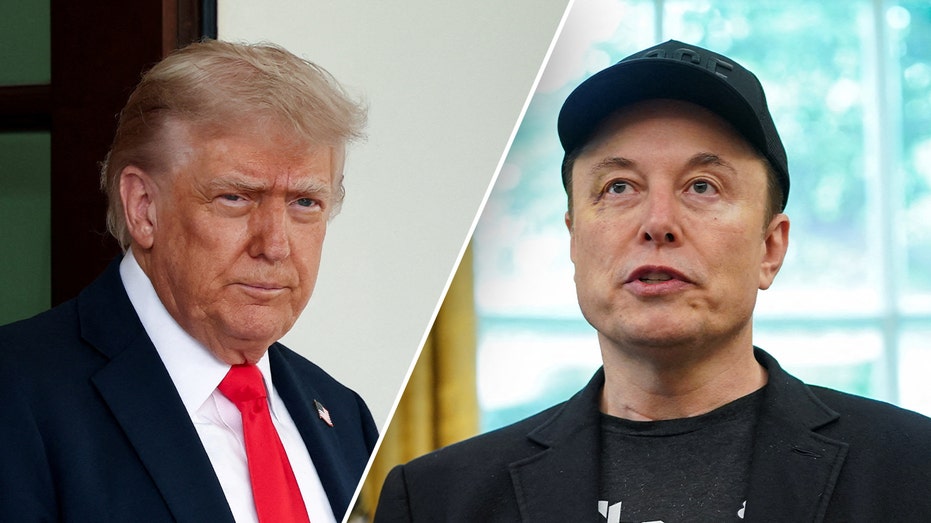
Greene’s engagement arrives just weeks after a very public rupture with Donald Trump, her decision to resign from Congress mid-term, and growing speculation about her next act. Read in that context, the announcement is less about a private milestone and more about the consolidation of a new kind of post-congressional power base – one that is rooted not in legislative authority, but in media reach, personal loyalty networks, and culture-war celebrity.
From Backbencher to Brand: How We Got Here
To understand why this engagement matters politically, it helps to see Greene’s trajectory not as an anomaly, but as part of a decade-long restructuring of the conservative movement.
- The Tea Party to MAGA pipeline: Since 2010, the right has rewarded figures who are less focused on policy details and more on symbolic combat – owning the libs, attacking elites, and waging cultural battles. Greene is an archetype of this shift: she entered Congress in 2021 already a national media figure, propelled by viral moments and controversial rhetoric rather than committee work or district-level organizing.
- Talk radio and Fox as precursors: The Republican Party has long been intertwined with its media ecosystem, from Rush Limbaugh to cable news opinion hosts. But in earlier eras, there was still some daylight between elected officials and the pundits who covered them. They collaborated, but they weren’t literally marrying each other.
- The Trump era acceleration: Donald Trump’s rise obliterated many remaining boundaries. Campaign rallies doubled as televised spectacles; policy announcements were made on social media; and cable hosts shaped the president’s nightly worldview. Many Republican figures began to act as content creators first and lawmakers second.
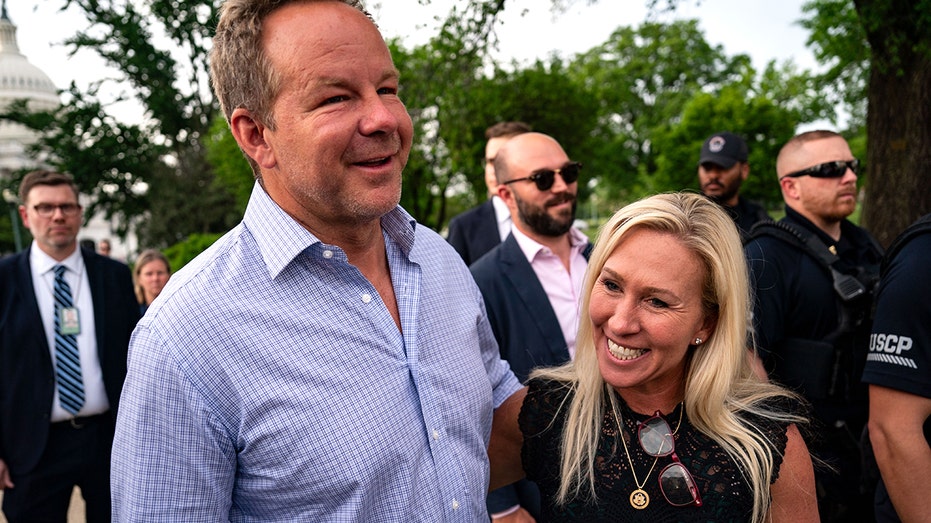
Greene’s relationship with Brian Glenn, the chief White House correspondent for a pro-Trump conservative network, fits squarely into this pattern. It’s not just a personal union; it’s the marriage of two roles that used to be separate: the elected firebrand and the movement media amplifier.
What the Engagement Signals About the Future of the Right
Seen politically, this engagement comes at a pivotal moment in Greene’s career. Trump’s recent attacks on her – and his signal that he’d back a primary challenger – effectively ended her trajectory as a rising MAGA star inside Congress. Her decision to resign mid-term, rather than fight it out with the base or reinvent herself in the House, suggests a strategic pivot away from formal politics and toward full-time personality and media work.
In that light, being engaged to a conservative TV figure isn’t incidental; it’s infrastructure. It gives Greene:
- A built-in media platform: Glenn is already embedded in a network aligned with the MAGA base. Their partnership could easily evolve into co-hosted shows, branded content, podcasts, or live events.
- Direct access to core audiences: Greene no longer needs a committee gavel to generate headlines or influence the conversation. She needs distribution, and Glenn’s role provides that pipeline.
- Insulation from party discipline: Outside Congress, Greene can say what she wants without worrying about leadership stripping her of committee assignments or donors cutting her off. Media, not party, becomes her accountability structure.
If you zoom out, this is part of a broader trend: the rise of the “post-office politician.” Think of figures who lose or leave formal power but remain – or become even more – influential through media and activism. Sarah Palin helped pioneer this model; Trump perfected it. Greene’s engagement suggests she’s opting into this template rather than fighting for a precarious future inside a party increasingly reshaped by Trump’s personal demands.
The Media-Politics Feedback Loop, Now Fully Personal
There’s another important dimension here: ethics and the changing nature of political journalism on the right.
In traditional journalism, romantic relationships between reporters and politicians are treated as major conflicts of interest. Even when they occur, they typically trigger reassignment, recusal, or at minimum formal disclosures. The core principle is simple: those who cover power should not be personally entangled with it.
But the conservative media ecosystem Greene and Glenn inhabit is built differently. Real America’s Voice and similar outlets are not designed to be adversarial watchdogs. They operate more as movement media – their mission is to support, not scrutinize, ideological allies. In that environment, the personal and professional overlap isn’t just tolerated; it can be a feature.
That has consequences:
- Coverage becomes collaboration: When a network’s chief White House correspondent is engaged to a MAGA-aligned national figure, stories and narratives are inevitably shaped from the inside. Viewers aren’t just seeing coverage of the movement; they’re seeing content produced by people deeply enmeshed in its inner social life.
- The watchdog role erodes further: The more conservative media becomes socially and personally intertwined with the political figures it covers, the less likely it is to surface uncomfortable truths, policy failures, or intra-movement corruption.
- Audiences get a blurred product: Viewers aren’t just watching news or commentary. They’re watching a lifestyle brand – where engagement announcements, political feuds, and ideological messaging blend into one continuous reality show.
In that sense, this engagement is a small but telling milestone in the normalization of “movement media” replacing journalism inside one major political coalition.
Trump, Loyalty, and the Fragmentation of the MAGA Universe
Greene’s romance would be a footnote if it weren’t unfolding in the shadow of a much larger drama: her public break with Trump. His posts attacking her and hinting at backing a primary challenger were not just personal rebukes; they were signals to the base about who remains inside the inner circle and who does not.
Her response – labeling his attacks a “dog whistle to dangerous radicals” – was a rare moment of open defiance from a onetime loyalist. The engagement announcement, coming soon after her decision to resign, effectively marks the closing of one chapter and the opening of another.
What emerges is a picture of a movement in which loyalty to Trump remains the organizing principle, but the ecosystem around him is increasingly fragmented. Greene, even sidelined from Congress and on the outs with Trump, still has name recognition, a fervent following, and now a likely media partnership. That combination makes her a potential node in an emerging constellation of MAGA-adjacent influencers who may be Trump-critical, Trump-sidelined, or simply Trump-adjacent rather than subordinate.
Whether that evolves into real political rivalry is speculative. But structurally, the infrastructure is forming for a post-Trump right composed less of traditional parties and more of overlapping media tribes anchored to personalities, not institutions.
Gender, Celebrity, and the Changing Face of Right-Wing Stardom
Greene’s engagement also highlights how gender and celebrity operate inside today’s right-wing politics. The conservative movement has increasingly embraced female firebrands – from Palin to Lauren Boebert to media figures like Tomi Lahren – who mix culture-war messaging with a carefully curated personal brand.
In that world, personal milestones – divorces, engagements, family conflicts – are not private embarrassments but recurring content arcs. Greene’s engagement after a public divorce continues that pattern: the story is designed to be both relatable and aspirational for her followers, reinforcing loyalty by inviting them into her personal life.
The performative aspect is key. The announcement unfolded on X, with emojis, exclamation points, and a carefully staged photo. It wasn’t an afterthought; it was a piece of content engineered for virality, engagement, and community-building. That’s not unique to the right – politicians across the spectrum now treat their personal lives as content – but within a media environment that is already heavily personality-driven, it amplifies the trend.
What Mainstream Coverage Is Missing
Most coverage has treated this story as political human interest: a controversial congresswoman getting engaged as she exits office after a dust-up with Trump. But three deeper dynamics are getting less attention:
- The move from lawmaking to lifestyle politics: Greene’s transition from Congress to likely media or influencer work is not a retreat; it may be a promotion in terms of influence and income. The incentives now often favor leaving office for the talk show, podcast, and branded-merch circuit.
- The normalization of intertwined media-political households: While there have always been marriages across these spheres, they are becoming central to how movements operate. The household becomes a micro-hub of content, messaging, and informal strategy.
- The long-term weakening of institutions: As high-profile politicians abandon legislative careers for media celebrity – and as media figures become party kingmakers – formal institutions like Congress and parties lose status and authority. The center of gravity moves toward platforms and personalities.
Looking Ahead: What to Watch
In the coming months and years, a few developments will reveal how consequential this engagement really is for the broader political landscape:
- Greene’s post-Congress platform: Does she join or co-create a media show with Glenn? Launch a podcast network? Become a fixture on conservative conferences and speaker circuits? The business model she chooses will signal how she sees her role.
- Her stance on Trump: Does she reconcile with Trump for strategic reasons, or lean into independence and critique? Her media choices will either tether her back to the Trump orbit or help forge a separate brand within or alongside the MAGA universe.
- How conservative media handles conflicts of interest: Does Glenn continue to cover the White House or national politics in a way that involves Greene? Does the network adjust his role or lean into the relationship as a selling point? Those decisions will illustrate how far movement media has drifted from traditional journalism norms.
- Copycat trajectories: If Greene’s next chapter proves lucrative and influential, expect more backbench lawmakers to see Congress as a launching pad for media celebrity rather than a long-term career.
The engagement announcement itself may fade quickly from headlines, but the structures it illuminates – the merging of media and politics, the rise of post-office personality power, and the internal realignments of the MAGA coalition – will define conservative politics for years to come.
The Bottom Line
Marjorie Taylor Greene’s engagement to Brian Glenn is not just a personal milestone. It’s a snapshot of a movement in transition, where the real currency is no longer committee assignments or legislative victories, but followers, airtime, and the ability to turn personal life into political content. As Greene exits Congress and enters a media-centered partnership, she embodies the shift from party politics to personality politics – a shift that is reshaping not just the Republican Party, but the architecture of American democracy itself.
Topics
Editor's Comments
What’s easy to miss in the flurry of social-media congratulations is how normalized this kind of media-political fusion has become on the American right. Twenty years ago, a reporter openly partnering with a polarizing elected official they might cover would have sparked serious ethical debates and newsroom shakeups. Today, in movement media spaces, it barely registers as a concern. That shift isn’t just about looser standards; it reflects a different mission. These outlets aren’t trying to emulate legacy journalism—they’re trying to be the communications arm of a political tendency. Greene’s engagement to Glenn makes that dynamic visible in a personal way. It raises hard questions: if a significant part of the right gets its information from people who are literally inside the political project they’re talking about, where does skepticism come from? Who tells the base uncomfortable truths? The more these personal and professional ties tighten, the harder it becomes to imagine robust internal accountability within the movement.
Like this article? Share it with your friends!
If you find this article interesting, feel free to share it with your friends!
Thank you for your support! Sharing is the greatest encouragement for us.