Mick Foley vs. Trump’s WWE: How One Legend’s Exit Exposes a Deeper Crisis in Sports Entertainment

Sarah Johnson
December 17, 2025
Brief
Mick Foley’s exit from WWE over its Trump ties exposes a deeper collision between sports entertainment, politics, and brand values—and tests how far WWE can lean into Trumpism before its own legends revolt.
Mick Foley’s WWE Exit Is About More Than Trump: It’s a Test of Where Sports Entertainment Draws the Line
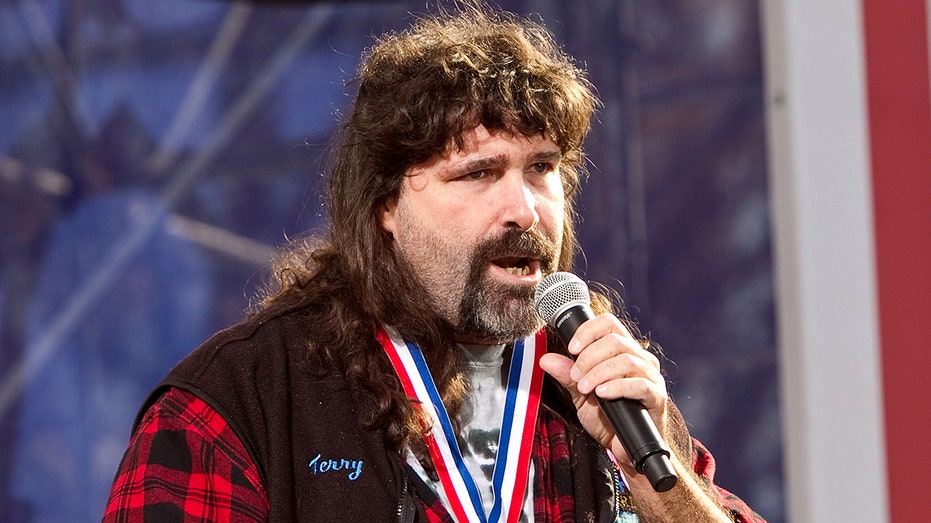
When Mick Foley says he’s walking away from WWE over its ties to Donald Trump, he’s not just making a personal protest. He’s putting a spotlight on a deeper question that has haunted American sports and entertainment for a decade: at what point does political association stop being “just business” and become complicity?
Foley’s decision, framed explicitly around Trump’s treatment of immigrants and his rhetoric after director Rob Reiner’s death, turns what could have been another celebrity-political dustup into something more consequential. It forces WWE, its fanbase, and the broader sports industry to confront the cost of being politically adjacent in an era where politics is no longer background noise but the main event.
How Wrestling Became a Stage for Trump-Style Politics
To understand why Foley’s move matters, you have to understand how deeply Trump and WWE have been intertwined for decades — and how wrestling itself pioneered a style of politics that Trump later brought to the White House.
In the late 1980s, Trump’s Atlantic City properties hosted WrestleMania IV and V, cementing a relationship with WWE’s Vince McMahon that blended spectacle, wealth, and mutual branding. By WrestleMania 23 in 2007, Trump wasn’t just a sponsor; he was a character. The “Battle of the Billionaires” hair vs. hair match cast him as the babyface (hero) against the villainous McMahon — a scripted rivalry built around populist mockery of elites, camera-friendly bravado, and the promise of public humiliation.
Political communication scholars have long noted that Trump’s campaign and presidency borrowed heavily from pro wrestling’s narrative DNA: clear heroes and villains, exaggerated personas, “worked” feuds, and a promise to break the rules for the fans. Foley, one of WWE’s most beloved and thoughtful performers, has been unusually candid over the years about how wrestling’s storytelling power can influence real-world attitudes, for better or worse.
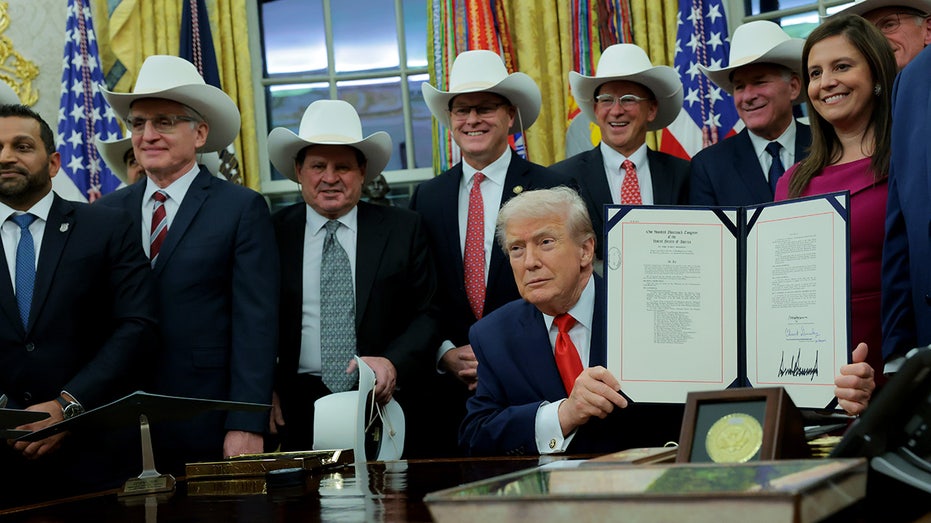
So when WWE figures appear in a Trump administration — Linda McMahon in the cabinet, Paul “Triple H” Levesque at the White House, the company remaining publicly friendly with Trump — it doesn’t look like a neutral corporate relationship. It looks like the continuation of an entertainment-political ecosystem that helped normalize his persona long before he ran for office.
Why Foley’s Protest Hits a Different Nerve
Foley is not the biggest mainstream name WWE has ever produced, but he may be one of its most morally credible figures. His reputation as a performer was built on a willingness to endure real physical punishment for the sake of storytelling. Offscreen, he’s cultivated a reputation as a thoughtful, self-reflective, and politically engaged figure — author, advocate, and frequent critic of both WWE and American politics.
Two things make this stand out:
- He’s sacrificing real money and status. A WWE Legends deal is easy income: occasional appearances, licensing rights, merchandise. Walking away means voluntarily giving up a reliable revenue stream and a formal connection to the brand that made him famous.
- He’s drawing a line while still expressing affection for WWE. Foley is clear: he loves the company and “treasures” his time there. This isn’t a burn-it-all-down rant. It’s a boundary. That nuance matters in an era when public statements often default to absolute loyalty or total denunciation.
Foley’s language — calling Trump “void of compassion” and warning of a march “towards autocracy” — is also striking. Stars in sports entertainment rarely use that kind of direct political language against a sitting president, especially when it risks alienating a portion of a politically diverse fanbase.
The Hidden Story: WWE as a Political Actor, Not Just a Brand
Most coverage frames this as “wrestling meets politics.” That misses the deeper reality: WWE, like many major sports organizations, is already a political actor, whether it acknowledges it or not.
Consider the broader pattern:
- Cabinet-level integration: Linda McMahon’s role in the Trump administration — first as the head of the Small Business Administration, and in this latest reporting as Secretary of Education — is more than a friendly cameo. It embeds WWE’s leadership in federal policymaking.
- Cultural signaling: WWE has long used patriotic imagery, the U.S. military, and nationalist storylines in its programming. That makes its political associations more culturally charged than, say, a tech company sponsoring a conference.
- Global positioning: WWE’s lucrative shows in countries with contested human rights records (notably Saudi Arabia) have already raised ethical questions. Foley is, in effect, adding domestic democratic norms and immigrant rights to that list of concerns.
What Foley is really saying is: if a company uses patriotism and Americana as part of its brand, its political alliances can’t be dismissed as “just business.” They are, inescapably, value-laden choices.
What Makes This Moment Different from Past Athlete Protests
Mick Foley’s stance sits within a broader wave of athletes and entertainers taking public positions — Colin Kaepernick on racial injustice, NBA stars on voting rights, women’s soccer players on pay equity. But there are key differences:
- He’s protesting his own company’s political patron, not a league-wide policy. Kaepernick kneeled against systemic injustice; Foley is withdrawing labor and branding from a company over who it “coddles” at the highest political level.
- He’s targeting a specific relationship, not issuing a broad ideological statement. Foley isn’t saying WWE can never engage with government; he’s saying there is a threshold of cruelty and authoritarian drift beyond which association is unacceptable.
- The medium is wrestling, not a traditional sport. Pro wrestling is scripted entertainment, often dismissed as “not real.” Foley’s move underscores that the values conveyed by “fake” narratives can have very real-world implications.
Historically, wrestling has been slower than other sports to host explicit political protest. Social and political commentary existed, but often as caricature — foreign heels, jingoistic Americans, crude stereotypes. Foley’s act is a rare example of a major wrestling figure making a principled, policy-linked break with the brand itself.
Expert Perspectives: The Collision of Persona, Politics, and Profit
Political communication and sports business experts see Foley’s departure as a case study in the risks of tightly woven political-entertainment alliances.
Media scholar Jeffrey Jones has argued for years that modern politics operates as “political entertainment,” where lines between governance and spectacle blur. Trump’s WWE history is often cited in that scholarship: “kayfabe” — the wrestling concept of maintaining the illusion of reality — became a useful lens for understanding Trump’s political performance.
Sports economist Victor Matheson has pointed out that political controversies rarely sink major leagues financially, but they can reshape audience demographics and brand perception over time. WWE, now a central pillar of a global entertainment conglomerate, is especially sensitive to how its legacy stars frame the company’s moral compass.
And immigration policy experts note that Trump’s record on immigration — from the family separation policy to travel bans to rhetoric about immigrants “poisoning the blood” of the nation — has driven a sharp normative divide. For figures like Foley who have long advocated for compassion and inclusion, continued alignment with that brand of politics becomes a reputational risk.
Data Points: How Politics Has Reshaped Sports and Entertainment
Several broader trends help explain why Foley’s move could resonate beyond wrestling:
- Public expectation for brands to take stands: Multiple surveys by Edelman and others over the past five years show majorities of consumers expect companies to reflect their values on issues like democracy, racism, and human rights. Silence is increasingly perceived as a choice.
- Polarization of fandoms: Studies of U.S. media consumption reveal that fan communities around sports, gaming, and entertainment now map more clearly onto political and cultural identities than they did 20 years ago. WWE’s fanbase is not monolithic; moves like Foley’s may activate segments that feel politically alienated by the Trump connection.
- Celebrity risk calculus: Talent agents and PR strategists report that high-profile figures increasingly map out “red line” issues where they are willing to walk away from deals. Immigration, LGBTQ+ rights, and democratic norms regularly top that list.
What This Means for WWE’s Future Image
The immediate financial impact of losing one Legend on a part-time deal is limited. The symbolic impact is not.
WWE now sits at the crossroads of several pressures:
- Corporate image vs. legacy relationships: As part of a larger entertainment conglomerate, WWE must appeal to investors, sponsors, and global audiences who may view overt coziness with polarizing political figures as a liability.
- Locker room culture: Foley’s decision may not trigger a mass exodus, but it will be closely watched by talent who are quietly uneasy. Younger wrestlers, especially those from immigrant families or marginalized communities, may begin to reassess how publicly they align with company branding.
- Historical narrative control: WWE heavily curates its own history via documentaries, Hall of Fame ceremonies, and specials. The more public dissent it faces from respected alumni, the harder it becomes to maintain a clean, unified corporate story.
The company can ignore Foley, subtly punish him by omission from future projects, or open quiet channels to address his concerns. The route it chooses will signal how seriously it takes the emerging expectation that sports entertainment entities must reckon with their political entanglements.
Beyond WWE: A Template for Value-Based Exits
Foley’s move also fits into a growing pattern of value-based exits across industries:
- Tech workers staging walkouts over contracts with military or law enforcement agencies.
- Musicians canceling shows in states with restrictive voting or reproductive rights laws.
- Actors walking away from franchises over representation or labor issues.
What is distinctive here is that Foley is tying his line in the sand to a specific tenure in office: he will not appear “as long as this man remains in office.” That creates a conditional protest, implying the relationship might be reassessed under a different political climate or leadership posture.
It also sends a message to other public figures: you cannot control a company’s decisions, but you can control what your image and legacy are used to normalize.
What to Watch Next
The downstream effects of this story won’t be felt overnight. Key signals to watch:
- Whether other Legends or current talent quietly follow Foley’s lead — even without public statements, reduced participation or reluctance to re-sign deals can be telling.
- How WWE handles future White House or administration-linked appearances — do they lean in, or quietly scale back the visibility of those ties?
- Fan reaction over time — does Foley’s stance become a rallying point within a segment of the fanbase demanding more distance from polarizing politics?
- How WWE presents Foley in future archival content — continued celebration vs. gradual minimization will reveal how comfortable the company is with internal dissent.
The Bottom Line
Mick Foley’s decision to walk away from WWE over its relationship with Donald Trump is not just a personal moral stand. It’s a stress test of how far the sports-entertainment complex can intertwine itself with polarizing political figures before its own talent begins to push back.
For WWE, this isn’t fundamentally about losing one Legend; it’s about whether a business built on patriotic spectacle and mythmaking can afford to remain politically aligned with a figure whose rhetoric on immigrants, critics, and democratic norms has sharply divided the country. For the wider industry, Foley’s exit is a reminder: in an age where politics and entertainment feed off each other, every partnership is also a statement of values — and some performers are no longer willing to pretend otherwise.
Topics
Editor's Comments
The most overlooked piece of this story is how much responsibility entertainment companies bear for the political figures they help legitimize. For decades, Trump’s involvement in WWE was treated as harmless spectacle—another billionaire willing to play the heel or hero on cue. But once that persona migrated into the presidency, the old line between “it’s just a storyline” and “it’s shaping how millions think about power” became untenable. Foley’s exit forces a retroactive accounting. If wrestling helped normalize a politics of humiliation, cruelty-as-entertainment, and ‘winning’ at any cost, then continuing to embrace Trump post-presidency isn’t neutral; it’s doubling down on that worldview. The contrarian question we should ask isn’t whether Foley is overreacting, but whether other high-profile figures in sports entertainment have underreacted. By remaining silent, they concede that there is no political behavior egregious enough to make them walk away from a check. Foley has drawn a line. The real test now is whether his peers even believe such a line exists.
Like this article? Share it with your friends!
If you find this article interesting, feel free to share it with your friends!
Thank you for your support! Sharing is the greatest encouragement for us.