Rosie O’Donnell, Trump, and the New Politics of Obsession and Exile

Sarah Johnson
December 7, 2025
Brief
Rosie O’Donnell’s move to Ireland over Trump isn’t just celebrity drama. It exposes how politics has become an identity, mental health trigger, and reason for self-imposed exile in the Trump era.
Rosie O’Donnell, Trump, and the Psychology of a Perpetual Campaign
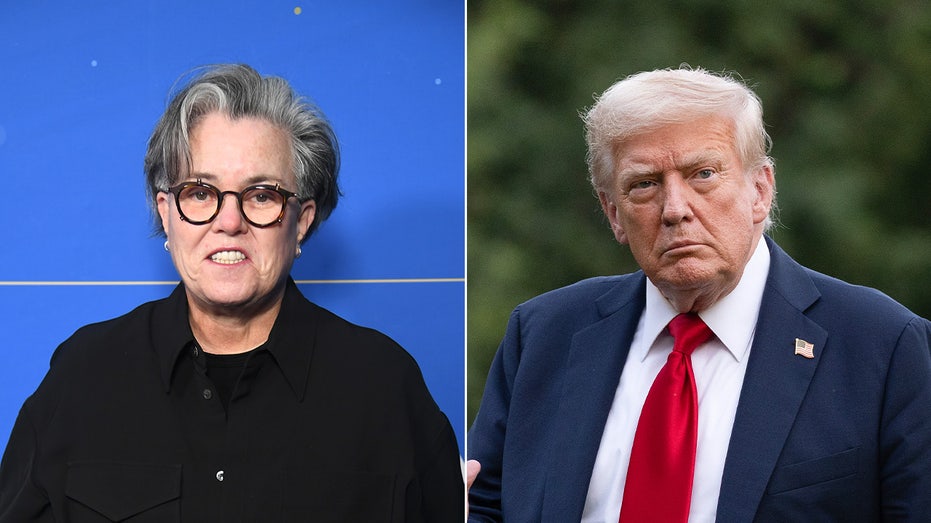
Rosie O’Donnell’s decision to leave the United States for Ireland over Donald Trump is, on the surface, a celebrity melodrama tailor-made for partisan cable segments. But underneath the tabloid framing is something more serious: a portrait of how American politics has become an all-consuming identity, a mental health trigger, and, increasingly, a reason people uproot their lives.
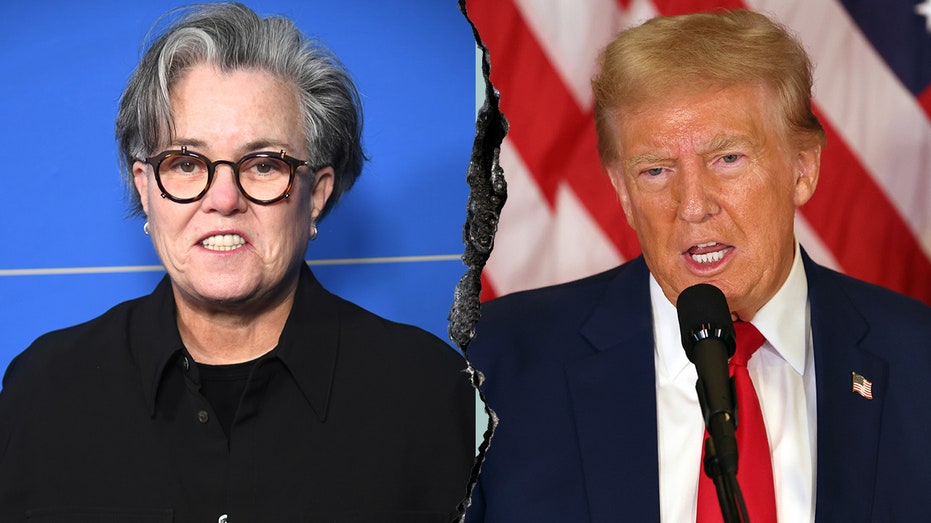
O’Donnell is not merely a famous person who dislikes a president. She is one of the earliest protagonists in the Trump-era culture war, locked in a feud that predates his presidency and has since become a kind of running public psychodrama. Her struggle to “detach” from Trump, even from across an ocean, reveals how politics in the 21st century has blurred the line between civic engagement, personal trauma, and addiction-like fixation.
From Comedy Feud to Culture-War Origin Story
The O’Donnell–Trump conflict is not new. It stretches back to 2006, when Rosie O’Donnell, then a co-host on “The View,” criticized Trump for his handling of Miss USA Tara Conner’s public scandal, calling him a “snake-oil salesman” and mocking his bankruptcy history and hair. Trump hit back with personal insults, threats of lawsuits, and a media blitz that set the tone for his political future: politics as personal vendetta, televised and monetized.
That exchange became one of the earliest viral episodes of Trump’s made-for-TV combat style. Long before “build the wall” rallies and Twitter fights with journalists, there was Trump vs. Rosie: insults traded on talk shows, gossip pages, and cable news. What looked like a celebrity spat foreshadowed the highly personalized, grievance-driven politics that would later define his presidential brand.
When Trump won the presidency in 2016, that decade-old feud suddenly sat at the intersection of celebrity culture, LGBTQ rights, and presidential power. O’Donnell was no longer sniping at a casino mogul; she was publicly criticizing the man who held the nuclear codes and the bully pulpit. Trump, for his part, used the machinery of his political persona to threaten her, at points musing about her citizenship. The imbalance of power turned an entertainment feud into something closer to a one-sided state-versus-citizen drama.
When Politics Becomes a Personal Emergency
O’Donnell describes her response to Trump’s election as an “emotional spiral,” crying when the results became clear. For some observers, that reaction is evidence of partisan hysteria. For others—particularly within marginalized communities—it mirrors a broader phenomenon: politics isn’t abstract when your rights, family, or safety feel directly implicated.
O’Donnell is a lesbian mother of five, with a youngest child who is nonbinary and autistic. Her stated fears center on two fronts.
- LGBTQ rights and hostility: During Trump’s first term, his administration rolled back key protections for LGBTQ Americans, including guidance protecting transgender students in schools, the attempted ban on transgender individuals serving in the military, and support for religious exemptions that could enable discrimination. For queer families, these were not policy footnotes; they were daily-life questions about safety and dignity.
- Special education funding and disability rights: Federal support for special education, already chronically underfunded since the Individuals with Disabilities Education Act (IDEA) passed in 1975, became a point of anxiety under Trump-era budget proposals. Even when cuts did not fully materialize, repeated attempts signaled that services many families depend on could be on the chopping block.
For someone in O’Donnell’s position, politics was not just “who’s in office,” but a potential threat to her child’s schooling, health care, and social acceptance. That helps explain why the language in her family—“He made us move for our own safety”—sounds less like political disagreement and more like flight from danger.
Exile, Real and Imagined
O’Donnell’s move to Ireland fits into a longstanding pattern: Americans, particularly from creative or activist circles, pledging to leave the country when a political figure they despise comes to power. The difference here is that she actually did it, tying the move explicitly to Trump and seeking Irish citizenship through ancestry.
Historically, political exile has accompanied authoritarian regimes, civil wars, and outright persecution. The U.S. in the Trump era is not experiencing that level of instability. Yet the psychological experience for some citizens—especially those who combine personal vulnerability (LGBTQ status, disability, immigration status) with heightened media consumption—can resemble the logic of exile: “I’m not safe here. I need to go somewhere else before it gets worse.”
What’s new is the combination of:
- 24/7 digital immersion in political content
- Parasocial relationships with political figures (feeling personally attached to, or attacked by, leaders we’ll never meet)
- Public identity work, where our political stance becomes central to who we are in our social networks and professional lives
O’Donnell’s 200+ iPad portraits of Trump, labeled with insults, are striking not just as art but as a coping mechanism. They read like a form of repetitive self-soothing that simultaneously keeps the trigger in constant focus. It’s political opposition as ritualized obsession.
“Trump Derangement Syndrome” vs. a Very Real Mental Health Crisis
The White House response calling O’Donnell a case of “Trump Derangement Syndrome” fits a broader rhetorical pattern: pathologizing critics as irrational or mentally ill. The phrase has become a catch-all among Trump allies for anyone whose opposition seems intense, emotional, or unrelenting.
But there is a deeper reality: the last decade has seen a measurable spike in political stress and anxiety across the ideological spectrum.
- A 2017 American Psychological Association survey found that over 60% of Americans cited the political climate as a “significant source of stress.”
- Subsequent studies have linked news consumption and social media exposure to increased anxiety, sleep disruption, and symptoms resembling trauma, especially after contentious political events.
- One study in the journal Politics and Governance estimated that political stress has led millions of Americans to lose friendships, change habits, or experience clinically significant distress.
In that context, O’Donnell is not an outlier so much as an extreme case study. Her fame amplifies it, but the underlying dynamic—checking political feeds compulsively, feeling unable to “disconnect,” repeatedly breaking self-imposed news fasts—is familiar to many voters who feel trapped in a perpetual crisis loop.
The Family Cost of Perpetual Crisis
Perhaps the most telling detail is not O’Donnell’s move, but her daughter pounding the table, saying, “He made us move for our own safety … and now he’s destroying the country.” This is politics as intergenerational inheritance of fear.
O’Donnell says she struggles to shield her daughter from the chaos while still being honest. That tension is now commonplace in politically engaged households: How much do you tell your kids about threats to democracy, discrimination, or violence without making them feel the world is fundamentally unsafe?
Children and teens are growing up in an environment where:
- Politics is omnipresent in social media feeds
- Norm-breaking behavior by political leaders is normalized by repetition
- Crisis language—“existential threat,” “end of democracy,” “civil war”—is routinely used by both sides
For a 12-year-old, especially one who is already navigating gender identity and disability, the message that your family fled your home country because of one political figure can become a defining narrative. Whether that narrative protects or harms them long term will depend on how adults frame agency, resilience, and the possibility of change.
What O’Donnell’s Struggle Says About the Trump Era’s Emotional Economy
O’Donnell’s insistence that she wants to be “tapped out” after 22 years of political combat signals another underreported reality: burnout among high-profile critics and activists. The Trump era has created an emotional economy in which outrage is a currency, engagement is performance, and detachment feels like betrayal.
Yet the same economy traps its participants. Public figures like O’Donnell are rewarded with attention, followers, and relevance for continuing to speak about Trump—precisely the thing they say they want to escape. Each new post, each new interview, each new vow to “stop posting” that fails, reinforces the cycle.
In that sense, “Trump obsession” is not just an individual problem; it is the logical outcome of an attention market built around conflict. Politicians, media organizations, and platforms all gain when figures like O’Donnell and Trump remain locked in symbolic war.
Looking Ahead: Beyond Trump, Does the Dynamic Change?
Even if Trump were to exit the political stage tomorrow, the patterns exemplified by O’Donnell are unlikely to vanish.
- Polarization as identity is now deeply embedded. Voters often define themselves not just by party but by who they despise. That mindset will transfer to future figures.
- Media systems are optimized for conflict narratives. Outrage and fear keep people clicking, sharing, and watching—and keep adversarial relationships in the spotlight.
- Mental health impacts of politics are only beginning to be systematically studied. We’re likely to see more research—and possibly more clinical recognition—of political trauma and stress syndromes in coming years.
For celebrities and ordinary citizens alike, the central question becomes: How do you stay ethically engaged in a high-stakes political environment without allowing it to colonize your entire life?
What’s Missing from the Public Conversation
Most coverage of O’Donnell’s situation focuses on the spectacle—her Instagram vows, her daughter’s anger, the White House’s derisive quote. Largely missing are three deeper questions:
- What responsibility do media platforms have? When algorithms reinforce obsessive engagement, where is the line between informing the public and exploiting their anxieties?
- How do we separate legitimate fear from paralyzing fixation? For marginalized communities, worry about policy impacts is rational. But when does that necessary vigilance tip into dysfunction, and who gets to decide?
- What are healthier models of resistance? Historical movements—from civil rights to ACT UP—show that sustained opposition to harmful policies can coexist with community, joy, and boundaries. Those models are rarely foregrounded in today’s coverage, which often highlights conflict over resilience.
The Bottom Line
Rosie O’Donnell’s self-described Trump obsession is not just another celebrity political rant. It’s an extreme manifestation of broader forces reshaping American civic life: the personalization of politics, the mental health toll of constant crisis, and the way identity, media, and fear now travel together.
Her move to Ireland may bring physical distance, but it’s unlikely to bring emotional distance as long as the underlying ecosystem—perpetual conflict, attention-driven platforms, existential framing—remains intact. O’Donnell’s story is a warning that in a politics built on polarization, the line between engaged citizen and captive audience is getting harder to see, and even harder to step back from.
Topics
Editor's Comments
The coverage of Rosie O’Donnell’s move to Ireland has mostly been framed as proof of either extreme partisan hysteria or heroic resistance, depending on the outlet. Both framings miss a more troubling, bipartisan reality: Americans are increasingly experiencing politics as a chronic emotional emergency. On the right, that can manifest as apocalyptic fears about cultural replacement or government tyranny; on the left, as existential dread about democracy’s collapse or the erasure of civil rights. O’Donnell’s situation is distinctive, but the mechanics—doomscrolling, inability to disengage, family tension—are recognizable across ideological lines. The contrarian question we should be asking is not whether she has gone too far, but why our political and media systems now routinely push people to the edge of their coping capacity. If we continue to normalize politics as a 24/7 emotional battlefield, O’Donnell will not be the exception; she will be an early, highly visible warning sign of where we are all headed.
Like this article? Share it with your friends!
If you find this article interesting, feel free to share it with your friends!
Thank you for your support! Sharing is the greatest encouragement for us.