Trump, FIFA and the 2026 World Cup: How a Tournament Draw Turned Into a Geopolitical Showcase

Sarah Johnson
December 7, 2025
Brief
Beyond the headlines of Trump’s FIFA Peace Prize, this analysis unpacks how the 2026 World Cup draw became a stage for soft power, security politics, and FIFA’s evolving geopolitical role.
Trump, FIFA and the 2026 World Cup: How a Tournament Draw Became a Geopolitical Stage
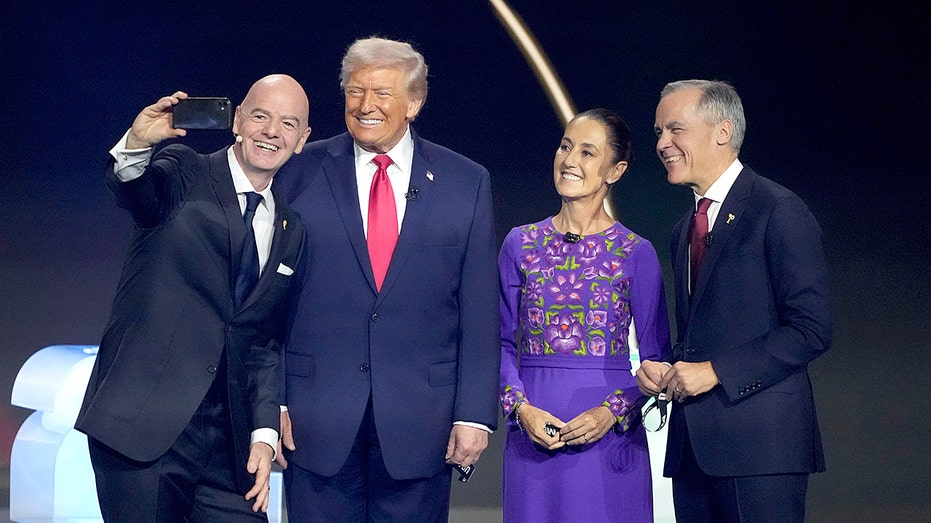
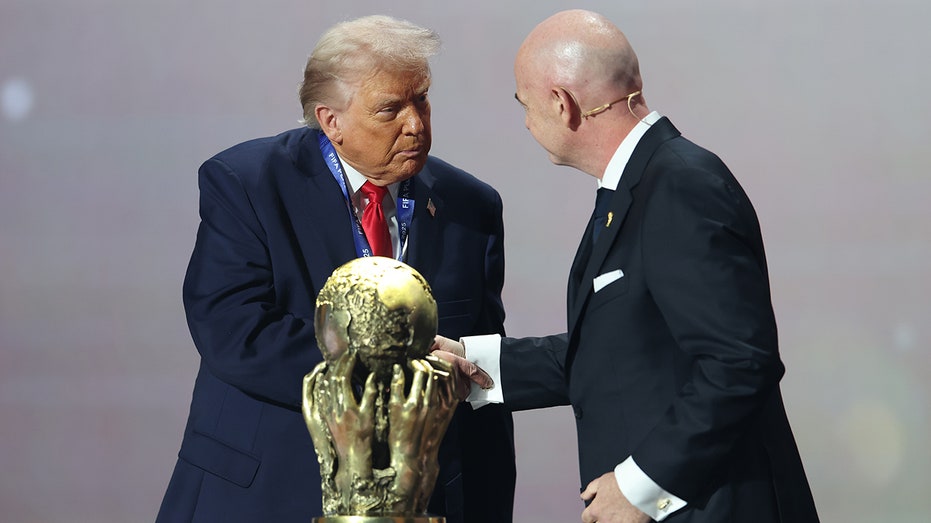
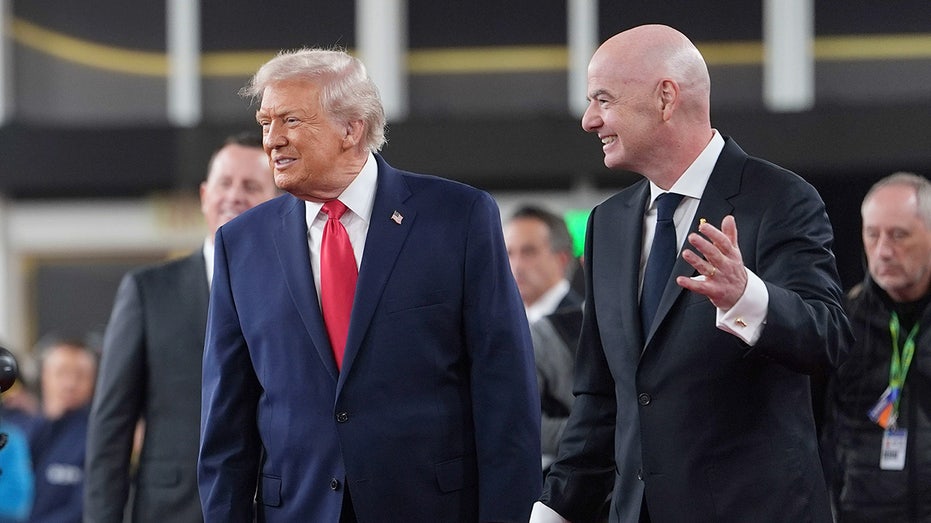
The 2026 World Cup draw in Washington, D.C. was ostensibly about football: 48 teams, three host nations, and a continent‑spanning tournament. But the moment quickly turned into something else. With Donald Trump receiving the first‑ever “FIFA Peace Prize,” claiming over a billion viewers for the draw, and sharing the stage with Mexico’s president and Canada’s prime minister, the event became a case study in how global sports, domestic politics, and soft power have fused into a single spectacle.
Understanding this moment means looking past the optics of Andrea Bocelli’s performance and the usual World Cup hype. It requires examining FIFA’s long history of courting political power, Trump’s reliance on spectacle and crowd metrics as political currency, and the broader way mega‑events are being used to reshape national narratives, especially in an era of polarized politics and contested democratic norms.
From Football Tournament to Global Power Theater
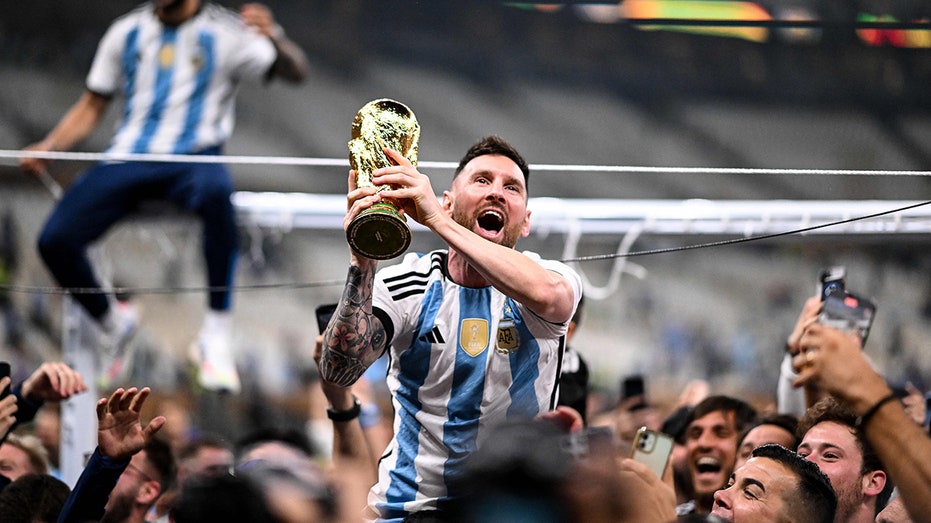
FIFA has never been shy about politics, even when insisting that football is “above” it. From Mussolini’s Italy using the 1934 World Cup for fascist prestige to Argentina’s junta weaponizing the 1978 tournament, World Cups have been political tools at least as much as sporting celebrations. More recently, Russia 2018 and Qatar 2022 were classic examples of “sportswashing” – using mega‑events to soften reputations and project influence.
The 2026 tournament, co-hosted by the United States, Mexico, and Canada, was originally awarded in 2018 to a joint North American bid pitched heavily on themes of unity, openness, and infrastructure readiness. At the time, relations between the U.S. and its neighbors were strained over trade and migration. The joint bid itself was a symbolic counterweight: three countries with divergent politics cooperating on the world’s largest sporting project.
That’s the backdrop for Trump, Mexican President Claudia Sheinbaum, and Canadian Prime Minister Mark Carney jointly drawing their countries’ names on stage in Washington. In visual terms alone, it signaled a carefully curated message: despite trade, border, and security frictions, North America presents a united front to the world—at least when billions of dollars in sports tourism and global television rights are at stake.
Why a “FIFA Peace Prize” for Trump Matters
FIFA president Gianni Infantino’s decision to award Trump the inaugural “FIFA Peace Prize” is not just ceremonial. FIFA has a clear strategic interest in aligning itself with powerful political figures in host countries: it needs security guarantees, infrastructure commitments, and regulatory flexibility. Praising a sitting U.S. president as a figure of peace and unity—regardless of how contested that claim may be domestically—signals that FIFA is willing to embrace political leaders who can protect its business model.
Historically, FIFA has handed out symbolic honors—think awards to heads of state, diplomatic medals, and honorary titles—as part of its soft power toolkit. What’s new here is the explicitly named “Peace Prize,” which pushes FIFA closer to the terrain occupied by entities like the Nobel Committee or major international NGOs, without the same transparency or democratic accountability those institutions at least aspire to.
Labeling Trump, a deeply polarizing figure globally, as a promoter of “peace and unity” illustrates a recurring pattern: FIFA’s definition of peace is effectively whatever aligns with its commercial stability and tournament continuity. If relations among co‑hosts remain functional enough to ensure full stadiums, smooth border crossings, and no political boycotts, that is “peaceful” enough.
The Billion-Viewer Claim and the Politics of Big Numbers
Trump’s claim that “over a billion people were watching” the draw fits a familiar pattern in his political communication: huge, often unverifiable crowd and audience numbers are used as proxies for legitimacy. The exact global viewership for a World Cup draw is rarely fully transparent, but historic data provide some scale.
- FIFA reported that roughly 1.5 billion people watched at least part of the 2018 World Cup final.
- World Cup draws generally attract far smaller audiences than finals or opening matches; they are important for football insiders but are not typically cultural events on the same level.
Media measurement specialists note that global “reach” figures are often inflated by counting anyone who watched even a few seconds on any platform over a broad time window. That’s useful marketing, but it blurs the line between actual audience engagement and promotional rhetoric.
For Trump, the specific number matters less than the narrative: if a billion people watched an event where he was honored, that becomes a foundation for renewed claims to international relevance and stature. In the U.S. political arena, projecting global popularity can be a counter to narratives of isolation, legal troubles, or domestic unpopularity. It’s an old playbook: political leaders have long used foreign audiences and international events to bolster their standing at home.
World Cup Soft Power: What the U.S., Mexico and Canada Stand to Gain
World Cups are soft power engines. They generate tourism, media exposure, infrastructure investment, and—at least temporarily—positive associations with host nations. For North America, the stakes are unusually high.
On the U.S. side, hosting in 2026 offers several potential benefits:
- Image repair and repositioning: After years of political polarization, contested elections, and questions about democratic resilience, a smoothly executed World Cup offers a counter‑narrative: a capable, welcoming, stable United States that can still host the world.
- Economic boost: Estimates for direct and indirect economic impact run into tens of billions of dollars across the three countries, though independent economists warn these projections are often overstated and unevenly distributed.
- Cultural influence: For a country historically more invested in American football, baseball, and basketball, a successful World Cup can accelerate the long‑running growth of soccer as both a consumer product and a cultural bridge to immigrant communities.
For Mexico and Canada, co‑hosting helps project themselves as major players, not mere regional appendages to the U.S. Mexico can frame itself as a modern, globally integrated state beyond stereotypes of violence and migration. Canada can reinforce its brand as a stable, open, multicultural society that can manage major global logistics.
Security, Migration and the Hidden Policy Questions
Behind the celebratory language about unity and peace lies a harder set of realities. U.S. authorities are already framing the tournament in terms of security and border management. A massive influx of international visitors intersects directly with domestic debates over immigration, surveillance, and policing.
Expect to see:
- Expanded security infrastructure: Temporary “event security” often leads to lasting technological and legal changes—from facial recognition deployments to more robust data-sharing between agencies.
- Border politics in the spotlight: With matches in all three countries, fans will need relatively frictionless cross‑border movement. That can clash with hardline border politics and could become a flashpoint if delays or selective enforcement appear politically motivated.
- Protests and counter‑narratives: Mega‑events often attract activists—on labor rights, climate, indigenous land issues, or civil liberties—who see global media attention as an opportunity. How security services respond will say as much about North American democracy as the matches themselves.
Expert Perspectives on the Trump–FIFA Dynamic
Sports governance experts and political scientists see this moment as part of a larger pattern.
Simon Chadwick, a professor of sport and geopolitical economy, has repeatedly argued that FIFA operates as a “quasi‑diplomatic actor,” leveraging tournaments to build relationships with governments that can secure its commercial interests. A Peace Prize to a sitting U.S. president fits that logic: it deepens institutional ties while signaling loyalty.
Political communication scholars note that Trump’s use of sporting stages is not new. From pressuring the NFL over player protests to courting Dana White and the UFC audience, Trump has consistently treated sports as a cultural battleground. Being feted by FIFA as a peace promoter lets him reposition from domestic culture warrior to international statesman—at least in the imagery.
Human rights organizations, on the other hand, may see the Peace Prize as part of a broader trend in which sports bodies sanitize or minimize concerns about democratic backsliding, civil liberties, or international law so long as host governments deliver revenue, infrastructure, and security.
What Mainstream Coverage Often Misses
Most surface‑level coverage will focus on the celebrity appearances, the novelty of a U.S. president receiving a FIFA Peace Prize, and the spectacle of a star like Andrea Bocelli performing in Washington. Less attention is likely to be paid to three under‑examined dynamics:
- Institutional incentives: FIFA’s priority is not abstract peace; it’s a stable environment for a highly complex, high‑risk event. Its honors tend to follow that logic.
- Domestic political leveraging: Trump’s remarks about massive viewership and the honor of the award are part of a deliberate narrative to reframe his role on the world stage in advance of a highly charged political year.
- Long‑term governance implications: The way the U.S., Mexico and Canada manage the security, civil liberties, and cross‑border logistics of 2026 will set precedents for future mega‑events and may normalize expanded security powers.
Looking Ahead: What to Watch as 2026 Approaches
Several key questions will shape the legacy of this World Cup—and the meaning of moments like Trump’s Peace Prize ceremony:
- Will FIFA deepen its use of political awards? If this Peace Prize becomes a recurring feature, who gets honored next, and on what criteria? That will tell us how FIFA wants to position itself politically.
- How will domestic politics intersect with the tournament? If the U.S. election cycle intensifies polarization, the World Cup might be pulled into debates over nationalism, protest, policing, and even player activism.
- Can North America balance security and openness? The practical management of visas, surveillance, policing, and protests will either reinforce or undermine the narrative of a peaceful, united, welcoming region.
- Will the economic benefits match the hype? Independent post‑event audits will be crucial to assess whether promised gains materialize or whether local communities are left with debt, displacement, or underused infrastructure.
The Bottom Line
The 2026 World Cup draw in Washington was more than a procedural step in football’s calendar. It was a carefully staged moment in which FIFA, the United States, Mexico, and Canada all advanced their own narratives of unity, prestige, and stability.
By awarding Donald Trump a “Peace Prize” and amplifying claims of billion‑strong audiences, FIFA reinforced its long‑standing habit of aligning with powerful political figures, while Trump leveraged the occasion to project global relevance and statesmanship. Beneath the surface, the event highlights how mega‑sports spectacles are increasingly central to geopolitical branding, domestic political storytelling, and contested debates over security and civil liberties.
As the 2026 tournament approaches, the real story will not just be who lifts the trophy, but how this World Cup reshapes the political and social landscape of North America—and how institutions like FIFA consolidate their influence in the process.
Topics
Editor's Comments
One striking aspect of this story is how quickly the language of ‘peace’ becomes detached from any substantive, measurable standard. FIFA’s decision to create and immediately award a Peace Prize to a sitting U.S. president—particularly one whose policies and rhetoric have been sharply divisive at home and abroad—illustrates a broader trend in global governance: the inflation and instrumentalization of moral language. Words like peace, unity, and democracy are deployed as branding tools rather than benchmarks. That doesn’t mean there is no value in symbolic gestures, but it raises hard questions. Who gets to define peace? On what criteria? And what accountability exists if those honored are implicated in policies that many view as destabilizing? As mega‑sporting bodies take on quasi‑diplomatic roles, there is a risk that they normalize a hollowed‑out version of peace, equating it with commercially stable conditions rather than justice, inclusion, or reduction of conflict. Readers should watch not only who receives such awards, but also which voices are conspicuously absent from these ceremonies.
Like this article? Share it with your friends!
If you find this article interesting, feel free to share it with your friends!
Thank you for your support! Sharing is the greatest encouragement for us.